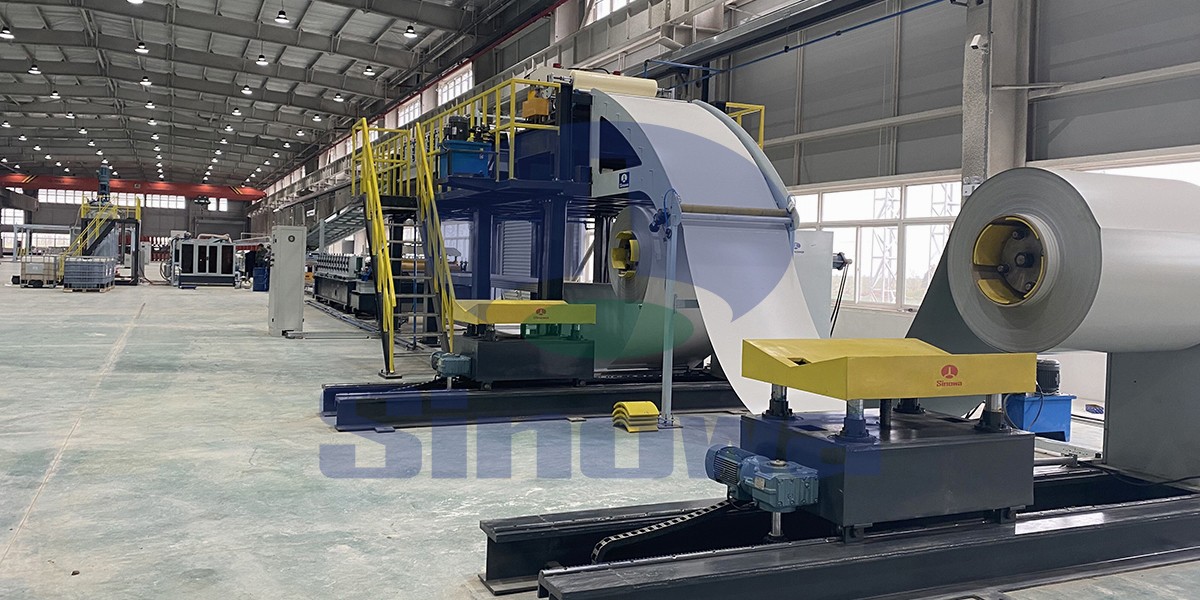
PU Foam Production Line
Sinowa is pu foam production line manufacturer from china, dedicated to the research and development of high-end and high-efficiency, Sinowa is comprehensively taking the leading position in terms of efficiency, automation control level, HMI, environment protection and energy consumption, with subversive designs made in some critical technological fields to procure exceptional cost performance and customer-friendly experience for the entire pu foam production line. The adoption of system integration technology and bus control technology accomplishes the full automatization of integrated and coordinated control of the entire pu foam production line with accessible remote interactive communication. Ranking the first-class level in the world, it is currently the pu foam production line in the market taking a comprehensive lead in high performance.
Based on the continuous technological pursuit, the pu foam production line developed by Sinowa provides you with high-efficiency industrial value. Based on China's cost advantage and our hard-working technology concept, our pu foam production line has a world-leading price-performance advantage. pu foam production line can meet a variety of production needs of customers.The whole pu foam production line design concept of modularization enables all our components to be integrated and combined at will. Our pu foam production line can easily automate the production of roof sandwich panel, wall sandwich panel, cold storage sandwich panel and other products by different combination and configuration selection and siple switching. The inner core layer can be polyrethane or rock wool, glass wool, an so on.
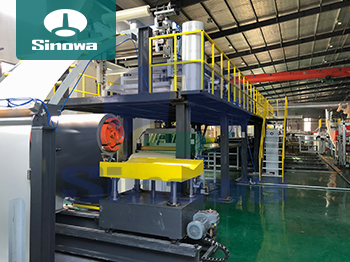


The pu foam production line has high adaptability, which may produce various sandwich panel of the PU, PIR and rock wool systems. We may design various products according to the customer’s requirements, including various configurations, so as to meet their demands with flexible price system. Highly integrated and linked control system centralizes all control points at the main central center, achieving parameter linkage, fault self-diagnosis controlled by the whole line and shipping distance control. High-level automatic control system also saves the manpower and reduces the manpower loss for customers.


Concentrated system control is fully realized in the practice of concentrated process control so that the control system of all the movements of the parts in the pu foam production line is integrated in one process control console with accessible remote communication to elevate the automation and reduce the allocated number of personnel for the assembly line. The main engine with modularized design achieves the precision operation of the pu foam production line, stable and reliable quality, less part and maintenance loss. The whole pu foam production line has over 40 innovative inventions, making our products have lots of unique features and the comprehensive performance of our pu foam production line leading in the industry.


The precision servo hoisting mechanism employed by the main engine without hydraulic system makes the board thickness control flexible and the customer may conveniently change or adjust the board thickness. There will be not such troubles as hydraulic system adjustment, leakage, maintenance, etc. High-level energy saving and protection design makes the whole pu foam production line possible to produce around the clock throughout the year and the customer will save huge budget. In addition, the isolated heat preservation room is constructed for warming the environment. The energy saving and protection design of our pu foam production line may guarantee that the customer’s production line may be freely heated and produce in the main time to save more costs for customers.


The high-power low-consumption design quickens the reaction of the pu foam production line while energy consumption is kept low. With the brand-new, fully sealed inner insulation design, the energy consumption is controlled at the minimum level to achieve the design objective of less than an hour for the insulation system to be activated from the room temperature above 5℃ to the production process temperature. The energy consumption is only 40% that of those similar products.
Polyurethane (PU) foam has become an indispensable material in modern industry and daily life, owing to its exceptional versatility, thermal insulation, cushioning, and sound-absorbing properties. From building insulation and automotive interiors to furniture upholstery and packaging materials, PU foam’s widespread applications are rooted in the advanced and precise operations of PU foam production lines.
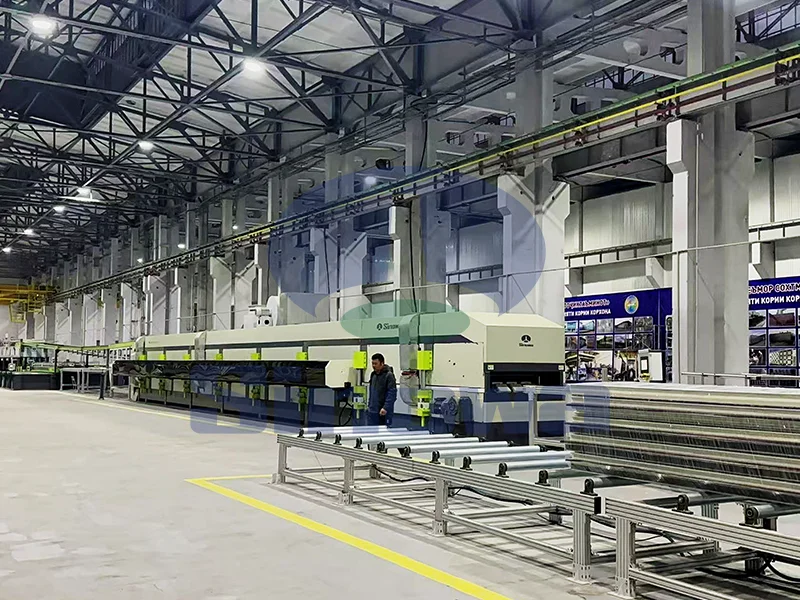
1. Core Principles of PU Foam Formation
The fundamental basis of PU foam production lies in the chemical reaction between isocyanates and polyols, two primary raw materials, which is accompanied by gas generation and polymer chain formation. This complex chemical process involves two simultaneous reactions: polyaddition and foaming, which must be precisely coordinated to ensure the desired foam structure and performance.
The polyaddition reaction occurs when isocyanate groups (-NCO) react with hydroxyl groups (-OH) in polyols to form polyurethane polymer chains. This reaction is exothermic, releasing heat that plays a crucial role in driving the subsequent foaming process. The foaming reaction, on the other hand, generates gas that expands the polymer matrix to form a porous structure. Historically, chlorofluorocarbons (CFCs) and hydrochlorofluorocarbons (HCFCs) were widely used as blowing agents, but due to their environmental impact, they have been gradually replaced by more eco-friendly alternatives such as hydrofluoroolefins (HFOs) like HFO-1233zd and bio-based blowing agents.
In addition to isocyanates and polyols, auxiliary materials including catalysts, surfactants, and flame retardants are essential components in the production process. Catalysts regulate the rate of the polyaddition and foaming reactions to ensure they proceed in a synchronized manner; surfactants help stabilize the foam bubbles during expansion, preventing coalescence or collapse; and flame retardants enhance the fire resistance of the final product, expanding its application scope in fire-sensitive areas such as construction and transportation.
2. Classification of PU Foam Production Lines
PU foam production lines are categorized based on production mode, product type, and foam structure, with each type tailored to specific application requirements and production scales. The two most common classification criteria are production mode (batch vs. continuous) and foam rigidity (rigid vs. flexible).
2.1 Batch Production Lines
Batch production lines are designed for small-to-medium scale production of customized or specialty PU foam products. As the name suggests, production is carried out in discrete batches, with each batch undergoing a complete cycle of raw material mixing, pouring, foaming, curing, and demolding before the next batch begins. This production mode offers high flexibility, allowing for easy adjustment of raw material ratios, foaming parameters, and mold designs to produce different types of foam products, such as automotive seat cushions, specialty packaging foam, and medical foam components.
Key characteristics of batch production lines include relatively simple equipment configurations, lower initial investment costs, and suitability for multi-variety, small-batch production. However, their production efficiency is generally lower compared to continuous lines, and the consistency of product quality across batches relies heavily on precise parameter control and operator expertise. Typical batch production lines have a production cycle ranging from a few minutes to several hours per batch, depending on the product size and curing requirements.
2.2 Continuous Production Lines
Continuous production lines are engineered for large-scale, high-volume production of standardized PU foam products, such as foam blocks for furniture upholstery, building insulation panels, and continuous foam sheets. Unlike batch lines, raw materials are continuously mixed, poured onto a moving conveyor belt, and undergo foaming and curing processes in a continuous flow. The final foam product is continuously cut into desired lengths or shapes as it exits the curing zone.
The main advantages of continuous production lines include high production efficiency, excellent product quality consistency, and lower unit production costs. Advanced continuous lines can achieve a production speed of several meters per minute, with foam block widths up to 2-3 meters. The continuous nature of the process minimizes human intervention, reducing the risk of human error and ensuring uniform foam density, pore structure, and mechanical properties throughout the product.
Continuous production lines are further divided into slab foam production lines and composite foam production lines. Slab foam lines produce large, continuous foam blocks that are later cut into smaller pieces for various applications. Composite foam lines, on the other hand, integrate additional layers (such as fabric, film, or rigid substrates) with the PU foam during the production process, creating composite materials used in automotive interiors, flooring, and building cladding.
2.3 Rigid vs. Flexible PU Foam Production Lines
Rigid PU foam production lines are specialized in manufacturing foam products with high density, high compressive strength, and excellent thermal insulation properties. Rigid PU foam has a closed-cell structure, with very low thermal conductivity (as low as 0.019 W/(m·K) for high-performance products), making it ideal for building insulation, refrigeration equipment insulation, and structural components. The production process for rigid foam requires precise control of the foaming reaction to ensure the formation of a dense, closed-cell structure, often using high-pressure mixing equipment to achieve thorough raw material dispersion.
Flexible PU foam production lines, by contrast, produce foam with an open-cell structure, offering excellent elasticity, cushioning, and breathability. Flexible foam is widely used in furniture, mattresses, automotive interiors, and sports equipment. The production process for flexible foam emphasizes the formation of a flexible polymer matrix and uniform open-cell structure, with adjustments to catalyst and surfactant ratios to control foam softness and resilience. Supercritical foaming technology has recently gained traction in flexible foam production, enabling the manufacture of low-density, high-performance foam products for shoe soles and sports equipment.
3. Key Equipment and Components of PU Foam Production Lines
A typical PU foam production line consists of several interconnected equipment systems, each playing a critical role in ensuring the smooth and efficient production of high-quality foam products. The core equipment includes raw material storage and handling systems, mixing and metering systems, foaming and curing systems, and post-processing equipment.
3.1 Raw Material Storage and Handling Systems
Raw material storage and handling systems are responsible for the safe and stable storage of isocyanates, polyols, and auxiliary materials, as well as their precise delivery to the mixing system. These systems typically include storage tanks, transfer pumps, filters, and temperature control units.
Storage tanks are usually double-jacketed to maintain a constant temperature (typically 20-30℃) for the raw materials, as temperature fluctuations can affect their viscosity and reactivity. Isocyanates and polyols are stored in separate tanks to prevent premature reaction. Some advanced storage systems use a dual-tank design (working tank and reserve tank) to ensure continuous raw material supply, with automatic transfer from the reserve tank to the working tank when the working tank level is low. Transfer pumps are used to transport raw materials from the storage tanks to the metering system, with flow rates controlled by variable frequency drives (VFDs) for precise delivery. Filters are installed in the transfer lines to remove impurities that could affect foam quality or clog the mixing equipment.
3.2 Mixing and Metering Systems
The mixing and metering system is the heart of the PU foam production line, responsible for accurately measuring and thoroughly mixing the raw materials in the correct proportions. The performance of this system directly determines the quality of the final foam product, including its density, pore structure, and mechanical properties.
Metering units are critical for ensuring precise raw material ratios. Advanced metering systems use positive displacement pumps or gear pumps with high-precision flow meters to measure the flow rates of isocyanates, polyols, and auxiliary materials. The flow rates are continuously monitored and adjusted by a closed-loop control system, ensuring a mixing ratio accuracy of ±0.5% or better. This level of precision is essential for maintaining consistent foam properties, as even small deviations in raw material ratios can lead to significant changes in foam density, strength, and curing time.
Mixing units are designed to achieve thorough and uniform mixing of the raw materials in a short period of time. There are two main types of mixing systems: high-pressure mixing and low-pressure mixing. High-pressure mixing systems inject the raw materials into a mixing chamber at high pressure (6-20 MPa), creating a high-velocity shear flow that rapidly mixes the materials. This type of mixing system is widely used in continuous production lines and high-performance foam production, as it ensures uniform mixing even for high-viscosity raw materials. Low-pressure mixing systems, on the other hand, use mechanical agitators to mix the raw materials at atmospheric pressure, making them suitable for small-scale batch production and low-viscosity raw materials.
Modern mixing systems are equipped with automatic cleaning functions to prevent raw material buildup and cross-contamination between batches. The mixing head is automatically cleaned with a solvent or high-pressure air after each mixing cycle, ensuring the integrity of the next batch.
3.3 Foaming and Curing Systems
The foaming and curing systems are where the chemical reactions take place, transforming the mixed raw materials into a solid PU foam product. The design of these systems varies depending on whether the production line is batch or continuous.
In batch production lines, foaming and curing occur in molds. The mixed raw materials are poured into molds of the desired shape and size, and the molds are placed in a temperature-controlled curing oven or room. The foaming reaction begins immediately after pouring, with the generated gas expanding the material to fill the mold cavity. The curing process is driven by the exothermic heat of the polyaddition reaction, supplemented by external heating if necessary, to ensure complete curing. The curing time typically ranges from 10 minutes to several hours, depending on the product thickness and formulation. After curing, the mold is opened, and the foam product is demolded for post-processing.
In continuous production lines, foaming and curing occur on a moving conveyor belt. The mixed raw materials are continuously poured onto the conveyor, which moves through a sealed foaming chamber. The foaming chamber is maintained at a constant temperature and humidity to control the foaming reaction. As the conveyor moves forward, the foam expands and begins to cure. The conveyor then enters a long curing tunnel, where the foam is subjected to controlled heating to complete the curing process. The length of the curing tunnel and the conveyor speed are carefully matched to ensure that the foam is fully cured before exiting the tunnel. Advanced continuous lines may also include vacuum systems to remove air bubbles and improve foam density uniformity.
3.4 Post-Processing Equipment
Post-processing equipment is used to refine the foam products into their final form, removing defects, adjusting dimensions, and improving surface quality. Common post-processing equipment includes cutting machines, trimming machines, and surface treatment equipment.
Cutting machines are essential for continuous slab foam production lines, used to cut the continuous foam block into desired lengths, widths, and thicknesses. There are several types of cutting machines, including horizontal cutters, vertical cutters, and contour cutters. Horizontal and vertical cutters are used for straight cuts, while contour cutters (often using CNC technology) are used to cut complex shapes for specialized applications such as automotive parts and medical devices.
Trimming machines are used to remove excess foam, flash, or uneven edges from the foam products, improving their surface finish and dimensional accuracy. Surface treatment equipment may include sanding machines, coating machines, or lamination machines, depending on the product requirements. For example, foam products used in automotive interiors may be laminated with fabric or leather to enhance their appearance and durability.
4. Technological Advancements in PU Foam Production Lines
In recent years, PU foam production lines have undergone significant technological advancements driven by the growing demand for high-performance, eco-friendly, and cost-effective foam products. Key advancements include the adoption of smart manufacturing technologies, the development of eco-friendly raw materials and processes, and improvements in process control and efficiency.
4.1 Smart Manufacturing and Automation
The integration of smart manufacturing technologies has revolutionized PU foam production lines, improving efficiency, reducing costs, and enhancing product quality. Modern production lines are equipped with advanced control systems based on Programmable Logic Controllers (PLCs) and Human-Machine Interfaces (HMIs), which enable real-time monitoring and control of all production parameters, including raw material flow rates, mixing ratios, temperature, pressure, and conveyor speed.
Automation has been widely adopted in various stages of the production process, from raw material handling to post-processing. Automatic raw material feeding systems ensure precise and consistent delivery of raw materials, reducing the risk of human error. Robotic systems are used for mold handling, pouring, and demolding in batch production lines, improving production efficiency and reducing labor costs. In continuous production lines, automatic cutting and trimming systems ensure precise dimensional control and consistent product quality.
The use of data analytics and Internet of Things (IoT) technology has further enhanced the performance of PU foam production lines. Sensors installed throughout the production line collect real-time data on process parameters and product quality, which is analyzed to identify trends, optimize processes, and predict potential equipment failures. This predictive maintenance capability reduces downtime and improves overall equipment effectiveness (OEE).
4.2 Eco-Friendly and Sustainable Technologies
Environmental concerns have driven the development of eco-friendly technologies in PU foam production lines. One of the most significant advancements is the replacement of traditional blowing agents (such as CFCs and HCFCs) with low-global warming potential (GWP) alternatives. HFOs, such as HFO-1233zd, have a GWP of less than 150, significantly lower than that of traditional blowing agents, and are now widely used in rigid foam production for building insulation and refrigeration.
Another important trend is the use of bio-based raw materials. Bio-based polyols derived from renewable resources such as vegetable oils, corn starch, and sugarcane are increasingly being used as alternatives to petroleum-based polyols. The use of bio-based polyols reduces the carbon footprint of PU foam products and reduces reliance on fossil fuels. In 2023, bio-based polyols accounted for approximately 9.5% of the total polyol usage in PU foam production, and this proportion is expected to grow to 25% by 2025.
Waste reduction and recycling technologies have also gained attention in recent years. Chemical recycling processes have been developed to break down waste PU foam into its constituent raw materials, which can then be reused in the production of new foam products. In 2023, the global capacity for chemical recycling of PU foam reached 23,000 tons, and it is expected that 30% of waste PU foam will be recycled by 2025. Additionally, production lines are being designed to minimize waste by optimizing raw material usage and reducing scrap rates.
4.3 Advanced Process Control and Optimization
Advancements in process control technology have enabled more precise control of the foaming reaction, resulting in foam products with improved performance characteristics. Advanced mixing systems with high-pressure injection and intensive shear mixing ensure thorough dispersion of raw materials, leading to uniform foam density and pore structure. Temperature and pressure control systems with high precision (temperature control accuracy of ±1℃ and pressure control accuracy of ±0.5 MPa) ensure consistent reaction conditions, improving product quality consistency.
Simulation and modeling technologies are also being used to optimize PU foam production processes. Computational Fluid Dynamics (CFD) models are used to simulate the mixing and foaming processes, allowing engineers to optimize the design of mixing heads, molds, and foaming chambers. Reaction kinetic models are used to predict the foaming and curing times, enabling the optimization of production parameters to reduce cycle times and improve efficiency.
5. Applications and Market Trends of PU Foam Production Lines
The wide range of PU foam products produced by PU foam production lines has led to their extensive application in various industries, including construction, automotive, furniture, packaging, and medical. The growth of these industries, coupled with technological advancements, is driving the expansion of the global PU foam production line market.
5.1 Key Application Industries
The construction industry is the largest consumer of PU foam products, accounting for approximately 35% of the total global consumption. Rigid PU foam is widely used in building insulation, including wall insulation, roof insulation, and floor insulation, due to its excellent thermal insulation properties. The growing focus on energy efficiency and sustainable building practices is driving the demand for high-performance insulation foam, boosting the growth of rigid PU foam production lines.
The automotive industry is another major application area, accounting for 20% of global PU foam consumption. PU foam is used in various automotive components, including seat cushions, backrests, headrests, door panels, and sound insulation materials. The trend towards lightweight vehicles (to improve fuel efficiency and reduce emissions) is driving the demand for lightweight PU foam products, which offer excellent cushioning properties while reducing vehicle weight. Additionally, the growth of the electric vehicle (EV) market is expected to further boost demand for automotive PU foam, as EVs require more sound insulation and thermal management materials.
The furniture industry is a significant consumer of flexible PU foam, accounting for 28% of global consumption. Flexible PU foam is used in sofas, chairs, mattresses, and pillows, due to its excellent comfort and durability. The growing demand for high-quality, comfortable furniture, particularly in emerging markets, is driving the growth of flexible PU foam production lines.
Other application areas include packaging (specialty PU foam for protecting fragile goods during transportation), medical (foam cushions for medical devices and orthopedic products), and sports equipment (foam for shoe soles, protective gear, and fitness equipment).
5.2 Market Trends
The global PU foam production line market is expected to grow at a steady rate, with the global market size for PU foam products projected to exceed 500 million tons by 2025, representing a compound annual growth rate (CAGR) of approximately 6.5%. The Asia-Pacific region is the largest market, accounting for more than 45% of global demand, with China being the largest producer and consumer of PU foam products. The growth of the Asia-Pacific market is driven by rapid urbanization, infrastructure development, and the expansion of the automotive and furniture industries.
The North American and European markets are growing at a moderate rate, with a focus on high-performance and eco-friendly PU foam products. Stringent environmental regulations in these regions, such as restrictions on VOC emissions and the phase-out of harmful blowing agents, are driving the adoption of eco-friendly production technologies. The demand for high-end PU foam products, such as those used in aerospace, medical devices, and specialty automotive applications, is also growing in these regions, supporting the growth of advanced PU foam production lines.
Another key market trend is the increasing demand for customized PU foam products. Consumers and end-users are increasingly seeking foam products tailored to their specific requirements, such as unique shapes, sizes, and performance characteristics. This trend is driving the growth of flexible batch production lines equipped with advanced mold design and process control technologies.
6. Challenges and Future Outlook
Despite the significant advancements and growth prospects, PU foam production lines face several challenges, including raw material price volatility, environmental regulations, and technological barriers.
Raw material price volatility is a major challenge for PU foam producers. The prices of key raw materials such as isocyanates (MDI, TDI) and polyols are highly dependent on the price of crude oil and natural gas, which are subject to global economic and geopolitical factors. Historical data shows that the price of MDI can fluctuate by up to 35%, leading to significant fluctuations in production costs.
Stringent environmental regulations are another challenge. Governments around the world are implementing increasingly strict regulations on VOC emissions, hazardous air pollutants (HAPs), and the use of harmful chemicals in PU foam production. For example, the U.S. Environmental Protection Agency (EPA) has proposed amendments to the National Emission Standards for Hazardous Air Pollutants (NESHAP) for flexible PU foam fabrication operations, imposing stricter limits on HCl emissions and requiring more frequent performance testing.
Looking ahead, the future of PU foam production lines is promising, with several key trends expected to shape the industry. The continued adoption of smart manufacturing technologies will further improve production efficiency and product quality. The development of bio-based and fully biodegradable PU foam materials will drive the growth of sustainable production lines. Additionally, the expansion of emerging applications such as 3D-printed PU foam products and PU foam for energy storage devices will open up new opportunities for PU foam production line manufacturers.
In conclusion, PU foam production lines are a critical component of the global manufacturing industry, enabling the production of versatile and high-performance foam products used in a wide range of applications. Technological advancements in automation, eco-friendly materials, and process control are driving the evolution of these production lines, making them more efficient, sustainable, and flexible. Despite the challenges posed by raw material price volatility and environmental regulations, the growing demand for PU foam products in emerging markets and new applications is expected to fuel the continued growth of the PU foam production line industry in the coming years.
《PU Foam Production Line》Update Date: 2026/1/8
URL: https://www.sinowamachine.cn/en/tag/pu-foam-production-line.html
- PU Sandwich Panel Making Machine
- Rockwool Sandwich Panel Production Line
- PU Sandwich Panel Machine
- PU Sandwich Panel Production Line
- Mineral Wool Sandwich Panel Machine
- PUF Panel Machine
- Rock Wool Sandwich Panel Line
- Sandwich Panel Machines
- Sandwich Panel Lines
- Rockwool Sandwich Panel Machine
- Rockwool Sandwich Panel Line
- PU Sandwich Panel Line
- PU Panel Machine
- Foam Forming Machine
- Continuous Sandwich Panel Line
- Continuous PU Sandwich Panel Line
- PIR Sandwich Panel Line
- Polyurethane Sandwich Panel Line
- Automatic PU Sandwich Panel Production Line
- PU Foam Sandwich Panel Production Line