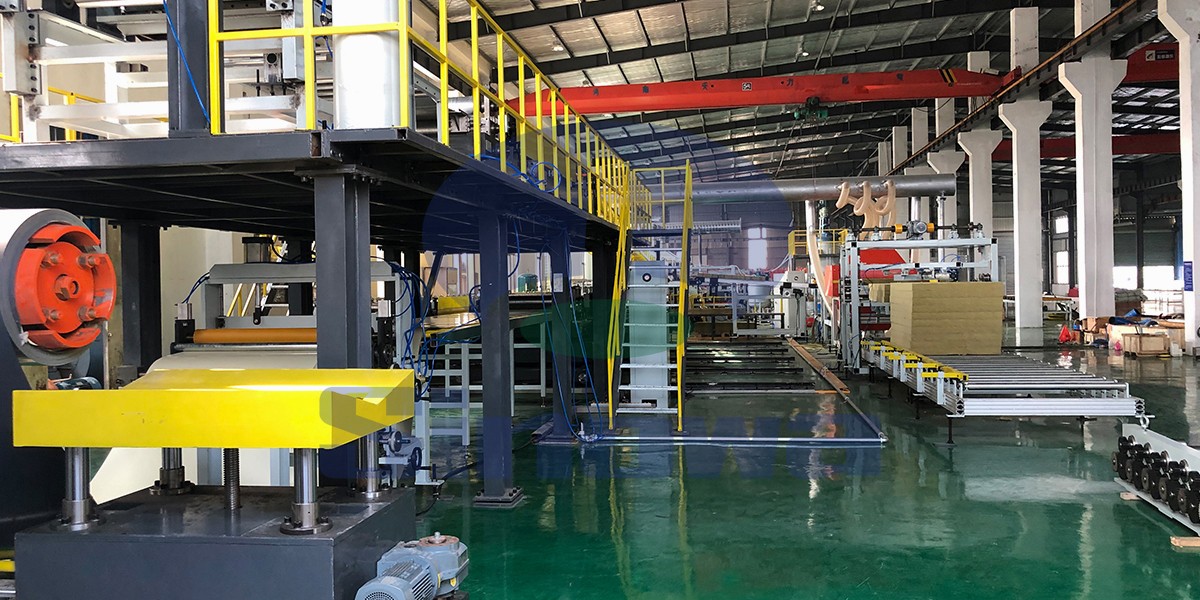
Sinowa is rock wool sandwich panel line manufacturer from china, dedicated to the research and development of high-end and high-efficiency, Sinowa is comprehensively taking the leading position in terms of efficiency, automation control level, HMI, environment protection and energy consumption, with subversive designs made in some critical technological fields to procure exceptional cost performance and customer-friendly experience for the entire rock wool sandwich panel line. The adoption of system integration technology and bus control technology accomplishes the full automatization of integrated and coordinated control of the entire rock wool sandwich panel line with accessible remote interactive communication. Ranking the first-class level in the world, it is currently the rock wool sandwich panel line in the market taking a comprehensive lead in high performance.
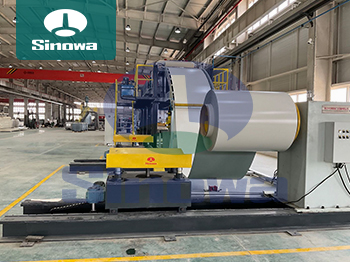
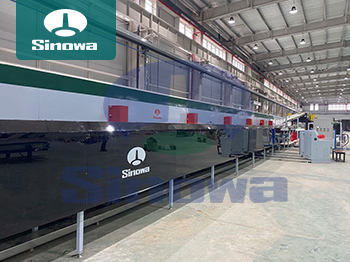
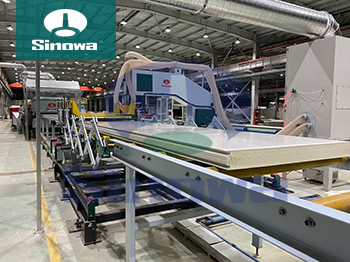
Based on the continuous technological pursuit, the rock wool sandwich panel line developed by Sinowa provides you with high-efficiency industrial value. Based on China's cost advantage and our hard-working technology concept, our rock wool sandwich panel line has a world-leading price-performance advantage. rock wool sandwich panel line can meet a variety of production needs of customers.The whole rock wool sandwich panel line design concept of modularization enables all our components to be integrated and combined at will. Our rock wool sandwich panel line can easily automate the production of roof sandwich panel, wall sandwich panel, cold storage sandwich panel and other products by different combination and configuration selection and siple switching. The inner core layer can be polyrethane or rock wool, glass wool, an so on.
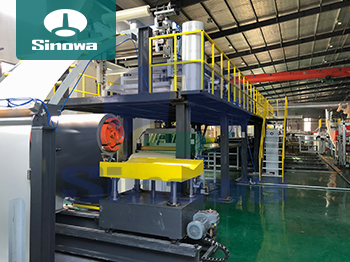
The rock wool sandwich panel line has high adaptability, which may produce various sandwich panel of the PU, PIR and rock wool systems. We may design various products according to the customer’s requirements, including various configurations, so as to meet their demands with flexible price system. Highly integrated and linked control system centralizes all control points at the main central center, achieving parameter linkage, fault self-diagnosis controlled by the whole line and shipping distance control. High-level automatic control system also saves the manpower and reduces the manpower loss for customers.
Concentrated system control is fully realized in the practice of concentrated process control so that the control system of all the movements of the parts in the rock wool sandwich panel line is integrated in one process control console with accessible remote communication to elevate the automation and reduce the allocated number of personnel for the assembly line. The main engine with modularized design achieves the precision operation of the rock wool sandwich panel line, stable and reliable quality, less part and maintenance loss. The whole rock wool sandwich panel line has over 40 innovative inventions, making our products have lots of unique features and the comprehensive performance of our rock wool sandwich panel line leading in the industry.
The precision servo hoisting mechanism employed by the main engine without hydraulic system makes the board thickness control flexible and the customer may conveniently change or adjust the board thickness. There will be not such troubles as hydraulic system adjustment, leakage, maintenance, etc. High-level energy saving and protection design makes the whole rock wool sandwich panel line possible to produce around the clock throughout the year and the customer will save huge budget. In addition, the isolated heat preservation room is constructed for warming the environment. The energy saving and protection design of our rock wool sandwich panel line may guarantee that the customer’s production line may be freely heated and produce in the main time to save more costs for customers.
The high-power low-consumption design quickens the reaction of the rock wool sandwich panel line while energy consumption is kept low. With the brand-new, fully sealed inner insulation design, the energy consumption is controlled at the minimum level to achieve the design objective of less than an hour for the insulation system to be activated from the room temperature above 5℃ to the production process temperature. The energy consumption is only 40% that of those similar products.
In the context of global emphasis on energy conservation, environmental protection and building safety, rock wool sandwich panels have emerged as a pivotal material in the construction industry, thanks to their excellent fire resistance, thermal insulation, sound absorption and structural stability. Behind the wide application of these high-performance panels lies the continuous innovation and upgrading of rock wool sandwich panel production lines. From traditional semi-automatic equipment to fully automatic intelligent production systems, these production lines have not only improved production efficiency and product quality, but also laid a solid foundation for the sustainable development of the rock wool sandwich panel industry.

A rock wool sandwich panel production line is a integrated manufacturing system that combines mechanical, electrical, hydraulic and chemical reaction technologies to produce sandwich panels with rock wool as the core material and metal sheets (such as galvanized steel sheets, color steel sheets) as the upper and lower surface layers. The core function of the production line is to realize the precise combination of surface materials and core materials through a series of continuous processes, ensuring that the final product meets the requirements of various application scenarios in terms of performance and specifications.
In the early stage of the development of the rock wool sandwich panel industry, production lines were mostly semi-automatic, relying heavily on manual operations in processes such as material feeding, cutting and stacking. This not only led to low production efficiency and unstable product quality, but also increased labor costs and potential safety hazards. With the continuous advancement of manufacturing technology and the growing market demand for high-quality rock wool sandwich panels, fully automatic production lines have gradually become the mainstream. These advanced production lines adopt technologies such as PLC programmable control, digital servo control and frequency conversion vector control, realizing the integration of all processes from raw material uncoiling to finished product packaging. The degree of automation has been significantly improved, and the production capacity and product consistency have been greatly enhanced.
The scale of modern rock wool sandwich panel production lines varies according to production needs, with the whole line length ranging from 70 meters to 120 meters. The production speed can reach up to 8 meters per minute, and the annual output can exceed 1 million square meters, which can meet the large-scale supply needs of large construction projects. At the same time, the production lines have strong flexibility and can produce panels of different specifications by adjusting parameters, including thickness ranging from 30mm to 150mm, width from 1000mm to 1250mm, and length from 2.5m to 12m, adapting to the diverse needs of different building structures.
A complete rock wool sandwich panel production line is composed of multiple functional units, each of which undertakes a specific production task and cooperates closely to ensure the smooth progress of the entire production process. The core components mainly include the following parts:
Uncoiling system: It is responsible for uncoiling the coiled surface metal sheets (such as color steel coils, galvanized steel coils) stably and continuously. The system is usually equipped with two or more uncoilers, and is equipped with an automatic strip connection machine, which can realize coil change without stopping the machine, ensuring the continuity of production. The uncoiling system also has a leveling function to correct the deformation of the metal sheets during storage and transportation, ensuring the flatness of the surface materials.
Roll forming system: This system uses advanced roll forming technology to shape the uncoiled metal sheets into the required cross-sectional shape (such as trapezoidal, corrugated) according to the design requirements. The roll forming process is carried out continuously, with high forming precision and good consistency, which can enhance the structural strength of the surface materials and lay the foundation for the subsequent composite process. The roll forming system can be quickly adjusted according to different product specifications, realizing the flexible production of wall panels and roof panels.
Rock wool feeding and cutting system: This system is responsible for cutting the rock wool core material into the required size and accurately conveying it between the upper and lower surface metal sheets. The system adopts automatic cutting equipment, which can accurately control the length and thickness of the rock wool, ensuring that the core material fits closely with the surface materials. For roof panels with rib structures, the system can also cut trapezoidal filling strips to fill the ribs, improving the overall performance of the panels.
Gluing and foaming system: It is a key part to ensure the bonding strength between the rock wool core material and the surface metal sheets. The system includes upper and lower glue spraying devices and side sealing foaming devices. The glue spraying device evenly sprays the special adhesive on the surface of the metal sheets and rock wool, ensuring the uniform bonding of the three layers. The side sealing foaming device uses two-component low-pressure foaming technology to seal the sides of the sandwich panels, improving the water resistance and thermal insulation performance of the products. The amount and spraying speed of the adhesive and foaming agent can be precisely controlled by the PLC system, ensuring the stability of the bonding quality.
Double-belt laminating and heating system: This system is equivalent to a continuous moving mold, which realizes the compound molding and curing of the sandwich panels. The combined surface materials and rock wool core material enter the double-belt conveyor, and under the action of constant pressure and temperature, the adhesive and foaming agent are fully cured, and the three layers are firmly bonded into an integrated sandwich panel. The heating method is usually electric heating, which can accurately control the heating temperature and time, ensuring the curing effect of the adhesive and the stability of the product performance. The effective length of the double-belt conveyor is usually about 24 meters, which can provide sufficient curing time for the sandwich panels.
Cutting system: After the continuous sandwich panel strip is formed, it needs to be cut into the required length by the cutting system. The system adopts a flying saw cutting device, which can cut while the panel strip is moving, without stopping the machine, ensuring the continuity of production. The cutting precision is high, and the cutting surface is flat, which can meet the installation requirements of the panels. The cutting length can be set freely through the control system, realizing the customization of product specifications.
Stacking and packaging system: The cut finished panels are conveyed to the stacking system through the conveyor belt, and the system automatically stacks the panels on the pallets according to the set quantity and specifications. After stacking, the packaging system uses PVC film to stretch-wrap the finished stacks, which can protect the panels from damage during storage and transportation. The whole process of stacking and packaging is automatic, which reduces manual intervention and improves production efficiency.
Control system: It is the "brain" of the entire production line, mainly composed of PLC programmable controller, touch screen operation interface and data monitoring system. The control system can realize the centralized control and management of all production links, and operators can set production parameters, monitor production status and adjust production processes through the touch screen. The data monitoring system can record key production data (such as production speed, product specifications, production quantity) in real time, which is convenient for enterprise management and quality traceability.
The production process of rock wool sandwich panels is a continuous and systematic process, and each link is closely connected. The specific process can be divided into the following steps:
Raw material preparation: First, the surface metal coils (such as color steel coils, galvanized steel coils) and rock wool core materials that meet the requirements are selected and transported to the corresponding positions of the production line. The metal coils are placed on the uncoilers, and the rock wool is placed in the feeding area of the rock wool cutting system. At the same time, the adhesive and foaming agent are prepared and injected into the corresponding storage tanks.
Uncoiling and leveling: The uncoiling system starts to uncoil the metal coils, and the metal sheets are leveled by the leveling device to eliminate the deformation. The automatic strip connection machine ensures that the connection between the coils is smooth, avoiding production interruption caused by coil change.
Surface treatment: The leveled metal sheets pass through the corona treatment system, which uses high-frequency electricity to remove grease and dirt on the surface of the metal sheets, improving the adhesion between the metal sheets and the adhesive, and ensuring the bonding strength of the subsequent composite process.
Roll forming: The surface-treated metal sheets enter the roll forming system, and are gradually formed into the required shape through a series of forming rolls. The forming parameters are set in advance through the control system to ensure the forming precision of the metal sheets.
Rock wool cutting and feeding: The rock wool core material is cut into the required size by the automatic cutting device, and then accurately conveyed between the upper and lower formed metal sheets through the feeding device. For roof panels, trapezoidal filling strips are cut and inserted into the ribs of the lower metal sheet to ensure the tight fit between the rock wool and the surface materials.
Gluing and side sealing: The glue spraying device sprays the adhesive evenly on the inner surface of the upper and lower metal sheets and the upper and lower surfaces of the rock wool core material. At the same time, the side sealing foaming device sprays the foaming agent on the sides of the sandwich structure to realize the side sealing of the panels.
Laminating and curing: The sandwich structure composed of upper and lower metal sheets and rock wool core material enters the double-belt laminating and heating system. Under the action of constant pressure and temperature, the adhesive and foaming agent are fully cured, and the three layers are firmly bonded into an integrated sandwich panel. The curing temperature and time are precisely controlled by the control system to ensure the stability of the product performance.
Cutting: The continuous sandwich panel strip after curing is cut into the required length by the flying saw cutting device. The cutting process is carried out while the panel strip is moving, ensuring the continuity of production and the flatness of the cutting surface.
Cooling and stacking: The cut finished panels are conveyed to the cooling conveyor belt for cooling. After cooling, the panels are automatically stacked on the pallets by the stacking system according to the set quantity.
Packaging and storage: The stacked panels are stretch-wrapped with PVC film by the packaging system to protect the panels from damage. The packaged finished products are then transported to the warehouse for storage or direct delivery to the construction site.
Modern rock wool sandwich panel production lines adopt fully automatic control technology, realizing the integration of all processes from raw material uncoiling to finished product packaging. The degree of manual intervention is greatly reduced, and only 6-8 operators are needed to complete the operation of the entire production line. Compared with traditional semi-automatic production lines, the production efficiency is increased by more than 50%, and the production speed can reach up to 8 meters per minute. The annual output can exceed 1 million square meters, which can meet the large-scale supply needs of large construction projects such as industrial warehouses, commercial buildings and logistics centers.
At the same time, the automatic production line can realize continuous production without stopping the machine, avoiding the production interruption caused by manual operation, and further improving the production efficiency. The data monitoring system of the production line can record the production data in real time, which is convenient for enterprises to optimize the production process and improve the production efficiency.
The quality of rock wool sandwich panels is closely related to the stability of the production process. Modern production lines use precise control technology to accurately control each production link, such as the forming precision of metal sheets, the cutting size of rock wool, the amount of adhesive spraying and the curing temperature and time. This ensures that the performance parameters (such as bonding strength, thermal conductivity, fire resistance) of each batch of products are consistent, avoiding the quality fluctuation caused by manual operation.
For example, the roll forming system of the production line can ensure that the cross-sectional shape and size of the metal sheets are consistent, and the error is controlled within a small range. The automatic glue spraying system can ensure the uniform distribution of the adhesive, avoiding the problem of insufficient bonding or excessive glue caused by manual spraying. The double-belt laminating and heating system can provide a stable curing environment, ensuring that the adhesive is fully cured, and the bonding strength of the panels meets the requirements. The stable product quality provides a reliable guarantee for the safety and durability of buildings.
With the diversification of building structures and the individualization of design requirements, the demand for rock wool sandwich panels of different specifications is increasing. Modern rock wool sandwich panel production lines have strong flexibility, and can produce panels of different specifications by adjusting parameters, including thickness ranging from 30mm to 150mm, width from 1000mm to 1250mm, and length from 2.5m to 12m. The roll forming system can be quickly adjusted to produce wall panels and roof panels of different shapes, adapting to the needs of different building structures.
In addition, the production line can also adjust the type and density of the rock wool core material according to the special requirements of customers, producing panels with different fire resistance and thermal insulation performance. For example, for buildings with high fire resistance requirements, high-density rock wool core materials can be used; for buildings with high thermal insulation requirements, rock wool core materials with low thermal conductivity can be used. The strong customization capability enables the production line to meet the diverse needs of different customers and different application scenarios.
Modern rock wool sandwich panel production lines adopt advanced energy-saving technologies, which can effectively reduce energy consumption. For example, the frequency conversion vector control technology used in the production line can adjust the motor speed according to the production load, avoiding the waste of energy caused by the motor running at full speed for a long time. The electric heating system adopts precise temperature control technology, which can reduce energy consumption while ensuring the curing effect. The power configuration of the entire production line is about 40kW, which has good economy under high-load production conditions.
At the same time, the automatic production line reduces the labor cost, and the precise control of raw materials reduces the waste of raw materials. For example, the automatic cutting system can accurately control the size of the rock wool core material, reducing the waste of rock wool; the automatic glue spraying system can accurately control the amount of adhesive, avoiding the waste of adhesive. The reduction of energy consumption and raw material waste makes the production cost of rock wool sandwich panels effectively controlled, improving the market competitiveness of the products.
Modern rock wool sandwich panel production lines are equipped with complete safety protection devices, such as emergency stop buttons, safety guards and fault alarm systems. When an abnormal situation occurs in the production process, the system can automatically alarm and stop the machine, avoiding safety accidents. The touch screen operation interface of the control system is intuitive and easy to operate, reducing the difficulty of operation and the risk of misoperation by operators.
In addition, the production line has good noise control performance, and the noise during operation is low, which improves the working environment of the workshop and protects the physical and mental health of operators. The stable operation of the production line also reduces the maintenance cost caused by equipment failure, ensuring the long-term stable operation of the production line.
Rock wool sandwich panels have excellent performance such as fire resistance, thermal insulation, sound absorption and quick installation, and are widely used in various fields of the construction industry. The continuous and stable supply of high-quality rock wool sandwich panels by modern production lines provides strong support for these application scenarios.
Industrial workshops, warehouses, logistics centers and other industrial buildings have high requirements for the fire resistance, thermal insulation and structural stability of building materials. Rock wool sandwich panels are ideal materials for the walls and roofs of these buildings. The high production efficiency of modern production lines can meet the large-scale supply needs of these large-scale industrial projects. For example, a large logistics center usually needs tens of thousands of square meters of rock wool sandwich panels, and the annual output of more than 1 million square meters of production lines can complete the supply task in a short time.
Commercial buildings such as shopping malls, supermarkets and office buildings have high requirements for the sound insulation and thermal insulation performance of buildings. Rock wool sandwich panels can effectively reduce the transmission of external noise and maintain a comfortable indoor temperature. The customizable capability of the production line can produce panels of different colors and shapes to meet the decorative needs of commercial buildings.
Prefabricated buildings have the advantages of quick construction, energy conservation and environmental protection, and are an important development direction of the modern construction industry. Rock wool sandwich panels are important prefabricated components, and their quick installation characteristics are consistent with the construction requirements of prefabricated buildings. The production line can produce rock wool sandwich panels according to the design drawings of prefabricated buildings, ensuring the precision and consistency of the components, and realizing the assembly of buildings on the construction site. The use of rock wool sandwich panels can shorten the construction period by more than 40%, improving the construction efficiency of prefabricated buildings.
Cold storage and refrigeration facilities have strict requirements for thermal insulation performance. Rock wool sandwich panels have low thermal conductivity and good thermal insulation performance, which can effectively reduce the loss of cold energy and maintain a stable low temperature environment in the cold storage. The side sealing foaming technology of the production line improves the airtightness and water resistance of the panels, avoiding the problem of reduced thermal insulation performance caused by moisture entering the core material. The production line can produce thick rock wool sandwich panels (up to 150mm) according to the thermal insulation requirements of cold storage, meeting the special needs of cold storage and refrigeration facilities.
Public buildings such as schools, hospitals and stadiums have high requirements for fire safety. Rock wool sandwich panels are non-combustible materials, which can effectively prevent the spread of fire and protect the safety of people's lives and property. The production line can produce panels with different fire resistance levels according to the fire safety requirements of public buildings, meeting the relevant national standards. In addition, rock wool sandwich panels are also used in infrastructure projects such as highways, railways and airports, such as the sound insulation walls of highways and the roof insulation of airport terminals.
With the development of Industry 4.0, intelligence and digitalization will become the main direction of the development of rock wool sandwich panel production lines. In the future, production lines will be equipped with more advanced sensors and data acquisition systems to realize real-time monitoring and analysis of the entire production process. Through big data and artificial intelligence technology, the production line can automatically optimize production parameters, predict equipment failures and carry out preventive maintenance, improving the intelligence level of production.
At the same time, the digital management system of the production line will be more perfect, realizing the integration of production, sales, inventory and other links. Enterprises can realize remote monitoring and management of the production line through the Internet of Things technology, improving the management efficiency. The digitalization of the production line will also facilitate the traceability of product quality, realizing the whole-process tracking of each product from raw material to finished product.
Under the background of global carbon neutrality, green and low-carbon development will become an important trend of the rock wool sandwich panel industry. Future production lines will pay more attention to energy conservation and environmental protection, adopt more advanced energy-saving technologies and equipment, further reduce energy consumption and carbon emissions. For example, the use of renewable energy (such as solar energy, wind energy) to power the production line, reducing the dependence on traditional energy sources.
In addition, the production line will also adopt more environmentally friendly raw materials and processes, reducing the emission of pollutants. For example, the use of water-based adhesives instead of solvent-based adhesives, reducing the emission of volatile organic compounds (VOCs). The recycling of waste materials will also be strengthened, realizing the resource utilization of waste rock wool and metal sheets, and promoting the sustainable development of the industry.
With the continuous improvement of building safety and energy conservation standards, the requirements for the performance of rock wool sandwich panels will be higher. Future production lines will focus on improving the precision of the production process and the performance of the products. For example, the roll forming system will adopt more advanced technology to improve the forming precision of the metal sheets; the glue spraying system will adopt more precise metering technology to ensure the uniform distribution of the adhesive; the curing system will adopt more advanced temperature control technology to improve the curing effect of the adhesive.
At the same time, the production line will also develop towards the production of high-performance rock wool sandwich panels, such as panels with higher fire resistance, better thermal insulation performance and stronger corrosion resistance. The development of high-performance production lines will promote the upgrading of the rock wool sandwich panel industry, meeting the higher requirements of the construction industry.
Future rock wool sandwich panel production lines will adopt modular and integrated design, which is convenient for transportation, installation and maintenance. The production line can be divided into multiple modules according to the functional units, and each module can be produced and debugged independently, improving the efficiency of production line construction. The integrated design of the control system will realize the seamless connection between different modules, improving the stability and reliability of the production line.
In addition, the modular production line can also be flexibly combined according to the production needs of enterprises, realizing the customization of the production line. For small and medium-sized enterprises with small production scale, they can choose the corresponding modules to form a simplified production line, reducing the investment cost. For large enterprises with large production scale, they can choose more modules to form a fully automatic production line, improving the production efficiency.
Rock wool sandwich panel production lines are an important part of the rock wool sandwich panel industry, and their technical level and performance directly affect the quality and efficiency of rock wool sandwich panels. With the continuous advancement of manufacturing technology, modern rock wool sandwich panel production lines have realized the transformation from semi-automatic to fully automatic, with the advantages of high automation, high production efficiency, stable product quality, strong flexibility and safe operation. These advantages have laid a solid foundation for the wide application of rock wool sandwich panels in industrial and commercial buildings, prefabricated buildings, cold storage and refrigeration facilities and other fields.
Looking forward to the future, with the development of intelligence, digitalization, green and low-carbon technologies, rock wool sandwich panel production lines will develop towards higher intelligence, higher precision, more environmental protection and more flexibility. The continuous innovation and upgrading of production lines will not only promote the high-quality development of the rock wool sandwich panel industry, but also provide strong support for the transformation and upgrading of the construction industry towards energy conservation, environmental protection and safety. In the context of global emphasis on sustainable development, rock wool sandwich panel production lines will play an increasingly important role in building a green and low-carbon construction system.
《Rock Wool Sandwich Panel Line》Update Date: 2026/1/8
URL: https://www.sinowamachine.cn/en/tag/rock-wool-sandwich-panel-line.html


