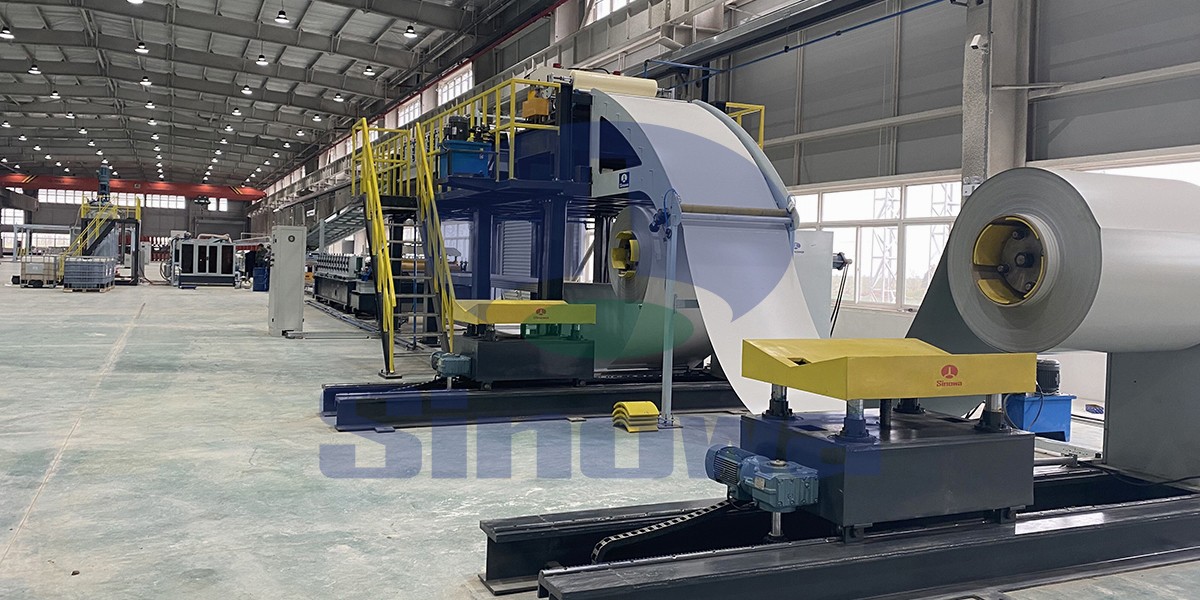
Polyurethane Sandwich Panel Line
Sinowa is polyurethane sandwich panel line manufacturer from china, dedicated to the research and development of high-end and high-efficiency, Sinowa is comprehensively taking the leading position in terms of efficiency, automation control level, HMI, environment protection and energy consumption, with subversive designs made in some critical technological fields to procure exceptional cost performance and customer-friendly experience for the entire polyurethane sandwich panel line. The adoption of system integration technology and bus control technology accomplishes the full automatization of integrated and coordinated control of the entire polyurethane sandwich panel line with accessible remote interactive communication. Ranking the first-class level in the world, it is currently the polyurethane sandwich panel line in the market taking a comprehensive lead in high performance.
Based on the continuous technological pursuit, the polyurethane sandwich panel line developed by Sinowa provides you with high-efficiency industrial value. Based on China's cost advantage and our hard-working technology concept, our polyurethane sandwich panel line has a world-leading price-performance advantage. polyurethane sandwich panel line can meet a variety of production needs of customers.The whole polyurethane sandwich panel line design concept of modularization enables all our components to be integrated and combined at will. Our polyurethane sandwich panel line can easily automate the production of roof sandwich panel, wall sandwich panel, cold storage sandwich panel and other products by different combination and configuration selection and siple switching. The inner core layer can be polyrethane or rock wool, glass wool, an so on.
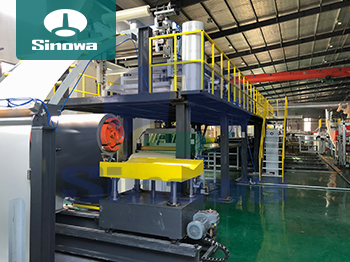


The polyurethane sandwich panel line has high adaptability, which may produce various sandwich panel of the PU, PIR and rock wool systems. We may design various products according to the customer’s requirements, including various configurations, so as to meet their demands with flexible price system. Highly integrated and linked control system centralizes all control points at the main central center, achieving parameter linkage, fault self-diagnosis controlled by the whole line and shipping distance control. High-level automatic control system also saves the manpower and reduces the manpower loss for customers.


Concentrated system control is fully realized in the practice of concentrated process control so that the control system of all the movements of the parts in the polyurethane sandwich panel line is integrated in one process control console with accessible remote communication to elevate the automation and reduce the allocated number of personnel for the assembly line. The main engine with modularized design achieves the precision operation of the polyurethane sandwich panel line, stable and reliable quality, less part and maintenance loss. The whole polyurethane sandwich panel line has over 40 innovative inventions, making our products have lots of unique features and the comprehensive performance of our polyurethane sandwich panel line leading in the industry.


The precision servo hoisting mechanism employed by the main engine without hydraulic system makes the board thickness control flexible and the customer may conveniently change or adjust the board thickness. There will be not such troubles as hydraulic system adjustment, leakage, maintenance, etc. High-level energy saving and protection design makes the whole polyurethane sandwich panel line possible to produce around the clock throughout the year and the customer will save huge budget. In addition, the isolated heat preservation room is constructed for warming the environment. The energy saving and protection design of our polyurethane sandwich panel line may guarantee that the customer’s production line may be freely heated and produce in the main time to save more costs for customers.


The high-power low-consumption design quickens the reaction of the polyurethane sandwich panel line while energy consumption is kept low. With the brand-new, fully sealed inner insulation design, the energy consumption is controlled at the minimum level to achieve the design objective of less than an hour for the insulation system to be activated from the room temperature above 5℃ to the production process temperature. The energy consumption is only 40% that of those similar products.
In the evolving landscape of modern construction and industrial manufacturing, the demand for high-performance, energy-efficient, and cost-effective building materials has driven significant advancements in production technology. Among these innovations, the polyurethane sandwich panel line stands out as a critical infrastructure that enables the mass production of composite panels renowned for their exceptional thermal insulation, structural integrity, and versatility. These production lines are engineered to transform raw materials into finished panels through a series of precisely coordinated processes, ensuring consistency, quality, and efficiency that meet the diverse needs of contemporary construction projects. From industrial warehouses and cold storage facilities to commercial buildings and public infrastructure, the panels produced by these lines have become indispensable components, shaping the way modern structures are designed and built.
The fundamental essence of a polyurethane sandwich panel line lies in its ability to manufacture composite panels with a three-layer "sandwich" structure: two outer facings and a central polyurethane foam core. The outer facings typically consist of metal sheets such as galvanized steel, galvalume, or aluminum, which are chosen for their durability, corrosion resistance, and structural strength. These metal sheets are often pre-treated with protective coatings to enhance their weather resistance and longevity, ensuring the final panels can withstand harsh environmental conditions including UV exposure, humidity, and temperature fluctuations. The central core, made of rigid polyurethane foam, is the key component that endows the panels with their superior thermal insulation properties. This foam is formed through a chemical reaction between isocyanate and polyether polyol, a process that occurs within the production line as the materials are combined, foamed, and cured between the outer facings.
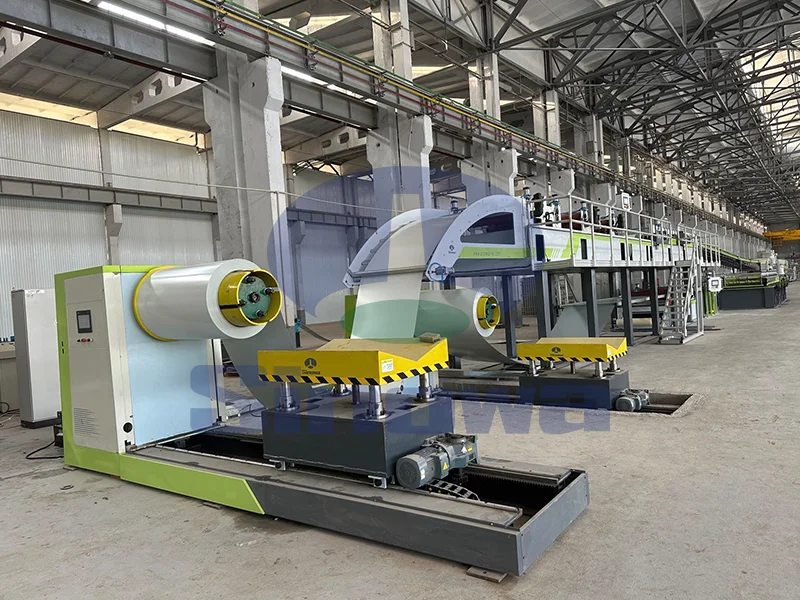
The working principle of a polyurethane sandwich panel line revolves around a continuous, automated production process that integrates multiple stages seamlessly. The process typically begins with the handling and preparation of the outer facing materials. Large rolls of metal sheets are loaded onto uncoiling machines, which unwind the sheets and feed them into preheating devices. Preheating is a crucial step as it ensures the metal surfaces are at an optimal temperature for bonding with the polyurethane foam, promoting strong adhesion and preventing delamination. The preheated metal sheets are then guided into position, with one sheet forming the bottom layer and the other the top layer of the panel, creating a gap between them that will be filled with the foam core.
Simultaneously, the raw materials for the polyurethane foam core are prepared and mixed in precise proportions. This involves the metering of isocyanate, polyether polyol, and various additives such as catalysts, blowing agents, and flame retardants. The accurate metering of these components is vital to ensuring the final foam has the desired properties, including density, thermal conductivity, and fire resistance. Modern production lines are equipped with advanced metering systems that use computerized controls to regulate the flow of each material, minimizing waste and ensuring consistency batch after batch. Once metered, the materials are fed into a high-pressure mixing head, where they are thoroughly blended to initiate the chemical reaction that produces the polyurethane foam.
The next stage is the foaming and lamination process, which is the core of the production line's operation. The freshly mixed polyurethane foam is uniformly deposited onto the moving bottom metal sheet through a foaming nozzle. As the bottom sheet moves forward on a conveyor system, the top metal sheet is brought down onto the foam layer, and the entire assembly enters a double-belt laminating press. This press consists of two parallel, continuous belts that apply uniform pressure to the sandwich structure as the foam expands and cures. The belts not only ensure the panels maintain a consistent thickness but also facilitate the curing process by controlling the temperature and pressure conditions. The curing of the polyurethane foam is a rapid process, allowing the production line to operate continuously without significant delays, thereby maximizing throughput.
After the foam has fully cured and the sandwich structure has solidified, the continuous panel is fed into post-processing equipment. This stage includes trimming the edges of the panel to achieve the desired width and shape, as well as cutting the continuous panel into individual sheets of predetermined lengths using precision saws. Advanced production lines often feature automated cutting systems that can adjust the length of the panels quickly in response to production requirements, enhancing flexibility. The finished panels are then conveyed to a stacking and packaging area, where they are neatly stacked and wrapped to protect them during storage and transportation. Some production lines also incorporate additional post-processing steps such as surface finishing or the application of protective films, depending on the specific requirements of the end product.
One of the key characteristics of modern polyurethane sandwich panel lines is their high level of automation and integration. Advanced control systems, often based on computerized programming, monitor and regulate every stage of the production process, from the uncoiling of raw materials to the packaging of finished products. These control systems enable operators to set and adjust production parameters such as panel thickness, length, and foam density with precision, ensuring that the panels meet the exact specifications required for different applications. Additionally, many production lines are equipped with diagnostic systems that can detect potential issues such as material flow inconsistencies or equipment malfunctions in real time, minimizing downtime and reducing the risk of defective products. The high degree of automation not only improves production efficiency but also reduces the reliance on manual labor, lowering labor costs and minimizing human error.
Another important aspect of polyurethane sandwich panel lines is their versatility. These lines are capable of producing a wide range of panel types by adjusting the raw materials, production parameters, and post-processing steps. For example, by changing the type of outer facing material, the production line can manufacture panels suitable for different environments, such as corrosion-resistant panels for coastal areas or high-strength panels for industrial applications. Similarly, adjusting the density and thickness of the polyurethane foam core allows for the production of panels with varying levels of thermal insulation and structural strength, making them suitable for everything from standard industrial warehouses to specialized cold storage facilities that require ultra-low thermal conductivity. Some production lines are also designed to handle alternative core materials such as rock wool or glass wool, further expanding their product range and market applicability.
The panels produced by polyurethane sandwich panel lines offer a multitude of advantages that have contributed to their widespread adoption in the construction industry. One of the most significant advantages is their exceptional thermal insulation performance. Polyurethane foam has one of the lowest thermal conductivity values among commonly used insulation materials, which means that panels made with this core can effectively reduce heat transfer between the interior and exterior of a building. This translates to lower energy consumption for heating and cooling systems, resulting in significant cost savings for building owners and operators. In addition, the closed-cell structure of polyurethane foam provides excellent moisture resistance, preventing the formation of condensation and protecting the building structure from water damage.
The structural performance of polyurethane sandwich panels is another key benefit. Despite their lightweight nature, these panels exhibit high strength and load-bearing capacity, thanks to the combination of rigid foam core and durable outer facings. This high strength-to-weight ratio makes the panels ideal for use in lightweight steel structures, as they reduce the overall weight of the building and minimize the load on the foundation. The panels also offer good resistance to wind loads, impact, and seismic activity, enhancing the safety and durability of the structures they are used in. Furthermore, the prefabricated nature of the panels allows for quick and efficient installation, significantly reducing construction time and labor costs compared to traditional building materials such as brick or concrete. This rapid installation is particularly beneficial for large-scale projects such as industrial warehouses or logistics centers, where minimizing downtime is critical.
The applications of polyurethane sandwich panels, and thus the production lines that manufacture them, are extremely diverse. In the industrial sector, these panels are widely used for the construction of warehouses, manufacturing facilities, and logistics centers. Their combination of thermal insulation, structural strength, and quick installation makes them an ideal choice for these applications, where large open spaces need to be enclosed efficiently and cost-effectively. In the cold storage and refrigeration industry, polyurethane sandwich panels are indispensable due to their ultra-low thermal conductivity, which helps maintain stable low temperatures inside the facilities while minimizing energy consumption. These panels are also used in the construction of food processing plants, pharmaceutical facilities, and other environments that require strict temperature and humidity control.
In the commercial and public sectors, polyurethane sandwich panels are used for the construction of shopping centers, office buildings, sports stadiums, and transportation hubs such as airports and train stations. Their versatility in terms of design and finish allows architects to create aesthetically pleasing structures while ensuring high performance. The panels can be produced in a variety of colors and textures, and their lightweight nature allows for more flexible design options, including large-span roofs and curved surfaces. Additionally, the sound insulation properties of polyurethane foam make these panels suitable for use in buildings located in noisy environments, such as near highways or airports, as they help reduce noise transmission.
The agricultural sector also benefits from the use of polyurethane sandwich panels, with applications including livestock barns, greenhouses, and storage facilities for agricultural products. The thermal insulation properties of the panels help maintain optimal temperature conditions for livestock and crops, improving productivity and reducing energy costs. The durability and moisture resistance of the panels also make them suitable for use in agricultural environments, where they are exposed to harsh conditions such as animal waste and varying weather.
In recent years, the demand for polyurethane sandwich panel lines has been driven by the growing emphasis on sustainable and energy-efficient construction. Governments and regulatory bodies around the world have implemented stricter energy efficiency standards for buildings, encouraging the use of high-performance insulation materials. Polyurethane sandwich panels, with their superior thermal insulation properties, play a key role in helping buildings meet these standards, reducing carbon emissions and promoting environmental sustainability. Additionally, the production process of polyurethane sandwich panels has become more environmentally friendly, with the development of low-VOC (volatile organic compound) raw materials and the adoption of energy-efficient production technologies. Many production lines now feature energy-saving designs that reduce power consumption, further enhancing their sustainability credentials.
The future development of polyurethane sandwich panel lines is likely to focus on further improving efficiency, enhancing product performance, and advancing sustainability. Technological innovations such as the integration of artificial intelligence and machine learning into production control systems could enable even more precise monitoring and optimization of the production process, leading to higher quality products and lower production costs. Additionally, research and development into new raw materials and foam formulations is expected to result in panels with even better thermal insulation, fire resistance, and environmental performance. The development of more flexible production lines that can handle a wider range of materials and produce more complex panel designs is also likely to be a key trend, as the construction industry continues to demand customized solutions.
In conclusion, the polyurethane sandwich panel line is a vital component of the modern construction materials industry, enabling the mass production of high-performance composite panels that meet the diverse needs of industrial, commercial, and public construction projects. Through their precise and automated production processes, these lines ensure the consistency, quality, and efficiency of the panels they produce, which are valued for their exceptional thermal insulation, structural strength, and versatility. As the global construction industry continues to prioritize energy efficiency, sustainability, and rapid construction, the importance of polyurethane sandwich panel lines is set to grow even further. Their ability to adapt to changing market demands and incorporate new technologies will ensure that they remain at the forefront of construction materials production for years to come, supporting the development of more efficient, safe, and sustainable buildings around the world.
《Polyurethane Sandwich Panel Line》Update Date: 2026/1/15
URL: https://www.sinowamachine.cn/en/tag/polyurethane-sandwich-panel-line.html
- PU Sandwich Panel Making Machine
- Rockwool Sandwich Panel Production Line
- PU Sandwich Panel Machine
- PU Sandwich Panel Production Line
- Mineral Wool Sandwich Panel Machine
- PUF Panel Machine
- Rock Wool Sandwich Panel Line
- Sandwich Panel Machines
- Sandwich Panel Lines
- Rockwool Sandwich Panel Machine
- Rockwool Sandwich Panel Line
- PU Sandwich Panel Line
- PU Panel Machine
- Foam Forming Machine
- Continuous Sandwich Panel Line
- Continuous PU Sandwich Panel Line
- PIR Sandwich Panel Line
- Polyurethane Sandwich Panel Line
- Automatic PU Sandwich Panel Production Line
- PU Foam Sandwich Panel Production Line