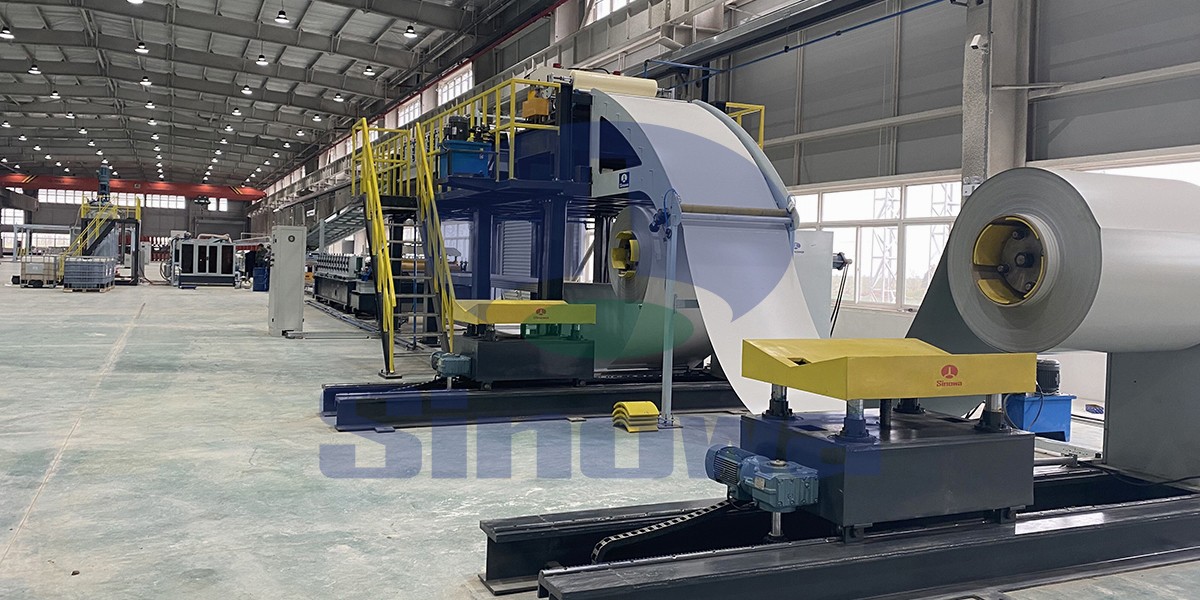
PIR Sandwich Panel Line
Sinowa is pir sandwich panel line manufacturer from china, dedicated to the research and development of high-end and high-efficiency, Sinowa is comprehensively taking the leading position in terms of efficiency, automation control level, HMI, environment protection and energy consumption, with subversive designs made in some critical technological fields to procure exceptional cost performance and customer-friendly experience for the entire pir sandwich panel line. The adoption of system integration technology and bus control technology accomplishes the full automatization of integrated and coordinated control of the entire pir sandwich panel line with accessible remote interactive communication. Ranking the first-class level in the world, it is currently the pir sandwich panel line in the market taking a comprehensive lead in high performance.
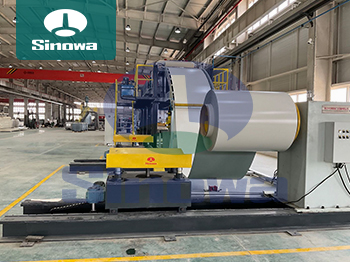
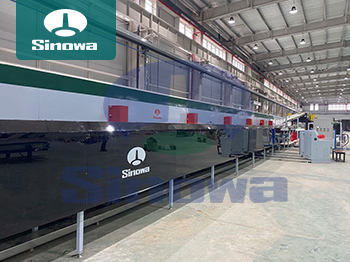
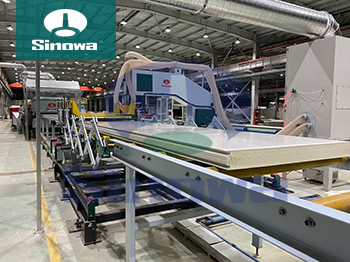
Based on the continuous technological pursuit, the pir sandwich panel line developed by Sinowa provides you with high-efficiency industrial value. Based on China's cost advantage and our hard-working technology concept, our pir sandwich panel line has a world-leading price-performance advantage. pir sandwich panel line can meet a variety of production needs of customers.The whole pir sandwich panel line design concept of modularization enables all our components to be integrated and combined at will. Our pir sandwich panel line can easily automate the production of roof sandwich panel, wall sandwich panel, cold storage sandwich panel and other products by different combination and configuration selection and siple switching. The inner core layer can be polyrethane or rock wool, glass wool, an so on.
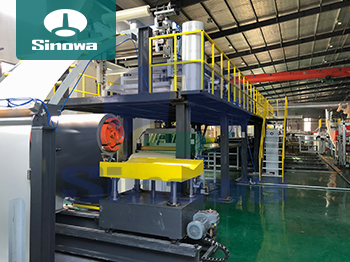


The pir sandwich panel line has high adaptability, which may produce various sandwich panel of the PU, PIR and rock wool systems. We may design various products according to the customer’s requirements, including various configurations, so as to meet their demands with flexible price system. Highly integrated and linked control system centralizes all control points at the main central center, achieving parameter linkage, fault self-diagnosis controlled by the whole line and shipping distance control. High-level automatic control system also saves the manpower and reduces the manpower loss for customers.


Concentrated system control is fully realized in the practice of concentrated process control so that the control system of all the movements of the parts in the pir sandwich panel line is integrated in one process control console with accessible remote communication to elevate the automation and reduce the allocated number of personnel for the assembly line. The main engine with modularized design achieves the precision operation of the pir sandwich panel line, stable and reliable quality, less part and maintenance loss. The whole pir sandwich panel line has over 40 innovative inventions, making our products have lots of unique features and the comprehensive performance of our pir sandwich panel line leading in the industry.


The precision servo hoisting mechanism employed by the main engine without hydraulic system makes the board thickness control flexible and the customer may conveniently change or adjust the board thickness. There will be not such troubles as hydraulic system adjustment, leakage, maintenance, etc. High-level energy saving and protection design makes the whole pir sandwich panel line possible to produce around the clock throughout the year and the customer will save huge budget. In addition, the isolated heat preservation room is constructed for warming the environment. The energy saving and protection design of our pir sandwich panel line may guarantee that the customer’s production line may be freely heated and produce in the main time to save more costs for customers.


The high-power low-consumption design quickens the reaction of the pir sandwich panel line while energy consumption is kept low. With the brand-new, fully sealed inner insulation design, the energy consumption is controlled at the minimum level to achieve the design objective of less than an hour for the insulation system to be activated from the room temperature above 5℃ to the production process temperature. The energy consumption is only 40% that of those similar products.
In the realm of modern construction and industrial manufacturing, the pursuit of efficiency, sustainability, and performance has driven continuous innovation in building materials and production technologies. Among these advancements, the PIR sandwich panel line stands out as a cornerstone of high-quality, energy-efficient panel production, catering to the diverse needs of industries ranging from cold storage and logistics to commercial construction and modular housing. Polyisocyanurate (PIR) sandwich panels, characterized by their exceptional thermal insulation, fire resistance, and structural stability, have become indispensable in contemporary building practices, and the production lines that manufacture these panels are engineered to translate raw materials into consistent, reliable products through a series of precision coordinated processes.
The fundamental essence of a PIR sandwich panel line lies in its ability to produce composite panels consisting of a rigid PIR foam core bonded between two outer facings, typically made of galvanized steel or aluminum. This three-layer structure, analogous to the design of an I-beam, leverages the strength of the outer facings to resist bending and lateral loads while the foam core absorbs shear forces, resulting in a product that is both lightweight and structurally robust. The production line is a integrated system of specialized equipment, each playing a crucial role in ensuring the quality, precision, and efficiency of the final product. From the initial processing of raw materials to the final cutting and packaging of finished panels, every stage of the production process is meticulously controlled to meet the stringent requirements of modern construction applications.
The production process of a PIR sandwich panel line begins with the preparation and processing of the facing materials. Typically, the outer facings start as large coils of metal sheets, which are first uncoiled using automated uncoiling equipment. This equipment is designed to handle coils of varying weights and widths, ensuring a smooth, consistent feed into subsequent processing stages. After uncoiling, the metal sheets pass through levelers to eliminate any wrinkles or deformations caused during storage and transportation, guaranteeing a flat surface that is essential for proper bonding with the PIR core. Depending on the specific application requirements, the metal sheets may also undergo additional processes such as cleaning or corona treatment to enhance the adhesion of the foam core, ensuring a strong, durable bond that withstands the test of time and environmental conditions.
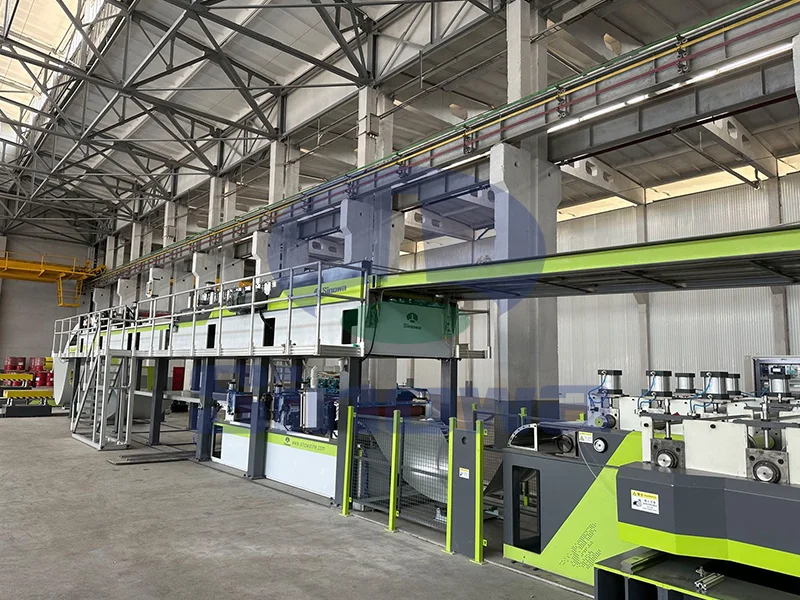
Following the preparation of the facing materials, the next critical stage in the production process is the roll forming of the outer sheets. Roll forming machines shape the metal sheets into specific profiles, including the edges and joints that enable the panels to interlock seamlessly during installation. These machines are equipped with multiple stations that gradually bend the metal sheets into the desired shape, with precision adjustments to ensure consistent dimensions across all panels. The profiles can be customized to suit different applications, such as wall panels or roof panels, with variations in ribbing, edging, and joint designs to enhance structural performance and weather resistance. For example, roof panels may feature trapezoidal profiles to facilitate water drainage, while wall panels may have flat or slightly ribbed surfaces for aesthetic appeal and impact resistance.
Parallel to the processing of the facing materials is the preparation of the PIR foam core, a stage that demands strict control over chemical ratios and mixing conditions. PIR foam is a thermosetting polymer produced by the reaction of isocyanates and polyols, enhanced with additives to improve fire resistance, thermal stability, and foam structure. The PIR sandwich panel line is equipped with high-pressure foaming machines that accurately meter and mix these chemical components. These machines feature advanced metering systems to ensure the correct ratio of ingredients, as any deviation can significantly affect the properties of the foam core, such as its thermal conductivity, compressive strength, and fire resistance. Additionally, the mixing heads of these machines are designed to achieve thorough homogenization of the chemicals, ensuring a uniform foam structure with consistent cell size, which is critical for the panel's insulation performance and structural integrity.
The foaming process is closely integrated with the lamination of the panel components, forming the core of the production line's operation. After the outer facings have been roll formed, they are fed into a double belt press system, where the PIR foam mixture is injected between the two sheets. The double belt press consists of two parallel, continuously moving conveyor belts that apply uniform pressure and temperature to the composite structure as the foam expands and cures. The temperature and pressure within the press are carefully controlled to facilitate the optimal expansion of the foam and the complete curing of the adhesive bond between the foam core and the outer facings. This controlled environment ensures that the foam core achieves its maximum density and thermal insulation properties, while also guaranteeing the flatness and planarity of the finished panel. The conveyor belts of the double belt press are independently heated and insulated, allowing for precise temperature regulation throughout the lamination process, which is essential for consistent product quality.
Once the composite panel exits the double belt press, it enters the cooling and solidification stage. At this point, the PIR foam core is partially cured but still requires additional time to achieve full structural stability. The panels pass through a cooling station, where controlled air flow or cooling plates accelerate the cooling process without causing thermal shock, which could lead to cracking or delamination. This slow, controlled cooling ensures that the foam core and outer facings bond firmly together, enhancing the panel's durability and long-term performance. After cooling, the panels may undergo a turning process to inspect both sides and prepare them for the cutting stage.
The cutting stage of the PIR sandwich panel line is responsible for trimming the continuous panel into individual units of specified lengths. This is typically accomplished using flying saw cutting machines, which are capable of cutting the moving panel without interrupting the production process. These machines are equipped with sharp, durable blades—either band saws or disk blades—that make clean, precise cuts, ensuring that the panel ends are straight and free of burrs. Many flying saw machines feature a 180-degree rotating mechanism, allowing them to make cuts in both directions, which is particularly useful for producing panels of short lengths while maintaining high production speeds. The cutting parameters, such as length and cutting speed, are controlled by automated systems, ensuring accuracy and consistency across all finished panels.
After cutting, the finished panels move to the handling and packaging stage, where they are sorted, stacked, and wrapped to protect them during transportation and storage. The handling system may include automated stacking equipment that arranges the panels in neat piles of specified quantities, reducing the need for manual labor and minimizing the risk of damage. The panels are then wrapped in protective film or packaging material to prevent scratches, moisture absorption, and contamination. Some production lines also integrate dust collection systems throughout the handling process, particularly when dealing with metal facings or foam trimming, to maintain a clean working environment and comply with environmental regulations.
One of the key advantages of modern PIR sandwich panel lines is their high degree of automation and customization. Advanced production lines are equipped with programmable logic controllers (PLCs) and human-machine interfaces (HMIs) that allow operators to monitor and adjust every stage of the production process in real time. These control systems enable precise regulation of parameters such as foam mixing ratios, press temperature and pressure, and cutting lengths, ensuring consistent product quality even when producing panels of varying specifications. Additionally, the lines can be customized to accommodate different panel thicknesses, widths, and facing materials, making them versatile enough to meet the needs of a wide range of applications. Panel thicknesses typically range from 30mm to 250mm, while widths can be up to 1200mm or more, depending on the specific configuration of the production line.
The performance of the panels produced by these lines is directly influenced by the design and operation of the production equipment. For instance, the double belt press system plays a critical role in ensuring the flatness and planarity of the panels, which is essential for easy installation and optimal thermal performance. A well-designed press system minimizes variations in panel thickness, ensuring that the thermal insulation properties are consistent across the entire surface of the panel. Similarly, the precision of the foaming machines ensures that the PIR core has a closed-cell structure with low thermal conductivity, typically below 0.023 W/(m·K), making the panels highly energy-efficient. This thermal efficiency translates into significant energy savings for buildings, reducing heating and cooling costs and lowering carbon emissions.
Fire resistance is another key performance attribute of PIR sandwich panels, and the production line is engineered to enhance this property through strict control of the foam formulation and curing process. PIR foam is inherently fire-resistant due to its thermosetting nature, which means it does not melt when heated but instead forms a char layer that inhibits flame spread. The production line's foaming machines ensure that the foam is formulated with the correct proportion of fire-retardant additives, and the curing process in the double belt press ensures that the foam achieves its maximum fire resistance rating. This makes PIR sandwich panels suitable for use in buildings where fire safety is a critical concern, such as hospitals, high-rises, and industrial facilities.
The applications of panels produced by PIR sandwich panel lines are diverse and far-reaching, reflecting the versatility of both the product and the production technology. In the cold storage and refrigeration industry, PIR sandwich panels are the material of choice due to their exceptional thermal insulation properties, which help maintain stable low temperatures while minimizing energy consumption. Warehouses and logistics centers also benefit from these panels, as they provide fast installation, thermal efficiency, and structural stability, enabling the construction of large, functional storage spaces in a short timeframe. Commercial buildings, such as shopping malls, office complexes, and sports facilities, utilize PIR sandwich panels for their exterior cladding and roofing, combining aesthetic appeal with energy efficiency and durability.
Modular housing is another growing application area for PIR sandwich panels, and the production lines that manufacture these panels are well-suited to meet the demands of this industry. Modular construction requires precise, standardized components that can be quickly assembled on-site, and PIR sandwich panels produced by automated lines meet these requirements perfectly. The lightweight nature of the panels also reduces the load on the building's foundation, lowering construction costs and expanding the range of viable building sites. Additionally, the panels' moisture resistance prevents mold growth and corrosion, ensuring the longevity of modular structures even in humid environments.
Sustainability has become a key consideration in modern manufacturing, and PIR sandwich panel lines are evolving to meet the growing demand for eco-friendly production practices. Many modern lines are designed with energy-efficient features, such as insulated press systems and variable-speed drives, which reduce energy consumption during production. The PIR foam core itself is often formulated without harmful substances such as HCFCs, making it environmentally friendly. Additionally, the production process minimizes material waste through precise cutting and efficient use of raw materials, and the panels themselves are recyclable at the end of their service life, further reducing their environmental impact.
The future development of PIR sandwich panel lines is likely to be driven by advancements in automation, material science, and digital technology. Further improvements in artificial intelligence (AI) and machine learning could enable predictive maintenance of production equipment, reducing downtime and improving overall efficiency. Innovations in foam formulations may lead to even higher thermal efficiency and fire resistance, expanding the applications of PIR sandwich panels to new industries. Additionally, the integration of digital twin technology could allow for real-time simulation and optimization of the production process, ensuring maximum efficiency and product quality.
In conclusion, the PIR sandwich panel line is a sophisticated, integrated production system that plays a vital role in the modern construction and manufacturing landscape. Through a series of precision coordinated processes—from raw material preparation to finished product packaging—these lines produce high-quality PIR sandwich panels that offer exceptional thermal insulation, fire resistance, and structural stability. The automation, customization, and efficiency of these production lines make them capable of meeting the diverse needs of a wide range of industries, from cold storage and logistics to commercial construction and modular housing. As the demand for energy-efficient, sustainable building materials continues to grow, the PIR sandwich panel line will remain at the forefront of innovation, driving advancements in both production technology and product performance. Whether in the construction of a large warehouse, a state-of-the-art cold storage facility, or a modular home, the panels produced by these lines contribute to the creation of buildings that are safer, more efficient, and more sustainable, shaping the future of modern construction.
《PIR Sandwich Panel Line》Update Date: 2026/1/19
URL: https://www.sinowamachine.cn/en/tag/pir-sandwich-panel-line.html
- PU Sandwich Panel Making Machine
- Rockwool Sandwich Panel Production Line
- PU Sandwich Panel Machine
- PU Sandwich Panel Production Line
- Mineral Wool Sandwich Panel Machine
- PUF Panel Machine
- Rock Wool Sandwich Panel Line
- Sandwich Panel Machines
- Sandwich Panel Lines
- Rockwool Sandwich Panel Machine
- Rockwool Sandwich Panel Line
- PU Sandwich Panel Line
- PU Panel Machine
- Foam Forming Machine
- Continuous Sandwich Panel Line
- Continuous PU Sandwich Panel Line
- PIR Sandwich Panel Line
- Polyurethane Sandwich Panel Line
- Automatic PU Sandwich Panel Production Line
- PU Foam Sandwich Panel Production Line