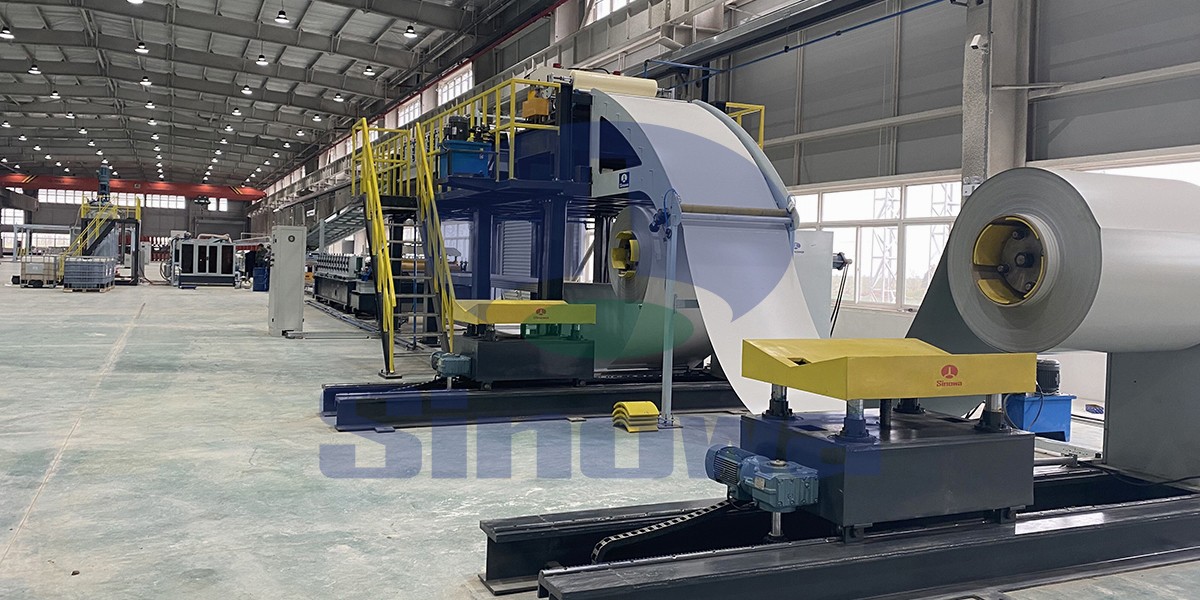
Sandwich Panel Equipment
Sinowa is sandwich panel equipment manufacturer from china, dedicated to the research and development of high-end and high-efficiency, Sinowa is comprehensively taking the leading position in terms of efficiency, automation control level, HMI, environment protection and energy consumption, with subversive designs made in some critical technological fields to procure exceptional cost performance and customer-friendly experience for the entire sandwich panel equipment. The adoption of system integration technology and bus control technology accomplishes the full automatization of integrated and coordinated control of the entire sandwich panel equipment with accessible remote interactive communication. Ranking the first-class level in the world, it is currently the sandwich panel equipment in the market taking a comprehensive lead in high performance.
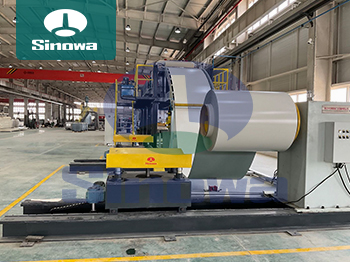
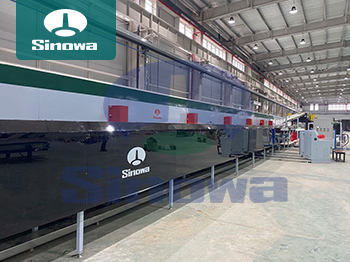
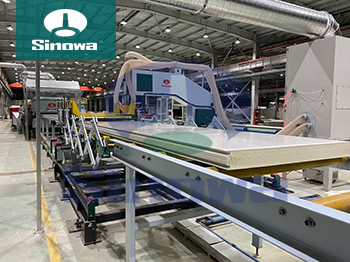
Based on the continuous technological pursuit, the sandwich panel equipment developed by Sinowa provides you with high-efficiency industrial value. Based on China's cost advantage and our hard-working technology concept, our sandwich panel equipment has a world-leading price-performance advantage. sandwich panel equipment can meet a variety of production needs of customers.The whole sandwich panel equipment design concept of modularization enables all our components to be integrated and combined at will. Our sandwich panel equipment can easily automate the production of roof sandwich panel, wall sandwich panel, cold storage sandwich panel and other products by different combination and configuration selection and siple switching. The inner core layer can be polyrethane or rock wool, glass wool, an so on.
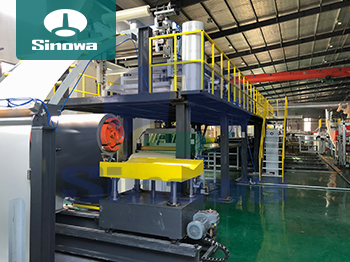


The sandwich panel equipment has high adaptability, which may produce various sandwich panel of the PU, PIR and rock wool systems. We may design various products according to the customer’s requirements, including various configurations, so as to meet their demands with flexible price system. Highly integrated and linked control system centralizes all control points at the main central center, achieving parameter linkage, fault self-diagnosis controlled by the whole line and shipping distance control. High-level automatic control system also saves the manpower and reduces the manpower loss for customers.


Concentrated system control is fully realized in the practice of concentrated process control so that the control system of all the movements of the parts in the sandwich panel equipment is integrated in one process control console with accessible remote communication to elevate the automation and reduce the allocated number of personnel for the assembly line. The main engine with modularized design achieves the precision operation of the sandwich panel equipment, stable and reliable quality, less part and maintenance loss. The whole sandwich panel equipment has over 40 innovative inventions, making our products have lots of unique features and the comprehensive performance of our sandwich panel equipment leading in the industry.


The precision servo hoisting mechanism employed by the main engine without hydraulic system makes the board thickness control flexible and the customer may conveniently change or adjust the board thickness. There will be not such troubles as hydraulic system adjustment, leakage, maintenance, etc. High-level energy saving and protection design makes the whole sandwich panel equipment possible to produce around the clock throughout the year and the customer will save huge budget. In addition, the isolated heat preservation room is constructed for warming the environment. The energy saving and protection design of our sandwich panel equipment may guarantee that the customer’s production line may be freely heated and produce in the main time to save more costs for customers.


The high-power low-consumption design quickens the reaction of the sandwich panel equipment while energy consumption is kept low. With the brand-new, fully sealed inner insulation design, the energy consumption is controlled at the minimum level to achieve the design objective of less than an hour for the insulation system to be activated from the room temperature above 5℃ to the production process temperature. The energy consumption is only 40% that of those similar products.
In the realm of modern industrial manufacturing and construction, sandwich panels have emerged as a pivotal material, celebrated for their exceptional combination of lightweight properties, thermal insulation, structural rigidity, and rapid installation capabilities. Behind the mass production of these versatile panels lies a sophisticated ecosystem of sandwich panel equipment, which has evolved dramatically over the decades to meet the growing demands for efficiency, customization, and sustainability. From basic manual assembly stations to fully automated production lines, sandwich panel equipment has become a cornerstone of industries ranging from construction and cold storage to automotive and aerospace.
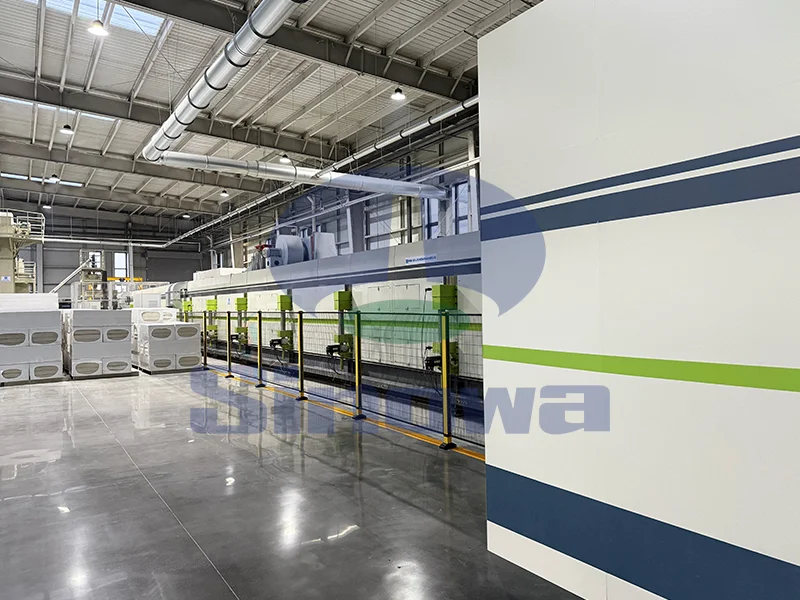
1. Classification of Sandwich Panel Equipment: Tailoring to Diverse Production Needs
Sandwich panel equipment encompasses a wide spectrum of machinery, each engineered to address specific production requirements, material combinations, and output scales. The classification of such equipment is primarily based on the production process, core material type, and level of automation. Understanding these categories is essential for manufacturers to align their equipment choices with their product portfolios and business objectives.
1.1 By Production Process: Continuous vs. Batch Production Lines
Continuous production lines represent the mainstream of large-scale sandwich panel manufacturing, enabling uninterrupted production of panels with consistent quality and high throughput. These lines are particularly suitable for mass-produced products such as roofing panels, wall panels, and cold storage insulation panels. The continuous process ensures that raw materials are fed, processed, bonded, and cut in a seamless flow, minimizing downtime and material waste. Key features of continuous lines include automated material uncoiling, precision roll forming, continuous core material injection or lamination, and computer-controlled cutting systems.
In contrast, batch production equipment is designed for small-batch, customized production scenarios, such as specialized panels for aerospace components, high-end architectural facades, or unique-shaped panels for modular housing. Batch lines offer greater flexibility in adjusting process parameters, accommodating different material thicknesses, and integrating custom profiling or punching operations. While their throughput is lower than continuous lines, batch equipment excels in meeting the diverse needs of niche markets where product customization and flexibility take precedence over volume.
1.2 By Core Material Type: Adapting to Material Properties
The core material of sandwich panels—ranging from polyurethane (PU) and polyisocyanurate (PIR) foam to polystyrene (EPS), mineral wool, and honeycomb structures—dictates the design and functionality of the production equipment. Each core material has distinct physical and chemical properties, requiring specialized processing techniques.
PU/PIR foam core equipment is equipped with high-pressure foaming systems that precisely mix and inject liquid chemical components into the gap between two surface materials. These systems must maintain strict control over temperature, pressure, and mixing ratios to ensure uniform foam expansion and bonding strength. Additionally, cooling and curing zones are integrated to facilitate the solidification of the foam core before cutting.
EPS foam core equipment, on the other hand, typically uses pre-formed foam boards, requiring machinery focused on lamination and cutting. The key processes include surface material uncoiling, adhesive application, foam board feeding, lamination under controlled pressure, and precision trimming. For mineral wool core panels, the equipment must handle the fibrous nature of the core material, incorporating dust collection systems and specialized conveying mechanisms to prevent material loss and ensure worker safety.
1.3 By Automation Level: Manual, Semi-Automated, and Fully Automated Systems
Manual and semi-automated equipment is often used in small-scale workshops or emerging markets where initial investment constraints exist. Manual systems rely heavily on human labor for material handling, alignment, and cutting, resulting in lower production efficiency and higher variability in product quality. Semi-automated systems integrate key automated components such as automatic uncoilers or computerized cutting machines, reducing labor intensity while maintaining some flexibility.
Fully automated systems represent the highest level of technological advancement in sandwich panel equipment, leveraging computer numerical control (CNC) systems, robotics, and real-time monitoring to streamline the entire production process. These systems can automatically adjust process parameters based on material type and product specifications, perform quality inspections in real time, and even handle stacking and packaging of finished products. The adoption of fully automated equipment not only enhances production efficiency and quality consistency but also reduces labor costs and environmental impact.
2. Core Working Mechanisms of Sandwich Panel Equipment
Regardless of the type, sandwich panel equipment operates on a set of core working principles centered on material preparation, lamination/bonding, shaping, and finishing. The integration of these processes ensures that the surface materials and core are combined into a structurally sound and high-performance composite panel. Below is a detailed breakdown of the key working stages common to most sandwich panel production lines.
2.1 Material Preparation Stage
The material preparation stage is the foundation of high-quality sandwich panel production, involving the handling and preprocessing of surface materials and core materials. Surface materials—commonly galvanized steel, aluminum, fiber-reinforced polyester (FRP), or OSB boards—are typically supplied in coil form for continuous production lines. Uncoiling equipment is used to feed the coils into the production line, with tension control systems ensuring stable and uniform feeding to prevent material deformation.
Preprocessing of surface materials may include cleaning, degreasing, and profiling. Cleaning systems remove dust, oil, and other contaminants to improve the bonding strength between the surface material and the core. Profiling equipment, such as roll forming machines, shapes the surface materials into desired profiles (e.g., corrugated, trapezoidal) to enhance the structural strength of the final panel. For batch production, surface materials may be cut into specific sizes before lamination.
Core material preparation varies based on the core type. For foam cores (PU/PIR), raw chemical components are stored in insulated tanks and heated or cooled to the optimal temperature for mixing. For pre-formed cores (EPS, mineral wool), the material is cut into panels of the required thickness and size using precision cutting equipment, such as CNC foam cutters or band saws.
2.2 Lamination and Bonding Stage
The lamination and bonding stage is critical to ensuring the structural integrity and performance of the sandwich panel. This stage involves combining the preprocessed surface materials with the core material, using either adhesive bonding or in-situ foaming (for foam cores).
For adhesive bonding, precision adhesive application systems are used to apply the adhesive to the surface materials or core. These systems can be in the form of roller coaters, spray guns, or dot application devices, depending on the adhesive type and material compatibility. The adhesive is applied in a uniform layer to ensure consistent bonding strength across the entire panel surface. After adhesive application, the surface materials and core are fed into a lamination press or double-track conveyor system, which applies controlled pressure and temperature to facilitate adhesive curing.
For in-situ foaming (PU/PIR cores), the bonding process is integrated with core formation. High-pressure mixing heads inject the mixed foam components between the two surface materials as they move through the production line. The foam expands rapidly to fill the gap between the surface materials, adhering to both surfaces as it cures. Double-track conveyor systems with adjustable spacing are used to control the thickness of the foam core, while temperature control systems ensure optimal curing conditions.
2.3 Shaping and Finishing Stage
After lamination and bonding, the composite panel undergoes shaping and finishing processes to meet the final product specifications. Cutting equipment is used to cut the continuous panel into the required length, with CNC cutting systems ensuring high precision. Common cutting technologies include circular saws, plasma cutters, and fiber laser cutters. Fiber laser cutters are particularly suitable for thin metal surface materials, offering high cutting speed, precision, and clean edges.
Finishing processes may include edge trimming, chamfering, and surface treatment. Edge trimming removes any irregularities from the panel edges, ensuring uniform dimensions and a neat appearance. Chamfering equipment creates beveled edges to facilitate installation and improve safety. Surface treatment processes, such as embossing or painting, may be integrated into the production line to enhance the aesthetic appeal and durability of the panel.
Finally, the finished panels are stacked and packaged using automated stacking equipment and packaging machines. Stacking equipment ensures that the panels are stacked neatly without damage, while packaging machines wrap the stacks in protective film to prevent moisture, dust, and scratches during transportation and storage.
3. Key Components of Sandwich Panel Equipment: Ensuring Precision and Efficiency
Sandwich panel equipment is composed of several key components, each playing a vital role in ensuring the efficiency, precision, and reliability of the production process. These components work in harmony to deliver high-quality panels consistently, even in high-volume production environments.
3.1 Uncoiling and Tension Control Systems
Uncoiling systems are essential for continuous production lines that use coil-fed surface materials. These systems consist of a mandrel, hydraulic or pneumatic expansion mechanisms, and braking systems. The mandrel holds the coil, while the expansion mechanisms secure the coil to prevent slippage during uncoiling. Braking systems control the tension of the material as it is fed into the production line, ensuring stable feeding and preventing material stretching or deformation.
3.2 Roll Forming Machines
Roll forming machines are used to shape surface materials into desired profiles. These machines consist of a series of rolling stands arranged in tandem, each with a set of rollers that gradually bend the material into the desired shape. The rollers are precision-engineered to ensure consistent profile dimensions and surface quality. Roll forming machines can be adjusted to produce different profiles by changing the roller sets, making them suitable for a wide range of panel designs.
3.3 Adhesive Application and Foaming Systems
Adhesive application systems are critical for bonding pre-formed cores to surface materials. These systems include adhesive storage tanks, pumps, and application devices. The pumps ensure a consistent flow of adhesive, while the application devices (rollers, sprays) ensure uniform application. For in-situ foaming, high-pressure mixing heads are the core component, ensuring thorough mixing of the foam components and precise injection between the surface materials.
3.4 Lamination and Curing Systems
Lamination systems, such as double-track conveyors and lamination presses, apply controlled pressure to the surface materials and core to ensure intimate contact and bonding. Double-track conveyors use upper and lower tracks to sandwich the panel as it moves through the line, with adjustable pressure and speed settings to accommodate different material combinations. Curing systems, such as heated chambers or infrared heaters, are used to accelerate adhesive curing or foam solidification, reducing production cycle time.
3.5 CNC Cutting and Trimming Equipment
CNC cutting equipment ensures precise cutting of the continuous panel into the required length and shape. These systems are controlled by computer programs, allowing for quick adjustments to cutting dimensions. Laser cutting machines offer high precision and clean cuts, making them ideal for thin metal surfaces, while plasma cutters are suitable for thicker metal materials. Trimming equipment removes excess material from the panel edges, ensuring uniform dimensions and a smooth finish.
3.6 Control and Monitoring Systems
Modern sandwich panel equipment is equipped with advanced control and monitoring systems, typically based on PLC (Programmable Logic Controller) or industrial PC platforms. These systems control all aspects of the production process, including material feeding, temperature, pressure, and cutting dimensions. Real-time monitoring systems track key process parameters, providing alerts for deviations from the set values to ensure product quality. Some advanced systems also integrate data collection and analysis functions, enabling manufacturers to optimize production efficiency and reduce waste.
4. Application-Driven Adaptations of Sandwich Panel Equipment
The versatility of sandwich panels has led to their adoption across a wide range of industries, each with unique requirements that drive adaptations in sandwich panel equipment. Equipment manufacturers tailor their designs to meet the specific needs of these applications, ensuring that the produced panels meet the performance, quality, and regulatory requirements of each industry.
4.1 Construction Industry
The construction industry is the largest consumer of sandwich panels, using them for roofing, walls, partitions, and modular housing. Sandwich panel equipment for construction applications is designed to produce large-volume, cost-effective panels with excellent thermal insulation and structural strength. Continuous production lines are the norm, with roll forming equipment capable of producing corrugated or trapezoidal profiles for roofing and wall panels. For cold storage construction, equipment is adapted to produce PU/PIR core panels with high thermal insulation properties, incorporating precise temperature control systems to ensure foam quality.
Modular housing applications require equipment that can produce panels of specific sizes and shapes, with integrated punching or profiling for window and door openings. Batch production lines or hybrid continuous-batch lines are often used for these applications, offering the flexibility to accommodate custom designs.
4.2 Automotive and Transportation Industry
In the automotive and transportation industry, sandwich panels are used for vehicle bodies, trailers, and refrigerated transport units. Equipment for these applications is designed to produce lightweight, high-strength panels with tight dimensional tolerances. Honeycomb core panels are commonly used in this industry, requiring specialized equipment for cutting and laminating honeycomb cores with lightweight surface materials (e.g., aluminum, FRP).
Refrigerated transport units require panels with excellent thermal insulation and moisture resistance, driving the use of PU/PIR core equipment with advanced foaming and curing systems. Equipment for automotive applications also incorporates precision cutting and trimming systems to ensure that panels fit seamlessly into vehicle assembly processes.
4.3 Aerospace and Specialized Industries
The aerospace industry uses sandwich panels for aircraft interiors, such as cabin walls and flooring, requiring panels that are lightweight, fire-resistant, and high-strength. Equipment for aerospace applications is highly specialized, with batch production lines that can handle advanced materials such as carbon fiber-reinforced polymers (CFRP) and ceramic matrix composites. These lines incorporate precision lamination systems, vacuum bagging, and autoclave curing to ensure the highest quality bonds and material properties.
Specialized industries, such as cleanrooms and laboratories, require sandwich panels with smooth, non-porous surfaces and high airtightness. Equipment for these applications is adapted to produce panels with FRP or stainless steel surface materials, with precise lamination systems to ensure airtight bonding and minimal surface defects.
5. Technological Advancements Shaping the Future of Sandwich Panel Equipment
The sandwich panel equipment industry is undergoing continuous innovation, driven by the growing demand for sustainability, efficiency, and customization. Several key technological advancements are shaping the future of this equipment, enabling manufacturers to produce higher-quality panels with lower environmental impact and greater flexibility.
5.1 Automation and Smart Manufacturing
The integration of automation and smart manufacturing technologies is a major trend in sandwich panel equipment. Fully automated lines with robotics for material handling, stacking, and packaging are becoming increasingly common, reducing labor costs and improving production efficiency. Smart control systems, powered by artificial intelligence (AI) and machine learning, enable real-time process optimization, predictive maintenance, and quality control.
For example, AI-powered vision systems can detect surface defects and bonding irregularities, triggering automatic adjustments to process parameters or alerting operators to potential issues. Predictive maintenance systems monitor equipment performance data to identify potential failures before they occur, minimizing downtime and extending equipment lifespan.
5.2 Sustainability and Energy Efficiency
Sustainability is a key driver of innovation in sandwich panel equipment, with manufacturers focusing on reducing energy consumption, material waste, and environmental impact. Energy-efficient motors, variable frequency drives (VFDs), and heat recovery systems are integrated into equipment to reduce energy use. For foam core equipment, low-VOC (volatile organic compound) foaming agents and adhesives are being adopted to minimize environmental pollution.
Material waste reduction is achieved through precision cutting systems and optimized process parameters, ensuring that raw materials are used efficiently. Some advanced equipment also incorporates recycling systems for excess foam or scrap material, further reducing environmental impact.
5.3 Customization and Flexibility
The growing demand for customized sandwich panels is driving the development of more flexible equipment. Modular production lines, which can be easily reconfigured to handle different material combinations, panel sizes, and profiles, are becoming increasingly popular. Quick-changeover systems for roll forming rollers, adhesive application devices, and cutting tools enable manufacturers to switch between product types with minimal downtime.
CNC technology plays a key role in enhancing customization capabilities, allowing for precise cutting of complex shapes and profiles. 3D scanning and modeling technologies are also being integrated into equipment design, enabling manufacturers to create custom panels based on digital models.
5.4 Advanced Material Compatibility
As new materials emerge in the sandwich panel industry, equipment manufacturers are adapting their designs to handle these materials. For example, equipment capable of processing recycled core materials, bio-based foams, and advanced composite surface materials is being developed. These adaptations include specialized mixing heads for bio-based foams, reinforced lamination systems for high-strength composites, and dust collection systems for recycled materials.
6. Key Considerations in Selecting and Operating Sandwich Panel Equipment
Selecting the right sandwich panel equipment is critical for manufacturers to achieve their production goals, ensure product quality, and maintain competitiveness. Several key factors should be considered when evaluating and selecting equipment, as well as during operation.
6.1 Production Requirements
Manufacturers should first define their production requirements, including output volume, product range, and customization needs. For high-volume, standard products, continuous production lines are the most cost-effective choice. For small-batch, customized products, batch lines or modular lines offer greater flexibility. The choice of equipment should also align with the core and surface materials to be used, ensuring that the equipment is compatible with the material properties.
6.2 Quality and Precision
Product quality requirements should guide the selection of equipment components, such as cutting systems, lamination presses, and control systems. High-precision applications, such as aerospace or automotive components, require equipment with tight tolerances and advanced quality control systems. Manufacturers should evaluate the equipment's repeatability, accuracy, and consistency in producing panels that meet the required specifications.
6.3 Cost and Return on Investment (ROI)
The initial investment cost of sandwich panel equipment varies significantly based on the level of automation, production capacity, and specialized features. Manufacturers should conduct a comprehensive cost-benefit analysis, considering not only the initial investment but also operating costs (energy, labor, maintenance), material waste reduction, and production efficiency. A higher initial investment in fully automated equipment may yield a higher ROI in the long run due to lower labor costs and higher throughput.
6.4 Maintenance and Support
Regular maintenance is essential to ensure the reliable operation of sandwich panel equipment. Manufacturers should select equipment with easy-to-maintain components and access to spare parts. Additionally, choosing equipment suppliers that offer comprehensive after-sales support, including installation, training, and technical assistance, can minimize downtime and ensure optimal equipment performance.
6.5 Safety and Regulatory Compliance
Safety is a critical consideration in the operation of sandwich panel equipment, particularly for equipment handling chemicals (foam components) or high-pressure systems. Equipment should be equipped with safety features such as emergency stop buttons, safety guards, and gas detection systems. Manufacturers should also ensure that the equipment complies with local and international safety and environmental regulations, such as those governing emissions of VOCs and noise levels.
7. Conclusion
Sandwich panel equipment has evolved from simple manual tools to sophisticated, automated systems that drive the mass production of high-performance sandwich panels across diverse industries. Its classification based on production process, material type, and automation level reflects the diverse needs of manufacturers, while its core working mechanisms and components ensure precision, efficiency, and product quality. Application-driven adaptations enable the equipment to meet the unique requirements of construction, automotive, aerospace, and other industries, while technological advancements in automation, sustainability, and customization are shaping its future.
Selecting and operating the right sandwich panel equipment requires careful consideration of production requirements, quality standards, cost, maintenance, and safety. As the demand for lightweight, energy-efficient, and sustainable materials continues to grow, the sandwich panel equipment industry will continue to innovate, delivering more advanced, flexible, and environmentally friendly solutions. In this context, sandwich panel equipment will remain a vital enabler of modern manufacturing, supporting the development of more efficient, sustainable, and resilient built environments and industrial products.
《Sandwich Panel Equipment》Update Date: 2026/1/8
URL: https://www.sinowamachine.cn/en/tag/sandwich-panel-equipment.html
- PU Sandwich Panel Making Machine
- Rockwool Sandwich Panel Production Line
- PU Sandwich Panel Machine
- PU Sandwich Panel Production Line
- Mineral Wool Sandwich Panel Machine
- PUF Panel Machine
- Rock Wool Sandwich Panel Line
- Sandwich Panel Machines
- Sandwich Panel Lines
- Rockwool Sandwich Panel Machine
- Rockwool Sandwich Panel Line
- PU Sandwich Panel Line
- PU Panel Machine
- Foam Forming Machine
- Continuous Sandwich Panel Line
- Continuous PU Sandwich Panel Line
- PIR Sandwich Panel Line
- Polyurethane Sandwich Panel Line
- Automatic PU Sandwich Panel Production Line
- PU Foam Sandwich Panel Production Line