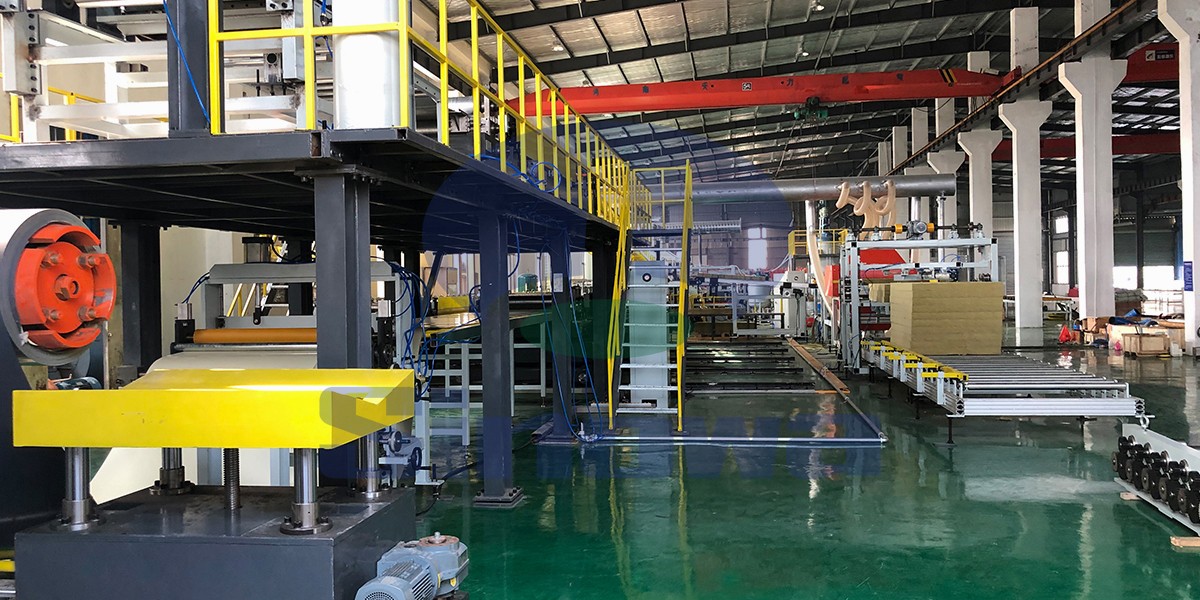
Rockwool Sandwich Panel Line
Sinowa is rockwool sandwich panel line manufacturer from china, dedicated to the research and development of high-end and high-efficiency, Sinowa is comprehensively taking the leading position in terms of efficiency, automation control level, HMI, environment protection and energy consumption, with subversive designs made in some critical technological fields to procure exceptional cost performance and customer-friendly experience for the entire rockwool sandwich panel line. The adoption of system integration technology and bus control technology accomplishes the full automatization of integrated and coordinated control of the entire rockwool sandwich panel line with accessible remote interactive communication. Ranking the first-class level in the world, it is currently the rockwool sandwich panel line in the market taking a comprehensive lead in high performance.
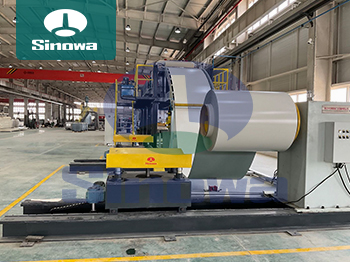
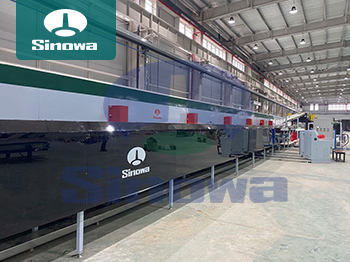
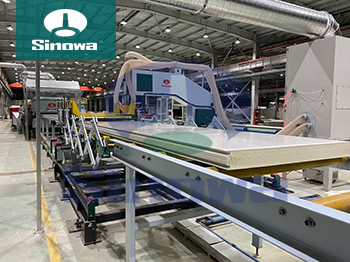
Based on the continuous technological pursuit, the rockwool sandwich panel line developed by Sinowa provides you with high-efficiency industrial value. Based on China's cost advantage and our hard-working technology concept, our rockwool sandwich panel line has a world-leading price-performance advantage. rockwool sandwich panel line can meet a variety of production needs of customers.The whole rockwool sandwich panel line design concept of modularization enables all our components to be integrated and combined at will. Our rockwool sandwich panel line can easily automate the production of roof sandwich panel, wall sandwich panel, cold storage sandwich panel and other products by different combination and configuration selection and siple switching. The inner core layer can be polyrethane or rock wool, glass wool, an so on.
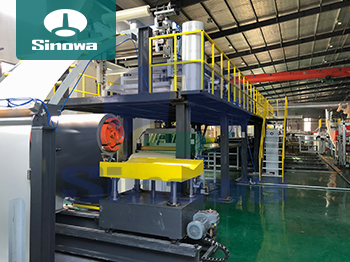


The rockwool sandwich panel line has high adaptability, which may produce various sandwich panel of the PU, PIR and rock wool systems. We may design various products according to the customer’s requirements, including various configurations, so as to meet their demands with flexible price system. Highly integrated and linked control system centralizes all control points at the main central center, achieving parameter linkage, fault self-diagnosis controlled by the whole line and shipping distance control. High-level automatic control system also saves the manpower and reduces the manpower loss for customers.


Concentrated system control is fully realized in the practice of concentrated process control so that the control system of all the movements of the parts in the rockwool sandwich panel line is integrated in one process control console with accessible remote communication to elevate the automation and reduce the allocated number of personnel for the assembly line. The main engine with modularized design achieves the precision operation of the rockwool sandwich panel line, stable and reliable quality, less part and maintenance loss. The whole rockwool sandwich panel line has over 40 innovative inventions, making our products have lots of unique features and the comprehensive performance of our rockwool sandwich panel line leading in the industry.


The precision servo hoisting mechanism employed by the main engine without hydraulic system makes the board thickness control flexible and the customer may conveniently change or adjust the board thickness. There will be not such troubles as hydraulic system adjustment, leakage, maintenance, etc. High-level energy saving and protection design makes the whole rockwool sandwich panel line possible to produce around the clock throughout the year and the customer will save huge budget. In addition, the isolated heat preservation room is constructed for warming the environment. The energy saving and protection design of our rockwool sandwich panel line may guarantee that the customer’s production line may be freely heated and produce in the main time to save more costs for customers.


The high-power low-consumption design quickens the reaction of the rockwool sandwich panel line while energy consumption is kept low. With the brand-new, fully sealed inner insulation design, the energy consumption is controlled at the minimum level to achieve the design objective of less than an hour for the insulation system to be activated from the room temperature above 5℃ to the production process temperature. The energy consumption is only 40% that of those similar products.
In the evolving landscape of global construction, the demand for materials that balance durability, energy efficiency, and safety has never been higher. Rockwool sandwich panels have emerged as a cornerstone of modern building practices, thanks to their exceptional thermal insulation, fire resistance, and acoustic performance. At the heart of the mass production of these high-performance panels lies the rockwool sandwich panel line—a sophisticated integration of mechanical engineering, automated control systems, and material science.
The rockwool sandwich panel line is more than a sequence of manufacturing equipment; it is a synchronized system designed to transform raw materials into precision-engineered panels with consistent quality. Unlike traditional discrete manufacturing processes, modern lines operate continuously, minimizing material waste and maximizing production efficiency. The fundamental objective of these lines is to bond two outer facing materials (typically steel or aluminum sheets) to a rockwool core—an inert, non-combustible material derived from volcanic rock or basalt—through a combination of mechanical pressing and adhesive bonding. The result is a composite panel that leverages the structural strength of the facing materials and the insulating properties of the rockwool core, making it suitable for a wide range of construction applications.

Core Components of a Rockwool Sandwich Panel Line
A fully integrated rockwool sandwich panel line comprises several interconnected modules, each performing a critical function in the production workflow. These modules are designed to work in harmony, with automated controls ensuring seamless transition between processes. Below is a detailed breakdown of the key components:
Uncoiling and Decoiling System
The production process begins with the uncoiling system, which handles the outer facing materials—usually pre-painted steel coils or aluminum coils. This system consists of hydraulic uncoilers equipped with tension control mechanisms to ensure the smooth, consistent feeding of the coil material. Tension control is crucial here, as excessive or uneven tension can cause deformation of the facing sheets, compromising the final panel’s dimensional accuracy. The uncoiling system is often paired with a decoiling unit that straightens the coiled material, removing any curvature introduced during storage or transportation. Some advanced lines also include a surface cleaning module to remove dust, oil, or debris from the facing sheets, ensuring optimal adhesion with the rockwool core.Rockwool Core Preparation and Feeding Module
The rockwool core is the defining element of the sandwich panel, and its preparation is a critical stage in the production process. The rockwool core preparation module typically includes a fiberization unit, cotton collection system, and pendulum cotton spreading machine. Raw rockwool or basalt is first melted at high temperatures and then fiberized using centrifugal force, creating fine, interlocking fibers. These fibers are then collected and formed into a continuous mat via the cotton collection system. The pendulum cotton spreading machine ensures uniform distribution of the rockwool fibers, creating a core with consistent density—a key factor in the panel’s insulation and structural performance. The thickness of the rockwool core can be adjusted according to production requirements, typically ranging from 30mm to 150mm to accommodate different thermal insulation needs.Adhesive Application System
To bond the rockwool core to the outer facing materials, a precise adhesive application system is employed. Modern lines use automatic glue spraying systems that distribute the adhesive evenly across the inner surfaces of the facing sheets or the top and bottom of the rockwool core. The type of adhesive used is carefully selected to ensure strong bonding, resistance to moisture, and compatibility with both the facing materials and the rockwool core. Some advanced systems incorporate a PU (polyurethane) edge-sealing module, which applies a protective polyurethane seal along the edges of the panel to enhance water resistance and prevent core degradation. The adhesive application system is controlled by computerized systems that regulate the amount of adhesive used, minimizing waste and ensuring consistent bonding strength across all panels.Composite Lamination and Pressing Unit
Once the adhesive is applied, the three layers—top facing sheet, rockwool core, and bottom facing sheet—are brought together in the composite lamination unit. This unit aligns the layers with high precision, ensuring that the rockwool core is centered and the facing sheets are perfectly aligned. The composite structure is then fed into a platen press or double-belt pressing system, where it is subjected to controlled pressure and temperature. The pressing process activates the adhesive, creating a strong bond between the layers. The double-belt pressing system is particularly common in continuous production lines, as it allows for constant movement of the composite structure, enabling high-speed production. The pressure and temperature parameters are adjustable, depending on the type of adhesive used and the thickness of the panel, ensuring optimal curing of the adhesive and maximum bond strength.Cooling and Solidification Module
After lamination and pressing, the composite panel needs to be cooled and solidified to ensure the adhesive sets properly. The cooling module typically uses forced air or water-cooled belts to lower the temperature of the panel gradually. Rapid cooling is avoided, as it can cause thermal stress and potential delamination of the layers. The cooling process also helps to stabilize the dimensions of the panel, preventing warping or deformation. The length of the cooling module varies depending on the production speed, with faster lines requiring longer cooling zones to ensure complete solidification.Cutting and Trimming System
Once the panel is fully solidified, it is fed into the cutting and trimming system, which cuts the continuous panel into individual panels of the desired length. Modern lines use servo-controlled, automatic cutting systems—such as band saws or disk saws—that can make precise, clean cuts without stopping the production line. This “cut-to-length without machine stop” capability is a key feature of high-efficiency lines, as it minimizes production downtime and increases overall output. The cutting system can be programmed to produce panels of varying lengths, typically ranging from 2.5m to 12m, to meet the specific requirements of different construction projects. Some lines also include a trimming module that removes any irregular edges, ensuring that the final panels have uniform dimensions and a clean finish.Stacking and Packaging Unit
The final stage of the production process is stacking and packaging. Automated stacking systems lift the cut panels and arrange them in neat piles, minimizing manual handling and reducing the risk of damage. The stacking unit can be adjusted to handle different panel sizes and weights, and some systems include a protective film application module that wraps each panel in a plastic film to prevent scratches, dust, or moisture damage during storage and transportation. The stacked panels are then packaged into bundles, ready for delivery to construction sites or distribution centers. The entire stacking and packaging process is automated, reducing labor requirements and ensuring consistent packaging quality.Central Control System
At the heart of every modern rockwool sandwich panel line is a central control system that oversees and coordinates all production processes. This system uses advanced technologies such as digital servo control, frequency conversion vector control, and hydraulic control to regulate the speed, pressure, temperature, and alignment of each module. The central control system features a user-friendly human-machine interface (HMI) that allows operators to set production parameters, monitor the production process in real time, and troubleshoot any issues that arise. Some advanced systems also include remote monitoring capabilities, enabling technicians to access the system from off-site locations and make adjustments as needed. The central control system collects data on production output, quality, and material usage, providing valuable insights for process optimization and quality control.
Operational Advantages of Modern Rockwool Sandwich Panel Lines
Modern rockwool sandwich panel lines offer a range of operational advantages that make them indispensable in today’s construction material manufacturing landscape. These advantages are driven by advancements in automation, process control, and engineering design, and they directly contribute to the production of high-quality panels at competitive costs.
High Automation and Reduced Labor Requirements
One of the most significant advantages of modern lines is their high degree of automation. From uncoiling to packaging, nearly all stages of the production process are automated, reducing the need for manual intervention. A fully automated line typically requires only 5 to 8 operators to oversee the entire production process, compared to traditional lines that may require dozens of workers. This reduction in labor requirements not only lowers production costs but also minimizes the risk of human error, which can lead to inconsistent product quality. The automation also enables continuous 24/7 production, maximizing output and reducing lead times for orders.High Production Efficiency and Output
Modern rockwool sandwich panel lines are designed for high-speed continuous production. The production speed varies depending on the panel thickness and type, but typical speeds range from 3m/min to 8m/min for standard panels. For thinner panels (e.g., 25mm thick), some advanced lines can achieve speeds of up to 13-15m/min. This high production speed translates to significant annual output—many lines can produce up to 800,000 square meters of panels per year (based on 250 working days and 10 working hours per day), with some high-capacity lines reaching 1 million square meters annually. This level of output is critical for meeting the growing demand for rockwool sandwich panels in large-scale construction projects, such as industrial facilities, commercial buildings, and cold storage warehouses.Consistent Product Quality and Dimensional Accuracy
Computerized control systems and precision engineering ensure that modern rockwool sandwich panel lines produce panels with consistent quality and dimensional accuracy. The automated adhesive application system ensures uniform bonding, while the precise alignment and pressing units guarantee that the layers are properly bonded and the panels have straight edges and uniform thickness. The servo-controlled cutting system ensures that each panel is cut to the exact length required, with minimal variation. This consistency is essential for construction projects, as it ensures that the panels fit together seamlessly during installation, reducing construction time and minimizing waste. Additionally, the uniform density of the rockwool core ensures consistent thermal insulation and acoustic performance across all panels.Energy Efficiency and Environmental Sustainability
Sustainability is a key focus of modern manufacturing, and rockwool sandwich panel lines are designed to minimize energy consumption and environmental impact. Many advanced lines incorporate energy-saving technologies, such as frequency conversion motors that adjust their speed according to production demand, reducing energy usage by up to 40% compared to traditional lines. The use of rockwool—a material made from natural, abundant resources (volcanic rock, basalt) that is 100% recyclable—further enhances the environmental sustainability of the production process. Additionally, the automated systems minimize material waste, as precise control of adhesive usage, core thickness, and cutting processes reduces the amount of scrap material generated. Some lines also include a waste recycling module that collects and reprocesses any scrap rockwool or facing material, further reducing environmental impact.Flexibility and Customization Capabilities
Modern rockwool sandwich panel lines are highly flexible, allowing for the production of a wide range of panel types and specifications to meet the diverse needs of construction projects. Operators can easily adjust the thickness of the rockwool core (30mm-150mm), the type of facing material (steel, aluminum), and the length of the panel (2.5m-12m) through the central control system. Some lines are also capable of producing panels with different surface finishes, such as corrugated or flat sheets, by changing the roll forming modules. This flexibility enables manufacturers to quickly adapt to changing market demands and fulfill custom orders for specialized applications, such as high-temperature industrial facilities or soundproof commercial buildings.
Application-Driven Adaptations of Rockwool Sandwich Panel Lines
The design and configuration of rockwool sandwich panel lines are often adapted to cater to the specific requirements of different application sectors. The unique needs of each sector—such as fire resistance, thermal insulation, or structural strength—drive modifications to the production process, core materials, or panel design. Below are some key application sectors and the corresponding adaptations of the production lines:
Industrial Construction
Industrial facilities, such as factories, warehouses, and power plants, require rockwool sandwich panels with high structural strength, fire resistance, and thermal insulation. To meet these needs, production lines for industrial panels are equipped with heavy-duty pressing units that create a stronger bond between the layers, enhancing the panel’s load-bearing capacity. The rockwool core is often produced with higher density to improve structural performance, and the adhesive used is resistant to high temperatures and industrial chemicals. Some lines also include a corrosion-resistant coating module for the facing sheets, protecting the panels from harsh industrial environments. Additionally, the lines are designed to produce large-format panels, which reduce the number of joints during installation and improve the efficiency of industrial building construction.Commercial Construction
Commercial buildings, such as offices, shopping malls, and hotels, prioritize thermal insulation, acoustic performance, and aesthetic appeal. Production lines for commercial panels often include modules for producing panels with decorative surface finishes, such as colored or textured facing sheets. The rockwool core is optimized for acoustic insulation, with a finer fiber structure that effectively absorbs sound waves. The lines may also incorporate a precision cutting system that produces panels with clean edges, enhancing the aesthetic appearance of the finished building. Additionally, the panels produced for commercial applications are often lightweight, making them easier to handle and install in high-rise buildings.Cold Storage and Refrigeration
Cold storage warehouses and refrigeration facilities require rockwool sandwich panels with exceptional thermal insulation properties to maintain low temperatures and reduce energy consumption. Production lines for cold storage panels are adapted to produce panels with thicker rockwool cores (100mm-150mm) and high-performance insulation materials. The adhesive and edge-sealing systems are optimized for moisture resistance, preventing the formation of condensation within the panel, which can degrade the rockwool core and reduce insulation performance. Some lines also include a vacuum insulation module that enhances the thermal efficiency of the panels, making them suitable for ultra-low temperature applications, such as frozen food storage.Residential Construction
In residential construction, rockwool sandwich panels are used for exterior walls, roofs, and partitions, requiring a balance of thermal insulation, soundproofing, and affordability. Production lines for residential panels are designed to be cost-effective, with optimized material usage and high production speeds to meet the large volume demands of residential projects. The panels are often produced with lighter-weight facing materials and rockwool cores, reducing transportation and installation costs. The lines may also include a module for producing panels with pre-drilled holes or grooves, facilitating easy installation in residential buildings. Additionally, the panels are designed to meet the energy efficiency requirements of modern residential buildings, helping to reduce heating and cooling costs for homeowners.
Future Trends and Innovations in Rockwool Sandwich Panel Line Technology
The rockwool sandwich panel line industry is poised for significant growth, driven by the increasing demand for sustainable construction materials and ongoing technological advancements. Several key trends and innovations are shaping the future of these production lines, focusing on improving efficiency, sustainability, and performance.
Intelligent Manufacturing and Industry 4.0 Integration
The integration of Industry 4.0 technologies—such as the Internet of Things (IoT), artificial intelligence (AI), and big data analytics—is transforming rockwool sandwich panel lines into intelligent manufacturing systems. IoT sensors are being installed throughout the production line to collect real-time data on temperature, pressure, speed, and material usage. This data is analyzed using AI algorithms to identify patterns, predict potential equipment failures, and optimize production parameters. For example, AI-powered systems can adjust the adhesive application rate based on variations in the rockwool core density, ensuring consistent bonding. Big data analytics also enables manufacturers to optimize production schedules, reduce downtime, and improve overall operational efficiency. Some advanced lines already feature remote monitoring and control capabilities, allowing technicians to manage production from anywhere in the world.Enhanced Sustainability and Circular Economy Practices
As the construction industry increasingly embraces circular economy principles, rockwool sandwich panel lines are being designed to minimize waste and maximize resource efficiency. Future lines will incorporate more advanced waste recycling systems that can reprocess not just scrap rockwool and facing materials, but also unused adhesive and packaging materials. Additionally, manufacturers are exploring the use of bio-based adhesives, which are derived from renewable resources and have a lower carbon footprint than traditional petroleum-based adhesives. The use of recycled facing materials, such as recycled steel or aluminum, is also becoming more common, further reducing the environmental impact of the production process. Some lines are also being designed to use solar or wind energy to power production, making the entire manufacturing process carbon-neutral.Advanced Material Science and Core Innovation
Innovations in material science are driving improvements in the performance of rockwool sandwich panels, and production lines are being adapted to handle these new materials. One key innovation is the development of low-density rockwool cores that offer the same thermal insulation and structural performance as traditional higher-density cores, reducing material usage and weight. Another trend is the integration of functional additives into the rockwool core, such as anti-microbial agents that prevent mold growth or flame-retardant additives that enhance fire resistance. Production lines are being modified to handle these specialized cores, with adjustments to the fiberization, spreading, and pressing processes to ensure consistent distribution of the additives. Additionally, the development of new facing materials, such as composite materials or fiber-reinforced polymers, is requiring adaptations to the uncoiling, lamination, and cutting modules.Increased Customization and Modular Design
The demand for customized rockwool sandwich panels is growing, and future production lines will be even more flexible and modular to meet this demand. Modular production lines, which consist of interchangeable modules, will allow manufacturers to quickly reconfigure the line to produce different panel types, sizes, or configurations. For example, a single line could be reconfigured to produce wall panels, roof panels, or cold storage panels by changing the relevant modules. This modular design will also make it easier to upgrade individual components of the line, such as the control system or cutting module, without replacing the entire line. Additionally, advanced software tools will enable customers to design custom panels online, with the production line automatically adjusting parameters to meet the customer’s specifications.
Challenges and Opportunities in the Industry
Despite the many advancements in rockwool sandwich panel line technology, the industry faces several challenges. One of the key challenges is the high initial investment required to purchase and install modern, automated lines, which can be a barrier for small and medium-sized manufacturers. Additionally, the complexity of the control systems and advanced technologies requires skilled operators and technicians, creating a shortage of qualified personnel in some regions. Another challenge is the volatility of raw material prices, such as steel and rockwool, which can impact production costs and profit margins.
However, these challenges are offset by significant opportunities. The growing global focus on sustainable construction and energy efficiency is driving increased demand for rockwool sandwich panels, creating a large and expanding market for production lines. Governments around the world are implementing stricter building codes and regulations that mandate the use of energy-efficient and fire-resistant materials, further boosting demand. Additionally, the expansion of construction activities in emerging economies, such as China, India, and Brazil, presents significant growth opportunities for manufacturers of rockwool sandwich panel lines. The ongoing technological advancements in automation, AI, and material science also offer opportunities to improve efficiency, reduce costs, and develop new, high-performance panels.
Conclusion
The rockwool sandwich panel line is a testament to the intersection of engineering innovation and sustainable construction. From its core components—uncoiling systems, rockwool preparation modules, and automated control systems—to its application-driven adaptations and future-oriented innovations, these production lines play a pivotal role in meeting the global demand for high-performance, energy-efficient building materials. As the construction industry continues to evolve, the rockwool sandwich panel line will remain at the forefront of innovation, integrating new technologies, materials, and practices to produce panels that are safer, more sustainable, and more versatile.
The future of rockwool sandwich panel lines lies in intelligent manufacturing, enhanced sustainability, and increased customization, enabling manufacturers to meet the diverse needs of construction projects around the world. Despite the challenges of high initial investment and skilled labor shortages, the industry’s growth prospects are strong, driven by the global shift toward sustainable construction and stricter building regulations. As such, the rockwool sandwich panel line will continue to be a critical enabler of modern construction, contributing to the development of buildings that are not only functional and durable but also environmentally friendly and energy-efficient.
《Rockwool Sandwich Panel Line》Update Date: 2026/1/8
URL: https://www.sinowamachine.cn/en/tag/rockwool-sandwich-panel-line.html
- PU Sandwich Panel Making Machine
- Rockwool Sandwich Panel Production Line
- PU Sandwich Panel Machine
- PU Sandwich Panel Production Line
- Mineral Wool Sandwich Panel Machine
- PUF Panel Machine
- Rock Wool Sandwich Panel Line
- Sandwich Panel Machines
- Sandwich Panel Lines
- Rockwool Sandwich Panel Machine
- Rockwool Sandwich Panel Line
- PU Sandwich Panel Line
- PU Panel Machine
- Foam Forming Machine
- Continuous Sandwich Panel Line
- Continuous PU Sandwich Panel Line
- PIR Sandwich Panel Line
- Polyurethane Sandwich Panel Line
- Automatic PU Sandwich Panel Production Line
- PU Foam Sandwich Panel Production Line