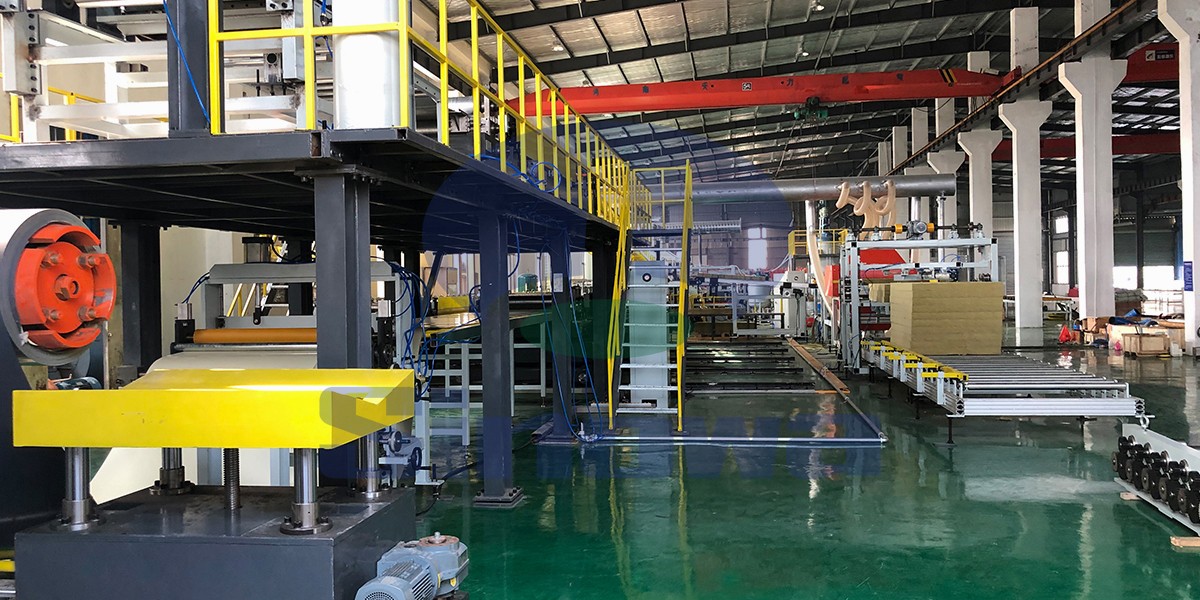
Mineral Wool Sandwich Panel Machine
Sinowa is mineral wool sandwich panel machine manufacturer from china, dedicated to the research and development of high-end and high-efficiency, Sinowa is comprehensively taking the leading position in terms of efficiency, automation control level, HMI, environment protection and energy consumption, with subversive designs made in some critical technological fields to procure exceptional cost performance and customer-friendly experience for the entire mineral wool sandwich panel machine. The adoption of system integration technology and bus control technology accomplishes the full automatization of integrated and coordinated control of the entire mineral wool sandwich panel machine with accessible remote interactive communication. Ranking the first-class level in the world, it is currently the mineral wool sandwich panel machine in the market taking a comprehensive lead in high performance.
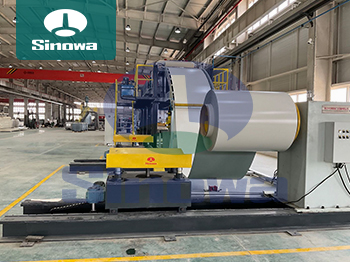
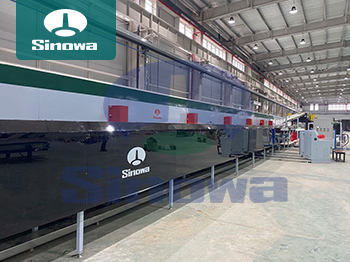
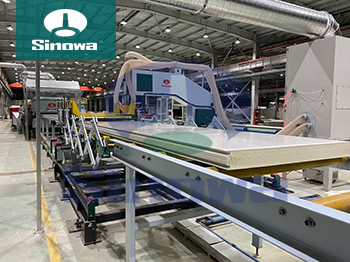
Based on the continuous technological pursuit, the mineral wool sandwich panel machine developed by Sinowa provides you with high-efficiency industrial value. Based on China's cost advantage and our hard-working technology concept, our mineral wool sandwich panel machine has a world-leading price-performance advantage. mineral wool sandwich panel machine can meet a variety of production needs of customers.The whole mineral wool sandwich panel machine design concept of modularization enables all our components to be integrated and combined at will. Our mineral wool sandwich panel machine can easily automate the production of roof sandwich panel, wall sandwich panel, cold storage sandwich panel and other products by different combination and configuration selection and siple switching. The inner core layer can be polyrethane or rock wool, glass wool, an so on.
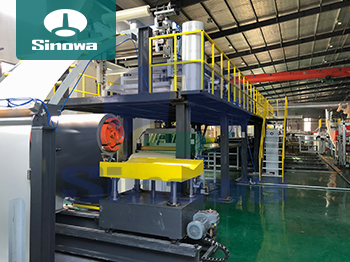


The mineral wool sandwich panel machine has high adaptability, which may produce various sandwich panel of the PU, PIR and rock wool systems. We may design various products according to the customer’s requirements, including various configurations, so as to meet their demands with flexible price system. Highly integrated and linked control system centralizes all control points at the main central center, achieving parameter linkage, fault self-diagnosis controlled by the whole line and shipping distance control. High-level automatic control system also saves the manpower and reduces the manpower loss for customers.


Concentrated system control is fully realized in the practice of concentrated process control so that the control system of all the movements of the parts in the mineral wool sandwich panel machine is integrated in one process control console with accessible remote communication to elevate the automation and reduce the allocated number of personnel for the assembly line. The main engine with modularized design achieves the precision operation of the mineral wool sandwich panel machine, stable and reliable quality, less part and maintenance loss. The whole mineral wool sandwich panel machine has over 40 innovative inventions, making our products have lots of unique features and the comprehensive performance of our mineral wool sandwich panel machine leading in the industry.


The precision servo hoisting mechanism employed by the main engine without hydraulic system makes the board thickness control flexible and the customer may conveniently change or adjust the board thickness. There will be not such troubles as hydraulic system adjustment, leakage, maintenance, etc. High-level energy saving and protection design makes the whole mineral wool sandwich panel machine possible to produce around the clock throughout the year and the customer will save huge budget. In addition, the isolated heat preservation room is constructed for warming the environment. The energy saving and protection design of our mineral wool sandwich panel machine may guarantee that the customer’s production line may be freely heated and produce in the main time to save more costs for customers.


The high-power low-consumption design quickens the reaction of the mineral wool sandwich panel machine while energy consumption is kept low. With the brand-new, fully sealed inner insulation design, the energy consumption is controlled at the minimum level to achieve the design objective of less than an hour for the insulation system to be activated from the room temperature above 5℃ to the production process temperature. The energy consumption is only 40% that of those similar products.
In the context of global emphasis on energy conservation, environmental protection and construction efficiency, the demand for high-performance building materials has been increasing significantly. Mineral wool sandwich panels, known for their excellent fire resistance, thermal insulation, sound insulation and structural stability, have become a staple in industrial, commercial and infrastructure construction. Behind the mass production of these high-quality panels lies a key piece of equipment: the mineral wool sandwich panel machine.

Structural Composition of Mineral Wool Sandwich Panel Machines
A standard mineral wool sandwich panel machine is a integrated production line consisting of multiple functional units, each of which plays a crucial role in ensuring the continuity, stability and quality of production. The core components include uncoilers, roll forming units, mineral wool supply systems, gluing systems, laminating units, cutting units, automatic stacking units and control systems. These units work in coordination to complete the entire production process from raw material input to finished product output.
Uncoilers are responsible for stably feeding the steel coils (the outer cladding material of sandwich panels) into the subsequent production process. They usually adopt a hydraulic mandrel design, which allows for easy adjustment and secure clamping of coils of different specifications. Advanced uncoiler systems often use a 2+2 configuration, enabling continuous feeding without stopping the machine when replacing coils, thus greatly improving production efficiency. The roll forming unit is tasked with shaping the flat steel coils into the desired cross-sectional shape (such as trapezoidal, corrugated or rectangular) through continuous rolling of upper and lower metal rollers. The design of this unit is often modular (cassette type or railway wheel type), facilitating quick replacement of roller sets to produce panels of different shapes and specifications to meet diverse construction needs.
The mineral wool supply system is a distinctive component of this production line, responsible for cutting and processing the mineral wool core material according to the thickness requirements of the sandwich panels and continuously supplying it to the laminating unit. This system typically includes lifts, board cutters, turning conveyors and side trimmers. The board cutter accurately cuts the mineral wool into the required width and thickness, while the side trimmer ensures the neatness of the mineral wool edges, improving the bonding effect with the steel cladding. Some advanced supply systems are also equipped with automatic pad supply devices to further enhance the stability of the core material during the lamination process.
The gluing system plays a key role in ensuring the bonding strength between the mineral wool core and the steel cladding. It adopts precise glue application technology, which can uniformly apply the adhesive on the inner surface of the steel cladding according to the preset amount and distribution pattern. The choice of adhesive and the accuracy of glue application directly affect the structural integrity and service life of the sandwich panels. The laminating unit uses high-pressure rollers to firmly bond the upper steel cladding, mineral wool core and lower steel cladding together, forming a integrated sandwich panel structure. The pressure and speed of the laminating rollers are adjustable to adapt to different material thicknesses and bonding requirements.
The cutting unit is used to cut the continuous sandwich panel into finished products of specified lengths. It usually adopts hydraulic cutting technology, which features fast cutting speed, high precision and smooth cuts without damaging the panel structure. The automatic stacking unit, after the panels are cut, neatly stacks the finished products according to the preset quantity and specifications, reducing manual labor and improving the efficiency of subsequent packaging and transportation. The control system is the "brain" of the entire production line, integrating digital servo technology, frequency conversion vector technology and hydraulic control technology. It realizes centralized control and management of all units, with a user-friendly man-machine interaction interface. Operators only need to input production parameters (such as panel length, width and thickness), and the system can automatically complete the entire production process.
Working Principles of Mineral Wool Sandwich Panel Machines
The working process of mineral wool sandwich panel machines is a continuous and automated operation that can be divided into six key stages: raw material preparation, steel coil forming, mineral wool processing, gluing and lamination, cutting and stacking, and finished product output. Each stage is closely linked to ensure the smooth progress of production.
In the raw material preparation stage, the steel coils (with a thickness usually ranging from 0.4mm to 0.6mm) and mineral wool core materials (with a bulk density of not less than 70kg/m³ and fiber length of more than 100mm) are inspected and placed in the designated positions. The steel coils need to be flat without deformation or bending, and the mineral wool core materials should have uniform density and intact structure to meet the production quality requirements.
Next is the steel coil forming stage. The uncoiler feeds the steel coils into the roll forming unit, where the steel plates are gradually rolled into the preset shape through multiple sets of rollers. The forming process is continuous and precise, ensuring that the shape and dimensions of the steel cladding meet the design standards. At the same time, the mineral wool supply system starts to work: the lift transports the mineral wool boards to the board cutter, which cuts them into the required thickness and width; the turning conveyor then turns the cut mineral wool to the correct direction and transports it to the side trimmer for edge trimming, ensuring that the mineral wool core is perfectly matched with the steel cladding.
In the gluing and lamination stage, the gluing system uniformly applies the adhesive on the inner surface of the formed steel cladding (upper and lower). The mineral wool core, after processing, is transported to the laminating unit and placed between the upper and lower steel claddings. Under the action of high-pressure rollers in the laminating unit, the three layers of materials are firmly bonded together to form a continuous sandwich panel. The pressure and speed of the laminating unit are precisely controlled by the control system to ensure the bonding strength and flatness of the panel.
The continuous sandwich panel then enters the cutting stage. According to the preset length parameters, the hydraulic cutting unit cuts the panel into finished products of fixed length. The cutting process is fast and accurate, and the cut surface is smooth, avoiding damage to the panel's structure and surface. Finally, the automatic stacking unit stacks the cut finished products neatly, and the operator can then package and transport them. The entire production process is automated, with a production speed of 3 to 8 meters per minute, and an annual production capacity of up to 800,000 square meters (based on 250 working days and 10 working hours per day), which greatly improves production efficiency compared to traditional on-site processing methods.
Technical Advantages of Modern Mineral Wool Sandwich Panel Machines
With the continuous advancement of industrial technology, modern mineral wool sandwich panel machines have achieved significant improvements in automation, efficiency, product quality and environmental protection, showing a series of outstanding technical advantages.
High automation is one of the most prominent advantages. The entire production line adopts an integrated computer control system, which realizes the linkage control of all units. Operators only need to set production parameters through the man-machine interface, and the system can automatically complete raw material feeding, forming, gluing, lamination, cutting and stacking. This not only reduces the number of operators (the entire line only needs 5 to 8 operators), but also minimizes human errors, ensuring the stability and consistency of product quality. In addition, some advanced systems also support remote interactive communication, enabling real-time monitoring and maintenance of the production line, further improving the convenience of operation and management.
High production efficiency is another important advantage. The continuous production design of the machine avoids the time loss caused by intermittent production. The 2+2 uncoiler configuration allows for non-stop coil replacement, and the high-speed laminating and cutting units ensure the rapid progress of the production process. Compared with traditional on-site processing methods, which require a lot of manual operations and have low efficiency, mineral wool sandwich panel machines can complete a large number of panel productions in a short time. The average daily installation area of the produced sandwich panels can reach 600 to 800 square meters, greatly shortening the construction period.
The machines also excel in improving product quality. Through precise control of the roll forming, gluing and lamination processes, the produced mineral wool sandwich panels have uniform dimensions, flat surfaces and firm bonding between the core and cladding. The overall rigidity of the panels is significantly higher than that of on-site pressed composite panels, as the mineral wool core and two layers of steel plates are bonded into a whole. After installation with accessories and purlins, the overall rigidity of the roof or wall is greatly improved, and the purlin consumption can be saved by 1/3 to 2/3. In addition, during the production process, a polyethylene adhesive protective film can be pasted on the surface of the steel cladding to avoid scratches or wear on the surface coating during transportation and installation, ensuring the aesthetic appearance of the products.
Environmental protection and energy conservation are also important features of modern mineral wool sandwich panel machines. The production process adopts closed-loop design, which reduces the emission of dust and waste gas. At the same time, the machines use energy-efficient motors and hydraulic systems, reducing energy consumption. The mineral wool core material used in the production is a non-combustible and environmentally friendly material, and the adhesive is also a low-VOC (volatile organic compound) product, which meets the requirements of green building materials. In addition, the high-precision cutting technology reduces material waste, improving the utilization rate of raw materials and reducing environmental pollution.
Application Scenarios of Mineral Wool Sandwich Panel Machines
The mineral wool sandwich panels produced by mineral wool sandwich panel machines have excellent comprehensive performance, making them widely used in various fields of construction. Correspondingly, the application scenarios of the machines are also closely linked to the demand for these panels, covering industrial buildings, commercial buildings, public infrastructure, residential buildings and other fields.
In the field of industrial buildings, mineral wool sandwich panels are widely used in the construction of factory workshops, warehouses, logistics centers and cold storage facilities. These buildings have high requirements for fire resistance, thermal insulation and sound insulation. The mineral wool core material has excellent fire resistance (reaching fire resistance classes such as REI 90/RE 180) and low thermal conductivity (about 0.041 W/mK), which can effectively prevent fire spread and maintain a stable indoor temperature. The high production efficiency of mineral wool sandwich panel machines can meet the large demand for panels in large-scale industrial construction projects, ensuring the progress of the projects. For example, in logistics centers, the quick installation of mineral wool sandwich panels (thanks to the standardized production of the machines) can shorten the construction period and enable the facilities to be put into use quickly.
In commercial buildings, such as shopping malls, supermarkets, office buildings and hotels, mineral wool sandwich panels are often used for internal and external walls, ceilings and partitions. These buildings require not only functional performance such as thermal insulation and sound insulation, but also aesthetic appearance. Mineral wool sandwich panel machines can produce panels of different shapes, colors and surface textures, meeting the diverse design needs of commercial buildings. The panels have good sound insulation performance (with high acoustic insulation coefficient RW), which can create a quiet and comfortable environment for commercial spaces. In addition, the lightweight characteristics of the panels reduce the structural load of the building, reducing the cost of structural design.
In the field of public infrastructure, mineral wool sandwich panels are used in the construction of airports, railway stations, stadiums, hospitals and schools. These public buildings have high safety requirements and large construction scales. The mineral wool sandwich panel machines can produce high-quality, standardized panels in large quantities, ensuring the safety and stability of the buildings. For example, in hospitals, the fire resistance and antibacterial properties of mineral wool sandwich panels are crucial for ensuring the safety of patients and medical staff. The machines' ability to produce panels that meet strict quality standards makes them an important guarantee for the construction of such projects.
In recent years, with the development of prefabricated residential buildings, mineral wool sandwich panels have also been increasingly used in residential construction. They are used for external walls, internal partitions and roof insulation of prefabricated houses. The standardized production of mineral wool sandwich panel machines enables the panels to be precisely matched with prefabricated building components, improving the assembly efficiency of residential buildings. At the same time, the excellent thermal insulation performance of the panels can reduce the energy consumption of residential buildings, meeting the requirements of energy-saving and environmentally friendly residences.
In addition to traditional construction fields, mineral wool sandwich panel machines also support the production of panels for special environments, such as power plants, chemical plants and coastal areas. These environments have harsh conditions (such as high temperature, corrosion and high humidity), and the panels produced by the machines can be processed with special surface coatings (such as anti-corrosion coatings) to improve their durability and adaptability to special environments.
Future Development Trends of Mineral Wool Sandwich Panel Machines
Driven by the global construction industry's transformation towards sustainability, intelligence and modularization, mineral wool sandwich panel machines are also facing new development opportunities and trends. The future development of these machines will focus on intelligence upgrading, energy conservation and environmental protection enhancement, product diversification and integration with prefabricated construction.
Intelligence upgrading will be the core trend of future development. With the integration of technologies such as the Internet of Things (IoT), big data and artificial intelligence (AI), mineral wool sandwich panel machines will realize more advanced intelligent control. For example, through IoT sensors installed on each unit, the machine can real-time monitor parameters such as production speed, pressure, temperature and material consumption, and transmit the data to the cloud platform for analysis. The AI system can then optimize the production parameters according to the analysis results, improving production efficiency and product quality. In addition, intelligent predictive maintenance will also become a key feature: the system can predict potential faults of the machine based on historical operation data, enabling timely maintenance and reducing downtime.
Energy conservation and environmental protection will be further strengthened. As countries around the world tighten environmental protection policies, the production process of mineral wool sandwich panel machines will become more environmentally friendly. On the one hand, the machines will adopt more energy-efficient components, such as high-efficiency motors and variable-frequency hydraulic systems, to further reduce energy consumption. On the other hand, the production process will realize zero emission of waste gas and waste water, and the waste materials generated during production will be recycled. For example, the leftover mineral wool and steel can be collected and reused, improving the utilization rate of resources. In addition, the development of environmentally friendly adhesives will also be promoted, reducing the emission of harmful substances.
Product diversification will be another important development direction. With the increasing diversity of construction needs, mineral wool sandwich panel machines will be able to produce panels of more specifications, shapes and functions. For example, the machines can be upgraded to produce ultra-thin or ultra-thick mineral wool sandwich panels, or panels with special functions such as anti-corrosion, anti-rust and anti-electromagnetic radiation. In addition, the machines can also realize the composite production of mineral wool with other materials (such as glass wool, rock wool), expanding the application scope of the panels. The modular design of the machines will be further optimized, enabling faster switching between different production modes to meet the personalized needs of customers.
Integration with prefabricated construction will be deepened. Prefabricated construction has become a mainstream trend in the construction industry due to its advantages of high efficiency, energy conservation and environmental protection. Mineral wool sandwich panel machines will be closely integrated with the prefabricated construction industry, realizing the customized production of panels according to the design requirements of prefabricated components. The machines can be connected with the BIM (Building Information Modeling) system, enabling the seamless integration of production data and design data. This will realize the intelligent production of prefabricated building components, improving the assembly efficiency and quality of prefabricated buildings. In addition, the machines will also adapt to the production needs of modular buildings, producing integrated panels that integrate multiple functions such as insulation, decoration and structure.
The global market demand for mineral wool sandwich panel machines is also showing a growing trend. According to market research, the Asia-Pacific region is currently the largest production and consumption market for mineral wool sandwich panel machines, with China, Japan, South Korea and Southeast Asian countries being the main demand areas. In addition, the European market, led by Germany, and the North American market also have significant demand for high-end mineral wool sandwich panel machines. In emerging markets such as South America, with the acceleration of industrialization and urbanization, the demand for mineral wool sandwich panels is increasing, which will drive the development of the local mineral wool sandwich panel machine market. The market is expected to maintain steady growth in the next few years, with technological innovation being the main driving force for market expansion.
Conclusion
Mineral wool sandwich panel machines, as key equipment for the production of high-performance mineral wool sandwich panels, have played an important role in promoting the modernization and sustainability of the construction industry. Their rational structural design, efficient working principles and outstanding technical advantages enable the mass production of mineral wool sandwich panels with excellent fire resistance, thermal insulation and sound insulation performance. These panels are widely used in industrial, commercial, public and residential buildings, meeting the diverse needs of the construction industry.
Looking to the future, with the continuous advancement of intelligence, energy conservation and environmental protection technologies, mineral wool sandwich panel machines will usher in new development opportunities. They will move towards more intelligent, environmentally friendly and diversified directions, and be more closely integrated with the prefabricated construction industry. This will not only further improve the production efficiency and product quality of mineral wool sandwich panels, but also contribute to the transformation and upgrading of the global construction industry towards green, low-carbon and efficient development. It is believed that in the context of increasing emphasis on sustainable development, mineral wool sandwich panel machines will play an even more important role in the construction industry, creating greater value for society and the environment.
《Mineral Wool Sandwich Panel Machine》Update Date: 2026/1/8
URL: https://www.sinowamachine.cn/en/tag/mineral-wool-sandwich-panel-machine.html
- PU Sandwich Panel Making Machine
- Rockwool Sandwich Panel Production Line
- PU Sandwich Panel Machine
- PU Sandwich Panel Production Line
- Mineral Wool Sandwich Panel Machine
- PUF Panel Machine
- Rock Wool Sandwich Panel Line
- Sandwich Panel Machines
- Sandwich Panel Lines
- Rockwool Sandwich Panel Machine
- Rockwool Sandwich Panel Line
- PU Sandwich Panel Line
- PU Panel Machine
- Foam Forming Machine
- Continuous Sandwich Panel Line
- Continuous PU Sandwich Panel Line
- PIR Sandwich Panel Line
- Polyurethane Sandwich Panel Line
- Automatic PU Sandwich Panel Production Line
- PU Foam Sandwich Panel Production Line