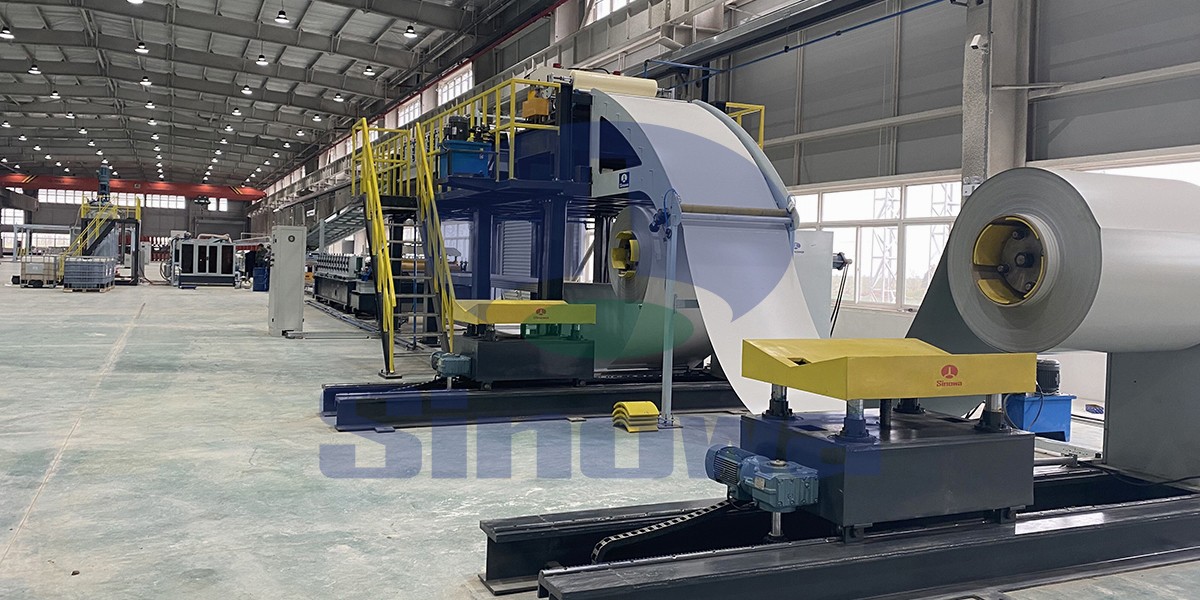
Continuous PU Sandwich Panel Line
Sinowa is continuous pu sandwich panel line manufacturer from china, dedicated to the research and development of high-end and high-efficiency, Sinowa is comprehensively taking the leading position in terms of efficiency, automation control level, HMI, environment protection and energy consumption, with subversive designs made in some critical technological fields to procure exceptional cost performance and customer-friendly experience for the entire continuous pu sandwich panel line. The adoption of system integration technology and bus control technology accomplishes the full automatization of integrated and coordinated control of the entire continuous pu sandwich panel line with accessible remote interactive communication. Ranking the first-class level in the world, it is currently the continuous pu sandwich panel line in the market taking a comprehensive lead in high performance.
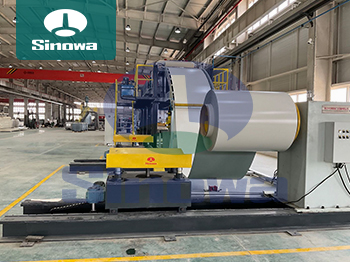
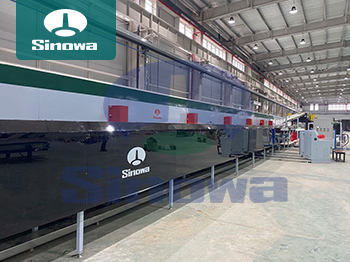
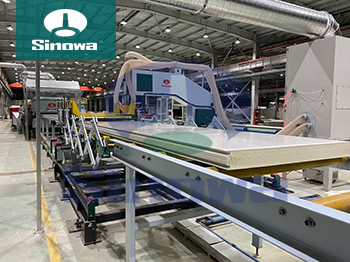
Based on the continuous technological pursuit, the continuous pu sandwich panel line developed by Sinowa provides you with high-efficiency industrial value. Based on China's cost advantage and our hard-working technology concept, our continuous pu sandwich panel line has a world-leading price-performance advantage. continuous pu sandwich panel line can meet a variety of production needs of customers.The whole continuous pu sandwich panel line design concept of modularization enables all our components to be integrated and combined at will. Our continuous pu sandwich panel line can easily automate the production of roof sandwich panel, wall sandwich panel, cold storage sandwich panel and other products by different combination and configuration selection and siple switching. The inner core layer can be polyrethane or rock wool, glass wool, an so on.
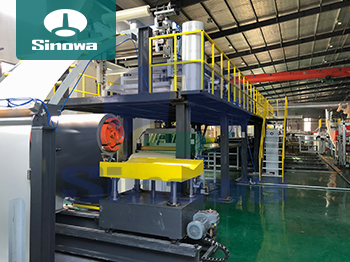


The continuous pu sandwich panel line has high adaptability, which may produce various sandwich panel of the PU, PIR and rock wool systems. We may design various products according to the customer’s requirements, including various configurations, so as to meet their demands with flexible price system. Highly integrated and linked control system centralizes all control points at the main central center, achieving parameter linkage, fault self-diagnosis controlled by the whole line and shipping distance control. High-level automatic control system also saves the manpower and reduces the manpower loss for customers.


Concentrated system control is fully realized in the practice of concentrated process control so that the control system of all the movements of the parts in the continuous pu sandwich panel line is integrated in one process control console with accessible remote communication to elevate the automation and reduce the allocated number of personnel for the assembly line. The main engine with modularized design achieves the precision operation of the continuous pu sandwich panel line, stable and reliable quality, less part and maintenance loss. The whole continuous pu sandwich panel line has over 40 innovative inventions, making our products have lots of unique features and the comprehensive performance of our continuous pu sandwich panel line leading in the industry.


The precision servo hoisting mechanism employed by the main engine without hydraulic system makes the board thickness control flexible and the customer may conveniently change or adjust the board thickness. There will be not such troubles as hydraulic system adjustment, leakage, maintenance, etc. High-level energy saving and protection design makes the whole continuous pu sandwich panel line possible to produce around the clock throughout the year and the customer will save huge budget. In addition, the isolated heat preservation room is constructed for warming the environment. The energy saving and protection design of our continuous pu sandwich panel line may guarantee that the customer’s production line may be freely heated and produce in the main time to save more costs for customers.


The high-power low-consumption design quickens the reaction of the continuous pu sandwich panel line while energy consumption is kept low. With the brand-new, fully sealed inner insulation design, the energy consumption is controlled at the minimum level to achieve the design objective of less than an hour for the insulation system to be activated from the room temperature above 5℃ to the production process temperature. The energy consumption is only 40% that of those similar products.
In the field of modern building materials production, the continuous PU sandwich panel line has emerged as a pivotal technology that redefines efficiency, quality and versatility in manufacturing composite insulation panels. Polyurethane (PU) sandwich panels, composed of two outer facings and a rigid PU foam core, have gained widespread recognition for their superior thermal insulation, structural strength and lightweight properties, making them indispensable in various construction and industrial applications. The continuous production line, as the primary manufacturing method for these high-performance panels, integrates advanced automation, precision engineering and sustainable processes to meet the growing demand for efficient and reliable building materials worldwide. Unlike discontinuous production methods that operate in batches, the continuous PU sandwich panel line enables uninterrupted manufacturing, ensuring consistent product quality while significantly increasing production output, which has made it the preferred choice for large-scale production facilities aiming to balance productivity with performance.
The fundamental working principle of a continuous PU sandwich panel line revolves around the seamless integration of multiple processing stages, each meticulously designed to transform raw materials into finished panels with minimal human intervention. The production process commences with the preparation of the outer facing materials, which typically include galvanized steel, galvalume, aluminum or other flexible substrates such as foil or non-woven fabrics. These facing materials are supplied in large rolls and fed into the production line through decoiling units equipped with tension control systems to ensure smooth and stable unrolling. Before entering the core foaming stage, the facing materials undergo preheating to optimize the adhesion between the facings and the PU foam core. This preheating step is crucial as it enhances the chemical bonding process, ensuring that the foam adheres firmly to the outer layers, thereby improving the overall structural integrity of the final panel.
Following the preheating process, the facing materials are guided into the foaming and lamination zone, which is the heart of the continuous production line. In this stage, two key components of the PU foam—polyol and isocyanate—along with additives such as catalysts, foaming agents and flame retardants, are precisely metered and mixed in a high-pressure mixing head. The use of precision metering systems ensures that the raw materials are mixed in the exact proportions required to achieve the desired foam properties, such as density, thermal conductivity and mechanical strength. The homogeneous mixture is then continuously deposited onto the moving lower facing material, which travels at a consistent speed controlled by the production line's drive system. Simultaneously, the upper facing material is fed into the system, and both facings, with the foam mixture between them, enter a double-belt lamination conveyor. This conveyor consists of two parallel, heated belts that apply uniform pressure to the sandwich structure as the PU foam undergoes polymerization and foaming. The controlled temperature and pressure within the lamination zone facilitate the expansion and curing of the foam, ensuring that the core achieves its optimal density and thermal insulation properties while bonding securely to the outer facings.

After the foaming and lamination process, the continuous sandwich panel blank moves into the post-processing stage, where it undergoes a series of operations to achieve the final product specifications. The first step in post-processing is cooling, as the freshly formed panels are still at an elevated temperature from the curing process. Cooling systems, which may include air cooling or water-cooled rollers, rapidly reduce the panel temperature to stabilize the foam core and ensure dimensional accuracy. Once cooled, the panel blank passes through edge trimming units that cut the edges to the required width, removing any excess material and ensuring uniform panel dimensions. Following edge trimming, the continuous panel is cut into individual panels of predetermined lengths using a high-precision tracking saw that moves synchronously with the panel's speed, ensuring clean and accurate cuts without disrupting the continuous production flow. Finally, the finished panels are conveyed to automatic stacking and packaging systems, where they are neatly stacked, wrapped and prepared for storage or transportation.
A key feature of the continuous PU sandwich panel line is its modular design, which allows for high adaptability and customization to meet diverse production requirements. The modular structure enables manufacturers to easily reconfigure or upgrade specific components of the line, such as changing the type of facing materials, adjusting the thickness of the foam core or modifying the panel dimensions. This flexibility is particularly valuable in responding to market demands for different panel types, such as roof panels, wall panels, cold storage panels or sound insulation panels. For example, by adjusting the foam density and thickness, the same production line can manufacture panels suitable for thermal insulation in cold storage facilities—requiring low thermal conductivity—or structural panels for industrial warehouses that prioritize load-bearing capacity. Additionally, the modular design simplifies maintenance and repair, as individual components can be removed and replaced without shutting down the entire production line, minimizing downtime and maximizing operational efficiency.
Automation is another defining characteristic of the continuous PU sandwich panel line, with advanced control systems integrating all production stages into a centralized management platform. Modern production lines are equipped with computerized control systems that monitor and adjust key process parameters in real time, including the speed of the conveyor belts, the temperature of the preheating and lamination zones, the ratio of raw material mixing and the cutting dimensions. This real-time monitoring ensures that any deviations from the set parameters are immediately corrected, maintaining consistent product quality throughout the production process. The automation system also includes fault diagnosis capabilities, which can detect issues such as material shortages, equipment malfunctions or process anomalies and alert operators, enabling quick intervention to prevent production disruptions. Furthermore, the high level of automation reduces the need for manual labor, minimizing human error and lowering labor costs while improving workplace safety by reducing the number of workers exposed to potentially hazardous processes.
Energy efficiency and sustainability have become increasingly important considerations in modern manufacturing, and the continuous PU sandwich panel line incorporates several features to address these concerns. One of the key sustainable innovations is the use of environmentally friendly foaming agents, such as pentane, which have replaced traditional chlorofluorocarbons (CFCs) and hydrochlorofluorocarbons (HCFCs) that contribute to ozone depletion and global warming. These eco-friendly foaming agents not only comply with international environmental regulations but also maintain the superior thermal insulation properties of the PU foam. Additionally, the production line is designed with energy-saving features, such as fully enclosed insulation systems that reduce heat loss during the preheating and lamination stages, and high-efficiency motors that minimize power consumption. Some advanced lines are also equipped with heat recovery systems that capture and reuse waste heat generated during the production process, further reducing energy consumption and carbon emissions. These sustainable design elements not only reduce the environmental impact of the manufacturing process but also lower operational costs for producers, making the continuous production line a cost-effective and environmentally responsible choice.
The advantages of the continuous PU sandwich panel line are not limited to efficiency and sustainability; they also extend to the quality and performance of the finished products. The uninterrupted production process ensures that the PU foam core is uniformly distributed throughout the panel, eliminating inconsistencies in density that can occur in batch production. This uniform density results in panels with consistent thermal insulation performance and structural strength, ensuring that each panel meets the required specifications. The precise control over the foaming and lamination process also allows for the production of panels with a wide range of thicknesses, from 20mm to 150mm or more, to accommodate different insulation and structural requirements. Furthermore, the continuous production method minimizes the risk of human error, as most processes are automated, leading to a lower defect rate and higher product reliability. The finished PU sandwich panels manufactured by continuous lines exhibit excellent durability, withstanding harsh weather conditions, humidity and UV exposure, and require minimal maintenance over their service life, making them a long-lasting and cost-effective solution for various applications.
The versatility of the continuous PU sandwich panel line is reflected in the wide range of applications for the panels it produces. In the construction industry, these panels are extensively used for roofing and wall cladding in industrial warehouses, manufacturing facilities, logistics and distribution centers. Their lightweight properties reduce the overall structural load of the building, while their superior thermal insulation helps lower energy consumption for heating and cooling. In cold storage and refrigeration applications, such as food warehouses, pharmaceutical storage facilities and cold chain logistics centers, PU sandwich panels are ideal due to their low thermal conductivity, which helps maintain stable internal temperatures and reduce energy costs. The panels are also used in commercial buildings, such as shopping centers, exhibition halls and sports stadiums, where their quick installation and aesthetic flexibility make them a practical choice. Additionally, they find applications in agricultural buildings, livestock facilities and even in marine environments for ship interior partitions, thanks to their resistance to moisture and corrosion.
The performance of the panels produced by continuous PU sandwich panel lines is further enhanced by the ability to incorporate additional features during production. For example, flame retardant additives can be integrated into the PU foam to improve the fire resistance of the panels, making them suitable for applications with strict fire safety requirements. Sound insulation properties can also be enhanced by adjusting the foam structure or using specialized facing materials, making the panels ideal for use in noise-sensitive environments such as near highways or industrial areas. Furthermore, the outer facings can be pre-painted or coated with decorative finishes during production, eliminating the need for additional painting or finishing work on-site, which saves time and labor during installation.
Maintenance and operational considerations are crucial for ensuring the long-term efficiency and reliability of continuous PU sandwich panel lines. Regular maintenance of key components, such as the mixing head, conveyor belts and cutting systems, is essential to prevent equipment breakdowns and maintain production quality. The modular design of the line simplifies maintenance tasks, as individual components can be easily accessed and replaced. Additionally, the use of high-quality, wear-resistant materials in critical components reduces the frequency of maintenance and extends the service life of the equipment. Operational efficiency is also enhanced by the ability to monitor production data in real time, allowing operators to optimize process parameters to minimize material waste and energy consumption. Many modern lines are equipped with remote monitoring capabilities, enabling technicians to monitor and troubleshoot the line from a distance, further reducing downtime and improving operational flexibility.
Looking ahead, the continuous PU sandwich panel line is poised to undergo further technological advancements driven by the growing demand for sustainable and high-performance building materials. One key area of innovation is the development of more eco-friendly raw materials, such as bio-based polyols derived from renewable resources, which will further reduce the carbon footprint of PU sandwich panel production. Additionally, advancements in automation and artificial intelligence (AI) are expected to enhance the precision and efficiency of production lines, with AI-powered systems capable of predicting equipment failures, optimizing process parameters and reducing material waste. The integration of digital twin technology, which creates a virtual replica of the production line, will enable manufacturers to simulate and optimize production processes before implementing them in the physical line, further improving efficiency and reducing risks. Another trend is the development of lines capable of producing thinner, lighter panels with enhanced performance, meeting the demand for more sustainable and space-efficient building solutions.
In conclusion, the continuous PU sandwich panel line represents a cornerstone of modern composite material manufacturing, combining advanced automation, precision engineering and sustainable processes to produce high-quality PU sandwich panels efficiently. Its ability to enable uninterrupted production, ensure consistent product quality and adapt to diverse production requirements has made it an indispensable technology in the building materials industry. The panels produced by these lines offer superior thermal insulation, structural strength and durability, making them suitable for a wide range of applications from industrial warehouses to cold storage facilities and commercial buildings. As the industry continues to prioritize sustainability and efficiency, the continuous PU sandwich panel line will continue to evolve, incorporating new technologies and materials to meet the changing needs of manufacturers and the global construction sector. With its proven track record of performance and versatility, the continuous PU sandwich panel line is set to remain a key driver of innovation and growth in the building materials industry for years to come.
《Continuous PU Sandwich Panel Line》Update Date: 2026/1/15
URL: https://www.sinowamachine.cn/en/tag/continuous-pu-sandwich-panel-line.html
- PU Sandwich Panel Making Machine
- Rockwool Sandwich Panel Production Line
- PU Sandwich Panel Machine
- PU Sandwich Panel Production Line
- Mineral Wool Sandwich Panel Machine
- PUF Panel Machine
- Rock Wool Sandwich Panel Line
- Sandwich Panel Machines
- Sandwich Panel Lines
- Rockwool Sandwich Panel Machine
- Rockwool Sandwich Panel Line
- PU Sandwich Panel Line
- PU Panel Machine
- Foam Forming Machine
- Continuous Sandwich Panel Line
- Continuous PU Sandwich Panel Line
- PIR Sandwich Panel Line
- Polyurethane Sandwich Panel Line
- Automatic PU Sandwich Panel Production Line
- PU Foam Sandwich Panel Production Line