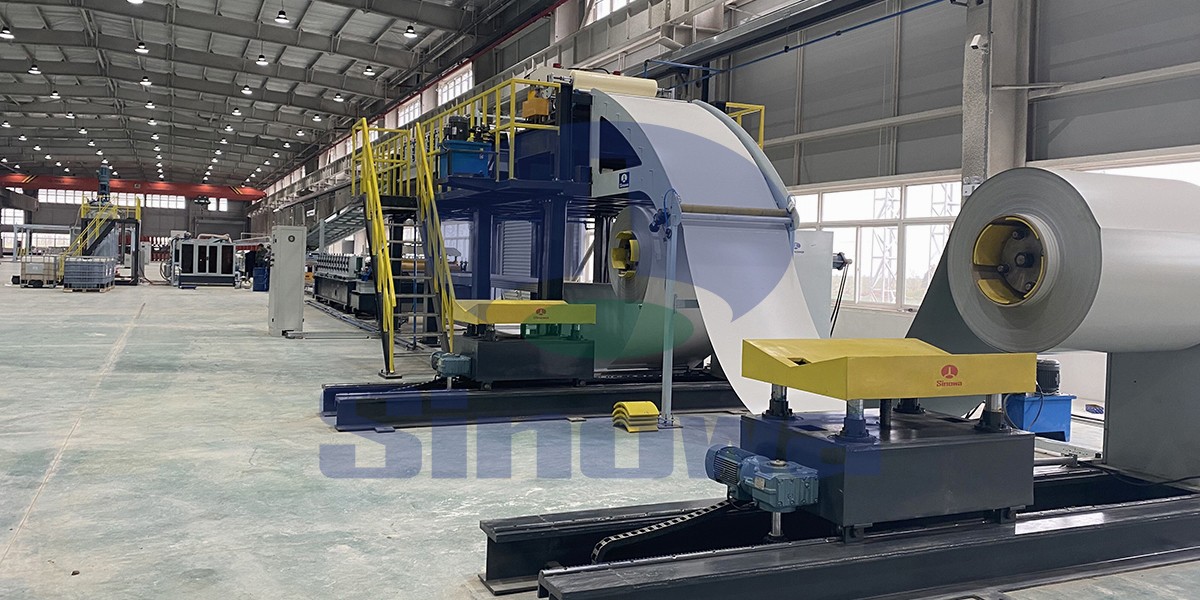
PU Foam Sandwich Panel Production Line
Sinowa is pu foam sandwich panel production line manufacturer from china, dedicated to the research and development of high-end and high-efficiency, Sinowa is comprehensively taking the leading position in terms of efficiency, automation control level, HMI, environment protection and energy consumption, with subversive designs made in some critical technological fields to procure exceptional cost performance and customer-friendly experience for the entire pu foam sandwich panel production line. The adoption of system integration technology and bus control technology accomplishes the full automatization of integrated and coordinated control of the entire pu foam sandwich panel production line with accessible remote interactive communication. Ranking the first-class level in the world, it is currently the pu foam sandwich panel production line in the market taking a comprehensive lead in high performance.
Based on the continuous technological pursuit, the pu foam sandwich panel production line developed by Sinowa provides you with high-efficiency industrial value. Based on China's cost advantage and our hard-working technology concept, our pu foam sandwich panel production line has a world-leading price-performance advantage. pu foam sandwich panel production line can meet a variety of production needs of customers.The whole pu foam sandwich panel production line design concept of modularization enables all our components to be integrated and combined at will. Our pu foam sandwich panel production line can easily automate the production of roof sandwich panel, wall sandwich panel, cold storage sandwich panel and other products by different combination and configuration selection and siple switching. The inner core layer can be polyrethane or rock wool, glass wool, an so on.
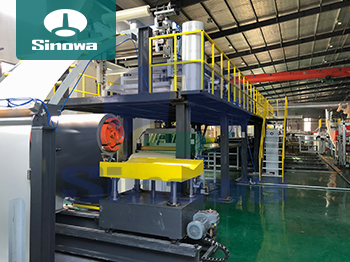


The pu foam sandwich panel production line has high adaptability, which may produce various sandwich panel of the PU, PIR and rock wool systems. We may design various products according to the customer’s requirements, including various configurations, so as to meet their demands with flexible price system. Highly integrated and linked control system centralizes all control points at the main central center, achieving parameter linkage, fault self-diagnosis controlled by the whole line and shipping distance control. High-level automatic control system also saves the manpower and reduces the manpower loss for customers.


Concentrated system control is fully realized in the practice of concentrated process control so that the control system of all the movements of the parts in the pu foam sandwich panel production line is integrated in one process control console with accessible remote communication to elevate the automation and reduce the allocated number of personnel for the assembly line. The main engine with modularized design achieves the precision operation of the pu foam sandwich panel production line, stable and reliable quality, less part and maintenance loss. The whole pu foam sandwich panel production line has over 40 innovative inventions, making our products have lots of unique features and the comprehensive performance of our pu foam sandwich panel production line leading in the industry.


The precision servo hoisting mechanism employed by the main engine without hydraulic system makes the board thickness control flexible and the customer may conveniently change or adjust the board thickness. There will be not such troubles as hydraulic system adjustment, leakage, maintenance, etc. High-level energy saving and protection design makes the whole pu foam sandwich panel production line possible to produce around the clock throughout the year and the customer will save huge budget. In addition, the isolated heat preservation room is constructed for warming the environment. The energy saving and protection design of our pu foam sandwich panel production line may guarantee that the customer’s production line may be freely heated and produce in the main time to save more costs for customers.


The high-power low-consumption design quickens the reaction of the pu foam sandwich panel production line while energy consumption is kept low. With the brand-new, fully sealed inner insulation design, the energy consumption is controlled at the minimum level to achieve the design objective of less than an hour for the insulation system to be activated from the room temperature above 5℃ to the production process temperature. The energy consumption is only 40% that of those similar products.
In the context of the global construction industry's transformation towards greenization and modularization, PU foam sandwich panels have emerged as a core building material favored for their excellent thermal insulation, structural strength, and lightweight properties. The production line that manufactures these high-performance panels is a sophisticated integration of multiple technologies, covering raw material processing, precision molding, continuous curing, and automated finishing.
A PU foam sandwich panel production line is designed to fabricate composite panels consisting of two outer facings and a rigid polyurethane foam core. The outer facings can be various materials such as pre-painted galvanized steel, aluminum foil, cement-based cloth, kraft paper, or non-woven fabrics, while the core is made of polyurethane (PU) foam, which is renowned for its low thermal conductivity and excellent insulation performance. The production process is a continuous and automated workflow that ensures the precise combination of facings and core material, resulting in panels with consistent quality and stable performance. Unlike traditional discrete production methods, modern continuous production lines enable high-efficiency manufacturing, capable of producing panels with customizable lengths and thicknesses to meet diverse application requirements.
The core components of a PU foam sandwich panel production line work in synergy to achieve seamless production from raw material input to finished product output. The uncoiling system is the starting point, responsible for unwinding the coiled facing materials. Equipped with tension control devices, it ensures stable and smooth uncoiling, preventing wrinkles or damage to the facings. For metal facings such as pre-painted galvanized steel, additional components like sheet guiding systems and automatic splicing devices are integrated to maintain continuous production without interruptions caused by coil changes. After uncoiling, the facings pass through a profiling or embossing unit, which shapes the metal sheets into specific profiles according to design requirements, enhancing their structural rigidity and aesthetic appeal.
The preheating system is a critical component that prepares the facings for optimal bonding with the PU foam core. By heating the facings to a controlled temperature, it improves the adhesion between the facings and the foam, ensuring a strong and durable bond. The temperature is precisely regulated based on the type of facing material and the properties of the PU foam, as excessive or insufficient heating can affect the bonding quality. Following preheating, the facings move to the foaming and lamination area, which is the heart of the production line. Here, the PU foam raw materials, including polyol, isocyanate, foaming agent, catalyst, and flame retardant, are accurately metered by a high-pressure metering system. The metered raw materials are then injected into a high-speed mixing head, where they undergo thorough and uniform mixing.
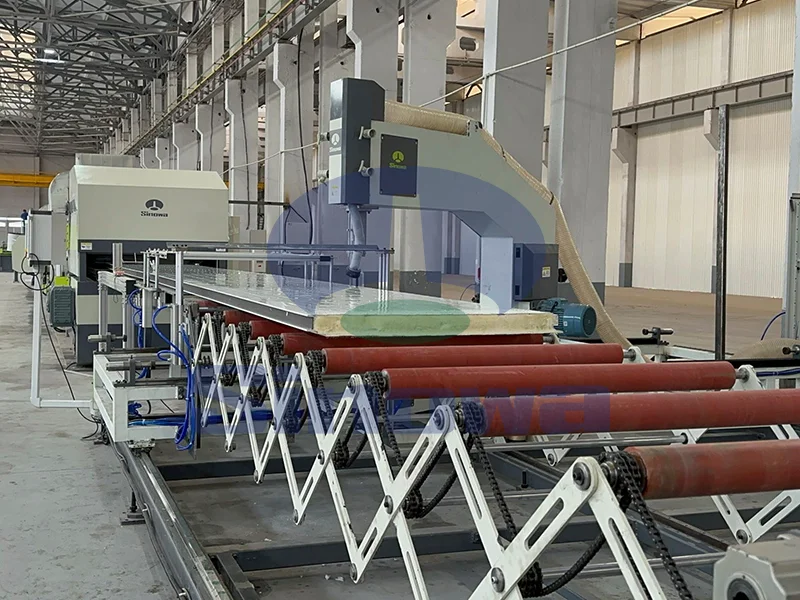
The mixed PU foam is continuously deposited onto the bottom facing material, which is moving along a conveyor system. Simultaneously, the top facing material is fed into position, and both facings with the foam core in between are conveyed into a double-belt laminating machine. This machine consists of two parallel, endless belts that apply uniform pressure to the sandwich structure, ensuring the foam expands and cures evenly within the confined space. The laminating machine is equipped with a heating system that maintains a stable temperature environment, promoting the complete curing of the PU foam. The length of the laminating machine and the speed of the belts are precisely controlled to match the curing time of the foam, ensuring that the panels exit the machine with a fully cured core and consistent thickness.
After lamination and curing, the continuous sandwich panel moves to the trimming and cutting area. Side trimming devices remove the excess material from the edges of the panel, ensuring precise width dimensions. An automatic tracking cutting machine cuts the continuous panel into individual pieces of the desired length. The cutting machine is equipped with sensors that track the movement of the panel, ensuring accurate cutting even at high production speeds. For soft-faced panels, additional edge trimming functions are often integrated to achieve a neat and smooth edge finish. Following cutting, the finished panels are conveyed to a cooling system, where they are cooled to room temperature to enhance their dimensional stability. Finally, the cooled panels are transferred to an automatic stacking and packaging system, which stacks the panels neatly and wraps them for protection during storage and transportation.
Modern PU foam sandwich panel production lines are characterized by high automation, energy efficiency, and modular design. The integrated control system, which uses advanced computer-aided technology, monitors and regulates the entire production process, including raw material metering, mixing ratios, temperature control, conveyor speed, and cutting precision. This automation not only reduces human intervention but also ensures consistent product quality, minimizing the impact of human factors on production. The modular design of the production line allows for easy assembly, disassembly, and maintenance. Most components are connected by bolts rather than welding, facilitating quick replacement of parts and reducing maintenance time and costs. Additionally, the modular design enables manufacturers to customize the production line according to specific production requirements, such as the type of facing material, panel thickness, and production capacity.
Energy efficiency is a key feature of modern PU foam sandwich panel production lines. Manufacturers have implemented various energy-saving measures to reduce the overall energy consumption of the production process. For example, the laminating machine is insulated with high-performance insulation materials to minimize heat loss, reducing the energy required to maintain the curing temperature. The motors used in the conveyor systems and other components are high-efficiency models, which consume significantly less energy compared to traditional motors. Some production lines also adopt energy recovery systems that capture and reuse waste heat, further improving energy efficiency. These energy-saving measures not only reduce production costs but also align with the global trend of sustainable manufacturing, reducing the carbon footprint of the production process.
The PU foam sandwich panels produced by these advanced production lines offer a range of outstanding performance advantages. The rigid PU foam core has a low thermal conductivity, typically between 0.022 and 0.028 W/(m·K), making the panels excellent thermal insulators. A 100mm thick PU foam sandwich panel provides thermal insulation performance five times that of a traditional brick wall, significantly reducing the energy consumption of buildings for heating and cooling. The panels also exhibit high structural strength despite their lightweight nature, offering excellent load-bearing capacity and contributing to the overall stability of buildings. They are highly durable and can withstand harsh weather conditions, including extreme temperatures, humidity, and UV exposure, with minimal maintenance requirements.
The versatility of PU foam sandwich panels enables their application in a wide range of fields. In the construction industry, they are widely used for exterior walls, roofs, and partitions of industrial warehouses, manufacturing facilities, commercial buildings, and agricultural structures. Their excellent thermal insulation properties make them ideal for cold storage facilities and refrigeration units, where maintaining a stable low temperature is critical. In these applications, PU foam sandwich panels can reduce energy consumption by up to 25% compared to traditional insulation materials. The panels are also used in pipeline insulation, subway construction, and HVAC systems, where their lightweight and easy installation features offer significant advantages.
The performance of PU foam sandwich panels is closely related to the precision of the production line. The accurate metering of raw materials ensures the consistent quality of the PU foam core, while the uniform pressure and temperature control in the laminating process guarantee the even expansion and curing of the foam. The precise trimming and cutting ensure that the panels meet the dimensional requirements of the application, facilitating quick and efficient installation. The strong bond between the facings and the core, achieved through proper preheating and lamination, prevents delamination, ensuring the long-term performance of the panels.
In recent years, the PU foam sandwich panel production line has undergone continuous technological innovations to meet the evolving demands of the market. One of the key trends is the development of environmentally friendly production processes. Manufacturers are increasingly adopting low-VOC (volatile organic compound) raw materials and environmentally friendly foaming agents, such as pentane, to reduce the environmental impact of the production process. Pentane-based foaming systems not only have a low global warming potential but also enable significant cost savings through efficient raw material utilization. Additionally, the development of bio-based PU foam materials, derived from renewable resources, has made significant progress. These bio-based materials reduce the carbon footprint of the panels by up to 60% and are being pilot-tested in green building projects in Europe.
Another important trend is the integration of multifunctional features into the production line. Modern production lines are capable of manufacturing panels with additional functions, such as fire resistance, sound insulation, and photovoltaic integration. Through the addition of flame retardant additives and the use of advanced foam modification technologies, PU foam sandwich panels can achieve higher fire classification ratings, addressing the long-standing challenge of balancing thermal insulation and fire safety. Some production lines are also equipped to produce photovoltaic (PV) integrated sandwich panels, which combine the functions of building enclosure and solar power generation. These panels have a power generation efficiency of up to 18% and can improve the comprehensive energy efficiency of buildings by 50%.
The integration of smart technologies is also transforming PU foam sandwich panel production lines. The adoption of digital twin technology allows manufacturers to create a virtual model of the production line, enabling real-time monitoring, simulation, and optimization of the production process. Sensors installed throughout the production line collect data on temperature, pressure, speed, and material flow, which is analyzed to identify potential issues and optimize performance. Predictive maintenance systems use this data to forecast equipment failures, reducing unplanned downtime and improving production efficiency. Additionally, the development of intelligent panels with built-in sensors is gaining traction. These panels can monitor temperature, humidity, and structural deformation, enabling real-time monitoring of building health and reducing maintenance costs by up to 25%.
The global demand for PU foam sandwich panels is expected to continue growing in the coming years, driven by the increasing focus on energy efficiency and sustainable construction. According to market research data, the global foam sandwich panel market reached a sales volume of 8.321 billion US dollars in 2024 and is projected to grow to 13.62 billion US dollars by 2031, with a compound annual growth rate (CAGR) of 7.4% from 2025 to 2031. This growth will drive further innovations in PU foam sandwich panel production lines, with a focus on improving production efficiency, reducing energy consumption, and enhancing product performance.
In conclusion, the PU foam sandwich panel production line is a sophisticated and evolving technology that plays a crucial role in the modern construction industry. Its high automation, energy efficiency, and modular design enable the efficient production of high-quality PU foam sandwich panels with excellent thermal insulation, structural strength, and durability. These panels find widespread applications in various fields, contributing to energy conservation and sustainable development. As the industry continues to advance, future production lines will integrate more environmentally friendly processes, multifunctional features, and smart technologies, further enhancing their performance and supporting the global transition towards green and intelligent construction. The continuous innovation and improvement of PU foam sandwich panel production lines will undoubtedly drive the development of the construction industry towards a more sustainable and efficient future.
《PU Foam Sandwich Panel Production Line》Update Date: 2026/1/15
URL: https://www.sinowamachine.cn/en/tag/pu-foam-sandwich-panel-production-line.html
- PU Sandwich Panel Making Machine
- Rockwool Sandwich Panel Production Line
- PU Sandwich Panel Machine
- PU Sandwich Panel Production Line
- Mineral Wool Sandwich Panel Machine
- PUF Panel Machine
- Rock Wool Sandwich Panel Line
- Sandwich Panel Machines
- Sandwich Panel Lines
- Rockwool Sandwich Panel Machine
- Rockwool Sandwich Panel Line
- PU Sandwich Panel Line
- PU Panel Machine
- Foam Forming Machine
- Continuous Sandwich Panel Line
- Continuous PU Sandwich Panel Line
- PIR Sandwich Panel Line
- Polyurethane Sandwich Panel Line
- Automatic PU Sandwich Panel Production Line
- PU Foam Sandwich Panel Production Line