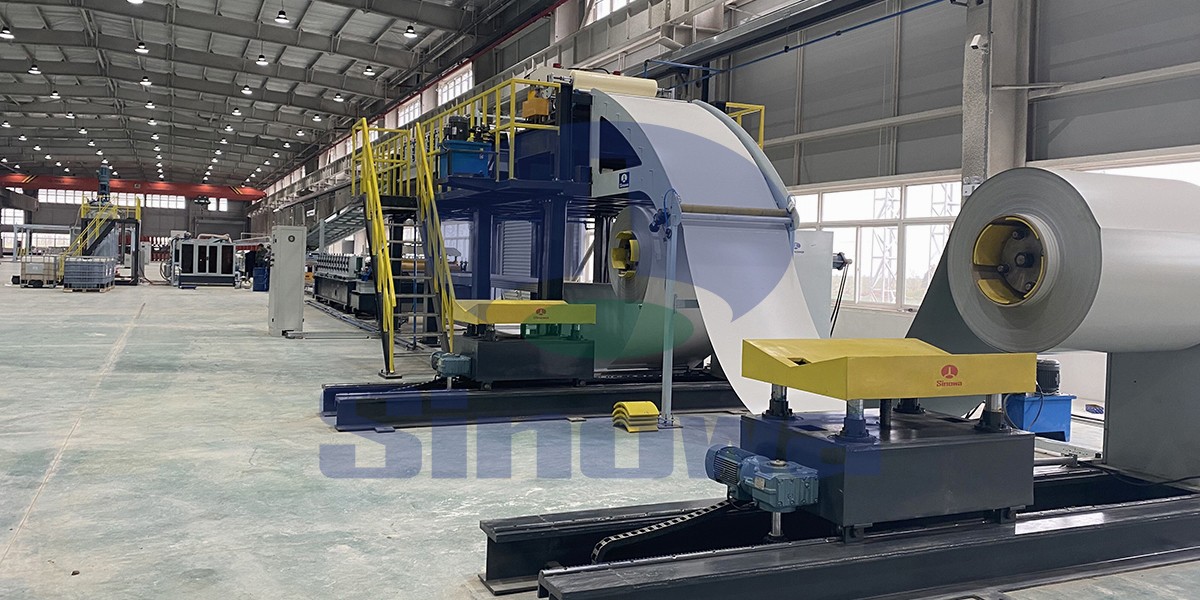
PU Sandwich Panel Machine
Sinowa is pu sandwich panel machine manufacturer from china, dedicated to the research and development of high-end and high-efficiency, Sinowa is comprehensively taking the leading position in terms of efficiency, automation control level, HMI, environment protection and energy consumption, with subversive designs made in some critical technological fields to procure exceptional cost performance and customer-friendly experience for the entire pu sandwich panel machine. The adoption of system integration technology and bus control technology accomplishes the full automatization of integrated and coordinated control of the entire pu sandwich panel machine with accessible remote interactive communication. Ranking the first-class level in the world, it is currently the pu sandwich panel machine in the market taking a comprehensive lead in high performance.
Based on the continuous technological pursuit, the pu sandwich panel machine developed by Sinowa provides you with high-efficiency industrial value. Based on China's cost advantage and our hard-working technology concept, our pu sandwich panel machine has a world-leading price-performance advantage. pu sandwich panel machine can meet a variety of production needs of customers.The whole pu sandwich panel machine design concept of modularization enables all our components to be integrated and combined at will. Our pu sandwich panel machine can easily automate the production of roof sandwich panel, wall sandwich panel, cold storage sandwich panel and other products by different combination and configuration selection and siple switching. The inner core layer can be polyrethane or rock wool, glass wool, an so on.
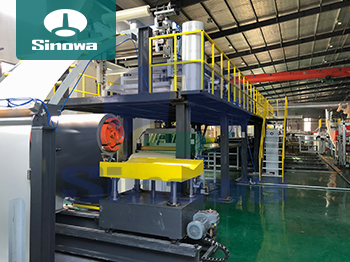


The pu sandwich panel machine has high adaptability, which may produce various sandwich panel of the PU, PIR and rock wool systems. We may design various products according to the customer’s requirements, including various configurations, so as to meet their demands with flexible price system. Highly integrated and linked control system centralizes all control points at the main central center, achieving parameter linkage, fault self-diagnosis controlled by the whole line and shipping distance control. High-level automatic control system also saves the manpower and reduces the manpower loss for customers.


Concentrated system control is fully realized in the practice of concentrated process control so that the control system of all the movements of the parts in the pu sandwich panel machine is integrated in one process control console with accessible remote communication to elevate the automation and reduce the allocated number of personnel for the assembly line. The main engine with modularized design achieves the precision operation of the pu sandwich panel machine, stable and reliable quality, less part and maintenance loss. The whole pu sandwich panel machine has over 40 innovative inventions, making our products have lots of unique features and the comprehensive performance of our pu sandwich panel machine leading in the industry.


The precision servo hoisting mechanism employed by the main engine without hydraulic system makes the board thickness control flexible and the customer may conveniently change or adjust the board thickness. There will be not such troubles as hydraulic system adjustment, leakage, maintenance, etc. High-level energy saving and protection design makes the whole pu sandwich panel machine possible to produce around the clock throughout the year and the customer will save huge budget. In addition, the isolated heat preservation room is constructed for warming the environment. The energy saving and protection design of our pu sandwich panel machine may guarantee that the customer’s production line may be freely heated and produce in the main time to save more costs for customers.


The high-power low-consumption design quickens the reaction of the pu sandwich panel machine while energy consumption is kept low. With the brand-new, fully sealed inner insulation design, the energy consumption is controlled at the minimum level to achieve the design objective of less than an hour for the insulation system to be activated from the room temperature above 5℃ to the production process temperature. The energy consumption is only 40% that of those similar products.
In the realm of modern construction and industrial manufacturing, the demand for efficient, high-performance building materials has driven significant innovations in production equipment. Among these, PU sandwich panel machines stand out as pivotal assets, enabling the mass production of polyurethane (PU) sandwich panels—composite materials celebrated for their exceptional thermal insulation, structural strength, and versatility.
PU sandwich panels, the end product of these specialized machines, consist of a lightweight PU foam core bonded between two outer facings, typically made of steel or aluminum sheets. This three-layer structure combines the structural rigidity of metal with the superior insulating properties of PU foam, resulting in a material that is both lightweight and durable. The production of such panels, however, requires precise control over multiple sequential processes—from metal sheet forming to foam injection and curing. PU sandwich panel machines are engineered to streamline these processes into a continuous, automated workflow, ensuring consistency in product quality while maximizing production efficiency. Unlike traditional manual or semi-automatic manufacturing methods, these machines eliminate human error, reduce material waste, and enable large-scale production to meet the growing demands of various industries.
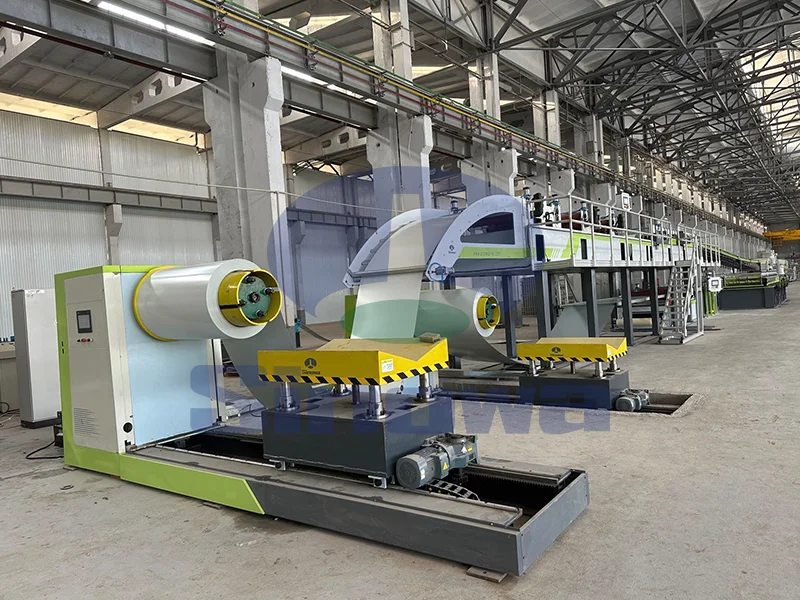
Working Principle of PU Sandwich Panel Machines
The operation of a PU sandwich panel machine revolves around a continuous, integrated production line that executes six core stages in sequence. Each stage is meticulously designed to ensure seamless coordination between raw material processing, foam formation, and final product finishing. Understanding this workflow is essential to appreciating the machine’s efficiency and the quality of the resulting panels.
The first stage is uncoiling and feeding. Raw materials for the panel facings—usually steel or aluminum coils—are loaded onto hydraulic uncoilers. These uncoilers unwind the coils smoothly and feed the metal sheets into the production line via guiding rollers. The uncoiling process is equipped with tension control mechanisms to prevent the metal sheets from wrinkling or tearing, ensuring a flat and consistent feed. This stage is critical because any irregularities in the metal sheets will propagate through subsequent processes, affecting the final panel’s flatness and structural integrity.
Next comes the roll forming stage. The flat metal sheets are passed through a series of tandem rolling stands, each equipped with precision-engineered rollers. These rollers gradually bend and shape the metal sheets into the desired profile—such as trapezoidal for roofing panels or rectangular for wall panels. The roll forming process is incremental, meaning each rolling stand modifies the sheet’s shape slightly, reducing stress on the metal and ensuring uniform profile formation. Modern machines offer adjustable rolling stands, allowing manufacturers to switch between different panel profiles without extensive retooling, enhancing production flexibility.
Following roll forming is the pre-heating stage. The formed metal sheets are passed through a heating chamber to reach a specific temperature (typically between 40°C and 60°C). This pre-heating is crucial for optimizing the bonding between the metal facings and the PU foam core. The heated metal surface promotes better adhesion with the liquid PU chemicals, ensuring a strong and durable bond that resists delamination over time. Temperature control in this stage is precise, as excessive heat can damage the metal sheets’ surface coatings, while insufficient heat will compromise the bonding strength.
The fourth stage, PU foam injection and mixing, is the heart of the production process. Liquid PU components—polyol and isocyanate—are pumped from separate tanks into a high-pressure mixing head. These components are mixed rapidly and uniformly at high pressure, initiating a chemical reaction that produces PU foam. The mixed foam is then continuously injected between the two pre-formed metal sheets as they move through the production line. The injection system is equipped with stepless adjustable flow controls, allowing manufacturers to vary the foam density (typically between 40 kg/m³ and 250 kg/m³) and core thickness (from 30 mm to 300 mm) according to application requirements—for example, higher density foam for structural applications or lower density for enhanced insulation.
Once injected, the panels enter the cooling and curing stage. The sandwich structure—metal facings with the liquid foam core—is passed through a double belt laminator. This laminator consists of two parallel conveyor belts that apply uniform pressure to the panel, ensuring the foam expands evenly and bonds tightly to the metal facings. Simultaneously, the laminator is equipped with cooling systems (either air or water-cooled) that accelerate the foam’s curing process. The PU foam cures from a liquid to a solid within minutes under controlled temperature and pressure conditions. The length of the laminator belt determines the curing time—longer belts allow for slower, more thorough curing, resulting in a stronger foam core. Typical laminator lengths range from 18 meters to 36 meters, depending on the machine’s production speed and the required foam properties.
The final stage is cutting and stacking. After curing, the continuous sandwich panel is cut to the desired length by an automatic flying cutting machine. Flying cutters move synchronously with the moving panel, ensuring precise, burr-free cuts without stopping the production line—this continuous cutting significantly enhances production efficiency. The cut panels are then conveyed to a stacking station, where automated vacuum stackers arrange them neatly for packaging or further processing. Some advanced machines integrate additional inline processes at this stage, such as punching, embossing, or inkjet printing, to add functional or aesthetic features to the panels.
Key Components of PU Sandwich Panel Machines
A PU sandwich panel machine is a complex assembly of specialized components, each playing a critical role in ensuring smooth operation and high-quality output. These components work in tandem, and their precision and durability directly impact the machine’s performance and lifespan. Below are the core components that define the machine’s functionality.
Uncoilers are essential for the initial feeding of metal coils. Hydraulic uncoilers are the most common type, offering stable tension control and easy coil loading. They typically have a maximum coil width capacity of 1250 mm or more, accommodating the standard widths of metal coils used in panel production. Some uncoilers are equipped with automatic coil joining units, allowing for continuous feeding without stopping the line when one coil is exhausted, further improving production efficiency.
The roll forming system is another critical component, consisting of multiple rolling stands, gears, and drive motors. The rollers in each stand are made of high-strength steel with hard chrome plating, ensuring wear resistance and long service life. The drive system for the roll forming stands is usually a servo motor, which provides precise speed control, ensuring that the metal sheets move through the stands at a consistent rate. The number of rolling stands varies depending on the complexity of the panel profile—simple profiles may require 10 to 12 stands, while more complex ones need 14 or more.
The PU foaming system includes material tanks, high-pressure pumps, mixing heads, and injection nozzles. The material tanks are equipped with temperature control and agitation systems to keep the PU components at the optimal temperature and prevent sedimentation. High-pressure pumps ensure a steady flow of components to the mixing head, where they are mixed at pressures typically between 150 bar and 200 bar. The mixing head is a precision component with replaceable wear parts, as the high-pressure mixing process causes gradual wear. Modern mixing heads offer self-cleaning functions, reducing downtime for maintenance.
The double belt laminator is crucial for ensuring panel flatness and bonding quality. The conveyor belts are made of heat-resistant and wear-resistant materials, such as fiberglass-reinforced rubber. The laminator’s pressure is adjustable, allowing manufacturers to apply the optimal pressure for different foam densities and panel thicknesses. The cooling system integrated into the laminator uses circulating air or water to maintain the desired temperature, ensuring consistent curing of the PU foam. Some advanced laminators have independently controlled upper and lower belts, allowing for precise pressure distribution across the panel’s width.
The control system is the brain of the PU sandwich panel machine. Modern machines use programmable logic controller (PLC) systems, often integrated with human-machine interface (HMI) touchscreens. The PLC controls all aspects of the production process—including uncoiling speed, roll forming parameters, pre-heating temperature, foam injection rate, laminator pressure, and cutting length. Operators can set and store multiple production recipes, enabling quick switching between different panel specifications. The HMI provides real-time monitoring of production data, such as line speed, material consumption, and temperature, allowing operators to detect and resolve issues promptly. Some advanced control systems also support remote monitoring and diagnostics, minimizing downtime by enabling technical support teams to troubleshoot problems without being on-site.
Operational Advantages of PU Sandwich Panel Machines
PU sandwich panel machines offer numerous advantages over traditional manufacturing methods, making them the preferred choice for large-scale panel production. These advantages stem from their automation, precision, and flexibility, translating into cost savings, improved product quality, and enhanced production efficiency.
One of the most significant advantages is high production efficiency. The continuous, automated workflow allows these machines to operate at speeds ranging from 1 m/min to 16 m/min, depending on the model and panel specifications. This continuous production eliminates the downtime associated with batch processing, enabling manufacturers to produce large volumes of panels in a short period. For example, a machine operating at 6 m/min can produce up to 3,600 meters of panel per hour, significantly outperforming manual or semi-automatic methods.
Consistency and quality control are another key benefit. Automation reduces human intervention, minimizing the risk of errors in each production stage. Precision components—such as the high-pressure mixing head and adjustable rolling stands—ensure uniform foam density, consistent panel thickness, and accurate profile formation. The result is panels with consistent properties across the entire production run, reducing waste and ensuring that each panel meets the required performance standards. This consistency is particularly important for applications such as cold storage, where uniform insulation properties are critical for energy efficiency.
Production flexibility is also a major advantage of modern PU sandwich panel machines. Adjustable components—such as rolling stands, foam injection systems, and cutting machines—allow manufacturers to produce panels of varying sizes, profiles, and core thicknesses. For example, a single machine can switch from producing 50 mm thick wall panels to 150 mm thick roofing panels with minimal adjustments. This flexibility enables manufacturers to cater to diverse customer needs without investing in multiple specialized machines, reducing capital expenditure and expanding market reach.
Cost-effectiveness is another compelling advantage. While the initial investment in a PU sandwich panel machine is significant, the long-term cost savings are substantial. Automation reduces labor costs, as a single operator can monitor and control the entire production line. The precise material control systems minimize waste of PU chemicals and metal sheets, reducing raw material costs. Additionally, the high production efficiency means that manufacturers can achieve economies of scale, lowering the per-unit production cost. The durable design of the machines also reduces maintenance costs, with components such as hard chrome-plated rollers and high-quality hydraulic systems offering long service lives.
Environmental friendliness is an increasingly important advantage. Modern PU sandwich panel machines are designed with energy-efficient components, such as variable-frequency drives for motors and insulated heating chambers, reducing energy consumption. The minimal material waste also contributes to environmental sustainability, as less raw material ends up in landfills. Furthermore, the PU foam used in the panels is often recyclable, and the metal facings can be fully recycled, aligning with global trends toward sustainable construction materials.
Applications of PU Sandwich Panels and the Role of Production Machines
The versatility of PU sandwich panels—driven by their exceptional properties—has led to their adoption across a wide range of industries. The PU sandwich panel machine’s ability to produce panels tailored to specific application requirements is instrumental in this widespread use. Below are the key application areas where these panels, and the machines that produce them, play a vital role.
The construction industry is the largest consumer of PU sandwich panels. The panels are widely used for roofing, wall cladding, and partitions in industrial buildings, warehouses, exhibition halls, and commercial complexes. Their lightweight nature reduces the building’s structural load, allowing for simpler and more cost-effective foundation designs. The excellent thermal insulation properties of the PU foam core reduce heating and cooling costs, making buildings more energy-efficient. For example, in industrial warehouses, PU sandwich panel roofing can reduce energy consumption for temperature control by up to 40% compared to traditional roofing materials. The quick and easy installation of the panels also shortens construction time, reducing labor costs and minimizing project delays.
Cold storage and refrigeration is another critical application area. PU sandwich panels are ideal for cold storage warehouses, refrigerated trucks, and freezers due to their superior thermal insulation and low water absorption. The PU foam core has a very low thermal conductivity, ensuring that cold air is retained inside the storage space, reducing the load on refrigeration systems. The panels’ airtight and moisture-resistant properties prevent condensation, which can damage stored goods and compromise the storage environment. PU sandwich panel machines produce panels with precise foam density and core thickness, ensuring that the panels meet the strict insulation requirements of the cold chain industry.
The transportation industry also relies heavily on PU sandwich panels. The panels are used in the manufacturing of RVs, ship cabins, train carriages, and box trucks. Their lightweight nature reduces fuel consumption, a key consideration for transportation vehicles. At the same time, their structural strength and durability ensure that the vehicles can withstand the rigors of travel, such as vibration and varying weather conditions. The thermal insulation properties are also beneficial for refrigerated trucks and RVs, maintaining comfortable internal temperatures. PU sandwich panel machines can produce panels with custom sizes and profiles to fit the unique dimensions of different transportation vehicles, enhancing their utility in this sector.
Other applications include cleanrooms, sound insulation barriers, and modular buildings. Cleanrooms—used in the pharmaceutical, electronics, and food processing industries—require panels with smooth, non-porous surfaces that are easy to clean and sanitize. PU sandwich panels meet these requirements, and the machines can produce panels with specialized surface coatings to enhance hygiene. Sound insulation barriers, used along highways and railways, leverage the PU foam’s sound-absorbing properties to reduce noise pollution. Modular buildings, which are prefabricated off-site and assembled on-site, use PU sandwich panels for their quick installation and energy efficiency, with the machines enabling mass production of the modular components.
Future Trends in PU Sandwich Panel Machine Technology
As the global demand for energy-efficient and sustainable building materials continues to grow, PU sandwich panel machines are evolving to meet new challenges and opportunities. Technological advancements are focused on improving automation, energy efficiency, and production flexibility, while also addressing environmental concerns. Below are the key trends shaping the future of these machines.
Increased intelligence and automation are at the forefront of technological development. Future machines will integrate advanced artificial intelligence (AI) and machine learning (ML) algorithms into their control systems. These algorithms will enable predictive maintenance, analyzing real-time production data to detect potential component failures before they occur, minimizing downtime. AI-powered quality control systems will use computer vision to inspect panels for defects—such as uneven foam distribution or surface scratches—during production, ensuring that only high-quality panels reach the market. Additionally, fully autonomous production lines, requiring minimal human intervention, will become more common, further reducing labor costs and improving efficiency.
Energy efficiency will continue to be a major focus. Manufacturers are developing machines with more efficient drive systems, such as permanent magnet motors, which consume less energy than traditional induction motors. Heat recovery systems will be integrated into the pre-heating and cooling stages, capturing waste heat and reusing it to heat the metal sheets or power other parts of the machine. These energy-saving measures will not only reduce operating costs but also help manufacturers meet global carbon emission reduction targets.
Enhanced production flexibility will enable machines to handle a wider range of materials and panel configurations. Future machines will be able to process not only steel and aluminum but also composite materials and recycled metal sheets, expanding the range of panel applications. Additionally, the integration of 3D printing technology into the roll forming stage may allow for more complex and customized panel profiles, catering to the growing demand for architectural diversity. Quick-change systems for rolling stands and injection nozzles will further reduce setup time between different production runs, improving overall productivity.
Environmental sustainability will drive the development of greener production processes. Machines will be designed to use low-VOC (volatile organic compound) PU components, reducing harmful emissions during foam injection. Waste recycling systems will be integrated into the production line, collecting and processing foam trimmings and metal scrap for reuse. Additionally, the use of biodegradable lubricants in the machine’s moving parts will reduce environmental impact. These developments align with the global shift toward circular economy principles, ensuring that the production of PU sandwich panels is more sustainable.
Globalization and digitalization will also shape the future of PU sandwich panel machines. Remote monitoring and control systems will become standard, allowing manufacturers to manage production lines across multiple locations from a central dashboard. Digital twin technology—creating a virtual replica of the production line—will enable operators to simulate production processes, optimize settings, and test new panel configurations without disrupting actual production. This digitalization will improve operational efficiency, reduce time-to-market for new products, and enhance collaboration between manufacturers and customers.
Conclusion
PU sandwich panel machines are indispensable tools in modern manufacturing, enabling the efficient production of high-quality, versatile panels that meet the diverse needs of the construction, transportation, and cold storage industries. Their continuous, automated workflow ensures consistency, efficiency, and cost-effectiveness, making them a preferred choice for large-scale production. The machines’ key components—from uncoilers and roll forming stands to high-pressure mixing heads and PLC control systems—work in harmony to produce panels with exceptional structural strength, thermal insulation, and durability.
As the global focus on sustainability and energy efficiency intensifies, PU sandwich panel machines are evolving to meet these demands. Future advancements in intelligence, energy efficiency, and flexibility will further enhance their performance, while greener production processes will reduce their environmental impact. The ongoing digitalization of production lines will improve operational efficiency and enable greater customization, ensuring that these machines remain at the forefront of manufacturing innovation.
In conclusion, PU sandwich panel machines play a critical role in shaping the future of sustainable construction and industrial manufacturing. Their ability to produce high-performance panels efficiently and sustainably makes them a key enabler of global efforts to reduce energy consumption and carbon emissions. As technology continues to advance, these machines will undoubtedly become even more versatile, efficient, and environmentally friendly, driving further growth in the adoption of PU sandwich panels across industries worldwide.
《PU Sandwich Panel Machine》Update Date: 2026/1/8
URL: https://www.sinowamachine.cn/en/tag/pu-sandwich-panel-machine.html
- PU Sandwich Panel Making Machine
- Rockwool Sandwich Panel Production Line
- PU Sandwich Panel Machine
- PU Sandwich Panel Production Line
- Mineral Wool Sandwich Panel Machine
- PUF Panel Machine
- Rock Wool Sandwich Panel Line
- Sandwich Panel Machines
- Sandwich Panel Lines
- Rockwool Sandwich Panel Machine
- Rockwool Sandwich Panel Line
- PU Sandwich Panel Line
- PU Panel Machine
- Foam Forming Machine
- Continuous Sandwich Panel Line
- Continuous PU Sandwich Panel Line
- PIR Sandwich Panel Line
- Polyurethane Sandwich Panel Line
- Automatic PU Sandwich Panel Production Line
- PU Foam Sandwich Panel Production Line