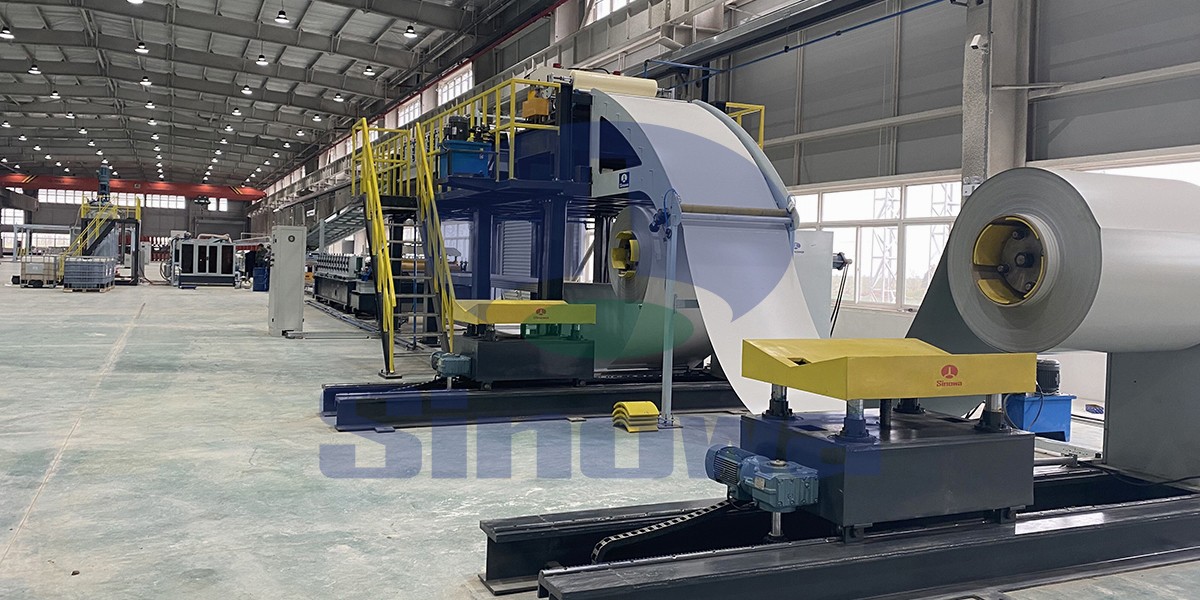
PU Sandwich Panel Making Machine
Sinowa is pu sandwich panel making machine manufacturer from china, dedicated to the research and development of high-end and high-efficiency, Sinowa is comprehensively taking the leading position in terms of efficiency, automation control level, HMI, environment protection and energy consumption, with subversive designs made in some critical technological fields to procure exceptional cost performance and customer-friendly experience for the entire pu sandwich panel making machine. The adoption of system integration technology and bus control technology accomplishes the full automatization of integrated and coordinated control of the entire pu sandwich panel making machine with accessible remote interactive communication. Ranking the first-class level in the world, it is currently the pu sandwich panel making machine in the market taking a comprehensive lead in high performance.
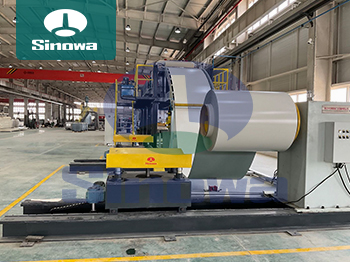
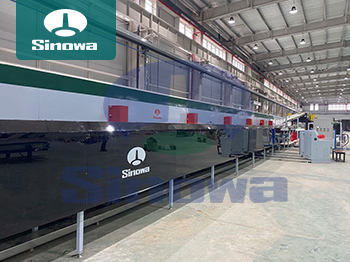
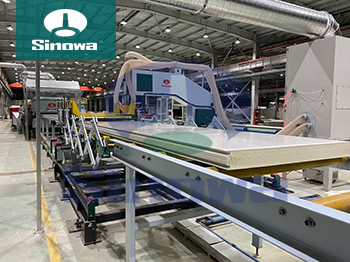
Based on the continuous technological pursuit, the pu sandwich panel making machine developed by Sinowa provides you with high-efficiency industrial value. Based on China's cost advantage and our hard-working technology concept, our pu sandwich panel making machine has a world-leading price-performance advantage. pu sandwich panel making machine can meet a variety of production needs of customers.The whole pu sandwich panel making machine design concept of modularization enables all our components to be integrated and combined at will. Our pu sandwich panel making machine can easily automate the production of roof sandwich panel, wall sandwich panel, cold storage sandwich panel and other products by different combination and configuration selection and siple switching. The inner core layer can be polyrethane or rock wool, glass wool, an so on.
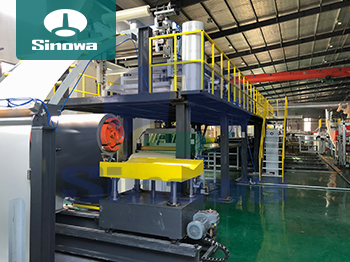


The pu sandwich panel making machine has high adaptability, which may produce various sandwich panel of the PU, PIR and rock wool systems. We may design various products according to the customer’s requirements, including various configurations, so as to meet their demands with flexible price system. Highly integrated and linked control system centralizes all control points at the main central center, achieving parameter linkage, fault self-diagnosis controlled by the whole line and shipping distance control. High-level automatic control system also saves the manpower and reduces the manpower loss for customers.


Concentrated system control is fully realized in the practice of concentrated process control so that the control system of all the movements of the parts in the pu sandwich panel making machine is integrated in one process control console with accessible remote communication to elevate the automation and reduce the allocated number of personnel for the assembly line. The main engine with modularized design achieves the precision operation of the pu sandwich panel making machine, stable and reliable quality, less part and maintenance loss. The whole pu sandwich panel making machine has over 40 innovative inventions, making our products have lots of unique features and the comprehensive performance of our pu sandwich panel making machine leading in the industry.


The precision servo hoisting mechanism employed by the main engine without hydraulic system makes the board thickness control flexible and the customer may conveniently change or adjust the board thickness. There will be not such troubles as hydraulic system adjustment, leakage, maintenance, etc. High-level energy saving and protection design makes the whole pu sandwich panel making machine possible to produce around the clock throughout the year and the customer will save huge budget. In addition, the isolated heat preservation room is constructed for warming the environment. The energy saving and protection design of our pu sandwich panel making machine may guarantee that the customer’s production line may be freely heated and produce in the main time to save more costs for customers.


The high-power low-consumption design quickens the reaction of the pu sandwich panel making machine while energy consumption is kept low. With the brand-new, fully sealed inner insulation design, the energy consumption is controlled at the minimum level to achieve the design objective of less than an hour for the insulation system to be activated from the room temperature above 5℃ to the production process temperature. The energy consumption is only 40% that of those similar products.
Polyurethane (PU) sandwich panel making machines stand as core industrial equipment dedicated to the mass production of high-performance composite sandwich panels, which consist of a rigid PU foam core tightly bonded between two outer facing sheets. These machines integrate mechanical engineering, automated control, chemical foaming technology, and material processing into a unified system, delivering efficient, stable, and customizable production solutions for modern construction, cold chain logistics, industrial manufacturing, and other key sectors. Unlike simple single-function machinery, a complete PU sandwich panel production line is a complex assembly of interconnected modules, each designed to perform a specific task in a sequential workflow, ensuring the final product meets consistent standards of structural integrity, thermal insulation, and durability. The design and construction of these machines are tailored to adapt to diverse production scales, material specifications, and end-use requirements, making them one of the most versatile pieces of equipment in the composite building material industry. Every component of the machine is engineered to withstand long hours of continuous operation, resist wear from raw material processing, and maintain precise control over critical production parameters, which directly determines the quality and performance of the finished PU sandwich panels.
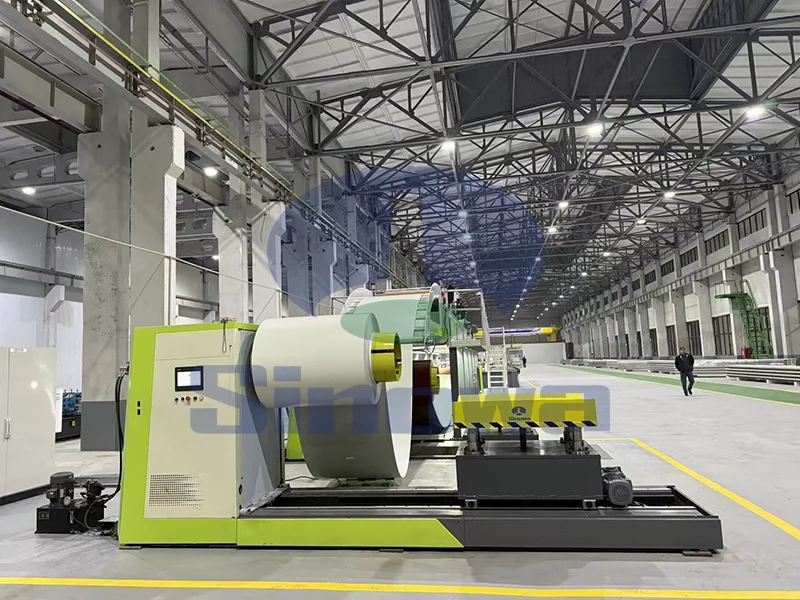
At the core of the PU sandwich panel making machine’s structure lies a fully integrated production line, which can be broken down into several key functional modules that work in seamless coordination. The first module is the raw material feeding and uncoiling system, which is responsible for handling the outer facing sheets, typically metal sheets such as steel or aluminum, but also compatible with other non-metal facing materials for specialized applications. This module includes heavy-duty uncoilers, sheet straightening mechanisms, precision guiding rollers, and tension control devices, all designed to ensure the facing sheets are fed into the production line smoothly, without warping, skewing, or surface damage. The uncoilers are built with sturdy frames to support large coils of facing material, while the tension control system maintains consistent sheet tension throughout the feeding process, preventing misalignment that could compromise the final panel’s structure. Following the feeding system is the roll forming section, which shapes the flat facing sheets into predefined profiles, such as flat, corrugated, trapezoidal, or interlocking designs, based on production needs. This section features a series of precision-machined rolling stands, each equipped with hardened steel rollers that gradually bend and form the sheet incrementally, avoiding cracks or deformation in the material. The roll forming units are adjustable, allowing operators to modify the profile shape and sheet thickness within a specified range without replacing the entire roller set, enhancing the machine’s flexibility.
The most critical module of the entire machine is the PU foaming and laminating system, which is responsible for mixing, injecting, and curing the PU foam core that defines the panel’s insulation and structural properties. This system consists of a high-precision raw material metering unit, a dynamic mixing chamber, a uniform injection mechanism, and a temperature-controlled laminating zone. The metering unit accurately controls the ratio of the two primary PU raw materials—polyol and isocyanate—ensuring a perfect chemical mix that leads to consistent foam density, cell structure, and bonding strength. The mixing chamber uses high-pressure impingement mixing to blend the two components thoroughly, eliminating uneven mixing that could result in weak spots or incomplete foaming. The mixed PU material is then injected evenly into the gap between the upper and lower facing sheets as they move through the laminating zone, where controlled pressure and temperature trigger the foaming and curing reaction. The laminating section is equipped with a continuous conveyor belt, pressure rollers, and heating or cooling devices to regulate the foaming speed and curing rate, ensuring the foam expands uniformly to fill the entire cavity and forms a strong, permanent bond with both facing sheets. This module is designed with precision control systems to adjust foam density, injection speed, and curing temperature, allowing the production of panels with varying insulation levels and load-bearing capacities.
Additional structural components include the precision cutting system, panel conveying and stacking system, and the central automated control cabinet. The cutting system uses high-speed saws or cutting blades synchronized with the production line speed to cut the continuous panel strip into fixed, customized lengths with tight dimensional tolerances, ensuring each panel is uniform and ready for direct use. The conveying and stacking system transports the finished panels away from the production line, gently stacking them to prevent surface scratches or structural damage, and can be configured for manual or automated stacking based on production scale. The central control cabinet serves as the brain of the entire machine, integrating touch-screen interfaces, programmable logic controllers, and a network of sensors to monitor and adjust all production parameters in real time, including line speed, material ratio, temperature, pressure, and cutting length. This centralized control system minimizes manual intervention, reduces human error, and ensures consistent production quality across long running cycles. The entire machine frame is constructed with heavy-duty steel profiles, providing exceptional stability and rigidity to absorb vibrations from the roll forming and cutting processes, maintaining overall precision even during high-speed operation. All moving parts are equipped with lubrication systems and wear-resistant components to extend service life and reduce maintenance requirements, making the machine suitable for sustained industrial use.
The performance characteristics of PU sandwich panel making machines are what set them apart in the composite material production industry, with a focus on precision, efficiency, stability, and adaptability. One of the standout performance features is high production efficiency, with continuous production models capable of operating at consistent line speeds to deliver large volumes of finished panels per hour, significantly outpacing manual or semi-automatic production methods. The automated coordination between all modules eliminates downtime between processes, such as coil changes, material refills, or parameter adjustments, maximizing overall production uptime. Precision is another core performance metric, as the machine maintains tight tolerances for panel thickness, width, length, and foam density across every production batch. The metering system for PU raw materials operates with minimal deviation, ensuring uniform foam structure throughout the panel, which directly translates to consistent thermal insulation, sound absorption, and structural strength. The roll forming and laminating sections maintain precise alignment and pressure distribution, preventing issues such as delamination, uneven foam distribution, or surface unevenness in the final product.
These machines also exhibit exceptional operational stability, designed to run continuously for extended periods without performance degradation, even under heavy industrial production demands. The robust frame and high-quality mechanical components resist wear and tear, while the automated control system includes fault detection and early warning functions to identify potential issues before they cause production interruptions. Temperature and pressure control systems maintain stable operating conditions within the foaming and laminating zones, unaffected by external environmental changes, ensuring consistent product quality in different working environments. Adaptability is a key performance advantage, as the machines can be adjusted to produce panels of varying specifications, including different thicknesses ranging from a few centimeters to over 30 centimeters, different widths, and diverse facing materials. They can also accommodate modified PU foam formulations, such as fire-resistant or high-density foam cores, without requiring extensive structural modifications to the machine. Additionally, the machines are designed for user-friendly operation, with intuitive control interfaces that allow trained operators to set production parameters, switch between panel specifications, and perform routine maintenance with ease. Energy efficiency is another notable performance aspect, with optimized motor systems, heating systems, and control logic designed to minimize energy consumption during operation, reducing long-term operational costs for manufacturers.
PU sandwich panel making machines are classified into distinct categories based on production process, automation level, and application scope, each tailored to meet different production needs and operational scales. The primary classification is based on production technology, dividing machines into continuous production lines and discontinuous (batch-type) production machines. Continuous production lines are the most commonly used type for large-scale industrial manufacturing, featuring a fully automated, uninterrupted workflow from raw material feeding to finished panel stacking. These lines are ideal for high-volume, standardized panel production, offering unmatched efficiency and consistency, and are widely adopted by large-scale building material manufacturers. Discontinuous production machines, on the other hand, operate on a batch production basis, using hydraulic press systems to form and cure individual panels or small batches. This type of machine is more compact, flexible, and cost-effective for small-scale production, custom panel orders, or specialized panel manufacturing that requires frequent design changes, making it suitable for small to medium-sized manufacturers or businesses focusing on customized projects.
Classification by automation level divides the machines into fully automatic, semi-automatic, and manual models, though fully automatic models dominate the modern market due to their efficiency and quality advantages. Fully automatic machines require minimal human intervention, with automated feeding, forming, foaming, cutting, and stacking processes, and centralized control for all parameters. Semi-automatic machines require manual operation for certain steps, such as raw material loading or panel stacking, making them a middle-ground option for manufacturers with moderate production demands and limited initial investment capacity. Manual machines are rare in large-scale production and are only used for extremely small-scale or experimental production, as they lack the efficiency and consistency required for commercial manufacturing. Machines can also be classified by the type of panels they produce, including standard insulation panel machines, fire-resistant panel machines, high-strength structural panel machines, and specialized cold storage panel machines, each optimized to enhance specific performance features of the final product, such as fire resistance, load-bearing capacity, or extreme thermal insulation.
The versatility of PU sandwich panel making machines directly translates to the wide-ranging applications of the panels they produce, spanning multiple industries and sectors worldwide. The most prominent application is in the construction industry, where PU sandwich panels are widely used for industrial workshops, warehouses, commercial buildings, residential prefabricated structures, and modular buildings. The panels serve as both wall and roof cladding, offering exceptional thermal insulation, lightweight construction, quick installation, and structural stability, making them a preferred choice for modern, energy-efficient building projects. Their lightweight nature reduces the overall load on building structures, while their durability ensures long service life with minimal maintenance, making them suitable for both permanent and temporary construction projects.
In the cold chain and refrigeration industry, PU sandwich panels are indispensable for the construction of cold storage warehouses, refrigerated trucks, frozen food processing plants, and cold chain logistics facilities. The closed-cell structure of the PU foam core provides outstanding thermal insulation performance, minimizing heat transfer and maintaining stable low temperatures inside cold storage spaces, which significantly reduces energy consumption for refrigeration systems. The panels’ airtight and moisture-resistant properties also prevent condensation and frost buildup, preserving the quality of perishable goods and extending the service life of refrigeration equipment. This makes the panels produced by these machines critical for the global food supply chain, supporting the storage and transportation of fresh produce, frozen foods, and pharmaceutical products that require temperature-controlled environments.
Additional applications include the manufacturing of clean rooms for pharmaceutical, electronics, and food processing industries, where the panels’ smooth, easy-to-clean surfaces and insulation properties help maintain controlled environmental conditions. They are also used in agricultural facilities such as greenhouses and livestock breeding houses, providing stable temperature and humidity control to optimize growing and breeding conditions. In the transportation industry, the panels are used to fabricate bodies for refrigerated vehicles, insulated containers, and mobile cold storage units, leveraging their lightweight and high-strength properties to reduce vehicle weight while maintaining insulation performance. Furthermore, PU sandwich panels are used in specialized industrial settings that require sound insulation, fire resistance, and corrosion resistance, with the machine’s adjustable production parameters allowing the creation of panels tailored to these specific industrial needs.
In summary, PU sandwich panel making machines represent a sophisticated integration of mechanical, automation, and chemical technologies, with a well-designed structural layout that ensures efficient and precise production, outstanding performance that meets diverse industrial standards, a flexible classification system that caters to different production scales, and a broad range of applications that drive progress in multiple key industries. As global demand for energy-efficient, sustainable, and high-performance building materials continues to rise, these machines will remain a cornerstone of composite panel manufacturing, evolving with technological advancements to offer higher efficiency, greater precision, and wider adaptability. Their role in reducing construction time, lowering energy consumption, and improving the durability of built environments cannot be overstated, making them an essential piece of equipment for modern industrial and construction manufacturing. The continuous optimization of their structure and performance will further expand their application potential, supporting the development of greener, more efficient, and more sustainable manufacturing practices across the globe.
《PU Sandwich Panel Making Machine》Update Date: 2026/3/19
URL: https://www.sinowamachine.cn/en/tag/pu-sandwich-panel-making-machine.html
- PU Sandwich Panel Making Machine
- Rockwool Sandwich Panel Production Line
- PU Sandwich Panel Machine
- PU Sandwich Panel Production Line
- Mineral Wool Sandwich Panel Machine
- PUF Panel Machine
- Rock Wool Sandwich Panel Line
- Sandwich Panel Machines
- Sandwich Panel Lines
- Rockwool Sandwich Panel Machine
- Rockwool Sandwich Panel Line
- PU Sandwich Panel Line
- PU Panel Machine
- Foam Forming Machine
- Continuous Sandwich Panel Line
- Continuous PU Sandwich Panel Line
- PIR Sandwich Panel Line
- Polyurethane Sandwich Panel Line
- Automatic PU Sandwich Panel Production Line
- PU Foam Sandwich Panel Production Line