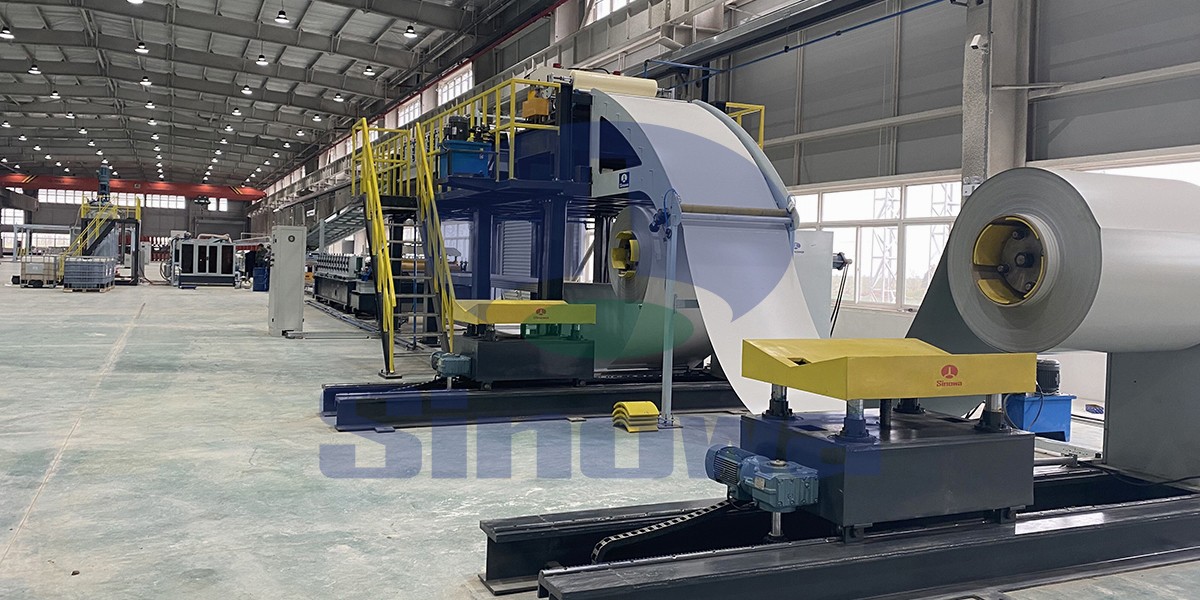
Continuous Sandwich Panel Line
Sinowa is continuous sandwich panel line manufacturer from china, dedicated to the research and development of high-end and high-efficiency, Sinowa is comprehensively taking the leading position in terms of efficiency, automation control level, HMI, environment protection and energy consumption, with subversive designs made in some critical technological fields to procure exceptional cost performance and customer-friendly experience for the entire continuous sandwich panel line. The adoption of system integration technology and bus control technology accomplishes the full automatization of integrated and coordinated control of the entire continuous sandwich panel line with accessible remote interactive communication. Ranking the first-class level in the world, it is currently the continuous sandwich panel line in the market taking a comprehensive lead in high performance.
Based on the continuous technological pursuit, the continuous sandwich panel line developed by Sinowa provides you with high-efficiency industrial value. Based on China's cost advantage and our hard-working technology concept, our continuous sandwich panel line has a world-leading price-performance advantage. continuous sandwich panel line can meet a variety of production needs of customers.The whole continuous sandwich panel line design concept of modularization enables all our components to be integrated and combined at will. Our continuous sandwich panel line can easily automate the production of roof sandwich panel, wall sandwich panel, cold storage sandwich panel and other products by different combination and configuration selection and siple switching. The inner core layer can be polyrethane or rock wool, glass wool, an so on.
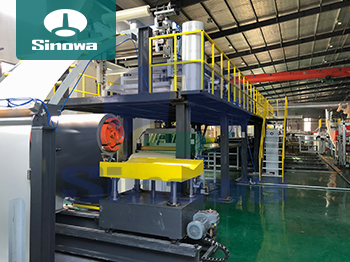


The continuous sandwich panel line has high adaptability, which may produce various sandwich panel of the PU, PIR and rock wool systems. We may design various products according to the customer’s requirements, including various configurations, so as to meet their demands with flexible price system. Highly integrated and linked control system centralizes all control points at the main central center, achieving parameter linkage, fault self-diagnosis controlled by the whole line and shipping distance control. High-level automatic control system also saves the manpower and reduces the manpower loss for customers.


Concentrated system control is fully realized in the practice of concentrated process control so that the control system of all the movements of the parts in the continuous sandwich panel line is integrated in one process control console with accessible remote communication to elevate the automation and reduce the allocated number of personnel for the assembly line. The main engine with modularized design achieves the precision operation of the continuous sandwich panel line, stable and reliable quality, less part and maintenance loss. The whole continuous sandwich panel line has over 40 innovative inventions, making our products have lots of unique features and the comprehensive performance of our continuous sandwich panel line leading in the industry.


The precision servo hoisting mechanism employed by the main engine without hydraulic system makes the board thickness control flexible and the customer may conveniently change or adjust the board thickness. There will be not such troubles as hydraulic system adjustment, leakage, maintenance, etc. High-level energy saving and protection design makes the whole continuous sandwich panel line possible to produce around the clock throughout the year and the customer will save huge budget. In addition, the isolated heat preservation room is constructed for warming the environment. The energy saving and protection design of our continuous sandwich panel line may guarantee that the customer’s production line may be freely heated and produce in the main time to save more costs for customers.


The high-power low-consumption design quickens the reaction of the continuous sandwich panel line while energy consumption is kept low. With the brand-new, fully sealed inner insulation design, the energy consumption is controlled at the minimum level to achieve the design objective of less than an hour for the insulation system to be activated from the room temperature above 5℃ to the production process temperature. The energy consumption is only 40% that of those similar products.
In the realm of modern manufacturing, the pursuit of efficiency, consistency, and versatility has driven the evolution of production lines across various industries. Among these, the continuous sandwich panel line stands out as a pivotal innovation, revolutionizing the way composite sandwich panels are produced. These panels, characterized by their three-layer structure consisting of two outer facings and a core material, have become indispensable in construction, transportation, refrigeration, and numerous other sectors due to their exceptional thermal insulation, structural strength, and lightweight properties. The continuous production mode, as opposed to the discontinuous alternative, has emerged as the preferred choice for large-scale manufacturing, offering unparalleled advantages in terms of productivity, quality control, and cost-effectiveness.
At the heart of a continuous sandwich panel line lies a seamless, integrated production process that ensures the uninterrupted fabrication of sandwich panels from raw material input to finished product output. Unlike discontinuous production, where materials are processed in batches, cut to length before assembly, and cured in separate presses, the continuous line processes all components simultaneously in a continuous flow. The fundamental working principle revolves around the precise coordination of multiple stages: unwinding and processing of facing materials, preparation and application of core material, lamination and curing, and finally, precision cutting to the desired length—all while the production line remains in constant motion. This continuous operation eliminates the downtime associated with batch processing, significantly boosting overall production efficiency and enabling manufacturers to meet high-volume demands efficiently.
The core components of a continuous sandwich panel line are meticulously designed to work in harmony, ensuring each stage of the production process is executed with precision and consistency. The line typically begins with unwinding units, which handle the outer facing materials—commonly galvanized steel, galvalume, aluminum, or flexible materials like aluminum foil and non-woven fabrics. These unwinding units are equipped with correction systems to ensure the facing materials are fed into the line smoothly and aligned correctly, preventing misalignment that could compromise the final product's quality. Following the unwinding stage, the facing materials often pass through pre-heating devices. Pre-heating is a critical step as it optimizes the adhesion between the facings and the core material, enhances the curing process of the core, and ensures uniform thermal distribution across the panel. The temperature of the pre-heating process is carefully controlled based on the type of facing material and core material being used, ensuring optimal performance without damaging the materials.
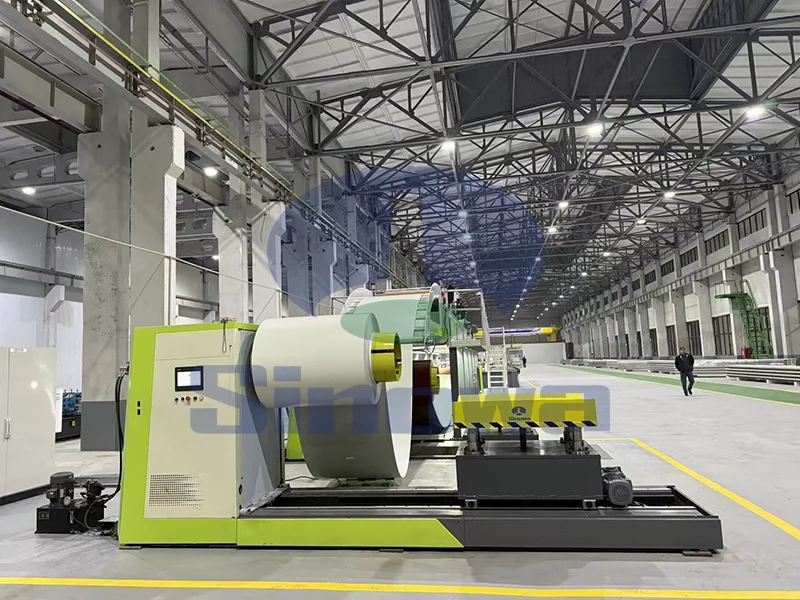
Next in the production sequence is the core material application system, which is tailored to the type of core being used—whether it be polyurethane (PU), polyisocyanurate (PIR), rock wool, glass wool, or other insulating materials. For foam-based cores like PU and PIR, the system consists of high-pressure metering pumps that accurately proportion the reactive components, which are then mixed in a specialized mixing head. The mixed foam is uniformly dispensed onto the moving lower facing material. The precision of the metering pumps and mixing head is crucial here, as it ensures the core material has a consistent density and composition, directly impacting the panel's thermal insulation and structural integrity. For fibrous cores such as rock wool or glass wool, the system involves feeding and distributing the fibrous material evenly between the two facing layers, often with additional bonding agents to ensure adhesion.
Once the core material is applied, the upper facing material is fed into the line to form the three-layer sandwich structure. This assembly then enters the lamination and curing zone, which is typically a dual-belt laminating conveyor. The dual belts—often made of high-strength steel or heat-resistant materials—apply uniform pressure to the sandwich structure, ensuring the core material is evenly distributed and firmly bonded to the facings. Simultaneously, heating systems integrated into the conveyor belts or the surrounding environment maintain the optimal temperature for the core material to cure or set. For foam cores, this curing process involves the polymerization of the reactive components, transforming the liquid mixture into a rigid, insulating foam. The length of the laminating conveyor is designed to provide sufficient time for the core material to fully cure before the panel exits the zone, ensuring the final product has the required structural stability and performance. Additional components in this zone may include side guiding devices to maintain the panel's width and prevent edge deformation, as well as trimming units to remove any excess material from the edges, ensuring clean, precise panel dimensions.
After the lamination and curing stage, the continuous panel moves to the cutting zone, where it is cut into individual panels of the desired length. The cutting process is performed by an automatic tracking cross-cut saw that moves in synchronization with the speed of the production line, ensuring clean, accurate cuts without stopping the line. This non-stop cutting capability is a key advantage of continuous production, as it eliminates the productivity losses associated with stopping and starting the line for batch cutting. The cut panels then proceed to a conveying and stacking system, where they are sorted, stacked, and prepared for packaging or direct shipment. Throughout the entire production process, a centralized control system monitors and regulates all parameters, including line speed, temperature, pressure, material feed rates, and cutting length. This integrated control system ensures real-time adjustment of variables to maintain consistent product quality, and it often includes fault diagnosis capabilities to detect and alert operators to any issues that may arise, minimizing downtime and reducing waste.
One of the most significant advantages of continuous sandwich panel lines is their exceptional production efficiency. By operating continuously without the need for batch changes or downtime, these lines can achieve much higher output rates compared to discontinuous lines. For example, modern continuous lines can produce panels at speeds ranging from 4 meters per minute to 25 meters per minute, depending on the panel type and thickness. This high productivity makes continuous lines ideal for large-scale projects, such as the construction of industrial warehouses, logistics centers, or large commercial buildings, where large quantities of panels are required within tight deadlines. Additionally, the automation of most processes in a continuous line reduces the need for manual intervention, lowering labor costs and minimizing the potential for human error, which further enhances productivity and consistency.
Consistency and quality control are another major benefit of continuous sandwich panel lines. The integrated nature of the production process, combined with precise automated control, ensures that each panel produced has uniform thickness, core density, and bonding strength. In discontinuous production, variations in material mixing, pressure application, or curing time between batches can lead to inconsistencies in product quality. In contrast, continuous lines maintain a steady state throughout production, with real-time monitoring and adjustment of key parameters to correct any deviations. This consistency is critical for sandwich panels, as variations in core density or bonding can significantly affect their thermal insulation performance and structural integrity. For applications such as cold storage facilities, where thermal efficiency is paramount, the consistent quality of panels produced by continuous lines ensures reliable insulation, reducing energy consumption and operational costs for end-users.
Versatility is also a key characteristic of modern continuous sandwich panel lines. Through modular design, these lines can be easily adapted to produce a wide range of sandwich panel types by changing core materials, facing materials, or adjusting production parameters. For example, a single continuous line can be configured to produce roof panels, wall panels, or cold storage panels by switching between PU, PIR, or rock wool cores, and using different facing materials such as color steel, aluminum, or aluminum foil. The modular design also allows for easy expansion or modification of the line to meet changing production needs, such as increasing output capacity or adding new panel configurations. This versatility makes continuous lines a cost-effective investment for manufacturers, as they can serve multiple market segments without the need for separate production lines for each panel type.
Energy efficiency and sustainability have become increasingly important considerations in manufacturing, and continuous sandwich panel lines have made significant advancements in these areas. Modern lines are designed with energy-saving features such as closed-loop heating systems, high-efficiency motors, and insulation of the curing zone to minimize heat loss. For example, some lines use full closed internal insulation designs that reduce energy consumption by up to 60% compared to older models. Additionally, the precise metering of materials in continuous lines reduces material waste, as the amount of core and facing material used is optimized for each panel. This not only reduces costs but also minimizes the environmental impact of production. Furthermore, the ability to produce panels with high thermal insulation properties contributes to sustainability by reducing the energy consumption of the buildings and structures where these panels are used. For instance, PU and PIR core panels have excellent thermal conductivity, which helps to reduce heating and cooling requirements in buildings, lowering carbon emissions.
The applications of sandwich panels produced by continuous lines are diverse and continue to expand across various industries. In the construction sector, these panels are widely used for roofing, wall cladding, partition walls, and modular buildings. Industrial warehouses and logistics centers benefit from the panels' lightweight nature and quick installation, which reduces construction time and costs. Commercial buildings such as shopping malls, airports, and office buildings use the panels for their aesthetic appeal, thermal insulation, and soundproofing properties. In the refrigeration and cold storage industry, panels with PU or PIR cores are essential due to their excellent thermal insulation, which helps to maintain stable low temperatures required for food storage, pharmaceuticals, and other perishable goods.
The transportation industry is another major user of sandwich panels from continuous lines. High-speed trains, ships, and recreational vehicles use lightweight aluminum honeycomb or PU core panels for interior components such as cabin walls, ceilings, and luggage racks, as they reduce overall vehicle weight while maintaining structural strength. This weight reduction improves fuel efficiency and reduces emissions. Additionally, the panels' soundproofing and thermal insulation properties enhance passenger comfort. In the agricultural sector, sandwich panels are used for the construction of greenhouses, livestock barns, and storage facilities, providing thermal insulation to protect crops and animals from extreme temperatures.
Looking to the future, continuous sandwich panel lines are poised to undergo further innovations driven by advancements in automation, material science, and sustainability. The integration of artificial intelligence (AI) and machine learning into control systems is expected to enhance real-time monitoring and predictive maintenance, allowing operators to anticipate and address potential issues before they cause downtime. For example, AI algorithms can analyze data from sensors throughout the line to detect patterns that indicate equipment wear or material inconsistencies, enabling proactive maintenance and reducing the risk of production disruptions.
Advancements in material science will also play a key role in the evolution of continuous lines. The development of new, more sustainable core materials—such as bio-based foams made from renewable resources like plant oils or agricultural waste—is expected to gain traction, further reducing the environmental impact of panel production. Additionally, the development of high-strength, lightweight facing materials will expand the applications of sandwich panels to new areas, such as aerospace and renewable energy, where weight and performance are critical. For instance, sandwich panels could be used in the construction of wind turbine nacelles or solar panel supports, leveraging their strength-to-weight ratio.
Modularization and customization will continue to be important trends, as manufacturers seek to meet the diverse needs of customers with greater flexibility. Future continuous lines may feature more advanced modular designs that allow for even faster changeovers between panel types, enabling small-batch production of customized panels without sacrificing efficiency. Additionally, the integration of robotic systems for material handling, cutting, and stacking will further reduce manual intervention, improving productivity and safety.
Sustainability will remain a driving force, with further improvements in energy efficiency and waste reduction. The development of recycling technologies for sandwich panels will address the end-of-life disposal challenges, making the entire lifecycle of the product more sustainable. For example, advancements in chemical or mechanical recycling processes could allow for the separation of core and facing materials, enabling them to be reused or repurposed. This circular economy approach will not only reduce environmental impact but also create new value streams for manufacturers.
In conclusion, continuous sandwich panel lines have transformed the production of composite sandwich panels, offering unmatched efficiency, consistency, versatility, and sustainability. Their integrated design and automated processes have made them the preferred choice for large-scale manufacturing, supporting the growing demand for high-quality sandwich panels across construction, transportation, refrigeration, and other industries. As technology continues to advance, these lines will become even more efficient, flexible, and sustainable, driving further innovation in material science and expanding the applications of sandwich panels. The continuous sandwich panel line is not just a manufacturing tool but a cornerstone of modern, sustainable construction and industrial development, contributing to the creation of more energy-efficient, durable, and cost-effective buildings and products.
《Continuous Sandwich Panel Line》Update Date: 2026/1/15
URL: https://www.sinowamachine.cn/en/tag/continuous-sandwich-panel-line.html
- PU Sandwich Panel Making Machine
- Rockwool Sandwich Panel Production Line
- PU Sandwich Panel Machine
- PU Sandwich Panel Production Line
- Mineral Wool Sandwich Panel Machine
- PUF Panel Machine
- Rock Wool Sandwich Panel Line
- Sandwich Panel Machines
- Sandwich Panel Lines
- Rockwool Sandwich Panel Machine
- Rockwool Sandwich Panel Line
- PU Sandwich Panel Line
- PU Panel Machine
- Foam Forming Machine
- Continuous Sandwich Panel Line
- Continuous PU Sandwich Panel Line
- PIR Sandwich Panel Line
- Polyurethane Sandwich Panel Line
- Automatic PU Sandwich Panel Production Line
- PU Foam Sandwich Panel Production Line