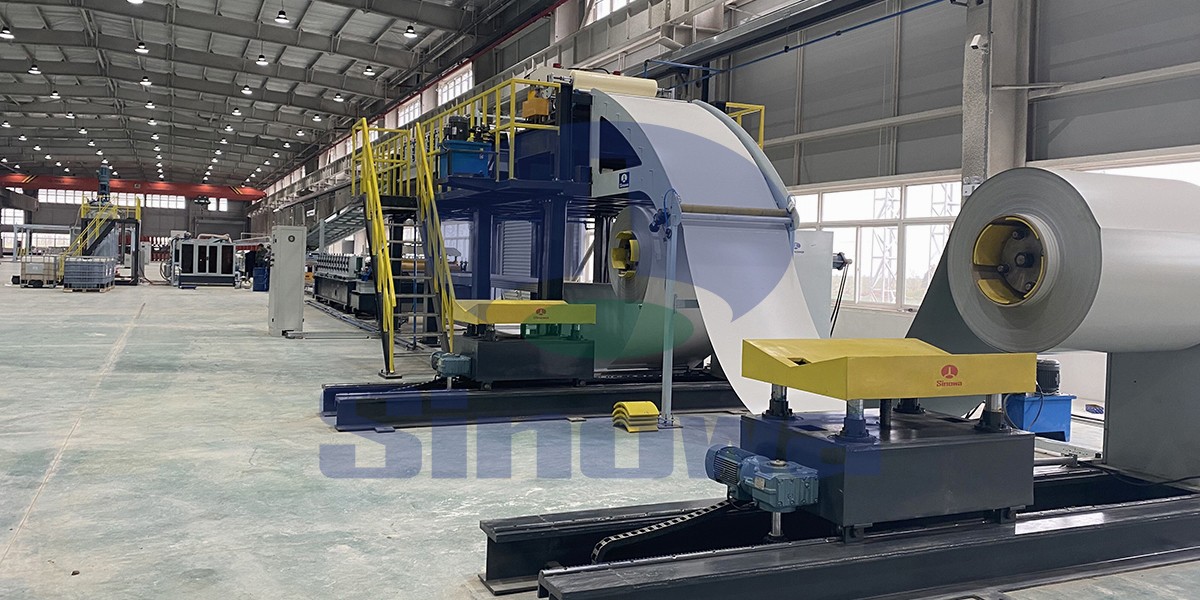
Polyurethane Sandwich Panel Manufacturing Line
Sinowa is polyurethane sandwich panel manufacturing line manufacturer from china, dedicated to the research and development of high-end and high-efficiency, Sinowa is comprehensively taking the leading position in terms of efficiency, automation control level, HMI, environment protection and energy consumption, with subversive designs made in some critical technological fields to procure exceptional cost performance and customer-friendly experience for the entire polyurethane sandwich panel manufacturing line. The adoption of system integration technology and bus control technology accomplishes the full automatization of integrated and coordinated control of the entire polyurethane sandwich panel manufacturing line with accessible remote interactive communication. Ranking the first-class level in the world, it is currently the polyurethane sandwich panel manufacturing line in the market taking a comprehensive lead in high performance.
Based on the continuous technological pursuit, the polyurethane sandwich panel manufacturing line developed by Sinowa provides you with high-efficiency industrial value. Based on China's cost advantage and our hard-working technology concept, our polyurethane sandwich panel manufacturing line has a world-leading price-performance advantage. polyurethane sandwich panel manufacturing line can meet a variety of production needs of customers.The whole polyurethane sandwich panel manufacturing line design concept of modularization enables all our components to be integrated and combined at will. Our polyurethane sandwich panel manufacturing line can easily automate the production of roof sandwich panel, wall sandwich panel, cold storage sandwich panel and other products by different combination and configuration selection and siple switching. The inner core layer can be polyrethane or rock wool, glass wool, an so on.
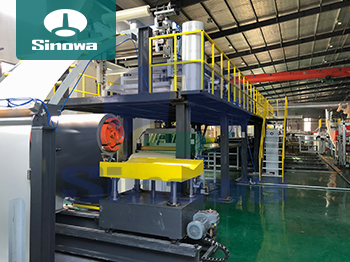


The polyurethane sandwich panel manufacturing line has high adaptability, which may produce various sandwich panel of the PU, PIR and rock wool systems. We may design various products according to the customer’s requirements, including various configurations, so as to meet their demands with flexible price system. Highly integrated and linked control system centralizes all control points at the main central center, achieving parameter linkage, fault self-diagnosis controlled by the whole line and shipping distance control. High-level automatic control system also saves the manpower and reduces the manpower loss for customers.


Concentrated system control is fully realized in the practice of concentrated process control so that the control system of all the movements of the parts in the polyurethane sandwich panel manufacturing line is integrated in one process control console with accessible remote communication to elevate the automation and reduce the allocated number of personnel for the assembly line. The main engine with modularized design achieves the precision operation of the polyurethane sandwich panel manufacturing line, stable and reliable quality, less part and maintenance loss. The whole polyurethane sandwich panel manufacturing line has over 40 innovative inventions, making our products have lots of unique features and the comprehensive performance of our polyurethane sandwich panel manufacturing line leading in the industry.


The precision servo hoisting mechanism employed by the main engine without hydraulic system makes the board thickness control flexible and the customer may conveniently change or adjust the board thickness. There will be not such troubles as hydraulic system adjustment, leakage, maintenance, etc. High-level energy saving and protection design makes the whole polyurethane sandwich panel manufacturing line possible to produce around the clock throughout the year and the customer will save huge budget. In addition, the isolated heat preservation room is constructed for warming the environment. The energy saving and protection design of our polyurethane sandwich panel manufacturing line may guarantee that the customer’s production line may be freely heated and produce in the main time to save more costs for customers.


The high-power low-consumption design quickens the reaction of the polyurethane sandwich panel manufacturing line while energy consumption is kept low. With the brand-new, fully sealed inner insulation design, the energy consumption is controlled at the minimum level to achieve the design objective of less than an hour for the insulation system to be activated from the room temperature above 5℃ to the production process temperature. The energy consumption is only 40% that of those similar products.
In the modern construction and industrial sectors, polyurethane sandwich panels have gained widespread recognition for their superior thermal insulation, structural rigidity, lightweight properties and quick installation capabilities. These composite panels, consisting of a polyurethane foam core bonded between two facing materials, have become indispensable in applications ranging from industrial warehouses and cold storage facilities to prefabricated buildings and modular constructions. The backbone of the mass production of high-quality polyurethane sandwich panels lies in the advanced manufacturing lines that integrate mechanical engineering, chemical processing, automatic control and material science.

Core Components of Polyurethane Sandwich Panel Manufacturing Lines
A standard polyurethane sandwich panel manufacturing line is a sophisticated integrated system composed of multiple functional units, each playing a vital role in ensuring the efficiency, precision and quality of the final product. These components work in tandem to complete the continuous production process from raw material feeding to finished product stacking. The key components can be categorized into five main modules: facing material processing unit, raw material storage and metering unit, foaming and lamination unit, post-processing unit and automatic control system.
1. Facing Material Processing Unit
The facing material processing unit is responsible for preparing the outer layers of the sandwich panel, which provide structural strength, weather resistance and aesthetic appeal. Common facing materials include metal sheets (such as steel or aluminum coils), aluminum foil, fiberglass paper and other flexible or rigid substrates. This unit primarily consists of decoilers, leveling devices, roll forming machines and preheating equipment.
Decoilers are designed to unwind large coils of facing materials smoothly and continuously. Double decoilers are often adopted to ensure uninterrupted production, allowing for coil replacement without halting the entire line. Leveling devices are used to eliminate wrinkles and unevenness from the uncoiled sheets, ensuring a flat surface for subsequent processing. Roll forming machines shape the flat sheets into desired profiles through a series of tandem rolling stands, which progressively bend the material into specific cross-sectional shapes according to application requirements. Preheating equipment is a crucial component in this unit; it heats the facing materials to a controlled temperature (typically between 40°C and 60°C) before the foaming process. This preheating step stabilizes the polymerization reaction of polyurethane, enhances the adhesion between the facing materials and the foam core, and improves the overall bonding strength of the sandwich panel.
2. Raw Material Storage and Metering Unit
The raw material storage and metering unit is responsible for the safe storage, precise proportioning and stable feeding of the chemicals required for polyurethane foam production. The main raw materials include polyol and isocyanate, along with various additives such as catalysts, foaming agents, flame retardants and stabilizers. This unit comprises storage tanks, transfer pumps, filters, metering devices and temperature control systems.
Storage tanks are equipped with temperature control and insulation systems to maintain the raw materials at optimal temperatures, preventing crystallization or degradation. Transfer pumps and filters ensure the smooth and clean transportation of raw materials to the metering devices. Metering devices are the core of this unit, as they accurately control the ratio of polyol, isocyanate and additives. High-precision metering pumps are used to achieve consistent mixing ratios, which directly affect the foam density, thermal insulation performance and mechanical strength of the final product. For environmentally friendly production, modern lines often use pentane-based foaming agents instead of traditional ozone-depleting substances, requiring specialized storage and handling systems to ensure safety due to pentane's flammable nature.
3. Foaming and Lamination Unit
The foaming and lamination unit is the heart of the manufacturing line, where the polyurethane foam core is formed and bonded to the facing materials. This unit mainly includes mixing heads, foaming stations and double-belt laminating conveyors.
There are two main foaming technologies: low-pressure foaming and high-pressure foaming. High-pressure foaming is widely adopted in modern automated lines due to its superior performance. High-pressure foaming systems operate at a mixing chamber pressure of 120 to 200 bar, ensuring intense mixing of raw materials and producing foam with a uniform cell structure, which enhances thermal insulation performance. The mixing head design of high-pressure systems prevents foam blockage, and automatic circulation cleaning devices activate when the line stops, using high-pressure airflow to clean the mixing chamber without leaving residues, making the process environmentally friendly and easy to operate. In contrast, low-pressure foaming systems have lower mixing efficiency, resulting in uneven foam structure and lower insulation performance, and they require solvent cleaning, which is less environmentally friendly.
The foaming process begins with the mixed raw materials being injected onto the preheated lower facing material through the mixing head. The upper facing material, which has also undergone preprocessing, is then fed into the double-belt laminating conveyor simultaneously. The double-belt conveyor consists of two parallel steel belts supported by rollers, which apply uniform pressure to the sandwich structure as it moves forward. Within the conveyor, the polyurethane mixture undergoes a polymerization reaction, expanding to form a rigid foam core and bonding firmly to the upper and lower facing materials. The conveyor's speed and pressure are precisely controlled to ensure the proper thickness and density of the foam core.
4. Post-Processing Unit
The post-processing unit is responsible for shaping the continuous sandwich panel into finished products of specific sizes and performing quality inspections and packaging. This unit includes cooling devices, trimming equipment, cutting machines, stacking systems and packaging equipment.
After exiting the laminating conveyor, the sandwich panel enters the cooling zone. Cooling devices, such as air-cooled or water-cooled systems, accelerate the curing of the polyurethane foam, ensuring dimensional stability and mechanical strength. Trimming equipment is used to trim the edges of the panel to achieve precise width dimensions and smooth edges. Cutting machines, including transverse and longitudinal saws, cut the continuous panel into fixed lengths according to customer requirements. Modern lines are equipped with multi-blade cutting devices and contour cutting systems to handle various shapes and sizes. Stacking systems use automated arms or conveyors to stack the cut panels neatly, and packaging equipment wraps the stacks with shrink film to protect them from damage during transportation and storage. Some advanced lines also integrate additional processes such as punching, embossing and inkjet printing according to application needs.
5. Automatic Control System
The automatic control system is the "brain" of the manufacturing line, overseeing and coordinating all production processes. Modern lines adopt PLC (Programmable Logic Controller) computer control systems with user-friendly human-machine interfaces. This system integrates "wet end" control (managing raw material metering, mixing and foaming) and "dry end" control (managing facing material processing, lamination, cutting and stacking).
The control system monitors and adjusts key parameters in real time, such as the temperature of raw materials and facing materials, the mixing ratio of chemicals, the speed of conveyors, the pressure of the laminating belt and the cutting length. Advanced systems also feature visual monitoring and fault diagnosis functions, allowing operators to quickly identify and resolve production issues. The automation level of the control system directly affects production efficiency, product consistency and operational safety. High-level automation enables rapid product changeovers, reducing downtime and improving production flexibility.
Operational Processes of Polyurethane Sandwich Panel Manufacturing Lines
The production process of polyurethane sandwich panels is a continuous and automated workflow that can be divided into six main stages: preprocessing of facing materials, preparation of raw materials, foaming and lamination, cooling and curing, post-processing and finished product inspection.
Preprocessing of Facing Materials
The process starts with the uncoiling of facing material coils by decoilers. The uncoiled sheets pass through leveling devices to remove any defects. For metal facing materials, roll forming machines shape the sheets into the desired profiles. The shaped facing materials are then sent to preheating equipment, where they are heated to the optimal temperature to ensure good adhesion with the foam core. During this stage, the control system adjusts the speed of the decoilers and the temperature of the preheater to match the subsequent production rhythm.Preparation of Raw Materials
Meanwhile, the raw materials (polyol, isocyanate and additives) stored in the tanks are heated or cooled to the required temperature. The metering devices precisely measure the raw materials according to the preset ratio, and transfer them to the mixing head through pipelines. Filters installed in the pipelines remove impurities to ensure the purity of the raw materials, which is crucial for the quality of the foam core.Foaming and Lamination
The metered raw materials are injected into the mixing head, where they are intensely mixed under high pressure. The mixed polyurethane mixture is then deposited onto the preheated lower facing material at the foaming station. The upper facing material is fed into the double-belt laminating conveyor at the same time, and the two facing materials with the foam mixture in between are conveyed forward by the double belts. As they move along the conveyor, the polyurethane mixture undergoes a chemical reaction, expanding to form a rigid foam core and bonding tightly to the upper and lower facing materials. The pressure and speed of the double belts are precisely controlled to ensure the foam core reaches the desired thickness and density.Cooling and Curing
After leaving the laminating conveyor, the continuous sandwich panel enters the cooling zone. The cooling system rapidly reduces the temperature of the panel, accelerating the curing of the polyurethane foam. The curing time depends on the foam formulation and cooling efficiency, and it is crucial to ensure that the foam is fully cured before proceeding to the next stage to avoid dimensional changes or bonding failures.Post-Processing
The cooled panel is first trimmed by edge trimming equipment to remove excess material from the sides, ensuring uniform width. Then, the transverse cutting machine cuts the continuous panel into finished products of the required length. The cut panels are conveyed to the stacking system, where they are stacked neatly. Finally, the packaging equipment wraps the stacks with shrink film to protect them from moisture, dust and damage during transportation.Finished Product Inspection
Quality inspection is an integral part of the production process. Inspectors check the dimensions, thickness, flatness, bonding strength and surface quality of the finished panels. Random samples are taken for further testing, such as thermal conductivity, compressive strength and flame retardancy, to ensure that the products meet the required performance standards. Defective products are removed from the production line, and the control system is adjusted to correct any deviations in the production process.
Technological Advancements in Manufacturing Lines
With the growing demand for high-performance, environmentally friendly and customized polyurethane sandwich panels, manufacturing lines have undergone significant technological advancements in recent years. These advancements focus on improving production efficiency, product quality, environmental sustainability and automation levels.
High-Speed and High-Capacity Production Technology
Modern manufacturing lines are designed for high-speed continuous production. Advanced double-belt laminating conveyors can operate at speeds of up to 60 meters per minute, enabling a production capacity of 4300 square meters per hour for 50mm thick, 1200mm wide panels. This high-capacity production is achieved through optimized conveyor design, high-efficiency foaming systems and precise control of production parameters. The use of high-speed cutting machines and automated stacking systems also contributes to the overall production efficiency, reducing labor costs and increasing output.Environmentally Friendly Production Technology
Environmental sustainability has become a key driver of technological innovation in manufacturing lines. The replacement of traditional ozone-depleting foaming agents (such as Freon F11) with environmentally friendly alternatives (such as pentane) is a major advancement. Although pentane is flammable, specialized safety systems, including gas detection, explosion-proof equipment and inert gas protection, have been developed to ensure safe operation. Additionally, high-pressure foaming systems eliminate the need for solvent cleaning, reducing environmental pollution. The integration of energy recovery systems in cooling and heating processes also reduces energy consumption, lowering the carbon footprint of production.Advanced Material Enhancement Technology
To improve the performance of polyurethane foam cores, manufacturers are adopting advanced material enhancement technologies. One promising development is the use of nanocrystalline cellulose (CNCs) as a reinforcing agent. CNCs, derived from renewable biomass resources such as wood, enhance the mechanical properties of polyurethane foam, including compressive strength, flexural stiffness and dimensional stability. Studies have shown that adding CNCs can increase the compressive strength of polyurethane foam by up to 45% and the modulus by over 30%. Additionally, CNCs promote a more uniform cell structure, improving thermal insulation performance. This technology not only enhances product performance but also reduces reliance on petrochemical-based materials, contributing to sustainability.Intelligent Automation and Digitalization
The integration of intelligent automation and digitalization technologies has transformed manufacturing lines into smart production systems. Advanced PLC control systems with artificial intelligence (AI) algorithms can predict and adjust production parameters in real time, optimizing product quality and reducing waste. Digital twin technology creates a virtual replica of the manufacturing line, allowing operators to simulate production processes, identify potential issues and optimize operations without disrupting actual production. Real-time data collection and analysis systems monitor equipment performance, production efficiency and product quality, providing valuable insights for process improvement. Remote monitoring and control capabilities enable operators to manage the production line from anywhere, improving operational flexibility and reducing downtime.
Quality Control Measures in Manufacturing Lines
Ensuring consistent product quality is critical for polyurethane sandwich panel manufacturing lines. A comprehensive quality control system covers the entire production process, from raw material inspection to finished product testing.
Raw Material Inspection
Raw materials are inspected upon arrival to ensure they meet the specified standards. Tests include checking the purity, viscosity, density and chemical composition of polyol and isocyanate, as well as the performance of additives. Any substandard raw materials are rejected to prevent negative impacts on the foam core and final product quality.In-Process Quality Control
During production, key parameters are continuously monitored and controlled by the automatic control system. These parameters include the temperature and pressure of raw materials, the mixing ratio of chemicals, the temperature of facing materials, the speed and pressure of the laminating conveyor, and the cooling temperature. Regular manual inspections are also conducted to check the foam expansion, bonding between facing materials and foam core, and the surface quality of the panel. Any deviations from the preset standards trigger immediate adjustments to the production process.Finished Product Testing
Finished panels undergo a series of tests to ensure they meet performance requirements. Dimensional tests check the length, width, thickness and flatness of the panels. Mechanical tests include measuring bonding strength, compressive strength and flexural strength. Thermal insulation performance is tested by measuring the thermal conductivity of the foam core. Flame retardancy tests ensure the panel meets fire safety requirements. Random sampling is used for destructive testing, while non-destructive testing methods such as infrared thermal imaging are used to detect internal defects such as voids or uneven foam distribution.
Future Trends of Polyurethane Sandwich Panel Manufacturing Lines
Looking ahead, polyurethane sandwich panel manufacturing lines will continue to evolve in response to the growing demands for sustainability, high performance, customization and intelligence. Several key trends are expected to shape the future of these manufacturing systems.
Greater Focus on Sustainability
Sustainability will remain a top priority, driving the development of more environmentally friendly production processes. This includes the increased use of bio-based raw materials (such as bio-polyol derived from renewable resources) to reduce reliance on fossil fuels. The adoption of carbon capture and storage technologies will further reduce the carbon footprint of production. Additionally, recycling technologies for polyurethane sandwich panels will be improved, enabling the reuse of materials and reducing waste. Manufacturing lines will be designed to be more energy-efficient, with optimized heating and cooling systems and energy recovery capabilities.Advanced Customization Capabilities
The demand for customized polyurethane sandwich panels is growing, with applications requiring specific sizes, shapes, colors and performance characteristics. Future manufacturing lines will feature greater flexibility, enabling rapid product changeovers and on-demand production. Advanced roll forming machines and cutting systems will be able to handle a wider range of profiles and shapes, while intelligent control systems will allow for real-time adjustment of production parameters to meet customized requirements. This flexibility will enable manufacturers to serve a broader range of industries and applications, from specialized cold storage facilities to architectural cladding.Deepening Intelligence and Digitalization
The integration of AI, Internet of Things (IoT) and big data analytics will further enhance the intelligence of manufacturing lines. AI algorithms will be used for predictive maintenance, identifying potential equipment failures before they occur and reducing downtime. IoT sensors will collect real-time data from all components of the line, enabling comprehensive monitoring and optimization of production processes. Big data analytics will provide insights into production efficiency, product quality and resource utilization, supporting data-driven decision-making. Digital twin technology will become more sophisticated, allowing for full-scale simulation and optimization of the production line, including the integration of supply chain and logistics data.Improved Safety and Reliability
As manufacturing lines become more automated and complex, safety and reliability will be further enhanced. Advanced safety systems, including real-time gas detection, fire suppression systems and emergency stop mechanisms, will be integrated to ensure safe operation, especially for lines using flammable foaming agents. The use of high-quality components and predictive maintenance technologies will improve the reliability of the line, reducing unplanned downtime and increasing overall production efficiency. Additionally, operator training and safety management systems will be strengthened to ensure proper operation and maintenance of the equipment.
Conclusion
Polyurethane sandwich panel manufacturing lines are sophisticated integrated systems that play a crucial role in the mass production of high-quality composite panels. These lines have evolved significantly over the years, integrating advanced technologies in mechanical engineering, chemical processing and automatic control to improve production efficiency, product quality and environmental sustainability. The core components, including facing material processing units, raw material storage and metering units, foaming and lamination units, post-processing units and automatic control systems, work in harmony to complete the continuous production process.
Technological advancements such as high-speed production, environmentally friendly foaming agents, material enhancement with nanocrystalline cellulose and intelligent automation have transformed the manufacturing process, enabling the production of panels with superior performance and lower environmental impact. Comprehensive quality control measures ensure consistent product quality, covering raw material inspection, in-process monitoring and finished product testing.
Looking to the future, polyurethane sandwich panel manufacturing lines will continue to develop towards greater sustainability, advanced customization, deepened intelligence and improved safety. These trends will enable manufacturers to meet the growing demands of various industries, contributing to the development of energy-efficient, sustainable and innovative construction solutions. As the technology continues to advance, polyurethane sandwich panel manufacturing lines will remain a key enabler of the modern construction and industrial sectors, driving progress towards a more sustainable and efficient future.
《Polyurethane Sandwich Panel Manufacturing Line》Update Date: 2026/1/8
URL: https://www.sinowamachine.cn/en/tag/polyurethane-sandwich-panel-manufacturing-line.html
- PU Sandwich Panel Making Machine
- Rockwool Sandwich Panel Production Line
- PU Sandwich Panel Machine
- PU Sandwich Panel Production Line
- Mineral Wool Sandwich Panel Machine
- PUF Panel Machine
- Rock Wool Sandwich Panel Line
- Sandwich Panel Machines
- Sandwich Panel Lines
- Rockwool Sandwich Panel Machine
- Rockwool Sandwich Panel Line
- PU Sandwich Panel Line
- PU Panel Machine
- Foam Forming Machine
- Continuous Sandwich Panel Line
- Continuous PU Sandwich Panel Line
- PIR Sandwich Panel Line
- Polyurethane Sandwich Panel Line
- Automatic PU Sandwich Panel Production Line
- PU Foam Sandwich Panel Production Line