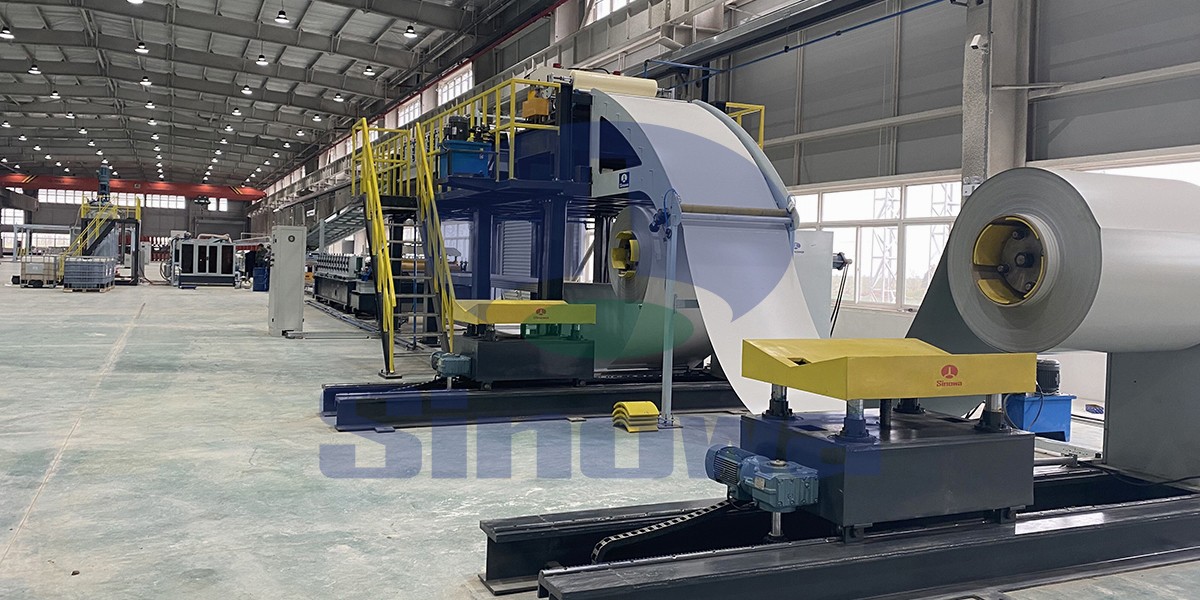
Glass Wool Sandwich Panel Production Line
Sinowa is glass wool sandwich panel production line manufacturer from china, dedicated to the research and development of high-end and high-efficiency, Sinowa is comprehensively taking the leading position in terms of efficiency, automation control level, HMI, environment protection and energy consumption, with subversive designs made in some critical technological fields to procure exceptional cost performance and customer-friendly experience for the entire glass wool sandwich panel production line. The adoption of system integration technology and bus control technology accomplishes the full automatization of integrated and coordinated control of the entire glass wool sandwich panel production line with accessible remote interactive communication. Ranking the first-class level in the world, it is currently the glass wool sandwich panel production line in the market taking a comprehensive lead in high performance.
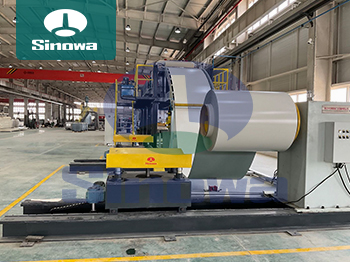
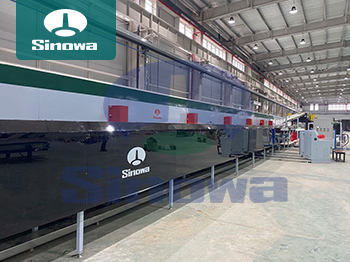
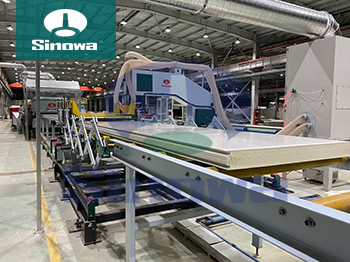
Based on the continuous technological pursuit, the glass wool sandwich panel production line developed by Sinowa provides you with high-efficiency industrial value. Based on China's cost advantage and our hard-working technology concept, our glass wool sandwich panel production line has a world-leading price-performance advantage. glass wool sandwich panel production line can meet a variety of production needs of customers.The whole glass wool sandwich panel production line design concept of modularization enables all our components to be integrated and combined at will. Our glass wool sandwich panel production line can easily automate the production of roof sandwich panel, wall sandwich panel, cold storage sandwich panel and other products by different combination and configuration selection and siple switching. The inner core layer can be polyrethane or rock wool, glass wool, an so on.
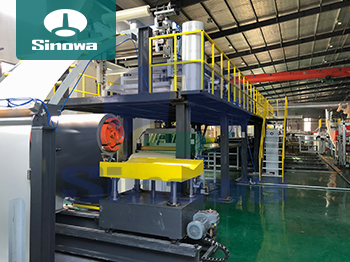


The glass wool sandwich panel production line has high adaptability, which may produce various sandwich panel of the PU, PIR and rock wool systems. We may design various products according to the customer’s requirements, including various configurations, so as to meet their demands with flexible price system. Highly integrated and linked control system centralizes all control points at the main central center, achieving parameter linkage, fault self-diagnosis controlled by the whole line and shipping distance control. High-level automatic control system also saves the manpower and reduces the manpower loss for customers.


Concentrated system control is fully realized in the practice of concentrated process control so that the control system of all the movements of the parts in the glass wool sandwich panel production line is integrated in one process control console with accessible remote communication to elevate the automation and reduce the allocated number of personnel for the assembly line. The main engine with modularized design achieves the precision operation of the glass wool sandwich panel production line, stable and reliable quality, less part and maintenance loss. The whole glass wool sandwich panel production line has over 40 innovative inventions, making our products have lots of unique features and the comprehensive performance of our glass wool sandwich panel production line leading in the industry.


The precision servo hoisting mechanism employed by the main engine without hydraulic system makes the board thickness control flexible and the customer may conveniently change or adjust the board thickness. There will be not such troubles as hydraulic system adjustment, leakage, maintenance, etc. High-level energy saving and protection design makes the whole glass wool sandwich panel production line possible to produce around the clock throughout the year and the customer will save huge budget. In addition, the isolated heat preservation room is constructed for warming the environment. The energy saving and protection design of our glass wool sandwich panel production line may guarantee that the customer’s production line may be freely heated and produce in the main time to save more costs for customers.


The high-power low-consumption design quickens the reaction of the glass wool sandwich panel production line while energy consumption is kept low. With the brand-new, fully sealed inner insulation design, the energy consumption is controlled at the minimum level to achieve the design objective of less than an hour for the insulation system to be activated from the room temperature above 5℃ to the production process temperature. The energy consumption is only 40% that of those similar products.
The glass wool sandwich panel production line stands as a sophisticated and integrated manufacturing system dedicated to the automated production of high-performance composite insulation panels, which combine lightweight metal facing sheets with porous glass wool core materials. As a specialized industrial production solution tailored for thermal insulation and building envelope materials, this production line integrates raw material pretreatment, precise gluing, automatic composite pressing, constant-temperature curing, fixed-size cutting and finished product shaping into one continuous workflow, effectively realizing standardized, high-efficiency and stable batch production of glass wool sandwich panels. Different from production lines for foam-based sandwich panels that rely on liquid foaming and in-situ molding, this production line is designed specifically for fibrous glass wool core materials, adopting targeted material conveying, pressing and bonding structures to adapt to the loose, porous and flexible structural characteristics of glass wool, ensuring that the final composite panels achieve excellent structural integrity and stable thermal insulation performance.

The overall operational logic of the glass wool sandwich panel production line follows a progressive and continuous processing mode, with each functional unit closely connected and coordinated to avoid intermittent production delays and material waste. The entire production process starts from the feeding and pretreatment of raw materials, covering metal surface finishing, core material shaping, adhesive coating, composite lamination, thermal curing, cooling shaping and precision cutting, and finally completes finished product output and stacking. Each link is equipped with intelligent sensing and automatic adjustment mechanisms, which can dynamically adapt to different product specifications including core material thickness, panel width and overall density, realizing flexible production without large-scale equipment debugging and structural modification. The high integration and automation level of the production line not only simplifies the traditional complex manual auxiliary processes but also significantly improves the consistency of product quality, reducing the performance difference between individual panels to a minimum level.
Raw material pretreatment and automatic feeding constitute the initial core stage of the entire production workflow, laying a solid foundation for subsequent composite molding. The production line is equipped with independent adaptive feeding units for upper and lower metal facing sheets and glass wool core materials respectively. For metal panels, the equipment adopts a stable unwinding and leveling structure, which can smoothly release coiled metal materials and eliminate bending wrinkles and surface unevenness generated during coiling and storage. A fine trimming device is matched at the feeding end to ensure consistent width of metal panels, avoiding dimensional deviation that may affect subsequent composite precision. In terms of glass wool core material feeding, the production line adopts a uniform-speed pushing and positioning structure specially optimized for fibrous materials, which effectively solves common problems such as core material offset, wrinkling and uneven compaction in traditional manual or semi-automatic feeding processes. The adaptive adjustment device built into the feeding unit can fine-tune the feeding speed and compression ratio according to the set product specifications, ensuring that the glass wool core material maintains uniform thickness and flatness before entering the composite process, and the overall fiber structure remains complete without crushing or hollowing.
The gluing process is a key link that determines the bonding strength and overall structural stability of glass wool sandwich panels, and the production line is equipped with a high-precision automatic gluing system to ensure uniform and efficient adhesive coating. Different from ordinary manual gluing and simple mechanical gluing devices, the supporting gluing unit realizes quantitative and directional coating of high-strength environmental-friendly adhesives on the inner surface of metal panels. The system is equipped with precision metering and conveying components, which can stably control the adhesive coating amount and uniformity, avoiding quality defects such as local glue shortage, excessive glue accumulation and uneven bonding. During the gluing process, the equipment can automatically adjust the coating range and glue amount according to the width and thickness of the panel, forming a continuous and uniform adhesive layer between the metal panel and the glass wool core material. This precise gluing technology not only maximizes the bonding tightness between the surface layer and the core material but also avoids redundant adhesive waste, optimizing production cost control while ensuring product structural firmness. Meanwhile, the gluing system is matched with a dust removal and surface pretreatment device, which cleans fine dust and impurities on the surface of metal panels and glass wool before gluing, further improving the adhesive force and durability of the bonding interface.
Composite pressing and constant-temperature curing are the core molding stages of glass wool sandwich panels, which directly determine the overall compactness, structural stability and service performance of finished products. After the completion of gluing and core material positioning, the metal panels and glass wool core material enter the high-stability double-belt pressing system synchronously. The upper and lower synchronous pressing structure can apply uniform and stable pressure on the entire panel surface, ensuring that the surface layer and core material are closely fitted without gaps or local extrusion deformation. The pressing system adopts an integral rigid frame structure, which can maintain constant pressure output during long-term continuous operation, avoiding pressure fluctuation caused by equipment vibration and material transmission. Inside the pressing and curing area, an independent zoning constant-temperature control system is configured to build a closed and stable thermal curing environment. Each heating zone can independently adjust the temperature according to the curing process requirements of the adhesive and the structural characteristics of glass wool, realizing gradient and targeted heating curing.
In the constant-temperature curing stage, the synergistic effect of stable pressure and scientific temperature field can fully activate the performance of the adhesive, promote the full penetration and solidification of the adhesive in the fiber gaps of glass wool, and form a firm integrated bonding structure between the metal surface layer and the fibrous core material. Unlike high-temperature rapid curing processes that easily damage the fiber structure of glass wool, the production line adopts a mild and constant-temperature curing mode, which effectively protects the porous and fibrous structure of glass wool, ensuring that the core material maintains excellent thermal insulation, sound absorption and lightweight characteristics while achieving firm bonding. The curing furnace is composed of a furnace body, circulating hot air system, conveying mechanism and power driving device. The circulating hot air design makes the temperature inside the furnace uniform in all directions, avoiding local overheating or insufficient curing, so that each position of the panel can complete the curing reaction synchronously, and the overall structural strength and performance of the product are consistent.
Cooling shaping and precision cutting processes follow the curing stage, realizing the final dimensional calibration and fixed-size molding of finished panels. After high-temperature curing, the panels are transmitted to the automatic cooling area through a synchronous conveyor belt. The natural air cooling and auxiliary air supply cooling mode are adopted to slowly reduce the panel temperature to the normal processing temperature. The slow cooling mode can effectively eliminate the internal stress generated by high-temperature pressing and curing, preventing the finished panels from bending, deforming or cracking during subsequent use and storage, and improving the flatness and dimensional stability of the products. After cooling and shaping, the panels enter the intelligent cutting unit, which adopts servo precision cutting technology to realize fixed-length cutting according to customized production parameters. The cutting equipment is equipped with real-time sensing and positioning devices, which can automatically track the transmission speed and position of panels, complete high-precision fixed-length cutting, and ensure smooth and neat cutting sections without burrs, fractures or core material falling off.
The entire cutting process realizes full automation without manual intervention, and the system can flexibly switch cutting parameters according to different customer customization needs to produce panels of various lengths and widths. At the same time, the cutting unit is matched with a waste recycling mechanism, which can collect and process the leftover materials generated in the cutting process, realizing resource recycling and reducing production waste. After cutting, the qualified finished panels are automatically transmitted to the stacking and packaging area, where the automatic stacking device neatly arranges the panels according to the set quantity, and completes protective packaging through winding and wrapping structures, which is convenient for subsequent transportation, storage and on-site construction, and effectively avoids surface scratches, extrusion damage and dust pollution during handling.
The core advantages of the glass wool sandwich panel production line are mainly reflected in its professional structural design, high automation level and stable product molding quality. Different from general sandwich panel production equipment, this line is specially optimized for the physical characteristics of glass wool fibrous core materials. It avoids the problems of fiber collapse, core material deformation and thermal performance attenuation easily caused by improper pressing and heating of traditional equipment. The synchronous material transmission and pressing technology ensures that the fiber orientation and internal pore structure of glass wool remain complete, so that the finished panels can retain excellent thermal insulation, heat preservation and sound insulation effects. The closed constant-temperature curing system makes the adhesive curing reaction more sufficient and uniform, greatly improving the bonding strength and peeling resistance of the product, and the integrated composite structure can maintain stable performance for a long time in complex service environments.
In terms of production efficiency and intelligent control, the production line adopts a centralized PLC intelligent control system, which integrates all functional units such as feeding, gluing, pressing, curing, cutting and stacking into a unified control platform. Operators can complete parameter setting, process adjustment, equipment operation monitoring and fault alarm through the intuitive human-machine interaction interface. The system supports real-time dynamic adjustment of production parameters, can automatically compensate and correct small deviations in material transmission and processing, and realize fine production control. The highly automated operation mode greatly reduces manual operation links, effectively reduces the impact of human factors on product quality, and significantly improves production efficiency and output stability. Meanwhile, the equipment is equipped with perfect safety protection and fault self-detection functions, which can automatically stop the machine and send an alarm in case of material blockage, equipment abnormal operation and parameter deviation, ensuring the safety and stability of continuous production.
In terms of production applicability and product performance, the glass wool sandwich panels produced by this professional production line have prominent comprehensive advantages, making them widely applicable in multiple industrial and construction fields. The composite structure of metal surface and glass wool core endows the panels with lightweight, high strength, good weather resistance and excellent thermal insulation performance. The complete fiber pore structure of glass wool ensures low thermal conductivity of the product, which can effectively block heat transfer and achieve efficient energy-saving and thermal insulation effects. At the same time, the unique fibrous structure also gives the product good sound absorption and noise reduction performance, which can effectively reduce noise transmission and improve the comfort of building and industrial environments. In addition, the product has good fire resistance, moisture resistance and corrosion resistance, can adapt to high humidity, high temperature and other harsh environments, and has a long service life, no easy aging and deformation.
With the continuous upgrading of energy-saving and environmental protection requirements in the construction and industrial manufacturing fields, the market demand for high-efficiency thermal insulation and energy-saving composite panels is increasing year by year, which also promotes the continuous technological iteration and performance optimization of glass wool sandwich panel production lines. Modern production lines are gradually developing towards higher automation, more flexible production, lower energy consumption and more environmentally friendly processing. Through continuous optimization of the hot air circulation system and pressing and curing process, the energy consumption of unit product production is reduced, and the energy-saving and environmental protection level of the production process is improved. At the same time, the equipment's flexible production capacity is continuously enhanced, which can adapt to more diversified product specifications and personalized customization needs, meeting the differentiated application requirements of different scenarios such as industrial factory buildings, public buildings, cold storage and special thermal insulation facilities.
In actual industrial production applications, the stable operation of the glass wool sandwich panel production line directly determines the yield, quality consistency and production cost of finished products. The integrated and continuous production mode realizes seamless connection between various processes, greatly shortens the production cycle of single-panel products and improves the overall production efficiency. The standardized and refined production process controls the key performance indicators of the products in an all-round way, ensuring that each batch of panels has stable thermal insulation performance, structural strength and dimensional accuracy. Compared with backward semi-automatic production equipment, the modern glass wool sandwich panel production line has obvious advantages in product qualification rate, production efficiency, labor cost control and production safety, and has become the core supporting equipment for the mass production of high-quality glass wool thermal insulation composite panels.
In conclusion, the glass wool sandwich panel production line, as a professional, intelligent and efficient special production equipment for thermal insulation composite materials, relies on its mature and perfect production process, optimized mechanical structure and intelligent control system to realize high-quality and high-efficiency manufacturing of glass wool sandwich panels. Its unique process design for fibrous core materials makes up for the technical defects of general sandwich panel production equipment in processing glass wool materials, ensures that the finished products give full play to the excellent thermal insulation, sound insulation and energy-saving advantages of glass wool, and provides reliable material support for the energy-saving transformation and high-quality construction of modern buildings and industrial facilities. With the continuous progress of industrial manufacturing technology and the continuous improvement of green energy-saving standards, this type of production line will continue to carry out technological innovation and performance upgrading, and maintain a broad market application prospect and industrial development value in the field of thermal insulation composite material production.
《Glass Wool Sandwich Panel Production Line》Update Date: 2026/7/24
URL: https://www.sinowamachine.cn/en/tag/glass-wool-sandwich-panel-production-line.html
- PU Sandwich Panel Making Machine
- Rockwool Sandwich Panel Production Line
- PU Sandwich Panel Machine
- PU Sandwich Panel Production Line
- Mineral Wool Sandwich Panel Machine
- PUF Panel Machine
- Rock Wool Sandwich Panel Line
- Sandwich Panel Machines
- Sandwich Panel Lines
- Rockwool Sandwich Panel Machine
- Rockwool Sandwich Panel Line
- PU Sandwich Panel Line
- PU Panel Machine
- Foam Forming Machine
- Continuous Sandwich Panel Line
- Continuous PU Sandwich Panel Line
- PIR Sandwich Panel Line
- Polyurethane Sandwich Panel Line
- Automatic PU Sandwich Panel Production Line
- PU Foam Sandwich Panel Production Line