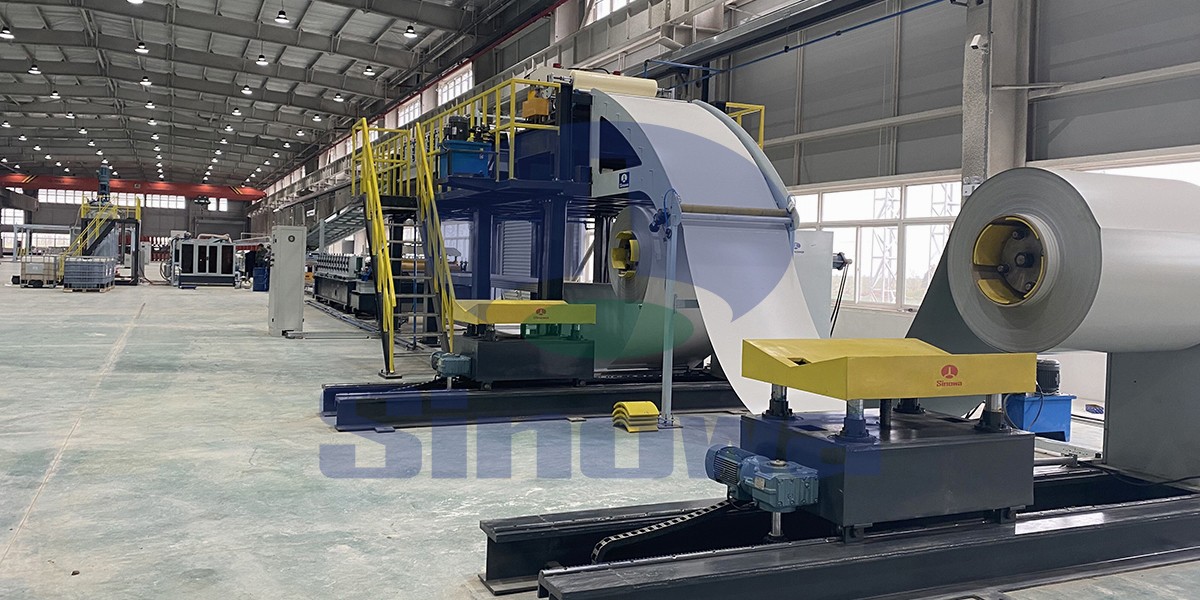
Insulated Sandwhich Panel Production Line
Sinowa is insulated sandwhich panel production line manufacturer from china, dedicated to the research and development of high-end and high-efficiency, Sinowa is comprehensively taking the leading position in terms of efficiency, automation control level, HMI, environment protection and energy consumption, with subversive designs made in some critical technological fields to procure exceptional cost performance and customer-friendly experience for the entire insulated sandwhich panel production line. The adoption of system integration technology and bus control technology accomplishes the full automatization of integrated and coordinated control of the entire insulated sandwhich panel production line with accessible remote interactive communication. Ranking the first-class level in the world, it is currently the insulated sandwhich panel production line in the market taking a comprehensive lead in high performance.
Based on the continuous technological pursuit, the insulated sandwhich panel production line developed by Sinowa provides you with high-efficiency industrial value. Based on China's cost advantage and our hard-working technology concept, our insulated sandwhich panel production line has a world-leading price-performance advantage. insulated sandwhich panel production line can meet a variety of production needs of customers.The whole insulated sandwhich panel production line design concept of modularization enables all our components to be integrated and combined at will. Our insulated sandwhich panel production line can easily automate the production of roof sandwich panel, wall sandwich panel, cold storage sandwich panel and other products by different combination and configuration selection and siple switching. The inner core layer can be polyrethane or rock wool, glass wool, an so on.
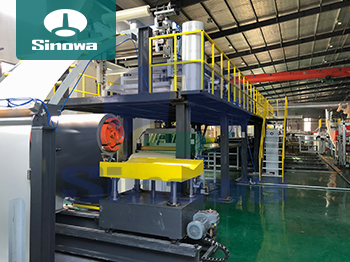


The insulated sandwhich panel production line has high adaptability, which may produce various sandwich panel of the PU, PIR and rock wool systems. We may design various products according to the customer’s requirements, including various configurations, so as to meet their demands with flexible price system. Highly integrated and linked control system centralizes all control points at the main central center, achieving parameter linkage, fault self-diagnosis controlled by the whole line and shipping distance control. High-level automatic control system also saves the manpower and reduces the manpower loss for customers.


Concentrated system control is fully realized in the practice of concentrated process control so that the control system of all the movements of the parts in the insulated sandwhich panel production line is integrated in one process control console with accessible remote communication to elevate the automation and reduce the allocated number of personnel for the assembly line. The main engine with modularized design achieves the precision operation of the insulated sandwhich panel production line, stable and reliable quality, less part and maintenance loss. The whole insulated sandwhich panel production line has over 40 innovative inventions, making our products have lots of unique features and the comprehensive performance of our insulated sandwhich panel production line leading in the industry.


The precision servo hoisting mechanism employed by the main engine without hydraulic system makes the board thickness control flexible and the customer may conveniently change or adjust the board thickness. There will be not such troubles as hydraulic system adjustment, leakage, maintenance, etc. High-level energy saving and protection design makes the whole insulated sandwhich panel production line possible to produce around the clock throughout the year and the customer will save huge budget. In addition, the isolated heat preservation room is constructed for warming the environment. The energy saving and protection design of our insulated sandwhich panel production line may guarantee that the customer’s production line may be freely heated and produce in the main time to save more costs for customers.


The high-power low-consumption design quickens the reaction of the insulated sandwhich panel production line while energy consumption is kept low. With the brand-new, fully sealed inner insulation design, the energy consumption is controlled at the minimum level to achieve the design objective of less than an hour for the insulation system to be activated from the room temperature above 5℃ to the production process temperature. The energy consumption is only 40% that of those similar products.
The insulated sandwich panel production line stands as a highly integrated, automated manufacturing system designed to produce composite building and industrial panels that combine structural rigidity, thermal insulation, and durable surface protection in a single unit. Unlike fragmented manual production processes, this line operates as a synchronized, continuous workflow that transforms raw materials—including metal sheet coils, insulating core materials, and adhesive bonding agents—into finished sandwich panels with consistent dimensions, uniform performance, and reliable structural integrity. At its core, the production line is built around a modular structural framework, where each functional segment works in seamless coordination to complete a series of sequential processing steps, from material unwinding and pretreatment to final cutting, stacking, and packaging. This modular design not only ensures smooth material flow throughout the entire production cycle but also allows for flexible adjustment and expansion based on production capacity needs, panel thickness requirements, and core material types, making it adaptable to a wide range of manufacturing scenarios without compromising on product consistency.
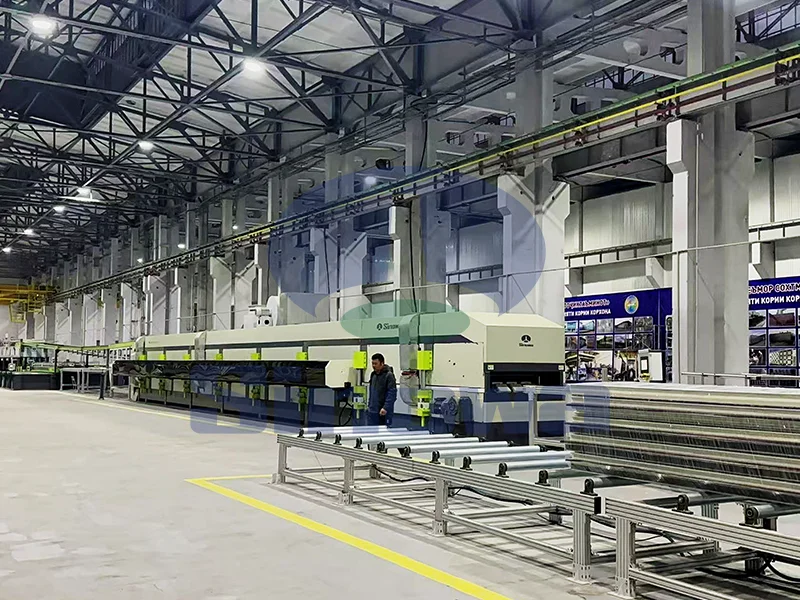
The overall structure of a standard continuous insulated sandwich panel production line can be broken down into several interconnected key components, each fulfilling a specialized role that contributes to the final product’s quality. The initial segment consists of material feeding and pretreatment units, which primarily include double uncoilers for the top and bottom metal facing sheets, along with leveling, degreasing, and surface treatment mechanisms. The uncoilers are engineered to handle large coils of metal sheeting, typically thin-gauge steel or aluminum, and feed the material at a controlled, constant speed to prevent wrinkling, misalignment, or tension damage during subsequent processing. The leveling unit straightens any minor deformations in the metal coils, ensuring the facing sheets remain perfectly flat and parallel, while the surface treatment process enhances the bonding strength between the metal facings and the central insulation core, eliminating the risk of delamination over time. Following the pretreatment stage, the metal sheets move into a forming and profiling section, where roll forming machines shape the edges of the facings into interlocking profiles—such as tongue-and-groove or lap joint designs—that enable tight, secure connections between adjacent panels during installation, improving overall airtightness and structural stability.
Positioned at the heart of the production line is the core filling and laminating unit, the most critical component that defines the panel’s composite structure and functional performance. For foam-based core panels, this unit integrates a precision mixing and pouring system that blends liquid raw materials to create rigid foam insulation in real time, injecting the mixture evenly between the two pre-formed metal facings as they move forward continuously. The system maintains strict control over material ratios, pouring speed, and foaming temperature to guarantee a uniform, bubble-free core with consistent density across the entire length and width of the panel. For mineral wool or other rigid fibrous core materials, the unit features a core feeding and positioning mechanism that cuts, aligns, and inserts pre-manufactured core boards precisely between the metal facings, ensuring no gaps or uneven distribution. Immediately after core insertion, the combined sandwich structure passes through a continuous laminating and pressing system, which applies consistent, controlled pressure to bond the three layers firmly together, setting the core material and forming a solid, unified composite panel. This pressing process is calibrated to avoid over-compression that could damage the insulation core or under-compression that would weaken bonding, striking a precise balance for optimal structural and thermal performance.
The final structural segments of the production line include a curing and cooling section, a precision cutting unit, and a stacking and handling system. The curing zone uses controlled heating and ambient cooling to accelerate the bonding and hardening process of the core material and adhesive layers, ensuring the panel reaches full structural strength before moving to cutting. The precision cutting unit is equipped with high-speed, computer-controlled cutting tools that trim panels to custom lengths and widths according to preset specifications, with minimal material waste and clean, burr-free edges. Unlike manual cutting, this automated system maintains tight dimensional tolerances, ensuring every finished panel fits perfectly in construction and industrial applications. The stacking and handling system then automatically collects, sorts, and stacks the finished panels, preparing them for storage or direct shipment, completing the fully automated production cycle with minimal manual intervention. This end-to-end structural design eliminates human error, reduces production time, and maintains a stable, repeatable manufacturing process that delivers uniform product quality batch after batch.
Performance is a defining characteristic of both the insulated sandwich panel production line and the finished panels it manufactures, with two distinct layers of performance: the operational performance of the production line itself and the functional performance of the end products. In terms of production line performance, the system prioritizes high efficiency, operational stability, and adaptability. Continuous production models operate at a steady, adjustable line speed, enabling high-volume output to meet large-scale project demands, while semi-continuous or discontinuous models offer greater flexibility for small-batch, custom production runs. The automated control system, which integrates precision sensors and programmable logic, monitors every stage of production in real time, adjusting speed, pressure, temperature, and material flow automatically to correct deviations and maintain consistent product quality. This high level of automation reduces labor requirements, minimizes production downtime, and ensures stable operation over long working hours, with low maintenance needs and strong resistance to common industrial operating conditions. Additionally, the production line is designed for energy efficiency, optimizing power and heating usage during the curing and laminating stages to reduce overall operational energy consumption without compromising production speed or product quality.
The functional performance of the insulated sandwich panels produced by the line is equally robust, combining multiple key properties that make them suitable for diverse demanding applications. Foremost among these is exceptional thermal insulation performance, driven by the closed-cell structure of foam cores or the fibrous composition of mineral wool cores, both of which effectively block heat transfer through conduction, convection, and radiation. This low thermal conductivity allows panels to maintain stable internal temperatures in both hot and cold environments, significantly reducing energy consumption for heating, ventilation, and air conditioning systems. Beyond insulation, the panels exhibit strong mechanical performance: the outer metal facings provide high tensile strength, impact resistance, and load-bearing capacity, while the core material adds rigidity and structural stability, preventing bending, warping, or cracking under normal structural loads and external forces such as wind, snow, and minor physical impact. The composite structure also delivers reliable sound insulation, dampening airborne and impact noise to create quieter indoor environments, a valuable feature for both residential and commercial applications.
Additional performance attributes of the finished panels include moisture resistance, weatherability, and long-term durability. The bonded metal facings act as a protective barrier against water penetration, humidity, and environmental corrosion, preventing the insulation core from absorbing moisture and losing its insulating efficiency over time. This moisture resistance also inhibits mold and mildew growth, maintaining a clean, healthy internal environment in enclosed spaces. The panels are highly resistant to temperature fluctuations, performing consistently in extreme temperature ranges from sub-zero cold to high heat, without degradation of structural or insulating properties. They are also lightweight relative to their structural strength, reducing the overall load on building frameworks and supporting structures, which simplifies transportation, handling, and installation processes compared to traditional building materials like concrete or solid brickwork. This combination of lightweight design and structural strength makes the panels not only easy to install but also suitable for structures with specific load-bearing limitations.
Insulated sandwich panel production lines are engineered to produce a wide variety of panel types, differentiated primarily by the type of insulation core material, as well as by panel thickness, facing material, and intended use case, each tailored to specific performance requirements. The most common core material varieties include expanded polystyrene (EPS), polyurethane (PU) or polyisocyanurate (PIR) foam, mineral wool (rock wool or glass wool), and phenolic foam, each with unique properties that suit distinct applications. EPS core panels are the most widely used general-purpose option, featuring a closed-cell foam structure that offers reliable thermal insulation, lightweight construction, and cost-effective performance, with consistent density and good compressive strength for everyday building needs. PU and PIR core panels represent a higher-performance insulation option, with significantly lower thermal conductivity than EPS, delivering superior insulating efficiency with thinner panel profiles; they also offer better bonding strength and dimensional stability, making them ideal for applications where maximum insulation is required in a limited space.
Mineral wool core panels, by contrast, prioritize fire resistance and high-temperature stability above all else, with a non-combustible fibrous structure that withstands extreme heat and prevents the spread of flames, making them suitable for applications with strict fire safety requirements. These panels also offer excellent sound absorption properties, outperforming foam cores in noise reduction, and maintain their structural integrity at high temperatures where foam cores may degrade. Phenolic foam core panels combine exceptional fire resistance with low thermal conductivity, offering a balance of insulation and fire safety, along with resistance to chemical corrosion and moisture absorption, making them suitable for specialized industrial and commercial environments. In addition to core material variations, panels are produced in a range of thicknesses, typically from a few centimeters for interior partition use to over ten centimeters for heavy-duty insulation in cold storage and industrial facilities. Facing materials can also be customized, with options including color-coated steel, galvanized steel, aluminum, and stainless steel, each offering different levels of corrosion resistance, aesthetic appeal, and durability to match specific environmental conditions.
The versatility of insulated sandwich panels, enabled by the flexible production capabilities of the manufacturing line, has led to their widespread adoption across countless residential, commercial, industrial, and specialized applications, spanning multiple industries and project types. In the construction sector, they are extensively used for the exterior walls and roofs of industrial plants, warehouses, and logistics centers, where their lightweight design speeds up construction timelines, thermal insulation reduces operational energy costs, and structural durability provides long-term reliability. These panels are also ideal for prefabricated and modular buildings, including temporary site offices, portable cabins, and permanent modular homes, as they allow for rapid on-site assembly, minimal construction waste, and improved energy efficiency compared to traditional building methods. For commercial structures such as shopping malls, exhibition centers, and office buildings, sandwich panels serve as both exterior cladding and interior partition walls, offering aesthetic versatility, sound insulation, and quick installation to minimize project downtime.
One of the most critical application areas is cold chain and temperature-controlled storage, including cold storage warehouses, refrigerated rooms, freezer facilities, and food processing plants. The high-performance thermal insulation of PU and PIR core panels maintains consistent low temperatures, preventing heat transfer and reducing the energy load on refrigeration systems, ensuring the safe storage of perishable goods, agricultural products, pharmaceuticals, and other temperature-sensitive items. The airtight interlocking profiles of the panels further enhance temperature control by eliminating air leakage, maintaining stable internal humidity and temperature levels essential for cold chain operations. In public and institutional buildings, such as hospitals, schools, and sports facilities, mineral wool core panels are preferred for their superior fire resistance and sound insulation, providing safe, quiet, and comfortable environments that meet strict public safety standards. These panels are also used for clean rooms in pharmaceutical manufacturing, electronics factories, and laboratories, where their smooth, non-porous metal facings are easy to clean and sanitize, preventing dust accumulation and maintaining a sterile, contamination-free environment.
Beyond building and construction, insulated sandwich panels find extensive use in transportation and industrial equipment applications. They are widely employed in the fabrication of refrigerated truck bodies, shipping containers, and refrigerated rail cars, where their lightweight construction reduces vehicle weight and improves fuel efficiency, while their insulation properties maintain consistent temperatures for the transport of perishable goods. In industrial settings, the panels are used to line high-temperature furnaces, drying tunnels, and heat treatment equipment, providing thermal insulation to retain heat, improve energy efficiency, and protect external surfaces from extreme heat. They are also used for soundproofing barriers in industrial zones, highways, and residential areas near noisy facilities, leveraging their sound absorption properties to reduce noise pollution and improve surrounding environmental quality. Additionally, the panels are suitable for agricultural buildings such as greenhouses, livestock barns, and grain storage facilities, regulating internal temperatures to support optimal plant growth and animal husbandry, while protecting stored agricultural products from moisture and temperature fluctuations.
The enduring value of the insulated sandwich panel production line lies in its ability to bridge efficient manufacturing with high-performance, multi-functional end products, adapting to evolving industry demands for sustainable, energy-efficient, and cost-effective building and industrial materials. As global focus on energy conservation and green building practices continues to grow, the production line’s role in manufacturing panels that reduce long-term energy consumption, minimize construction waste, and offer long service life becomes increasingly significant. The flexibility of the line to produce diverse panel types for an ever-expanding range of applications ensures its relevance across multiple sectors, from large-scale industrial construction to specialized temperature-controlled and fire-safe environments. Every structural component, performance feature, and product variety of the production line is engineered to deliver consistent, reliable results, making insulated sandwich panels a staple material in modern construction and industrial design, and the production line itself an indispensable asset in the global manufacturing landscape.
《Insulated Sandwhich Panel Production Line》Update Date: 2026/3/19
URL: https://www.sinowamachine.cn/en/tag/insulated-sandwhich-panel-production-line.html
- PU Sandwich Panel Making Machine
- Rockwool Sandwich Panel Production Line
- PU Sandwich Panel Machine
- PU Sandwich Panel Production Line
- Mineral Wool Sandwich Panel Machine
- PUF Panel Machine
- Rock Wool Sandwich Panel Line
- Sandwich Panel Machines
- Sandwich Panel Lines
- Rockwool Sandwich Panel Machine
- Rockwool Sandwich Panel Line
- PU Sandwich Panel Line
- PU Panel Machine
- Foam Forming Machine
- Continuous Sandwich Panel Line
- Continuous PU Sandwich Panel Line
- PIR Sandwich Panel Line
- Polyurethane Sandwich Panel Line
- Automatic PU Sandwich Panel Production Line
- PU Foam Sandwich Panel Production Line