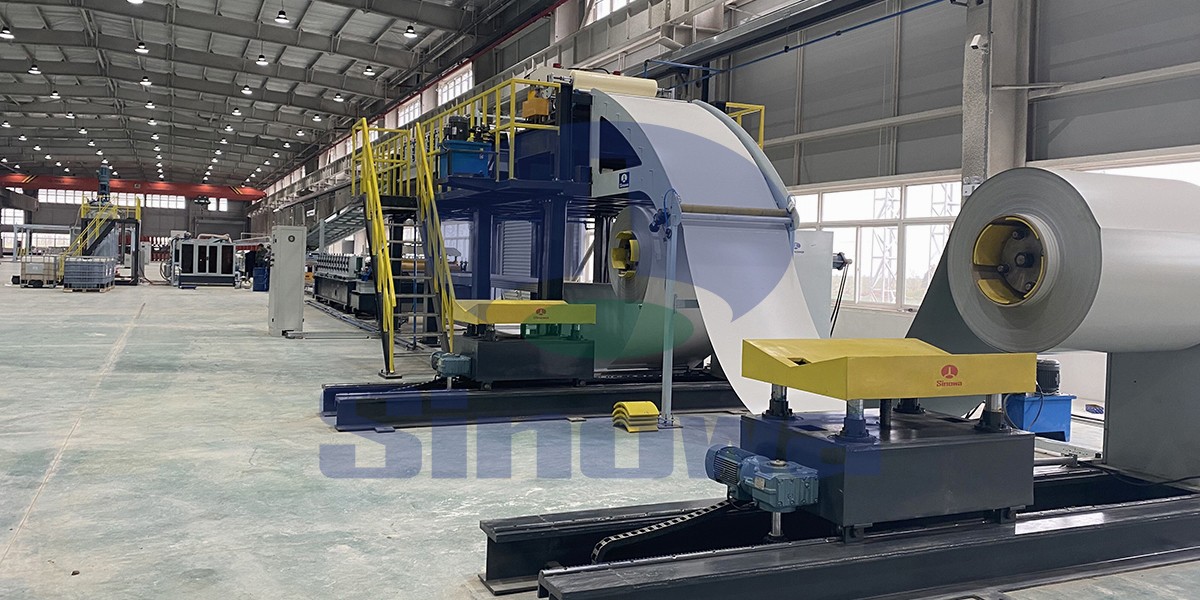
Sandwich Panel Making Machine
Sinowa is sandwich panel making machine manufacturer from china, dedicated to the research and development of high-end and high-efficiency, Sinowa is comprehensively taking the leading position in terms of efficiency, automation control level, HMI, environment protection and energy consumption, with subversive designs made in some critical technological fields to procure exceptional cost performance and customer-friendly experience for the entire sandwich panel making machine. The adoption of system integration technology and bus control technology accomplishes the full automatization of integrated and coordinated control of the entire sandwich panel making machine with accessible remote interactive communication. Ranking the first-class level in the world, it is currently the sandwich panel making machine in the market taking a comprehensive lead in high performance.
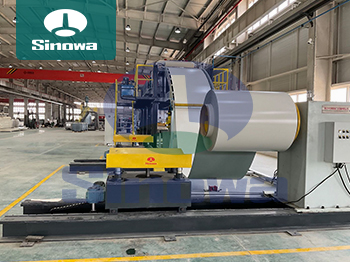
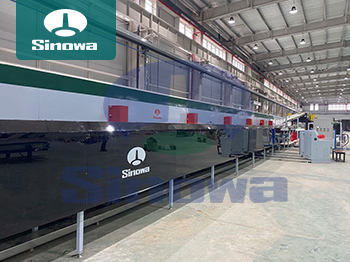
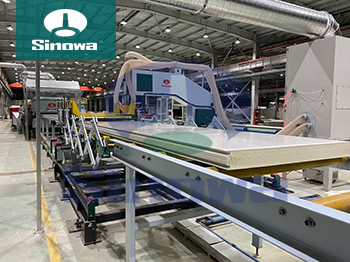
Based on the continuous technological pursuit, the sandwich panel making machine developed by Sinowa provides you with high-efficiency industrial value. Based on China's cost advantage and our hard-working technology concept, our sandwich panel making machine has a world-leading price-performance advantage. sandwich panel making machine can meet a variety of production needs of customers.The whole sandwich panel making machine design concept of modularization enables all our components to be integrated and combined at will. Our sandwich panel making machine can easily automate the production of roof sandwich panel, wall sandwich panel, cold storage sandwich panel and other products by different combination and configuration selection and siple switching. The inner core layer can be polyrethane or rock wool, glass wool, an so on.
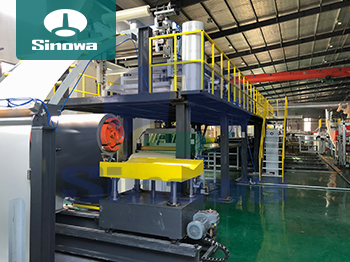


The sandwich panel making machine has high adaptability, which may produce various sandwich panel of the PU, PIR and rock wool systems. We may design various products according to the customer’s requirements, including various configurations, so as to meet their demands with flexible price system. Highly integrated and linked control system centralizes all control points at the main central center, achieving parameter linkage, fault self-diagnosis controlled by the whole line and shipping distance control. High-level automatic control system also saves the manpower and reduces the manpower loss for customers.


Concentrated system control is fully realized in the practice of concentrated process control so that the control system of all the movements of the parts in the sandwich panel making machine is integrated in one process control console with accessible remote communication to elevate the automation and reduce the allocated number of personnel for the assembly line. The main engine with modularized design achieves the precision operation of the sandwich panel making machine, stable and reliable quality, less part and maintenance loss. The whole sandwich panel making machine has over 40 innovative inventions, making our products have lots of unique features and the comprehensive performance of our sandwich panel making machine leading in the industry.


The precision servo hoisting mechanism employed by the main engine without hydraulic system makes the board thickness control flexible and the customer may conveniently change or adjust the board thickness. There will be not such troubles as hydraulic system adjustment, leakage, maintenance, etc. High-level energy saving and protection design makes the whole sandwich panel making machine possible to produce around the clock throughout the year and the customer will save huge budget. In addition, the isolated heat preservation room is constructed for warming the environment. The energy saving and protection design of our sandwich panel making machine may guarantee that the customer’s production line may be freely heated and produce in the main time to save more costs for customers.


The high-power low-consumption design quickens the reaction of the sandwich panel making machine while energy consumption is kept low. With the brand-new, fully sealed inner insulation design, the energy consumption is controlled at the minimum level to achieve the design objective of less than an hour for the insulation system to be activated from the room temperature above 5℃ to the production process temperature. The energy consumption is only 40% that of those similar products.
In the modern construction and manufacturing industries, sandwich panels have emerged as a versatile and efficient building material, renowned for their excellent thermal insulation, soundproofing, and structural stability. Behind the mass production of these high-performance panels lies a sophisticated piece of equipment: the sandwich panel making machine. This advanced machinery has revolutionized the production process of sandwich panels, enabling continuous, automated, and high-quality manufacturing that meets the growing demands of various industries. From industrial warehouses and cold storage facilities to commercial buildings and residential constructions, the sandwich panels produced by these machines have become an indispensable part of modern infrastructure, and the continuous evolution of the making machines themselves continues to drive innovation in the field.
The core functionality of a sandwich panel making machine revolves around the precise assembly of three distinct layers: two outer facing materials and a central core. The outer layers, typically made of metal sheets such as color steel or aluminum, provide structural strength and protection, while the core material, which can be polyurethane (PU), polyisocyanurate (PIR), rock wool, glass wool, or expanded polystyrene (EPS), is responsible for the panel's insulation and soundproofing properties. The machine's primary task is to bond these layers together seamlessly, ensuring uniform thickness, strong adhesion, and consistent quality across every panel produced. What sets modern sandwich panel making machines apart is their ability to handle a wide range of materials and customize panel specifications according to specific project requirements, making them highly adaptable to diverse application scenarios.
At the heart of a sandwich panel making machine is a series of interconnected systems that work in harmony to complete the production process. The unwinding system is the starting point, where rolls of facing material are loaded and fed into the machine at a steady pace. Equipped with servo correction mechanisms, this system ensures that the facing materials remain aligned throughout the production process, preventing misalignment that could affect the final product's quality. Following the unwinding system is the pre-treatment unit, which prepares the facing materials for bonding. This may involve cleaning the surfaces to remove dust and debris, preheating the sheets to optimize adhesion with the core material, or forming specific profiles (such as corrugated or trapezoidal shapes) to enhance the panel's structural rigidity. The pre-treatment process is crucial, as it directly impacts the bond strength between the layers and the overall durability of the finished panel.
The core forming and application system is perhaps the most critical component of the sandwich panel making machine, especially when using foam-based core materials like PU or PIR. For these materials, the machine is equipped with a high-pressure mixing and metering unit that precisely measures and mixes the reactive components (such as polyol and isocyanate) along with additives like catalysts, flame retardants, and foaming agents. The mixed liquid is then evenly distributed onto the lower facing material via a moving distribution head. As the material moves forward, the foam begins to expand and cure, filling the space between the upper and lower facing sheets. For non-foam core materials like rock wool or glass wool, the machine uses a different mechanism to feed and position the pre-cut core sheets between the facing layers before bonding. Regardless of the core material, the machine ensures that the core is distributed uniformly, maintaining consistent thickness across the panel.
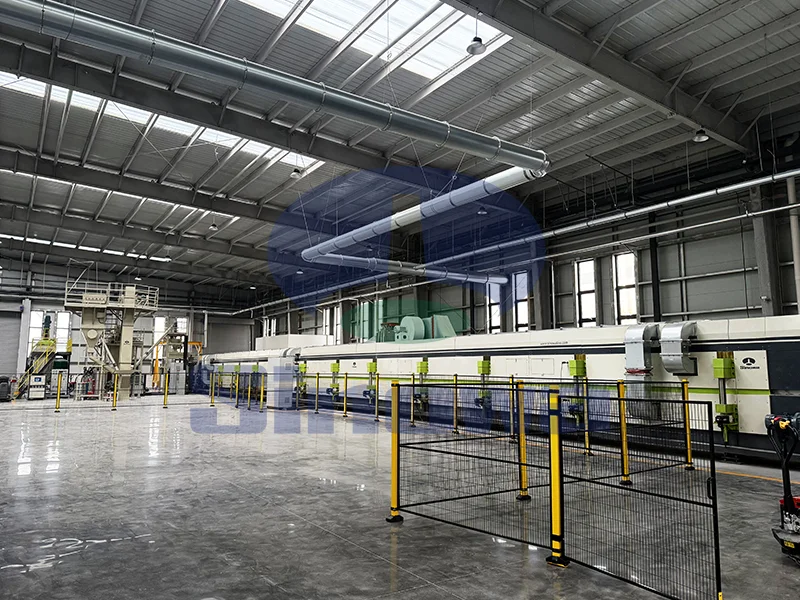
Once the core material is in place between the two facing layers, the composite structure moves into the lamination and curing system. This system typically consists of a pair of continuous tracks that apply uniform pressure to the panel as it passes through. The tracks are also equipped with temperature control systems that regulate the curing process of the bonding agent or foam core. For foam-based cores, the controlled temperature ensures that the foam expands fully and cures properly, forming a strong bond with the facing layers. The pressure applied by the track ensures that the panel remains flat and compact, eliminating any air gaps that could reduce insulation efficiency or structural integrity. The lamination process is continuous, allowing for high-volume production without interruptions, which is a key advantage over traditional manual or semi-automatic production methods.
After lamination and curing, the continuous panel moves to the cutting system, where it is trimmed to the desired length and width. The cutting system uses high-precision saws or blades that are computer-controlled to ensure accurate dimensions. Advanced machines are equipped with automatic tracking systems that adjust the cutting position in real-time to match the speed of the production line, ensuring clean, precise cuts without damaging the panel's edges. Some machines also include edge trimming and profiling capabilities, which shape the panel's edges to facilitate easy installation, such as creating tongue-and-groove joints that allow panels to fit together seamlessly. Once cut, the finished panels are conveyed to a stacking system, where they are neatly piled and prepared for packaging or shipment.
One of the most significant advantages of modern sandwich panel making machines is their high level of automation. Integrated control systems, often operated via a central control panel or even remotely, monitor and adjust every aspect of the production process. These control systems regulate the speed of the unwinding rolls, the amount of core material applied, the pressure and temperature in the lamination system, and the cutting dimensions. They also include fault detection mechanisms that can identify issues such as material shortages, misalignment, or equipment malfunctions, triggering alerts or even stopping the production line to prevent the production of defective panels. This high degree of automation not only reduces the need for manual labor but also improves production efficiency and consistency, ensuring that every panel meets the same high-quality standards.
Another key benefit of these machines is their modular design. Modern sandwich panel making machines are constructed using modular components that can be easily configured or upgraded to meet changing production needs. For example, changing the core material from PU to rock wool only requires adjusting or replacing specific modules, rather than overhauling the entire machine. This modularity also makes maintenance and repair easier, as individual components can be removed and replaced without disrupting the entire production line. Additionally, modular design allows for customization of the production line according to the available factory space and production capacity, making the machines suitable for both large-scale industrial facilities and smaller manufacturing operations.
Energy efficiency is another important feature of contemporary sandwich panel making machines. Manufacturers have incorporated various energy-saving technologies to reduce the machine's environmental impact and operational costs. For instance, the lamination and curing systems use advanced insulation materials to minimize heat loss, reducing the energy required to maintain the desired temperature. The high-pressure mixing units are designed to minimize material waste, and the servo motors used in the unwinding and conveying systems are more energy-efficient than traditional motors. Some machines also include heat recovery systems that capture and reuse excess heat generated during the curing process, further reducing energy consumption. These energy-saving features not only lower operational costs for manufacturers but also align with global efforts to promote sustainable and eco-friendly manufacturing practices.
The versatility of sandwich panel making machines is evident in their ability to produce a wide range of panel types for various applications. In the construction industry, they are used to manufacture wall panels, roof panels, and floor panels for industrial buildings, warehouses, and commercial complexes. These panels offer excellent thermal insulation, helping to reduce energy consumption for heating and cooling. In the cold storage industry, sandwich panels with PU or PIR cores are used to construct refrigerated warehouses and transport vehicles, as their high insulation efficiency helps maintain stable low temperatures. In the transportation sector, lightweight sandwich panels are used in the manufacturing of train carriages, ship interiors, and RVs, thanks to their high strength-to-weight ratio. Additionally, sandwich panels produced by these machines are used in soundproofing applications, such as noise barriers along highways and acoustic panels in concert halls, due to their excellent sound absorption properties.
The performance of sandwich panel making machines is also reflected in the quality of the panels they produce. The automated production process ensures that the panels have uniform thickness, consistent core density, and strong adhesion between layers. This results in panels with superior structural strength, able to withstand harsh weather conditions, heavy loads, and other environmental stresses. The precise control over the production process also minimizes defects such as cracks, gaps, and uneven surfaces, ensuring that the panels meet the strict quality requirements of various industries. Furthermore, the ability to produce panels in custom sizes and configurations allows manufacturers to meet the specific needs of individual projects, enhancing the versatility and applicability of sandwich panels.
As the demand for energy-efficient and sustainable building materials continues to grow, the sandwich panel making machine industry is evolving to meet these needs. One of the key trends in the industry is the development of machines that can process eco-friendly and renewable materials. For example, manufacturers are exploring the use of bio-based foams for the core material, which are derived from renewable resources and have a lower carbon footprint than traditional petroleum-based foams. Additionally, machines are being designed to handle recycled facing materials, further reducing the environmental impact of sandwich panel production.
Another trend is the integration of smart technology into sandwich panel making machines. The use of Internet of Things (IoT) sensors allows manufacturers to monitor the machine's performance in real-time, collect data on production efficiency, material usage, and energy consumption, and make data-driven decisions to optimize the production process. Predictive maintenance, enabled by IoT technology, allows manufacturers to identify potential equipment issues before they occur, reducing downtime and maintenance costs. Furthermore, the use of artificial intelligence (AI) in control systems is enabling machines to adapt to changing production conditions automatically, further improving efficiency and quality.
The future of sandwich panel making machines also includes advancements in speed and productivity. Manufacturers are continuously improving the design of the machines to increase production speeds without compromising quality. This is particularly important as the demand for sandwich panels grows in emerging markets and new applications. Additionally, machines are being designed to handle thicker and larger panels, expanding their range of applications and meeting the needs of large-scale construction projects.
In conclusion, the sandwich panel making machine is a critical piece of equipment that has transformed the production of sandwich panels, making them more efficient, consistent, and versatile. From the unwinding of raw materials to the stacking of finished products, every aspect of the production process is carefully controlled and optimized by these machines. Their high level of automation, modular design, energy efficiency, and versatility make them indispensable in modern manufacturing, enabling the production of high-quality sandwich panels that meet the diverse needs of the construction, cold storage, transportation, and other industries. As the industry continues to evolve, driven by the demand for sustainable and smart manufacturing, sandwich panel making machines will continue to undergo innovations, further improving their performance, efficiency, and environmental friendliness. Whether in large-scale industrial facilities or small manufacturing operations, these machines play a vital role in supporting the growth and development of the global construction and manufacturing sectors, and their importance is only set to increase in the years to come.
《Sandwich Panel Making Machine》Update Date: 2026/1/15
URL: https://www.sinowamachine.cn/en/tag/sandwich-panel-making-machine.html
- PU Sandwich Panel Making Machine
- Rockwool Sandwich Panel Production Line
- PU Sandwich Panel Machine
- PU Sandwich Panel Production Line
- Mineral Wool Sandwich Panel Machine
- PUF Panel Machine
- Rock Wool Sandwich Panel Line
- Sandwich Panel Machines
- Sandwich Panel Lines
- Rockwool Sandwich Panel Machine
- Rockwool Sandwich Panel Line
- PU Sandwich Panel Line
- PU Panel Machine
- Foam Forming Machine
- Continuous Sandwich Panel Line
- Continuous PU Sandwich Panel Line
- PIR Sandwich Panel Line
- Polyurethane Sandwich Panel Line
- Automatic PU Sandwich Panel Production Line
- PU Foam Sandwich Panel Production Line