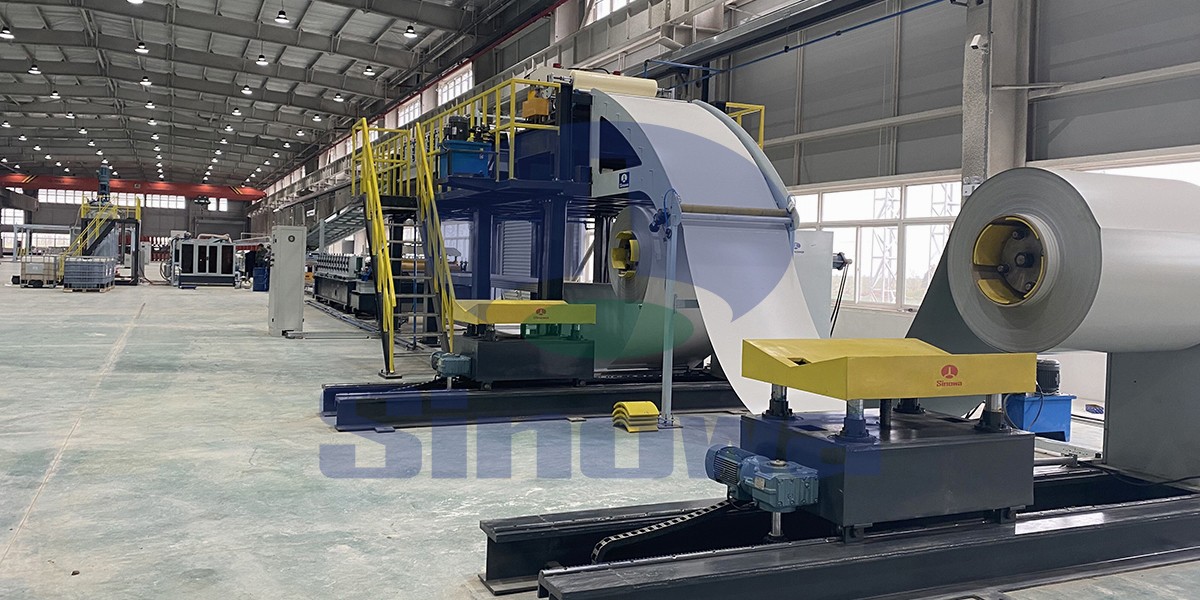
Polyurethane Sandwich Panel Production Line
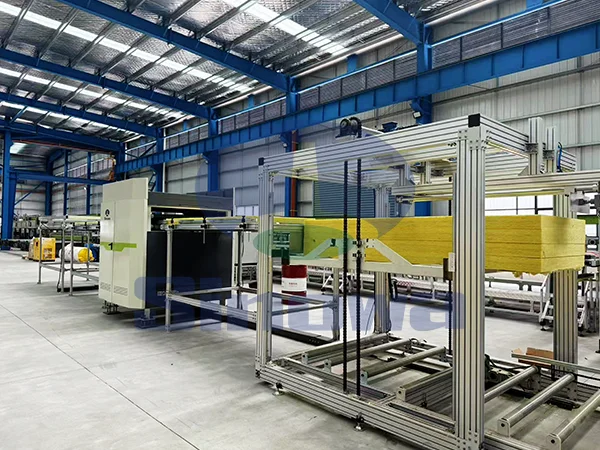
Sinowa is polyurethane sandwich panel production line manufacturer from china, dedicated to the research and development of high-end and high-efficiency, Sinowa is comprehensively taking the leading position in terms of efficiency, automation control level, HMI, environment protection and energy consumption, with subversive designs made in some critical technological fields to procure exceptional cost performance and customer-friendly experience for the entire polyurethane sandwich panel production line. The adoption of system integration technology and bus control technology accomplishes the full automatization of integrated and coordinated control of the entire polyurethane sandwich panel production line with accessible remote interactive communication. Ranking the first-class level in the world, it is currently the polyurethane sandwich panel production line in the market taking a comprehensive lead in high performance.
In the modern construction and industrial sectors, polyurethane sandwich panels have emerged as a pivotal material, celebrated for their exceptional thermal insulation, structural rigidity, lightweight properties, and quick installation capabilities. Behind these high-performance panels lies a sophisticated and integrated manufacturing system: the polyurethane sandwich panel production line. This continuous, automated production system combines mechanical engineering, chemical processing, and precision control technologies to transform raw materials into consistent, high-quality panels that meet the diverse needs of applications ranging from industrial warehouses and cold storage facilities to prefabricated buildings and stadiums.
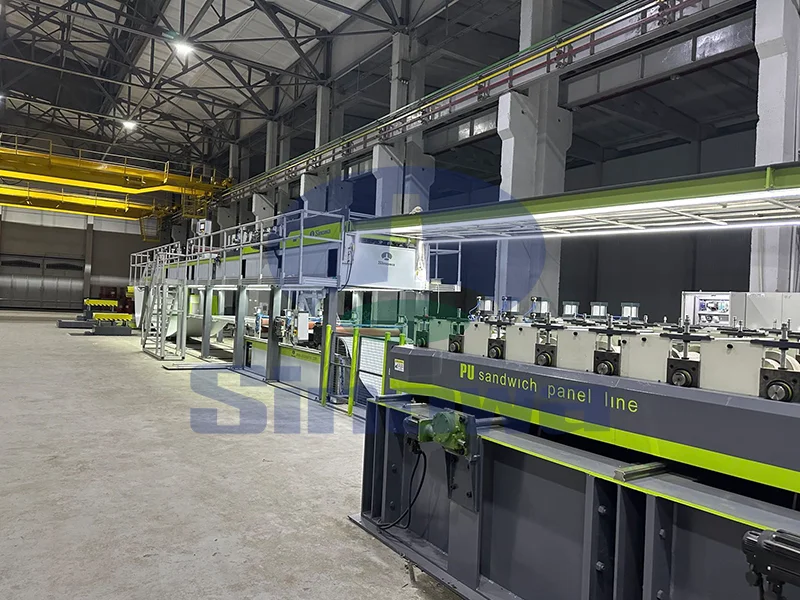
1. Core Components of the Polyurethane Sandwich Panel Production Line
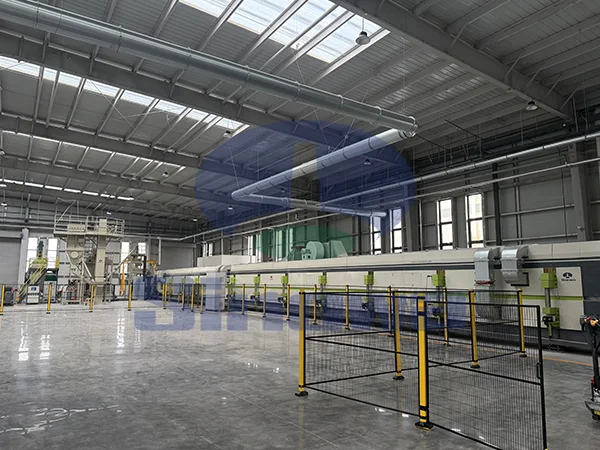
A fully functional polyurethane sandwich panel production line is an integrated system composed of several interconnected modules, each designed to perform specific tasks in the manufacturing process. These modules work in tandem to ensure continuous, efficient, and high-precision production. The core components can be categorized into five main sections: facing material processing equipment, raw material storage and metering system, foaming and laminating unit, cooling and curing system, and post-processing and packaging equipment.
1.1 Facing Material Processing Equipment
The facing materials of polyurethane sandwich panels serve as the structural and protective layers, typically made of rigid materials such as galvanized steel, aluminum sheets, or flexible materials like aluminum foil, fiberglass paper, and bituminous paper. The processing equipment for these materials is responsible for unwinding, shaping, and preheating the facing sheets to prepare them for the laminating process.
The key equipment in this section includes decoilers, roll forming machines, and preheating devices. Decoilers are designed to safely unwind large coils of facing material, with dual decoiler systems often used to ensure continuous feeding without production interruptions. Roll forming machines consist of a series of tandem rolling stands that progressively bend the flat facing sheets into the desired profiles (e.g., corrugated, trapezoidal) through guided pressure, ensuring consistent shape and dimensional accuracy. Preheating devices are essential for adjusting the temperature of the facing materials to 40-60℃, which stabilizes the subsequent polyurethane polymerization reaction and enhances the adhesion between the facing sheets and the foam core.
1.2 Raw Material Storage and Metering System
The polyurethane foam core is formed by the reaction of multiple chemical components, including polyol, isocyanate, foaming agents, catalysts, flame retardants, and stabilizers. The storage and metering system is critical for ensuring the precise proportioning, uniform mixing, and stable supply of these raw materials, which directly affects the performance of the foam core (e.g., density, thermal insulation, compressive strength).
This system comprises storage tanks, metering pumps, and mixing units. Storage tanks are equipped with temperature control and agitation devices to maintain the raw materials in optimal condition, with separate tanks for different components to prevent premature reactions. Metering pumps (usually high-pressure piston pumps) deliver the raw materials to the mixing unit with high precision, ensuring the correct ratio of each component. The mixing unit, often a high-pressure mixing head operating at 120-200 bar, creates intense turbulence to achieve thorough mixing of the components. Unlike low-pressure mixing systems, high-pressure mixing offers superior mixing efficiency, resulting in a uniform foam cell structure and better insulation performance. Additionally, high-pressure systems feature automatic circulation cleaning devices that eliminate residual material without the need for environmentally harmful solvents, making them more eco-friendly and convenient to operate.
1.3 Foaming and Laminating Unit
The foaming and laminating unit is the core of the production line, where the polyurethane foam is formed and bonded with the preprocessed facing sheets. This unit integrates the mixing head, foam deposition platform, and double-belt laminator (also known as a double-track conveyor).
The process begins with the mixed raw materials being injected onto the preheated lower facing sheet through the foaming port. As the materials move forward on the conveyor, they undergo a polymerization reaction, expanding to form a rigid polyurethane foam core. Simultaneously, the upper facing sheet (preprocessed and preheated) is fed into the double-belt laminator, which applies uniform pressure to the upper and lower facing sheets. The double-belt laminator consists of two parallel, endless steel belts supported by rollers, creating a closed chamber where the foam core expands and cures while being pressed between the two facing sheets. The speed of the conveyor and the pressure applied by the belts are precisely controlled to ensure the desired thickness, flatness, and bonding strength of the sandwich panel.
1.4 Cooling and Curing System
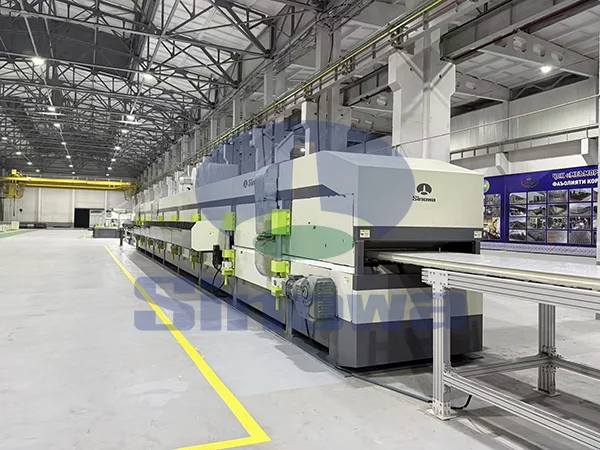
After the initial foaming and laminating process, the sandwich panel requires further cooling and curing to stabilize its structure and ensure the foam core fully hardens. The cooling and curing system typically includes cooling conveyors, air cooling devices, or water cooling systems, depending on the production requirements.
The panel moves through the cooling system, where controlled airflow or water circulation reduces its temperature gradually. This gradual cooling prevents thermal stress and dimensional deformation, ensuring the panel maintains its shape and structural integrity. The curing time varies depending on factors such as the foam formulation, panel thickness, and ambient temperature, but the continuous conveyor system ensures that the production process remains uninterrupted while providing sufficient time for full curing.
1.5 Post-Processing and Packaging Equipment
Once the panel is fully cured, it proceeds to the post-processing section, where it is cut to the required length, trimmed, and prepared for packaging. The key equipment here includes cross-cutting saws, edge trimming machines, and automated stacking and packaging systems.
Cross-cutting saws (either single-blade or multi-blade) use precision cutting technology to cut the continuous panel into fixed lengths according to customer specifications. Edge trimming machines remove any irregularities from the sides of the panel, ensuring uniform width and clean edges. Some advanced production lines also include contouring devices to shape the edges for better fitting during installation. Finally, automated stacking systems lift and stack the finished panels, and packaging equipment (such as shrink wrap machines) wraps the stacks to protect them from dust, moisture, and damage during transportation and storage. Foot block insertion devices may also be used to prevent damage to the panel surfaces during stacking.
2. Key Production Processes and Working Principles
The production of polyurethane sandwich panels is a continuous, sequential process that integrates mechanical processing, chemical reaction, and thermal control. The entire process can be divided into six main stages: facing material preparation, raw material mixing and foaming, laminating, cooling and curing, post-processing, and quality inspection. Each stage is closely linked, and any deviation in parameters can affect the final product quality.
2.1 Facing Material Preparation
The process starts with the preparation of the facing materials. Large coils of metal sheets or flexible materials are loaded onto the decoilers, which unwind the coils at a controlled speed. The unwound sheets are fed into the roll forming machine, where they are progressively bent into the desired profile. During this stage, the sheets are also guided through preheating devices to reach the optimal temperature (40-60℃). This preheating step is crucial because it improves the adhesion between the facing sheets and the foam core, as well as promotes the uniform expansion of the polyurethane foam.
2.2 Raw Material Mixing and Foaming
Simultaneously, the raw materials for the foam core are prepared in the storage and metering system. Polyol, isocyanate, and other additives (foaming agents, catalysts, flame retardants) are stored in separate tanks and heated or cooled to the required temperature. The metering pumps deliver the raw materials to the high-pressure mixing head in precise proportions. Inside the mixing head, the materials are mixed intensely under high pressure (120-200 bar), creating a homogeneous mixture that is immediately injected onto the preheated lower facing sheet.
The injected mixture begins to react chemically as soon as it contacts the facing sheet. The foaming agent (commonly pentane, a more environmentally friendly alternative to traditional freon) decomposes to produce gas, causing the mixture to expand. This expansion process continues as the mixture moves forward on the conveyor, forming the foam core.
2.3 Laminating
As the foam expands, the preprocessed upper facing sheet is fed into the double-belt laminator, which brings the upper and lower facing sheets together. The double belts apply uniform pressure to the entire surface of the panels, controlling the expansion of the foam and ensuring that the foam core is evenly distributed between the two facing sheets. The pressure applied by the belts also enhances the bonding between the foam core and the facing sheets, creating a strong, integrated structure. The speed of the conveyor is synchronized with the foaming and laminating process to ensure the correct thickness of the panel.
2.4 Cooling and Curing
After leaving the laminator, the panel enters the cooling and curing system. At this stage, the foam core is still in the process of polymerizing and hardening. The cooling system uses controlled airflow or water circulation to lower the temperature of the panel gradually. This gradual cooling ensures that the foam core cures uniformly, preventing the formation of internal stresses or cracks. The curing process is complete when the foam core has fully hardened and the panel has stabilized dimensionally. The length of the cooling and curing section is designed to provide sufficient time for full curing, even at the maximum production speed.
2.5 Post-Processing
Once fully cured, the continuous panel is fed into the cross-cutting saw, which cuts it into individual panels of the required length. The edge trimming machine then trims the sides of the panels to remove any excess material and ensure uniform width. Some production lines also include additional processes such as punching, embossing, or inkjet printing to meet specific customer requirements. Finally, the finished panels are stacked by the automated stacking system and wrapped in shrink film or other packaging materials to protect them during transportation.
2.6 Quality Inspection
Quality inspection is an integral part of the production process, conducted at multiple stages to ensure the final product meets the required standards. Raw material inspection involves checking the chemical composition, density, and purity of the polyol, isocyanate, and additives. In-process inspection includes monitoring the temperature, pressure, and speed of the production line, as well as sampling and testing the panels for dimensional accuracy, foam core density, and bonding strength. Final product testing includes evaluating thermal conductivity, fire resistance, compressive strength, and moisture resistance. Any defective panels are flagged and removed from the production line to prevent them from reaching the market.
3. Quality Control Measures in Production
The quality of polyurethane sandwich panels is determined by a combination of raw material quality, production process parameters, and equipment performance. To ensure consistent, high-quality production, rigorous quality control measures must be implemented throughout the entire manufacturing process.
3.1 Raw Material Quality Control
Raw material inspection is the first line of defense in quality control. All incoming raw materials must be tested to verify their compliance with specifications. For polyol and isocyanate, key parameters such as viscosity, hydroxyl value (for polyol), and isocyanate content (for isocyanate) are tested. Foaming agents, catalysts, and flame retardants are checked for purity and concentration. Facing materials are inspected for thickness, strength, surface finish, and coating adhesion. Any raw material that fails to meet the specifications is rejected and not allowed to enter the production line.
3.2 Process Parameter Control
Precise control of process parameters is essential for ensuring consistent product quality. The production line is equipped with advanced sensors and a computerized control system (usually PLC-based) that monitors and adjusts key parameters in real-time. These parameters include the temperature and pressure of the raw materials, the mixing ratio of the components, the preheating temperature of the facing materials, the speed of the conveyor, and the pressure applied by the double-belt laminator. Regular calibration of the equipment is also necessary to ensure the accuracy of the parameters. Any deviations from the set parameters trigger an alarm, allowing operators to take immediate corrective action.
3.3 In-Process and Final Inspection
In-process inspection is conducted at various points along the production line to detect defects early. Random samples are taken to check the foam core density, which directly affects the thermal insulation and compressive strength of the panel. The bonding strength between the foam core and the facing sheets is tested using peel tests. Dimensional accuracy (length, width, thickness) is measured using precision tools. Final inspection involves comprehensive testing of the finished panels, including thermal conductivity testing (to ensure good insulation performance), fire resistance testing (to verify the effectiveness of flame retardants), and durability testing (to assess resistance to environmental factors such as moisture and temperature fluctuations). All test results are documented for traceability.
4. Technological Advancements and Innovations
In recent years, the polyurethane sandwich panel production line has undergone significant technological advancements, driven by the demand for higher efficiency, better product performance, and more sustainable manufacturing processes. These advancements have focused on automation, material innovation, and environmental friendliness.
4.1 Automation and Intelligent Control
Modern production lines are increasingly adopting fully automated and intelligent control systems. Advanced PLC and SCADA (Supervisory Control and Data Acquisition) systems enable real-time monitoring and control of the entire production process, reducing human error and improving production efficiency. Automated product changeover systems allow quick switching between different panel sizes and profiles, enhancing the flexibility of the production line. Robotic systems are also being integrated into the post-processing and packaging stages, improving stacking accuracy and reducing labor costs. Additionally, data analytics tools are used to analyze production data, identifying trends and optimizing process parameters to further improve product quality and efficiency.
4.2 Material Innovation
Material innovation has played a key role in enhancing the performance and sustainability of polyurethane sandwich panels. One notable advancement is the use of cellulose nanocrystals (CNCs) as a reinforcing agent in the foam core. CNCs, derived from renewable biomass such as wood, improve the mechanical properties of the foam core, including compressive strength and flexural stiffness, while reducing the carbon footprint of the production process by up to 50%. Studies have shown that adding CNCs to polyurethane foam can increase compressive strength by up to 45% and modulus by over 30%, making the panels suitable for more demanding applications.
Another material innovation is the adoption of environmentally friendly foaming agents. Traditional foaming agents such as freon (e.g., F11) are harmful to the ozone layer and have been phased out. They have been replaced by more eco-friendly alternatives such as pentane. Although pentane is flammable, advanced production lines are equipped with safety systems (e.g., gas detection, explosion-proof equipment) to ensure safe operation. Additionally, bio-based polyols derived from renewable resources such as vegetable oils are being used to reduce reliance on petrochemical-based materials, further enhancing the sustainability of the production process.
4.3 Energy Efficiency and Environmental Protection
Manufacturers are increasingly focusing on improving the energy efficiency of production lines and reducing their environmental impact. Energy-saving technologies such as heat recovery systems are used to capture and reuse waste heat from the foaming and curing processes, reducing energy consumption. High-efficiency motors and variable frequency drives (VFDs) are installed to optimize the energy use of the equipment. Additionally, the use of water-based coatings for facing materials and solvent-free cleaning agents reduces the emission of volatile organic compounds (VOCs), making the production process more environmentally friendly.
5. Applications and Market Significance of Polyurethane Sandwich Panels
The superior properties of polyurethane sandwich panels, combined with the efficient production capabilities of modern production lines, have made them a popular choice in a wide range of applications. The main application areas include building and construction, cold storage, industrial facilities, and transportation.
5.1 Building and Construction
In the construction industry, polyurethane sandwich panels are widely used for walls, roofs, and partitions in industrial warehouses, logistics centers, prefabricated buildings, and commercial complexes. Their excellent thermal insulation properties help reduce energy consumption for heating and cooling, making buildings more energy-efficient. The lightweight nature of the panels reduces the overall weight of the building structure, lowering construction costs. Additionally, their quick installation capability shortens the construction period, making them ideal for fast-track projects.
5.2 Cold Storage
Polyurethane sandwich panels are particularly well-suited for cold storage facilities such as refrigerated warehouses, freezers, and cold chain logistics centers. Their low thermal conductivity (0.021-0.023 W/mK) ensures excellent insulation performance, maintaining stable internal temperatures and reducing energy consumption. The panels also have good moisture resistance, preventing condensation and frost formation, which is critical for cold storage applications. Additionally, their high compressive strength allows them to withstand the weight of storage racks and equipment.
5.3 Industrial Facilities
In industrial settings, polyurethane sandwich panels are used for the construction of factory walls, roofs, and clean rooms. Their fire resistance (when combined with flame retardants) and sound insulation properties make them suitable for industrial environments where safety and noise reduction are important. The panels are also resistant to corrosion and chemical damage, ensuring long-term durability in harsh industrial conditions.
5.4 Market Significance
The global market for polyurethane sandwich panels is growing steadily, driven by the increasing demand for energy-efficient and sustainable building materials. Technological advancements in production lines have improved product quality and reduced costs, making polyurethane sandwich panels more competitive than traditional building materials. The market is also benefiting from the rapid growth of the construction industry in emerging economies, where there is a high demand for industrial and commercial buildings. As the focus on sustainability and energy efficiency intensifies, the demand for polyurethane sandwich panels and the advanced production lines that manufacture them is expected to continue to rise.
6. Future Trends of the Production Line
Looking ahead, the polyurethane sandwich panel production line is poised to undergo further advancements, with a focus on sustainability, intelligence, and customization. One key trend is the development of fully digitalized production lines, where artificial intelligence (AI) and machine learning are used to optimize process parameters, predict equipment failures, and improve production efficiency. AI-powered quality control systems will be able to detect defects with higher accuracy and speed, further enhancing product quality.
Another trend is the increased focus on circular economy principles. Manufacturers will develop production lines that can process recycled materials, such as recycled polyurethane foam and recycled metal facing sheets, reducing waste and resource consumption. Additionally, the development of biodegradable polyurethane materials will further enhance the sustainability of the product lifecycle.
Customization will also become more important, with production lines designed to handle a wider range of panel sizes, thicknesses, and profiles. Advanced roll forming and cutting technologies will enable quick and cost-effective customization to meet the specific needs of different applications. Finally, the integration of renewable energy sources (e.g., solar power) into production lines will reduce reliance on fossil fuels, making the manufacturing process more environmentally friendly.
Conclusion
The polyurethane sandwich panel production line is a sophisticated, integrated system that combines mechanical engineering, chemical processing, and precision control to produce high-performance panels for a wide range of applications. Its core components, including facing material processing equipment, raw material storage and metering systems, foaming and laminating units, cooling and curing systems, and post-processing equipment, work in tandem to ensure continuous, efficient production. Rigorous quality control measures throughout the production process guarantee consistent product quality, while technological advancements in automation, material innovation, and energy efficiency are driving the evolution of the production line.
As the demand for energy-efficient, sustainable, and high-performance building materials continues to grow, the polyurethane sandwich panel production line will play an increasingly important role in the construction and industrial sectors. Future advancements in digitalization, circular economy, and customization will further enhance the efficiency, sustainability, and flexibility of the production line, ensuring that polyurethane sandwich panels remain a preferred material for modern construction projects. The continuous innovation and improvement of this production technology will not only benefit manufacturers but also contribute to the global goal of achieving more sustainable and energy-efficient built environments.
《Polyurethane Sandwich Panel Production Line》Release Date: 2023/11/20
URL: https://www.sinowamachine.cn/en/tag/polyurethane-sandwich-panel-production-line.html
- PU Sandwich Panel Making Machine
- Rockwool Sandwich Panel Production Line
- PU Sandwich Panel Machine
- PU Sandwich Panel Production Line
- Mineral Wool Sandwich Panel Machine
- PUF Panel Machine
- Rock Wool Sandwich Panel Line
- Sandwich Panel Machines
- Sandwich Panel Lines
- Rockwool Sandwich Panel Machine
- Rockwool Sandwich Panel Line
- PU Sandwich Panel Line
- PU Panel Machine
- Foam Forming Machine
- Continuous Sandwich Panel Line
- Continuous PU Sandwich Panel Line
- PIR Sandwich Panel Line
- Polyurethane Sandwich Panel Line
- Automatic PU Sandwich Panel Production Line
- PU Foam Sandwich Panel Production Line