Insulated Sandwich Panel Lines
Sinowa is insulated sandwich panel lines manufacturer from china, dedicated to the research and development of high-end and high-efficiency, Sinowa is comprehensively taking the leading position in terms of efficiency, automation control level, HMI, environment protection and energy consumption, with subversive designs made in some critical technological fields to procure exceptional cost performance and customer-friendly experience for the entire insulated sandwich panel lines. The adoption of system integration technology and bus control technology accomplishes the full automatization of integrated and coordinated control of the entire insulated sandwich panel lines with accessible remote interactive communication. Ranking the first-class level in the world, it is currently the insulated sandwich panel lines in the market taking a comprehensive lead in high performance.
Based on the continuous technological pursuit, the insulated sandwich panel lines developed by Sinowa provides you with high-efficiency industrial value. Based on China's cost advantage and our hard-working technology concept, our insulated sandwich panel lines has a world-leading price-performance advantage. insulated sandwich panel lines can meet a variety of production needs of customers.The whole insulated sandwich panel lines design concept of modularization enables all our components to be integrated and combined at will. Our insulated sandwich panel lines can easily automate the production of roof sandwich panel, wall sandwich panel, cold storage sandwich panel and other products by different combination and configuration selection and siple switching. The inner core layer can be polyrethane or rock wool, glass wool, an so on.
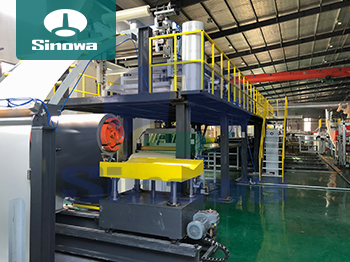


The insulated sandwich panel lines has high adaptability, which may produce various sandwich panel of the PU, PIR and rock wool systems. We may design various products according to the customer’s requirements, including various configurations, so as to meet their demands with flexible price system. Highly integrated and linked control system centralizes all control points at the main central center, achieving parameter linkage, fault self-diagnosis controlled by the whole line and shipping distance control. High-level automatic control system also saves the manpower and reduces the manpower loss for customers.


Concentrated system control is fully realized in the practice of concentrated process control so that the control system of all the movements of the parts in the insulated sandwich panel lines is integrated in one process control console with accessible remote communication to elevate the automation and reduce the allocated number of personnel for the assembly line. The main engine with modularized design achieves the precision operation of the insulated sandwich panel lines, stable and reliable quality, less part and maintenance loss. The whole insulated sandwich panel lines has over 40 innovative inventions, making our products have lots of unique features and the comprehensive performance of our insulated sandwich panel lines leading in the industry.


The precision servo hoisting mechanism employed by the main engine without hydraulic system makes the board thickness control flexible and the customer may conveniently change or adjust the board thickness. There will be not such troubles as hydraulic system adjustment, leakage, maintenance, etc. High-level energy saving and protection design makes the whole insulated sandwich panel lines possible to produce around the clock throughout the year and the customer will save huge budget. In addition, the isolated heat preservation room is constructed for warming the environment. The energy saving and protection design of our insulated sandwich panel lines may guarantee that the customer’s production line may be freely heated and produce in the main time to save more costs for customers.


The high-power low-consumption design quickens the reaction of the insulated sandwich panel lines while energy consumption is kept low. With the brand-new, fully sealed inner insulation design, the energy consumption is controlled at the minimum level to achieve the design objective of less than an hour for the insulation system to be activated from the room temperature above 5℃ to the production process temperature. The energy consumption is only 40% that of those similar products.
In the era of global emphasis on energy conservation, environmental protection, and efficient construction, insulated sandwich panels have emerged as a pivotal material in modern architecture and industrial applications. Characterized by their excellent thermal insulation, soundproofing, and structural stability, these panels are widely used in warehouses, cold storage facilities, commercial buildings, and modular constructions. At the heart of the mass production of high-quality insulated sandwich panels lies the insulated sandwich panel line—a sophisticated integration of mechanical engineering, material science, and automation technology.
The insulated sandwich panel line is a continuous production system designed to fabricate panels consisting of two outer facings and a central insulating core. The seamless coordination of its components ensures consistent quality, high production efficiency, and adaptability to various material combinations. To understand the functionality of the production line, it is essential to examine its key components, each of which plays a critical role in the overall manufacturing process.
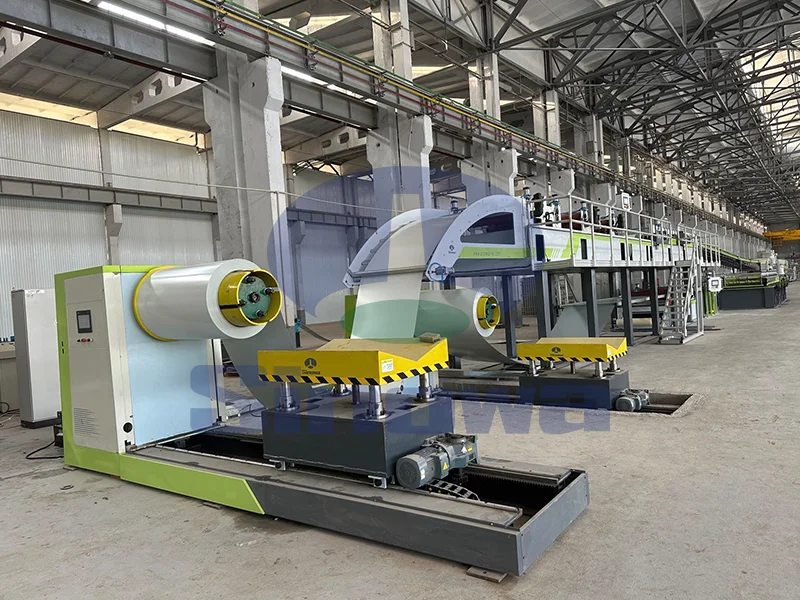
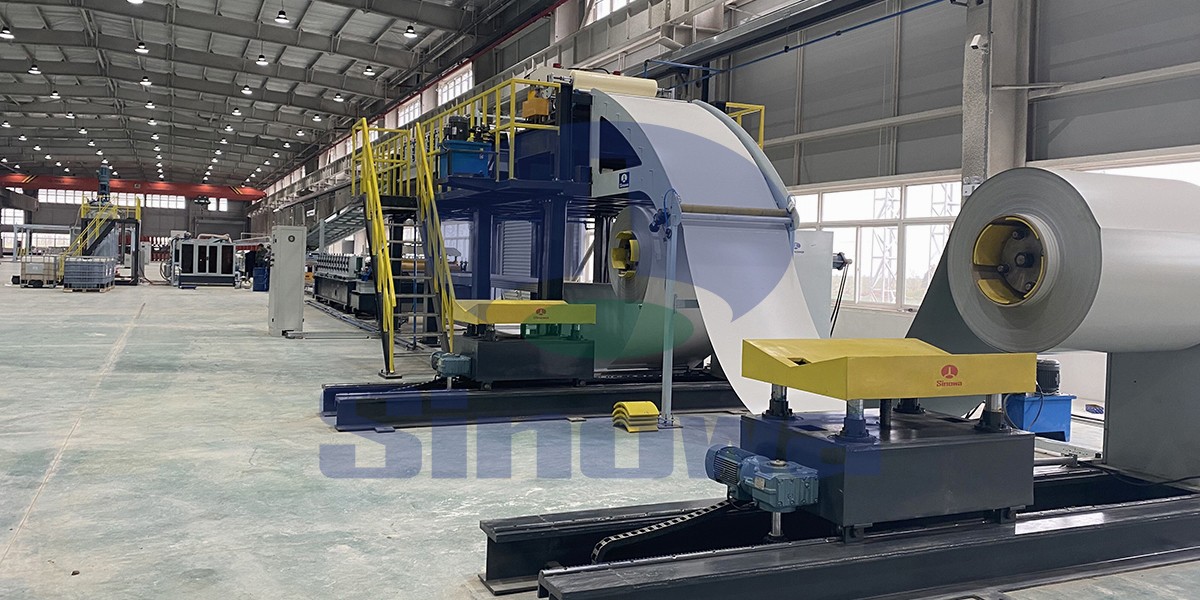
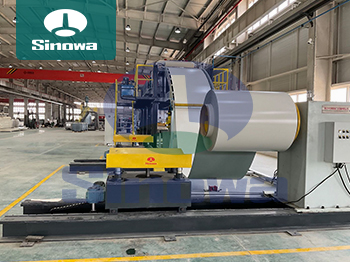
The first segment of the production line is the facing material processing system, which primarily includes decoilers and roll forming machines. Decoilers are responsible for unwinding large coils of facing materials—commonly galvanized steel, aluminum, or pre-coated steel—with precision to ensure a steady and smooth feed into subsequent processes. The stability of the decoiling process is crucial, as uneven feeding can lead to defects in the final panel’s shape and structure. Following the decoilers, roll forming machines shape the flat metal sheets into desired profiles, such as corrugated, ribbed, or flat surfaces, based on application requirements. These machines use a series of consecutive rollers to gradually bend the metal, ensuring consistent profile dimensions and structural integrity. Some advanced production lines are equipped with adjustable roll forming modules, allowing for quick switching between different profile designs to meet diverse customer needs.
Next is the pre-heating system, a vital component that significantly impacts the bonding quality between the facing materials and the insulating core. Before the facing materials enter the foaming and laminating zone, they are passed through a pre-heating tunnel equipped with infrared heaters. The pre-heating temperature is typically controlled between 40°C and 60°C, depending on the type of facing material and the subsequent bonding process. This controlled heating stabilizes the material properties, removes any moisture on the surface, and optimizes the adhesion of the insulating core. Without proper pre-heating, the bond between the facings and the core may be weak, leading to delamination over time and compromising the panel’s durability and performance.
The core of the production line is the insulation core processing system, which includes material storage, metering, mixing, and foaming equipment. The choice of insulating core material—such as polyurethane (PU), expanded polystyrene (EPS), extruded polystyrene (XPS), or mineral wool—dictates the specific configuration of this system. For PU and EPS cores, the system involves bulk storage tanks for chemical raw materials, metering pumps, and high-pressure mixing heads. Metering pumps ensure precise proportioning of raw materials, as even slight deviations in the mixture ratio can significantly affect the insulation performance and structural strength of the core. High-pressure mixing heads, operating at pressures between 120 and 200 bar, ensure thorough and uniform mixing of the chemical components, resulting in a consistent foam structure with excellent thermal insulation properties. Unlike low-pressure mixing systems, high-pressure mixing minimizes material waste and environmental pollution, as it does not require solvent-based cleaning agents; instead, it uses high-pressure airflow for automatic cleaning when the production line stops.
For mineral wool cores, the processing system differs, involving equipment for cutting, preparing, and inserting the mineral wool into the gap between the two facing materials. Mineral wool, known for its excellent fire resistance and soundproofing capabilities, requires precise cutting to match the dimensions of the facing materials. Specialized gluing equipment then applies adhesive to ensure a strong bond between the mineral wool core and the metal facings. This configuration is particularly suitable for applications where fire safety is a top priority, such as industrial buildings and public facilities.
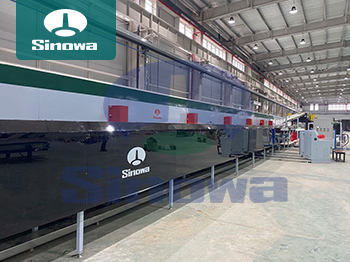
The laminating and curing system is another critical component, responsible for bonding the two facing materials and the insulating core into a single integrated panel. The double belt laminator (also known as the continuous press) is the key equipment in this segment. It consists of two parallel, endless steel belts that apply uniform pressure to the sandwich structure as it moves through the production line. The pressure and speed of the laminator are precisely controlled to ensure optimal bonding. Simultaneously, the curing process takes place within the laminator. For PU cores, the chemical reaction of the raw materials generates heat, which aids in curing; for other core materials, additional heating elements may be integrated into the laminator to accelerate the curing process. The length of the laminator and the speed of the belts determine the curing time, which is tailored to the type of core material to ensure full polymerization and structural stability.
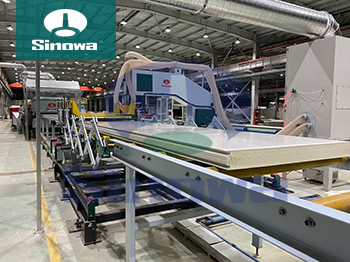
Finally, the cutting and stacking system completes the manufacturing process. After the cured sandwich panel exits the laminator, it is fed into a precision cutting machine—typically equipped with circular saws or CNC cutting tools—that trims the panel to the desired length. The cutting process is synchronized with the production line speed to avoid material waste and ensure accurate dimensions. Some advanced cutting systems use laser positioning to enhance precision, resulting in clean cuts with minimal edge damage. Following cutting, the finished panels are automatically stacked by a stacking machine, which arranges them in neat piles for storage and transportation. This automated stacking not only improves efficiency but also reduces the risk of damage to the panels during handling.
The working principle of the insulated sandwich panel line is a continuous and sequential process that integrates the above components into a seamless operation. The process begins with the unwinding and forming of the facing materials. The metal coils are unwound by the decoiler and fed into the roll forming machine, where they are shaped into the required profiles. The formed facing materials then pass through the pre-heating tunnel to reach the optimal temperature for bonding.
Meanwhile, the insulating core material is prepared in parallel. For PU cores, the chemical raw materials (such as isocyanate and polyol) are pumped from bulk storage tanks to the metering system, which precisely controls their ratio. The metered materials are then injected into the high-pressure mixing head, where they are thoroughly mixed and sprayed onto the lower facing material. The upper facing material is then fed into position, sandwiching the newly sprayed foam between the two facings.
The sandwich structure is then conveyed into the double belt laminator, where uniform pressure is applied to ensure intimate contact between the facings and the core. As the structure moves through the laminator, the foam core cures and expands (for PU and EPS) or bonds firmly (for mineral wool), forming a rigid and integrated panel. Once fully cured, the panel is cut to the desired length by the precision cutting machine and then stacked automatically. Throughout the entire process, sensors and control systems monitor key parameters—such as temperature, pressure, material flow rate, and line speed—to ensure consistent quality. Any deviations from the preset parameters trigger automatic adjustments, minimizing defects and ensuring the reliability of the final product.
The versatility of the insulated sandwich panel line is reflected in its ability to produce panels for a wide range of applications across various industries. The unique properties of insulated sandwich panels—lightweight, high strength, excellent thermal insulation, and quick installation—make them indispensable in modern construction and industrial settings.
One of the primary applications is in industrial and commercial buildings. Warehouses, factories, and logistics centers often use insulated sandwich panels for walls and roofs due to their ability to maintain stable internal temperatures, reduce energy consumption for heating and cooling, and provide durable protection against external weather conditions. The lightweight nature of the panels also reduces the overall structural load of the building, allowing for more cost-effective structural designs. Additionally, the quick installation of the panels accelerates the construction schedule, minimizing downtime for industrial operations.
Cold storage and refrigeration facilities are another major application area. Insulated sandwich panels with PU or EPS cores are ideal for these environments due to their exceptional thermal insulation properties, which help maintain consistent low temperatures with minimal energy input. The airtight and moisture-resistant nature of the panels prevents heat transfer and condensation, ensuring the quality and safety of stored products such as food, pharmaceuticals, and chemicals. The panels’ durability and resistance to temperature fluctuations also make them suitable for long-term use in cold storage facilities.
Modular and prefabricated construction is a rapidly growing field that relies heavily on insulated sandwich panels produced by these production lines. Modular buildings, such as temporary offices, housing units, and disaster relief shelters, require components that are lightweight, easy to transport, and quick to assemble. Insulated sandwich panels meet these requirements perfectly, as they can be prefabricated in standard sizes and assembled on-site in a fraction of the time required for traditional construction. The production line’s ability to customize panel dimensions and profiles further enhances the flexibility of modular construction, allowing for diverse architectural designs.
Public facilities and residential buildings are also increasingly adopting insulated sandwich panels. Schools, hospitals, and residential complexes use these panels for walls, partitions, and roofs to improve energy efficiency and indoor comfort. The soundproofing properties of the panels make them ideal for partitions in busy public areas, reducing noise pollution and creating a more pleasant environment. Additionally, the use of eco-friendly core materials (such as bio-based PU foam) aligns with the growing focus on sustainable and green building practices, making insulated sandwich panels a popular choice for environmentally conscious projects.
In recent years, technological advancements have driven significant improvements in the performance, efficiency, and sustainability of insulated sandwich panel lines. Automation and digitalization have been key drivers of these advancements, transforming the production process from semi-automatic to fully intelligent operations.
The integration of advanced control systems, such as programmable logic controllers (PLC) and human-machine interfaces (HMI), has enhanced the precision and reliability of the production line. Operators can now monitor and adjust key parameters in real-time through the HMI, and the PLC automatically regulates processes such as material metering, temperature control, and line speed. Some advanced production lines also incorporate artificial intelligence (AI) and machine vision systems to detect defects in the panels—such as delamination, uneven foam distribution, or surface scratches—during the production process. This real-time defect detection allows for immediate adjustments, reducing waste and improving product quality.
Another significant advancement is the development of eco-friendly production technologies. As global environmental regulations become stricter, manufacturers are increasingly adopting sustainable practices in the production of insulated sandwich panels. For example, the traditional foaming agent freon (which damages the ozone layer) has been replaced with environmentally friendly alternatives such as pentane and hydrofluorocarbons (HFCs) with low global warming potential. Additionally, the use of bio-based raw materials for PU foam—derived from renewable resources such as vegetable oils—reduces the carbon footprint of the production process. The high-pressure mixing systems mentioned earlier also contribute to sustainability by minimizing material waste and eliminating the need for solvent-based cleaning agents.
Technological innovations have also expanded the range of materials that can be processed by the production line. For instance, the integration of 3D printing technology into some advanced lines allows for the production of customized insulating cores with complex structures—such as arch-corrugated cores made from polylactic acid (PLA), a biodegradable polymer. These 3D-printed cores offer enhanced structural performance, including higher flexural strength and energy absorption capacity, making them suitable for specialized applications such as aerospace and transportation. Additionally, the production line can now process high-performance facing materials, such as fiber-reinforced polymers (FRP) and ultra-high-performance fiber-reinforced concrete (UHPFRC), which further improve the durability and structural capabilities of the sandwich panels.
The future of the insulated sandwich panel line is closely tied to the broader trends in the construction industry, particularly the shift towards sustainability, modularization, and smart construction. Several key trends are expected to shape the development of these production lines in the coming years.
First, the demand for more sustainable and energy-efficient production lines will continue to grow. Manufacturers will focus on reducing energy consumption during production, using 100% renewable energy sources, and developing fully biodegradable insulation materials. The integration of carbon capture and storage (CCS) technologies may also become a focus for large-scale production facilities, further reducing their environmental impact. Additionally, the concept of circular economy will gain traction, with production lines designed to recycle and reuse waste materials—such as offcuts from facing materials and excess foam—reducing resource waste and promoting sustainability.
Second, the trend towards customization and flexibility will drive the development of more versatile production lines. As architectural designs become more diverse and complex, there will be a growing need for production lines that can quickly switch between different material combinations, panel dimensions, and profiles. The integration of digital technologies such as building information modeling (BIM) will enable seamless communication between the design phase and the production line, allowing for the automatic adjustment of production parameters based on BIM models. This will not only improve efficiency but also reduce errors and rework, ensuring that the produced panels perfectly match the design requirements.
Third, the adoption of smart manufacturing technologies will further enhance the intelligence of insulated sandwich panel lines. The use of IoT (Internet of Things) sensors will enable real-time monitoring of all production processes, collecting data on material usage, energy consumption, and product quality. This data can be analyzed using big data analytics to optimize production efficiency, predict maintenance needs, and identify opportunities for process improvement. Predictive maintenance, in particular, will reduce downtime by allowing manufacturers to address potential equipment failures before they occur, ensuring continuous and efficient production.
Finally, the expansion of applications in emerging markets will drive the growth and adaptation of insulated sandwich panel lines. Rapid urbanization in emerging economies is leading to increased demand for affordable, efficient, and sustainable construction materials. Production lines will need to be adapted to local conditions, such as the availability of raw materials and specific building codes, to meet the needs of these markets. Additionally, the development of mobile and modular production lines—capable of being transported to remote construction sites—will enable on-site production, reducing transportation costs and improving accessibility in areas with limited infrastructure.
Despite the numerous advancements and opportunities, the insulated sandwich panel line industry also faces several challenges. Fluctuations in raw material prices—such as steel, aluminum, and chemical components for foam cores—can affect production costs and profit margins. Additionally, varying regional regulations on fire safety and environmental protection require manufacturers to continuously adjust their production processes and materials to ensure compliance. The lack of awareness about the benefits of insulated sandwich panels in some emerging markets also poses a challenge, as it limits the adoption of these materials and the corresponding demand for production lines.
To address these challenges, manufacturers need to invest in research and development to develop more cost-effective and versatile production technologies. They also need to engage in educational initiatives to raise awareness about the advantages of insulated sandwich panels in emerging markets. Collaboration with governments, architectural firms, and construction companies will be crucial in promoting the adoption of these materials and driving the growth of the industry.
In conclusion, the insulated sandwich panel line is a critical component of the modern construction and industrial supply chain, enabling the efficient production of high-quality, versatile, and sustainable insulated sandwich panels. Its core components work in harmony to ensure consistent quality and high production efficiency, while its adaptability allows for the production of panels for a wide range of applications. Technological advancements in automation, digitalization, and sustainability are continuously improving the performance of these production lines, making them more intelligent, efficient, and environmentally friendly.
Looking ahead, the future of the insulated sandwich panel line is promising, with opportunities in sustainable manufacturing, customization, smart production, and emerging markets. By addressing the existing challenges and embracing these trends, the industry can continue to support the growth of a more sustainable and efficient construction sector. As the global focus on energy conservation and environmental protection intensifies, the insulated sandwich panel line will play an increasingly important role in shaping the future of building materials manufacturing.
《Insulated Sandwich Panel Lines》Update Date: 2026/1/8
URL: https://www.sinowamachine.cn/en/tag/insulated-sandwich-panel-lines.html
- PU Sandwich Panel Making Machine
- Rockwool Sandwich Panel Production Line
- PU Sandwich Panel Machine
- PU Sandwich Panel Production Line
- Mineral Wool Sandwich Panel Machine
- PUF Panel Machine
- Rock Wool Sandwich Panel Line
- Sandwich Panel Machines
- Sandwich Panel Lines
- Rockwool Sandwich Panel Machine
- Rockwool Sandwich Panel Line
- PU Sandwich Panel Line
- PU Panel Machine
- Foam Forming Machine
- Continuous Sandwich Panel Line
- Continuous PU Sandwich Panel Line
- PIR Sandwich Panel Line
- Polyurethane Sandwich Panel Line
- Automatic PU Sandwich Panel Production Line
- PU Foam Sandwich Panel Production Line