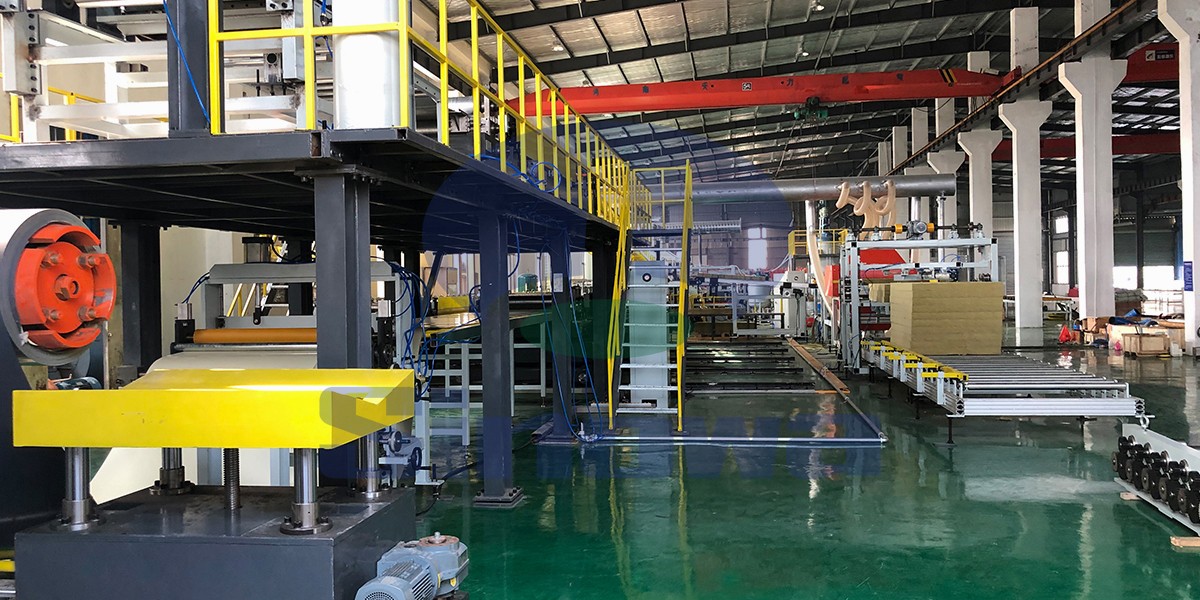
Fully Automatic Rock Wool Sandwich Panel Production Line
Sinowa is fully automatic rock wool sandwich panel production line manufacturer from china, dedicated to the research and development of high-end and high-efficiency, Sinowa is comprehensively taking the leading position in terms of efficiency, automation control level, HMI, environment protection and energy consumption, with subversive designs made in some critical technological fields to procure exceptional cost performance and customer-friendly experience for the entire fully automatic rock wool sandwich panel production line. The adoption of system integration technology and bus control technology accomplishes the full automatization of integrated and coordinated control of the entire fully automatic rock wool sandwich panel production line with accessible remote interactive communication. Ranking the first-class level in the world, it is currently the fully automatic rock wool sandwich panel production line in the market taking a comprehensive lead in high performance.
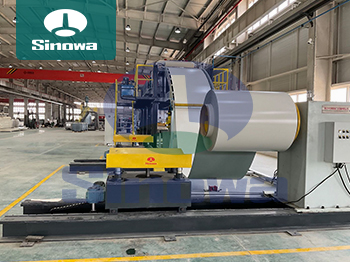
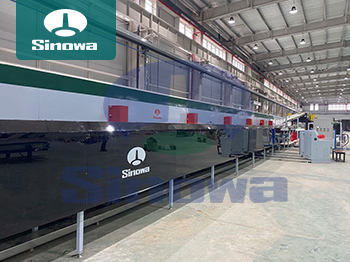
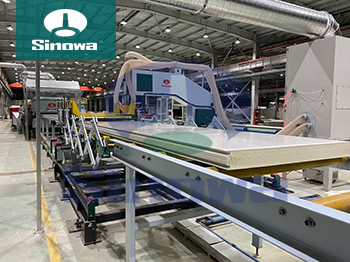
Based on the continuous technological pursuit, the fully automatic rock wool sandwich panel production line developed by Sinowa provides you with high-efficiency industrial value. Based on China's cost advantage and our hard-working technology concept, our fully automatic rock wool sandwich panel production line has a world-leading price-performance advantage. fully automatic rock wool sandwich panel production line can meet a variety of production needs of customers.The whole fully automatic rock wool sandwich panel production line design concept of modularization enables all our components to be integrated and combined at will. Our fully automatic rock wool sandwich panel production line can easily automate the production of roof sandwich panel, wall sandwich panel, cold storage sandwich panel and other products by different combination and configuration selection and siple switching. The inner core layer can be polyrethane or rock wool, glass wool, an so on.
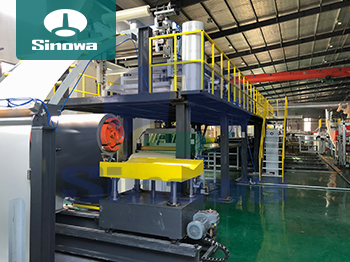


The fully automatic rock wool sandwich panel production line has high adaptability, which may produce various sandwich panel of the PU, PIR and rock wool systems. We may design various products according to the customer’s requirements, including various configurations, so as to meet their demands with flexible price system. Highly integrated and linked control system centralizes all control points at the main central center, achieving parameter linkage, fault self-diagnosis controlled by the whole line and shipping distance control. High-level automatic control system also saves the manpower and reduces the manpower loss for customers.


Concentrated system control is fully realized in the practice of concentrated process control so that the control system of all the movements of the parts in the fully automatic rock wool sandwich panel production line is integrated in one process control console with accessible remote communication to elevate the automation and reduce the allocated number of personnel for the assembly line. The main engine with modularized design achieves the precision operation of the fully automatic rock wool sandwich panel production line, stable and reliable quality, less part and maintenance loss. The whole fully automatic rock wool sandwich panel production line has over 40 innovative inventions, making our products have lots of unique features and the comprehensive performance of our fully automatic rock wool sandwich panel production line leading in the industry.


The precision servo hoisting mechanism employed by the main engine without hydraulic system makes the board thickness control flexible and the customer may conveniently change or adjust the board thickness. There will be not such troubles as hydraulic system adjustment, leakage, maintenance, etc. High-level energy saving and protection design makes the whole fully automatic rock wool sandwich panel production line possible to produce around the clock throughout the year and the customer will save huge budget. In addition, the isolated heat preservation room is constructed for warming the environment. The energy saving and protection design of our fully automatic rock wool sandwich panel production line may guarantee that the customer’s production line may be freely heated and produce in the main time to save more costs for customers.


The high-power low-consumption design quickens the reaction of the fully automatic rock wool sandwich panel production line while energy consumption is kept low. With the brand-new, fully sealed inner insulation design, the energy consumption is controlled at the minimum level to achieve the design objective of less than an hour for the insulation system to be activated from the room temperature above 5℃ to the production process temperature. The energy consumption is only 40% that of those similar products.
The fully automatic rock wool sandwich panel production line stands as a cornerstone of modern building material manufacturing, integrating precision mechanical engineering, advanced electrical control, hydraulic transmission, and composite material bonding technology to streamline the mass production of high-performance rock wool sandwich panels. Unlike semi-automatic or manual production setups, this fully automated system eliminates fragmented manual operations, unifies every production stage from raw material input to finished product output, and delivers consistent, high-quality panels that meet the rigorous demands of contemporary construction, industrial, and special-purpose engineering projects. Designed for continuous, uninterrupted operation, the production line is engineered to balance efficiency, precision, and durability, addressing the global push for energy-efficient, fire-safe, and sound-insulating building solutions while adapting to diverse market needs for customizable panel specifications.

At its core, the fully automatic rock wool sandwich panel production line is a modular, highly integrated system composed of interconnected functional units that work in synchronous harmony, each executing a specialized task without manual intervention. The structural framework begins with the raw material handling and feeding module, which serves as the initial entry point for the two primary components of sandwich panels: the metal facing sheets and the rock wool core material. For the metal facings, typically galvanized steel, color-coated steel, or aluminum alloy coils, this module includes heavy-duty uncoilers that smoothly unwind coiled metal sheets, precision leveling machines to eliminate wrinkles, warping, or unevenness, and edge trimming devices to adjust sheet width to exact production specifications. These components ensure the metal sheets are perfectly flat, dimensionally accurate, and free of surface defects, laying the groundwork for a tight, stable bond with the rock wool core. Parallel to this, the rock wool core feeding system manages the processing of pre-formed rock wool boards, which are derived from natural volcanic ores melted at high temperatures, spun into inorganic fibers, and compressed into rigid core blocks. This system features automated conveying belts, thickness adjustment mechanisms, and edge cutting tools that trim rock wool cores to match the width and thickness of the metal facings, while dust collection units control fiber particulate emissions to maintain a clean production environment and protect equipment longevity.
Following the raw material preparation stage, the production line progresses to the surface treatment and adhesive application module, a critical segment that directly impacts the structural integrity and long-term performance of the final sandwich panels. The metal facing sheets pass through a pre-heating unit that raises surface temperature to optimize adhesive bonding, eliminating moisture and ensuring the adhesive forms a strong, permanent bond rather than a fragile, temporary layer. The adhesive application system utilizes precision spray nozzles or roller coating mechanisms to apply a uniform layer of high-strength, heat-resistant adhesive across the entire inner surface of the upper and lower metal sheets; the system is calibrated to control adhesive thickness with micrometer-level accuracy, preventing excess adhesive that seeps out during pressing or insufficient adhesive that causes delamination. This closed-loop application process avoids waste and ensures consistent bonding across every panel, regardless of size or thickness. Next, the composite forming and pressing module merges the prepared metal facings and rock wool core into a single, unified sandwich structure. This unit consists of a continuous double-belt press system that applies steady, uniform pressure across the entire panel surface, squeezing out trapped air bubbles and compressing the three layers into a dense, stable composite. The press is equipped with temperature control functions, applying moderate heat to accelerate adhesive curing without damaging the inorganic rock wool fibers, and maintains consistent pressure distribution to avoid uneven compaction that could compromise thermal insulation or structural strength.
The subsequent stages of the production line include precision cutting, cooling and solidification, and finished product handling, all fully automated to maintain production continuity and dimensional accuracy. The high-precision cutting module uses CNC-controlled circular saws or flying cutters that operate without halting the production line, cutting the continuous panel strip into pre-set lengths with minimal margin of error, typically within ±2 millimeters. This non-stop cutting mechanism maximizes production efficiency by eliminating downtime associated with manual cutting or line stoppages. After cutting, the newly formed panels move through a cooling and solidification zone, where forced air cooling or water-cooled rollers rapidly reduce panel temperature to room level, completing the adhesive curing process and locking in the panel’s structural shape and dimensional stability. This step prevents warping, shrinkage, or deformation that can occur if panels cool too slowly, ensuring each panel retains its flatness and precise dimensions for seamless on-site installation. The final structural component is the automated stacking and conveying system, which gently lifts, sorts, and stacks finished panels onto pallets without scratching or damaging the metal facings; some advanced configurations also include automated wrapping units to protect panels during storage and transportation, though this remains an optional add-on. The entire production line is governed by a central control system, usually a PLC (Programmable Logic Controller) with a user-friendly touchscreen interface, which monitors and adjusts all operational parameters in real time—including production speed, pressure, temperature, adhesive flow, and cutting length—enabling seamless coordination between all modules and minimizing the need for manual oversight.
The performance of the fully automatic rock wool sandwich panel production line is defined by a set of core attributes that set it apart from less advanced manufacturing systems, directly translating to superior quality panels and enhanced operational efficiency for manufacturers. First and foremost is its high degree of automation, which reduces labor dependency to a minimal team of operators responsible solely for monitoring the control system, conducting routine equipment checks, and replenishing raw materials. This eliminates human error in manual feeding, bonding, and cutting, ensuring every panel meets uniform quality standards and reducing labor costs and operational risks associated with manual labor in industrial settings. The production line’s continuous operation capability is another key performance trait; designed for 24-hour cyclic operation with only scheduled maintenance pauses, it achieves significantly higher output volumes compared to batch-based or semi-automatic lines, making it ideal for large-scale construction projects and sustained market demand. Precision control is a defining performance feature, with servo motors and high-precision sensors regulating every process variable, from metal sheet leveling to rock wool core thickness and adhesive application. This precision ensures consistent panel quality across entire production runs, with uniform thickness, flatness, and bonding strength, eliminating defective panels and reducing material waste.
Durability and adaptability further enhance the production line’s performance value. The main frame and core components are constructed from heavy-duty steel profiles with reinforced welding and surface anti-corrosion treatment, enabling the equipment to withstand the wear and tear of continuous industrial operation and maintain functional stability for years with proper maintenance. The system’s adaptive design allows for quick adjustments to accommodate diverse panel specifications, including variable thickness (ranging from 30mm to over 300mm), width (from 900mm to 1250mm), and length, as well as different metal facing profiles such as flat sheets, corrugated sheets, and interlocking profiles for enhanced structural stability. Additionally, the production line boasts strong energy efficiency and environmental performance, with energy-saving servo motors replacing traditional high-power hydraulic components in many modern configurations, reducing power consumption by a significant margin. Closed-loop adhesive recovery systems capture excess adhesive for reuse, and dust collection units contain rock wool fiber particulates, minimizing environmental pollution and aligning with global sustainable manufacturing standards. Unlike production lines for organic core materials, rock wool processing generates no harmful volatile organic compounds, and the automated system optimizes raw material usage to cut down on waste, making it an eco-friendly manufacturing solution.
The versatility of the fully automatic production line enables the manufacturing of multiple types of rock wool sandwich panels, each tailored to specific performance requirements and application scenarios, classified primarily by structural design, facing material, and functional purpose. The most common classification is based on panel structure, with flat wall panels being the most widely used type, featuring smooth, flat metal facings and a uniform rock wool core, designed for vertical installation on building exterior walls, interior partition walls, and factory workshop enclosures. These panels prioritize thermal insulation, sound insulation, and fire resistance, with a rigid structure that supports easy installation and seamless splicing. Corrugated roof panels, by contrast, feature trapezoidal or wave-shaped metal facings, engineered to enhance load-bearing capacity and water resistance, making them suitable for sloped roofs of industrial warehouses, logistics centers, agricultural facilities, and commercial buildings. The corrugated design disperses gravitational loads, including snow and wind, and prevents water accumulation, while the rock wool core maintains consistent thermal performance even under outdoor weather conditions.
Another key classification is based on functional enhancements, including fire-resistant specialized panels, thermal insulation panels for low-temperature environments, and sound-absorbing panels for noise-sensitive spaces. Fire-resistant rock wool sandwich panels leverage the inherent non-combustible properties of inorganic rock wool fibers, which do not ignite, melt, or release toxic fumes at high temperatures, making them ideal for buildings with strict fire safety requirements such as industrial plants, public facilities, and storage depots for flammable materials. These panels often feature reinforced edge sealing to prevent fire spread through panel joints, with the production line able to integrate additional fire-resistant coatings during the bonding stage without altering core production processes. Low-temperature thermal insulation panels, optimized for cold chain facilities, feature high-density rock wool cores with low thermal conductivity, minimizing heat transfer and maintaining stable internal temperatures; the production line can adjust core compaction and adhesive type to enhance moisture resistance, preventing water absorption that degrades insulation performance in humid, low-temperature environments. Sound-absorbing panels utilize porous rock wool fiber structure to absorb sound waves and reduce noise transmission, suitable for workshops with heavy machinery, recording studios, office buildings, and residential buildings near high-traffic areas, with the production line able to adjust core porosity to fine-tune sound insulation performance.
Panels are also classified by facing material, with galvanized steel facing panels offering exceptional corrosion resistance and structural strength, ideal for industrial facilities and harsh outdoor environments; color-coated steel facing panels add aesthetic versatility, available in a wide range of colors and finishes to match building design requirements, suitable for commercial structures, public buildings, and modern residential complexes; and aluminum alloy facing panels, lightweight yet durable, preferred for projects requiring reduced structural load, such as prefabricated buildings and temporary modular structures. Regardless of type, the fully automatic production line maintains consistent quality, with customizable edge configurations—including square edges, overlapping edges, and interlocking edges—to facilitate tight, stable on-site splicing and improve overall building airtightness and structural stability.
The rock wool sandwich panels produced by this fully automatic line find extensive, irreplaceable applications across construction, industrial, agricultural, and special-purpose sectors, driven by their unique combination of fire resistance, thermal insulation, sound insulation, structural strength, and environmental friendliness. In the field of industrial and commercial construction, these panels are the material of choice for factory workshops, warehouses, logistics centers, office buildings, and shopping malls. For industrial plants, especially those involving high-temperature operations or flammable materials, the non-combustible rock wool core provides reliable passive fire protection, while the thermal insulation properties reduce energy consumption for heating and cooling, lowering long-term operational costs. Warehouses and logistics facilities benefit from the panels’ quick installation and high structural stability, enabling rapid construction of large-span spaces with minimal structural support, while the sound insulation properties create a quieter working environment for staff.
In cold chain and temperature-controlled engineering, the panels are indispensable for cold storage warehouses, refrigerated transport facilities, pharmaceutical storage rooms, and food processing plants. The low thermal conductivity of the rock wool core maintains consistent low temperatures, reducing energy waste from refrigeration systems and ensuring the quality and safety of perishable goods such as food, pharmaceuticals, and biological products. Unlike organic insulation materials that may degrade in low-temperature environments, rock wool remains stable and retains its insulation performance over time, making it a durable, cost-effective solution for long-term cold chain operations. For agricultural construction, the panels are widely used in greenhouse structures, livestock breeding farms, and agricultural product storage facilities, providing stable temperature and humidity control to protect crops and livestock from extreme weather conditions; the corrosion-resistant metal facings withstand the humid, chemically active environment of livestock farms, while the fire-resistant properties eliminate fire risks associated with agricultural equipment and materials.
Prefabricated and modular construction represents another major application area, aligning with the global trend toward efficient, sustainable building methods. Rock wool sandwich panels are lightweight, easy to transport, and simple to install, allowing for the rapid assembly of prefabricated houses, temporary accommodation, emergency shelters, and modular office spaces. The panels’ structural rigidity ensures the stability of prefabricated structures, while their thermal and sound insulation properties meet residential and commercial comfort standards. Additionally, the panels are used in clean room and sterile environment construction, including pharmaceutical factories, food processing workshops, electronic component manufacturing plants, and medical facilities. The smooth, non-porous metal facings resist dust accumulation and are easy to clean, while the tight bonding between layers prevents air leakage and contamination, maintaining the sterile conditions required for sensitive production processes.
Beyond these core applications, rock wool sandwich panels are utilized in infrastructure projects, including sound barriers along highways, railways, and airports, where their sound-absorbing properties reduce noise pollution for nearby communities; insulation layers for industrial pipelines and storage tanks, providing thermal retention and fire protection; and renovation projects for existing buildings, where they enhance energy efficiency and fire safety without requiring major structural modifications. The adaptability of the fully automatic production line ensures that panels can be customized to meet the unique demands of each application, from specialized thickness and size to custom facing colors and edge designs, making the equipment a versatile asset for manufacturers serving diverse global markets.
In summary, the fully automatic rock wool sandwich panel production line represents a pinnacle of modern building material manufacturing technology, merging sophisticated structural design, exceptional performance, and flexible adaptability to produce high-quality rock wool sandwich panels that address critical industry needs. Its modular, automated structure streamlines production from raw material to finished product, delivering consistent quality, high efficiency, and sustainable operation, while its ability to manufacture diverse panel types enables widespread use across construction, cold chain, agriculture, prefabrication, and infrastructure sectors. As global demand for energy-efficient, fire-safe, and environmentally friendly building materials continues to rise, the fully automatic rock wool sandwich panel production line will remain a vital piece of industrial equipment, driving innovation in building material manufacturing and supporting the development of sustainable, resilient construction projects worldwide. Its ongoing evolution, focused on enhanced automation, precision, and energy efficiency, will further expand its capabilities and applications, solidifying its role as a key enabler of modern, responsible construction practices across the globe.
《Fully Automatic Rock Wool Sandwich Panel Production Line》Update Date: 2026/3/19
URL: https://www.sinowamachine.cn/en/tag/fully-automatic-rock-wool-sandwich-panel-production-line.html
- PU Sandwich Panel Making Machine
- Rockwool Sandwich Panel Production Line
- PU Sandwich Panel Machine
- PU Sandwich Panel Production Line
- Mineral Wool Sandwich Panel Machine
- PUF Panel Machine
- Rock Wool Sandwich Panel Line
- Sandwich Panel Machines
- Sandwich Panel Lines
- Rockwool Sandwich Panel Machine
- Rockwool Sandwich Panel Line
- PU Sandwich Panel Line
- PU Panel Machine
- Foam Forming Machine
- Continuous Sandwich Panel Line
- Continuous PU Sandwich Panel Line
- PIR Sandwich Panel Line
- Polyurethane Sandwich Panel Line
- Automatic PU Sandwich Panel Production Line
- PU Foam Sandwich Panel Production Line