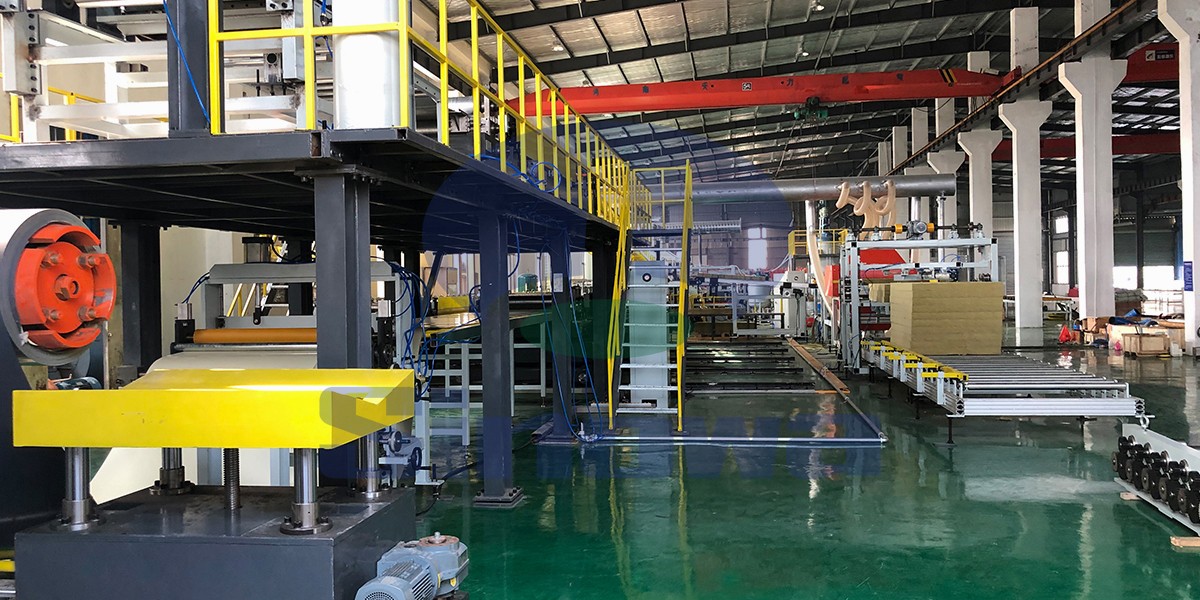
Rockwool Sandwich Panel Continuous Production Line
Sinowa is rockwool sandwich panel continuous production line manufacturer from china, dedicated to the research and development of high-end and high-efficiency, Sinowa is comprehensively taking the leading position in terms of efficiency, automation control level, HMI, environment protection and energy consumption, with subversive designs made in some critical technological fields to procure exceptional cost performance and customer-friendly experience for the entire rockwool sandwich panel continuous production line. The adoption of system integration technology and bus control technology accomplishes the full automatization of integrated and coordinated control of the entire rockwool sandwich panel continuous production line with accessible remote interactive communication. Ranking the first-class level in the world, it is currently the rockwool sandwich panel continuous production line in the market taking a comprehensive lead in high performance.
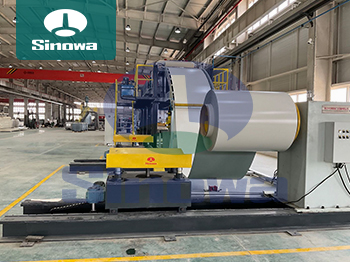
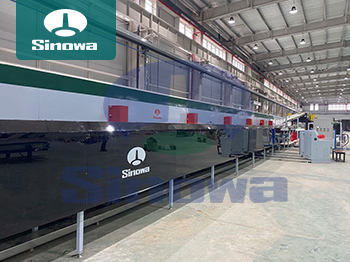
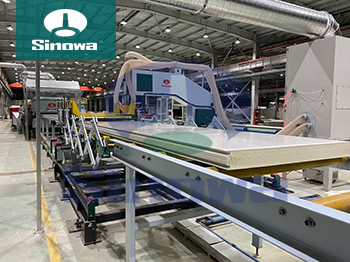
Based on the continuous technological pursuit, the rockwool sandwich panel continuous production line developed by Sinowa provides you with high-efficiency industrial value. Based on China's cost advantage and our hard-working technology concept, our rockwool sandwich panel continuous production line has a world-leading price-performance advantage. rockwool sandwich panel continuous production line can meet a variety of production needs of customers.The whole rockwool sandwich panel continuous production line design concept of modularization enables all our components to be integrated and combined at will. Our rockwool sandwich panel continuous production line can easily automate the production of roof sandwich panel, wall sandwich panel, cold storage sandwich panel and other products by different combination and configuration selection and siple switching. The inner core layer can be polyrethane or rock wool, glass wool, an so on.
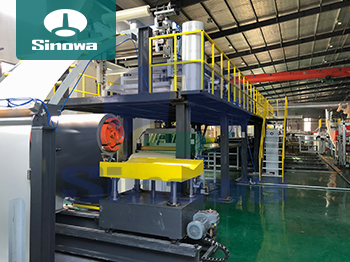


The rockwool sandwich panel continuous production line has high adaptability, which may produce various sandwich panel of the PU, PIR and rock wool systems. We may design various products according to the customer’s requirements, including various configurations, so as to meet their demands with flexible price system. Highly integrated and linked control system centralizes all control points at the main central center, achieving parameter linkage, fault self-diagnosis controlled by the whole line and shipping distance control. High-level automatic control system also saves the manpower and reduces the manpower loss for customers.


Concentrated system control is fully realized in the practice of concentrated process control so that the control system of all the movements of the parts in the rockwool sandwich panel continuous production line is integrated in one process control console with accessible remote communication to elevate the automation and reduce the allocated number of personnel for the assembly line. The main engine with modularized design achieves the precision operation of the rockwool sandwich panel continuous production line, stable and reliable quality, less part and maintenance loss. The whole rockwool sandwich panel continuous production line has over 40 innovative inventions, making our products have lots of unique features and the comprehensive performance of our rockwool sandwich panel continuous production line leading in the industry.


The precision servo hoisting mechanism employed by the main engine without hydraulic system makes the board thickness control flexible and the customer may conveniently change or adjust the board thickness. There will be not such troubles as hydraulic system adjustment, leakage, maintenance, etc. High-level energy saving and protection design makes the whole rockwool sandwich panel continuous production line possible to produce around the clock throughout the year and the customer will save huge budget. In addition, the isolated heat preservation room is constructed for warming the environment. The energy saving and protection design of our rockwool sandwich panel continuous production line may guarantee that the customer’s production line may be freely heated and produce in the main time to save more costs for customers.


The high-power low-consumption design quickens the reaction of the rockwool sandwich panel continuous production line while energy consumption is kept low. With the brand-new, fully sealed inner insulation design, the energy consumption is controlled at the minimum level to achieve the design objective of less than an hour for the insulation system to be activated from the room temperature above 5℃ to the production process temperature. The energy consumption is only 40% that of those similar products.
The rockwool sandwich panel continuous production line stands as a highly integrated, automated manufacturing system that redefines the mass production of high-performance building composite panels, merging mechanical engineering, electrical control, hydraulic transmission, and chemical bonding technologies into a seamless operational workflow. Unlike fragmented, semi-automatic production models, this continuous line operates as a unified production chain, streamlining every stage from raw material input to finished panel output without intermittent interruptions, thus elevating production efficiency, product consistency, and overall quality stability to an unprecedented level. At its core, the line is engineered to fabricate composite panels with a dual-layer outer shell and a dense rockwool core, a structural design that endows the final products with a unique combination of mechanical strength, thermal insulation, fire resistance, and sound absorption; the continuous production model eliminates manual handling gaps, reduces material waste, and ensures uniform physical properties across every panel produced, making it a cornerstone equipment in modern construction material manufacturing. Designed with modularity as a core principle, the entire production line consists of several interconnected functional modules, each performing a dedicated task while synchronizing perfectly with adjacent modules to maintain uninterrupted production, a structural layout that not only simplifies daily operation and maintenance but also enables flexible adjustment of production parameters to cater to diverse product specifications.

Delving into the detailed structural composition, the rockwool sandwich panel continuous production line is comprised of seven core functional segments, each engineered to fulfill critical production procedures with precision and stability. The first segment is the metal sheet uncoiling and leveling system, which handles the feeding and preliminary processing of coiled metal outer shells, typically thin steel sheets; this system unwinds coiled raw materials smoothly, eliminates surface wrinkles and deformations through high-precision leveling rollers, and trims excess edges to meet standardized width requirements, laying a solid foundation for subsequent composite forming. Following this is the sheet profiling system, which uses continuous roll-forming technology to press the leveled metal sheets into preset structural profiles, such as trapezoidal, flat, or locked-edge shapes, with the profile design directly impacting the panels’ mechanical load-bearing capacity and installation tightness. Next comes the rockwool core processing and feeding module, responsible for conveying, sizing, and positioning prefabricated rockwool core boards; this module ensures the rockwool core is fed into the composite area at a consistent speed and precise thickness, with built-in dust collection and fiber protection mechanisms to preserve the integrity of the porous rockwool structure, which is vital for retaining the material’s inherent insulation and soundproofing properties. The adhesive coating system follows, applying a uniform layer of high-strength structural adhesive to the inner surfaces of the metal profile sheets; equipped with precision metering pumps and distributed spray nozzles, this system controls adhesive thickness and coverage accurately, avoiding uneven bonding or excessive adhesive accumulation that could compromise panel performance. The core composite pressing and curing segment is where the metal outer layers and rockwool core are permanently bonded together, using a dual continuous pressing belt system that applies stable, uniform pressure and controlled heating to accelerate adhesive curing, expel internal air bubbles, and ensure tight integration between the core and outer shells without compressing the rockwool core beyond its optimal density. After composite forming, the continuous panel enters the cooling and shaping system, which rapidly lowers the panel temperature to stabilize its physical dimensions and complete adhesive cross-linking, preventing post-production deformation or delamination. Finally, the precision cutting and finished product stacking system cuts the continuous panel into fixed lengths based on preset parameters without halting the production line, then stacks qualified panels neatly for subsequent storage and transportation, with an automatic inspection module integrated to screen out panels with surface defects, bonding failures, or dimensional deviations.
The operational performance of the rockwool sandwich panel continuous production line is defined by a set of core advantages that distinguish it from traditional production equipment, centered on automation stability, production efficiency, product quality consistency, and processing flexibility. One of the most prominent performance traits is its high degree of full-process automation, powered by an advanced programmable logic control system paired with a human-machine interaction interface; operators only need to input preset production parameters such as panel thickness, width, length, and pressing pressure, and the system automatically coordinates the operation of all modules, realizing closed-loop control of the entire production chain. This high automation level drastically reduces manual intervention, minimizes human errors, and lowers labor demand, while supporting long-duration continuous operation with minimal downtime, greatly boosting overall production capacity. In terms of processing precision, the line achieves exceptional accuracy in dimensional control, with thickness deviation controlled within a tiny margin and length cutting error kept to an extremely low level, ensuring every finished panel meets strict processing standards and facilitates seamless on-site installation. The production line also boasts outstanding adaptability to variable production demands, supporting quick switching between different panel specifications without major equipment disassembly or reconstruction; by adjusting profiling rollers, modifying control parameters, or replacing individual modular components, manufacturers can shift production between different thicknesses, profiles, and core densities efficiently, catering to the diverse needs of the construction market. Additionally, the line exhibits excellent energy efficiency and operational stability, with optimized mechanical transmission and servo control systems reducing energy consumption compared to traditional hydraulic-driven equipment, and built-in fault self-diagnosis and alarm functions that detect potential equipment issues in real time, preventing large-scale defective product production and extending the service life of the entire production line. From a material processing perspective, the line preserves the inherent performance advantages of rockwool during production, avoiding damage to the inorganic fiber structure that would reduce thermal insulation, fire resistance, and sound absorption, thus ensuring the final panels retain all the functional properties of the raw rockwool material.
The panels produced by the rockwool sandwich panel continuous production line are categorized into multiple types based on structural design, application scenarios, core density, and outer shell properties, each tailored to specific engineering requirements, with classifications primarily focused on structural form and functional orientation. The most common classification is based on panel application, dividing products into wall sandwich panels and roof sandwich panels; wall panels are designed with emphasis on vertical load-bearing capacity, wind pressure resistance, and facade flatness, often featuring locked-edge or lapped profiles to enhance overall wall tightness and structural stability, while roof panels prioritize waterproof performance, snow load resistance, and thermal insulation, with thicker core layers and inclined profiling to facilitate rainwater drainage and prevent water accumulation. Another key classification is based on rockwool core density, ranging from low-density to high-density panels; low-density panels are suitable for non-load-bearing internal partitions and light insulation applications, offering cost-effective thermal and sound insulation, while medium and high-density panels are engineered for external building envelopes and load-bearing structures, delivering enhanced mechanical strength, compression resistance, and durability to withstand harsh outdoor environmental conditions. Panels can also be classified by outer shell material and surface treatment, including galvanized steel outer shells, coated steel outer shells, and aluminum outer shells; galvanized steel shells offer exceptional corrosion resistance and structural strength, ideal for industrial and harsh environmental applications, coated steel shells provide rich color options and weather resistance for commercial and public building facades, and aluminum shells feature lightweight properties and aesthetic appeal for high-end architectural projects. Additionally, there are specialized customized panels produced by adjusting production line parameters, such as ultra-thin insulation panels for interior decoration, thickened fireproof isolation panels for building fire compartments, and moisture-proof enhanced panels for humid environments, all manufactured seamlessly by the continuous production line through minor parameter adjustments, highlighting the equipment’s flexible production capacity.
Beyond product classification, the inherent performance of the finished rockwool sandwich panels further expands the application scope of the continuous production line, with the core performance indicators of the panels directly derived from the precise processing control of the production line. Foremost among these is exceptional fire resistance, as rockwool is an inorganic non-combustible material made from natural volcanic ore processed at high temperatures; the panels do not ignite, melt, or release toxic flue gas under high temperatures, effectively blocking flame spread and meeting strict building fire safety requirements, making them indispensable for fire partition and fire-resistant envelope projects. Thermal insulation performance is another core advantage, with the porous fiber structure of rockwool creating a large number of closed air pockets that drastically reduce heat conduction, resulting in extremely low thermal conductivity; this makes the panels highly effective in reducing energy loss for heating and cooling, improving building energy efficiency and reducing long-term operational energy costs, a critical feature for green and energy-saving construction projects. The panels also offer superior sound absorption and noise reduction performance, as the disordered rockwool fiber structure absorbs sound wave energy and weakens sound transmission, isolating external environmental noise and indoor equipment noise, making them suitable for noise-sensitive buildings such as residential complexes, hospitals, schools, and office buildings. Mechanically, the composite sandwich structure combines the high strength of metal outer shells with the compression resistance of the rockwool core, endowing the panels with good bending resistance, shear resistance, and impact resistance; they can withstand certain external loads, wind pressure, and seismic impacts, ensuring long-term structural stability in various building environments. Furthermore, the panels feature excellent moisture resistance and dimensional stability, with treated rockwool cores resisting moisture absorption and metal outer shells providing effective waterproof protection, preventing panel deformation, mildew, or performance degradation in humid environments, thus extending the service life of building envelopes.
Driven by these outstanding performance features, rockwool sandwich panels produced by continuous production lines are widely applied across a vast range of construction and engineering fields, covering industrial, commercial, residential, and special-purpose projects. In the industrial construction sector, the panels are the preferred material for factory buildings, warehouses, logistics centers, and industrial workshops; their quick installation, high structural strength, fire resistance, and thermal insulation adapt to the large-span, high-strength load-bearing, and safe production requirements of industrial facilities, while also supporting fast construction cycles to shorten project completion time. For commercial construction, including shopping malls, office buildings, exhibition halls, and public service facilities, the panels combine aesthetic appearance, thermal insulation, and sound insulation, creating comfortable and safe indoor environments while meeting modern architectural design requirements for facade aesthetics and energy efficiency. In the residential sector, the panels are used for lightweight residential buildings, villa envelopes, interior partition walls, and attic insulation, leveraging their lightweight nature, excellent sound insulation, and fire safety to enhance living comfort and residential safety. The panels also play a critical role in special engineering projects that demand strict temperature control and fire safety, such as cold storage facilities, constant-temperature warehouses, and pharmaceutical storage buildings; their ultra-high thermal insulation performance maintains stable indoor temperatures, reduces energy consumption for refrigeration and constant temperature systems, and meets the fire safety standards required for special material storage. Additionally, they are widely used in temporary construction projects such as prefabricated houses, construction site dormitories, and emergency buildings, due to their lightweight, easy transportation, quick assembly, and reusability, providing safe and comfortable temporary living and working spaces. In public infrastructure projects, including stadiums, transportation hubs, and school buildings, the panels meet the dual requirements of large-space structural design and public safety, offering reliable fire protection, sound insulation, and thermal insulation for high-traffic public venues.
As the global construction industry continues to shift towards prefabrication, energy efficiency, and fire safety, the rockwool sandwich panel continuous production line has become an indispensable piece of equipment in the modern building material manufacturing sector, with its optimized structural design, stable operational performance, and flexible production capacity driving the upgrading of rockwool sandwich panel products. Unlike traditional batch production, the continuous production model not only improves production efficiency and reduces manufacturing costs but also ensures consistent product quality, enabling large-scale supply of high-performance building composite panels to meet the growing market demand for green, safe, and durable building materials. The integration of advanced control technologies further enhances the intelligence of the production line, enabling real-time monitoring of production data, remote operation and maintenance, and adaptive parameter adjustment, aligning with the development trend of intelligent manufacturing in the industrial sector. Looking ahead, with continuous technological innovation in material science and mechanical engineering, the rockwool sandwich panel continuous production line will undergo further optimization in terms of energy conservation, processing precision, and product customization capacity, expanding the application boundaries of rockwool sandwich panels and supporting the sustainable development of the global construction industry. From urban industrial parks to commercial complexes, from residential communities to special engineering facilities, the products of this advanced production line continue to create safer, more energy-efficient, and more comfortable built environments, solidifying its position as a key driving force in the evolution of modern construction materials and manufacturing processes.
《Rockwool Sandwich Panel Continuous Production Line》Update Date: 2026/3/26
URL: https://www.sinowamachine.cn/en/tag/rockwool-sandwich-panel-continuous-production-line.html
- PU Sandwich Panel Making Machine
- Rockwool Sandwich Panel Production Line
- PU Sandwich Panel Machine
- PU Sandwich Panel Production Line
- Mineral Wool Sandwich Panel Machine
- PUF Panel Machine
- Rock Wool Sandwich Panel Line
- Sandwich Panel Machines
- Sandwich Panel Lines
- Rockwool Sandwich Panel Machine
- Rockwool Sandwich Panel Line
- PU Sandwich Panel Line
- PU Panel Machine
- Foam Forming Machine
- Continuous Sandwich Panel Line
- Continuous PU Sandwich Panel Line
- PIR Sandwich Panel Line
- Polyurethane Sandwich Panel Line
- Automatic PU Sandwich Panel Production Line
- PU Foam Sandwich Panel Production Line