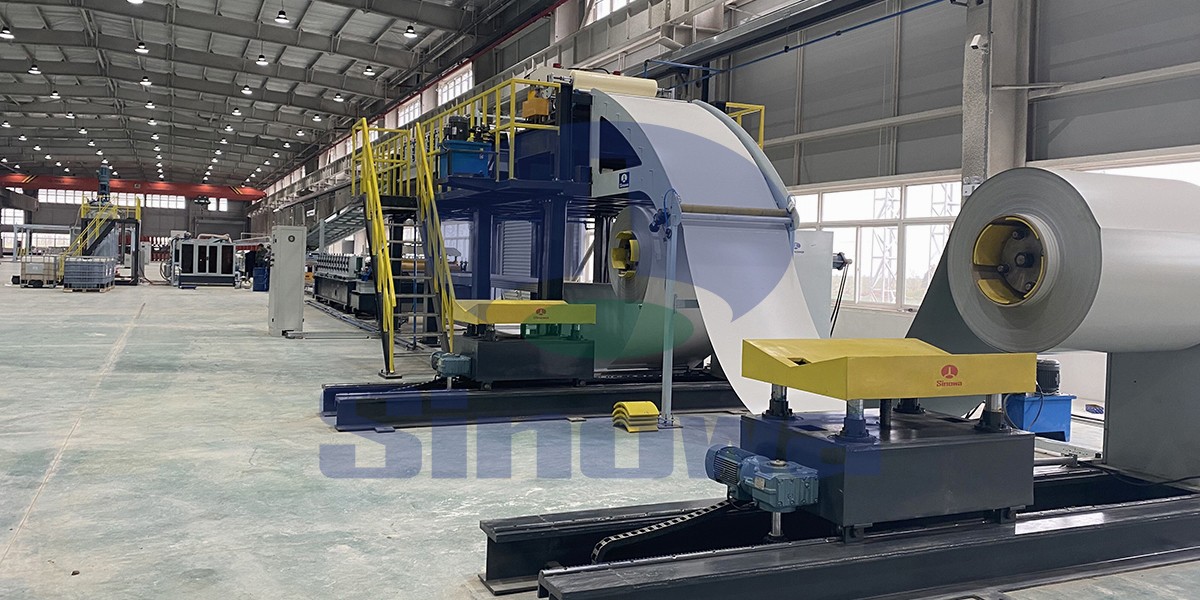
Sinowa is pur sandwich panel production line manufacturer from china, dedicated to the research and development of high-end and high-efficiency, Sinowa is comprehensively taking the leading position in terms of efficiency, automation control level, HMI, environment protection and energy consumption, with subversive designs made in some critical technological fields to procure exceptional cost performance and customer-friendly experience for the entire pur sandwich panel production line. The adoption of system integration technology and bus control technology accomplishes the full automatization of integrated and coordinated control of the entire pur sandwich panel production line with accessible remote interactive communication. Ranking the first-class level in the world, it is currently the pur sandwich panel production line in the market taking a comprehensive lead in high performance.
Based on the continuous technological pursuit, the pur sandwich panel production line developed by Sinowa provides you with high-efficiency industrial value. Based on China's cost advantage and our hard-working technology concept, our pur sandwich panel production line has a world-leading price-performance advantage. pur sandwich panel production line can meet a variety of production needs of customers.The whole pur sandwich panel production line design concept of modularization enables all our components to be integrated and combined at will. Our pur sandwich panel production line can easily automate the production of roof sandwich panel, wall sandwich panel, cold storage sandwich panel and other products by different combination and configuration selection and siple switching. The inner core layer can be polyrethane or rock wool, glass wool, an so on.
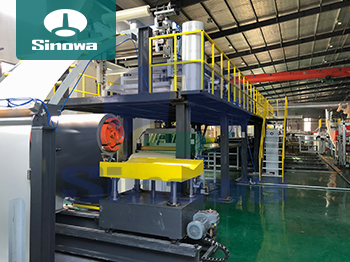
The pur sandwich panel production line has high adaptability, which may produce various sandwich panel of the PU, PIR and rock wool systems. We may design various products according to the customer’s requirements, including various configurations, so as to meet their demands with flexible price system. Highly integrated and linked control system centralizes all control points at the main central center, achieving parameter linkage, fault self-diagnosis controlled by the whole line and shipping distance control. High-level automatic control system also saves the manpower and reduces the manpower loss for customers.
Concentrated system control is fully realized in the practice of concentrated process control so that the control system of all the movements of the parts in the pur sandwich panel production line is integrated in one process control console with accessible remote communication to elevate the automation and reduce the allocated number of personnel for the assembly line. The main engine with modularized design achieves the precision operation of the pur sandwich panel production line, stable and reliable quality, less part and maintenance loss. The whole pur sandwich panel production line has over 40 innovative inventions, making our products have lots of unique features and the comprehensive performance of our pur sandwich panel production line leading in the industry.
The precision servo hoisting mechanism employed by the main engine without hydraulic system makes the board thickness control flexible and the customer may conveniently change or adjust the board thickness. There will be not such troubles as hydraulic system adjustment, leakage, maintenance, etc. High-level energy saving and protection design makes the whole pur sandwich panel production line possible to produce around the clock throughout the year and the customer will save huge budget. In addition, the isolated heat preservation room is constructed for warming the environment. The energy saving and protection design of our pur sandwich panel production line may guarantee that the customer’s production line may be freely heated and produce in the main time to save more costs for customers.
The high-power low-consumption design quickens the reaction of the pur sandwich panel production line while energy consumption is kept low. With the brand-new, fully sealed inner insulation design, the energy consumption is controlled at the minimum level to achieve the design objective of less than an hour for the insulation system to be activated from the room temperature above 5℃ to the production process temperature. The energy consumption is only 40% that of those similar products.
The PUR (Polyurethane Rigid Foam) sandwich panel production line stands as a cornerstone of modern industrial manufacturing, engineered to produce high-performance composite panels that merge structural strength, thermal insulation, and versatile usability into a single integrated product. Unlike basic panel fabrication setups, this production system is a meticulously coordinated assembly of mechanical, electrical, and chemical processing units, each designed to execute a specialized stage of production with precision and consistency, ensuring the final panels meet strict functional and structural standards across diverse operating conditions. Every component of the production line works in synchronized harmony, eliminating bottlenecks and maintaining uniform product quality, whether operating at high-volume continuous output or smaller-scale batch production, making it adaptable to the varying demands of global construction, logistics, manufacturing, and transportation sectors. To fully understand the value and versatility of PUR sandwich panels, it is essential to delve into the intricate structural design of the production line, the inherent performance characteristics it delivers to the finished panels, the distinct classifications of both production systems and end products, and the wide-ranging practical applications that rely on these unique material properties.

At its core, the PUR sandwich panel production line is built around a modular, interconnected structural framework that supports a seamless, linear production flow, starting from raw material handling and ending with finished panel cutting, stacking, and quality inspection. The foundational structure begins with the uncoiling and pre-processing station, which accommodates large rolls of facing materials—most commonly metal sheets, but also fiberglass, aluminum composite materials, and other rigid or semi-rigid substrates—that form the outer skins of the sandwich panel. This station is equipped with precision leveling and surface treatment mechanisms to remove imperfections, ensure flatness, and prepare the surface for optimal adhesion with the polyurethane foam core, preventing delamination and enhancing the overall bond strength between the facings and core. Adjacent to the uncoiling unit is the roll forming section, which shapes the flat facing materials into predefined profiles, such as corrugated, flat, or interlocking edge designs, to boost structural rigidity and facilitate seamless on-site installation. The roll forming equipment is adjustable to accommodate varying panel widths, thicknesses, and profile styles, allowing for flexible production without major reconfiguration, a key structural advantage that enhances the line’s operational versatility.
Moving along the production flow, the central and most critical structural component is the polyurethane foaming and laminating system, which serves as the heart of the entire line. This system consists of a high-precision raw material metering and mixing unit, a controlled injection mechanism, and a double-belt laminating press that maintains consistent pressure and temperature throughout the foaming and curing process. The metering unit precisely regulates the ratio of polyol and isocyanate, the two primary chemical components of rigid PUR foam, ensuring uniform mixing and consistent foam cell structure across the entire panel surface; even minor deviations in mixing ratio can compromise insulation performance, structural integrity, and dimensional stability, making this precision control a non-negotiable structural feature. The injection system distributes the mixed liquid foam evenly between the upper and lower pre-formed facings, with adjustable nozzle arrays to match different panel widths and core thicknesses, avoiding uneven foam distribution or voids that would weaken the panel. The double-belt laminating press is a heavy-duty structural assembly with parallel, heat-regulated conveyor belts that apply steady, uniform pressure to compress the sandwich assembly as the foam expands and cures, setting the final panel thickness and ensuring a permanent, high-strength bond between the foam core and outer facings. This press is designed with temperature and speed controls to match the curing rate of the PUR foam, balancing production efficiency with complete chemical curing to maximize panel performance.
Completing the structural layout are the post-processing and finishing units, which include a precision cutting system, edge trimming equipment, surface protection application, and automated stacking and handling mechanisms. The cutting unit uses high-speed, dust-free cutting tools to trim panels to exact custom lengths, with programmable controls to accommodate diverse project specifications, while edge trimming ensures clean, uniform edges that align with installation standards. The entire production line is integrated with a centralized control system, typically a touch-screen operator interface linked to programmable logic controllers, that synchronizes the speed, temperature, pressure, and material flow of every individual station. This centralized control structure eliminates manual coordination errors, allows for real-time adjustments to production parameters, and maintains consistent output quality over extended operating hours. Supporting the core processing units are auxiliary structural components, including material storage racks, waste recycling systems for excess facing material and foam scraps, and environmental control units to manage fumes and temperature within the production area, creating a safe, efficient, and sustainable operational environment. The overall structural design prioritizes durability, ease of maintenance, and scalability, with heavy-duty steel framing to support the weight of processing equipment and continuous operation, and modular components that can be upgraded or expanded to boost production capacity or adapt to new panel specifications.
The performance characteristics of PUR sandwich panels are directly shaped by the structural design and operational precision of the production line, with the finished products exhibiting a unique combination of mechanical, thermal, chemical, and physical properties that set them apart from traditional building and insulation materials. One of the most prominent performance traits is exceptional thermal insulation efficiency, driven by the closed-cell structure of rigid PUR foam, which is formed under the controlled conditions of the production line’s foaming and curing system. This closed-cell structure traps stationary air within tiny, uniform cells, minimizing heat transfer through conduction, convection, and radiation, resulting in a significantly low thermal conductivity value. Unlike loose-fill insulation or fibrous materials, PUR foam maintains its insulation performance consistently over time, without settling, compressing, or degrading, even when exposed to fluctuating temperatures and humidity levels. This thermal stability makes the panels highly effective at reducing energy consumption for heating and cooling in enclosed spaces, supporting energy-efficient design and long-term operational cost savings across residential, commercial, and industrial applications.
Structural mechanical performance is another key attribute delivered by the production line’s precision engineering. The sandwich panel design, with rigid outer facings and a dense, cured PUR core, creates a lightweight yet exceptionally strong composite structure that distributes weight and external stress evenly across the panel surface. This combination of low weight and high load-bearing capacity reduces the structural load on supporting frameworks in buildings and vehicles, allowing for more streamlined, cost-effective structural designs without compromising durability or safety. The panels exhibit high flexural strength, resistance to impact damage, and ability to withstand wind loads, snow loads, and minor physical impacts, making them suitable for exterior and interior applications in high-traffic or harsh environmental conditions. Additionally, the strong bond between the foam core and facings, achieved through the controlled lamination and curing process, prevents delamination, warping, or twisting over the panel’s service life, ensuring long-term dimensional stability. Unlike solid wood, concrete, or single-layer metal panels, PUR sandwich panels maintain their shape and structural integrity even in regions with extreme temperature variations, avoiding expansion, contraction, or warping that can compromise installation and performance.
Additional performance features include excellent sound insulation, moisture resistance, and chemical stability, all enhanced by the closed-cell PUR foam structure and protective outer facings. The dense foam core absorbs and blocks airborne sound transmission, reducing noise transfer between rooms, buildings, or vehicle compartments, making the panels ideal for noise-sensitive environments such as residential complexes, office buildings, and industrial facilities near high-noise equipment. The closed-cell structure also repels liquid moisture and prevents water absorption, inhibiting mold growth, mildew, and material degradation that can occur with porous insulation materials; this moisture resistance is critical for applications in humid climates, cold storage facilities, and outdoor structures where exposure to moisture is unavoidable. The panels also demonstrate good resistance to mild chemicals, oils, and environmental pollutants, with the outer facings providing an additional layer of protection against UV radiation, corrosion, and surface wear. When produced under the controlled conditions of a well-designed production line, PUR sandwich panels have a long service life, retaining their performance properties for decades with minimal maintenance, adding to their overall practical and economic value.
PUR sandwich panel production lines and the panels they produce are classified into distinct categories based on production process, panel design, core specifications, and intended use, with each classification tailored to meet specific industry requirements and operational needs. The primary classification of production lines is based on operational mode: continuous production lines and discontinuous (batch) production lines. Continuous lines are designed for large-scale, high-volume output, operating non-stop with synchronized material feeding, foaming, lamination, and finishing, making them ideal for large manufacturing facilities that supply mass markets and large-scale construction projects. These lines feature fully automated material handling, minimal manual intervention, and high production speeds, maximizing output efficiency and consistent product quality for standard-sized panels. Discontinuous lines, by contrast, are designed for smaller batch production, lower output volumes, and highly customized panel specifications; they are more compact, require less initial installation space, and are suitable for smaller manufacturers, custom fabrication shops, or projects that demand unique panel sizes, profiles, or core thicknesses. Discontinuous lines offer greater flexibility for short production runs and custom modifications, making them a practical choice for niche markets and specialized applications.
Classifications based on panel structure and core type further expand the versatility of PUR sandwich panel products, with the production line adaptable to produce each variant through minor adjustments to foaming, lamination, and forming parameters. Standard rigid core panels are the most common, featuring a dense, fully cured PUR foam core and rigid metal or fiberglass facings, designed for general-purpose structural and insulation use. For enhanced fire performance, some production lines are configured to produce modified PUR core panels with fire-retardant additives integrated into the foam mixture during the mixing stage, creating panels with slower flame spread and reduced smoke emission without significant loss of insulation or structural strength. Another classification is based on facing material type: metal-faced panels (most often steel or aluminum) are the most prevalent, offering high durability, weather resistance, and structural strength, suitable for exterior applications; fiberglass-faced panels provide corrosion resistance, non-conductive properties, and smooth surface finishes, ideal for chemical-resistant environments, clean rooms, and interior decorative use; and composite-faced panels offer a balance of lightweight design and aesthetic appeal for specialized applications. Panels are also classified by core thickness, ranging from thin profiles for interior partition walls and lightweight cladding to thick profiles for heavy-duty insulation in cold storage and industrial facilities, with the production line’s adjustable laminating press accommodating the full range of thickness options.
Additional classifications include profile type (flat panels, corrugated panels, interlocking edge panels) and functional specialization (standard insulation panels, fire-resistant panels, moisture-proof panels, sound-dampening panels). Each classification is directly enabled by the production line’s modular structural design, which allows for quick adjustments to roll forming, foaming, and finishing parameters to switch between panel types without extensive downtime. This adaptability means a single production line can serve multiple market segments, from basic construction panels to highly specialized industrial and transportation panels, maximizing operational versatility and market reach for manufacturers.
The unique combination of structural performance, thermal efficiency, and versatility has made PUR sandwich panels indispensable across a vast array of industries, with applications spanning construction, cold chain logistics, industrial manufacturing, transportation, and residential development. In the global construction sector, these panels are widely used for both residential and commercial building projects, serving as exterior wall cladding, roof panels, partition walls, and facade elements. Their lightweight design reduces the need for heavy supporting structures, speeding up construction timelines and lowering overall building costs, while their exceptional thermal insulation helps buildings meet modern energy efficiency standards. For commercial structures such as office buildings, shopping malls, and retail spaces, the panels offer clean, aesthetically pleasing finishes that require minimal ongoing maintenance, and their sound-dampening properties improve indoor comfort for occupants. In residential construction, they are used for prefabricated homes, modular housing units, and accessory structures, providing quick, cost-effective, and energy-efficient building solutions that are durable and weather-resistant.
One of the most critical and widespread applications is in the cold chain and refrigeration industry, where PUR sandwich panels are the material of choice for cold storage warehouses, refrigerated distribution centers, walk-in freezers, and cool rooms. The superior thermal insulation performance of the panels maintains consistent low temperatures, from mild cooling to sub-zero freezing conditions, minimizing energy consumption for refrigeration equipment and preventing temperature fluctuations that can compromise the quality and safety of perishable goods such as food, pharmaceuticals, and biological samples. The moisture-resistant and closed-cell foam structure prevents condensation buildup inside cold storage facilities, avoiding ice formation, mold growth, and structural damage, while the smooth, easy-to-clean surface facings meet hygiene standards for food and pharmaceutical storage. The panels’ structural strength also supports the weight of refrigeration equipment and storage racking, making them suitable for large-scale, high-capacity cold chain infrastructure that supports global food supply and pharmaceutical distribution networks.
Industrial manufacturing facilities rely heavily on PUR sandwich panels for warehouse construction, factory walls and roofs, clean rooms, and temperature-controlled production areas. The panels’ resistance to impact, chemicals, and wear makes them suitable for heavy-duty industrial environments, where they protect internal spaces from external weather conditions, temperature fluctuations, and industrial noise. Clean room applications, common in electronics manufacturing, pharmaceutical production, and food processing, benefit from the panels’ smooth, non-porous facings that resist dust accumulation and are easy to sanitize, maintaining controlled, sterile environments. For industrial warehouses and logistics centers, the panels’ quick installation and high durability create spacious, temperature-stable storage spaces that protect raw materials, finished goods, and equipment from damage due to extreme temperatures or moisture. Additionally, the panels are used for temporary industrial structures, on-site workshops, and storage extensions, offering a portable, reusable building solution that can be assembled and disassembled efficiently.
The transportation industry is another key market for PUR sandwich panels, leveraging their lightweight yet strong design and thermal insulation properties for a range of mobile applications. Refrigerated trucks, vans, and shipping containers use the panels to construct insulated cargo bodies, maintaining consistent temperatures for perishable goods during long-distance transportation. The lightweight nature of the panels reduces the overall weight of the vehicle body, improving fuel efficiency and increasing payload capacity, a critical advantage for transportation and logistics operations. The panels are also used in the construction of recreational vehicles, mobile offices, and modular transportable units, providing comfortable, insulated interior spaces that are durable and lightweight for mobile use. In marine and coastal applications, corrosion-resistant fiberglass or aluminum-faced PUR panels are used for small boat structures, coastal storage facilities, and offshore modular units, where they withstand saltwater exposure and humid marine environments while providing reliable insulation.
Beyond these core sectors, PUR sandwich panels find specialized applications in agricultural structures, public infrastructure, and emergency construction. Agricultural buildings such as greenhouses, livestock barns, and grain storage facilities use the panels to maintain stable internal temperatures, protect crops and livestock from extreme weather, and reduce energy costs for climate control. Public infrastructure projects, including schools, hospitals, and community centers, benefit from the panels’ quick installation, energy efficiency, and sound-dampening properties, creating safe, comfortable public spaces that are cost-effective to build and maintain. In emergency and disaster relief scenarios, the panels are used to construct temporary housing, medical clinics, and relief centers, as they can be transported easily and assembled rapidly to provide secure, insulated shelter in affected areas. This broad spectrum of applications underscores the adaptability and value of PUR sandwich panels, all made possible by the robust structural design, precise performance control, and flexible classification options of the PUR sandwich panel production line.
As global demand for energy-efficient, durable, and versatile building and industrial materials continues to rise, the PUR sandwich panel production line remains a vital piece of manufacturing infrastructure, evolving to incorporate enhanced precision, automation, and sustainability features. The ongoing refinement of production line structure, from improved metering systems to more efficient curing and lamination processes, further boosts the performance and consistency of the final panels, expanding their potential applications across emerging sectors. Whether producing standard construction panels, specialized cold storage components, or lightweight transportation materials, the production line’s ability to deliver consistent quality, diverse product classifications, and reliable performance ensures that PUR sandwich panels will remain a preferred choice for industries worldwide, balancing functionality, durability, and energy efficiency in a single, innovative composite product. The seamless integration of structural engineering, chemical processing, and automated manufacturing in these production lines not only meets current market demands but also supports the global shift toward sustainable, energy-efficient, and cost-effective industrial and construction practices.
《PUR Sandwich Panel Production Line》Update Date: 2026/3/19
URL: https://www.sinowamachine.cn/en/tag/pur-sandwich-panel-production-line.html


