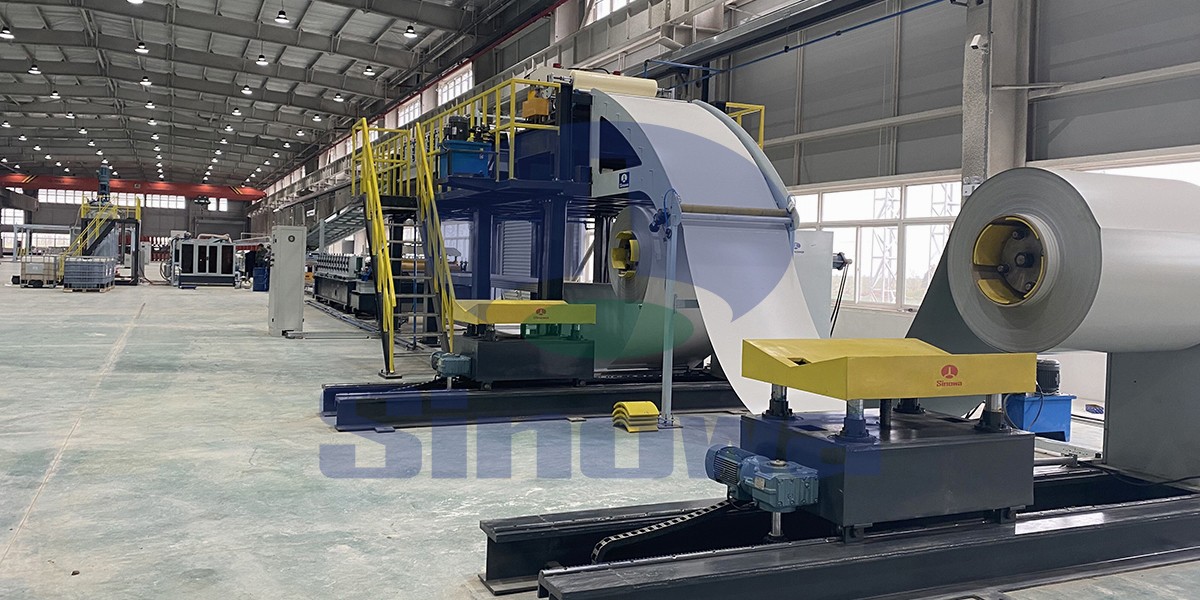
PUR Sandwich Panel Line
Sinowa is pur sandwich panel line manufacturer from china, dedicated to the research and development of high-end and high-efficiency, Sinowa is comprehensively taking the leading position in terms of efficiency, automation control level, HMI, environment protection and energy consumption, with subversive designs made in some critical technological fields to procure exceptional cost performance and customer-friendly experience for the entire pur sandwich panel line. The adoption of system integration technology and bus control technology accomplishes the full automatization of integrated and coordinated control of the entire pur sandwich panel line with accessible remote interactive communication. Ranking the first-class level in the world, it is currently the pur sandwich panel line in the market taking a comprehensive lead in high performance.
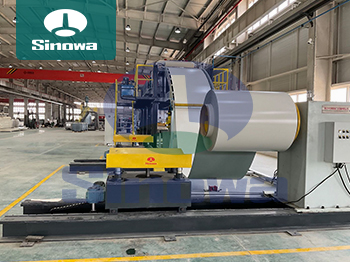
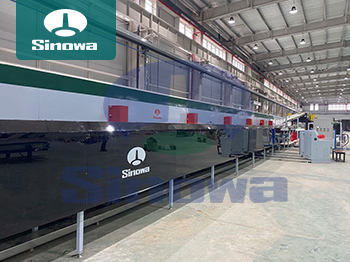
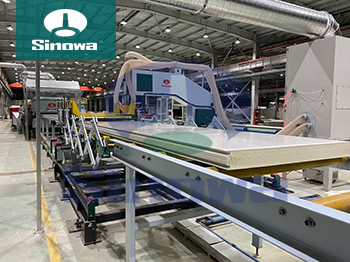
Based on the continuous technological pursuit, the pur sandwich panel line developed by Sinowa provides you with high-efficiency industrial value. Based on China's cost advantage and our hard-working technology concept, our pur sandwich panel line has a world-leading price-performance advantage. pur sandwich panel line can meet a variety of production needs of customers.The whole pur sandwich panel line design concept of modularization enables all our components to be integrated and combined at will. Our pur sandwich panel line can easily automate the production of roof sandwich panel, wall sandwich panel, cold storage sandwich panel and other products by different combination and configuration selection and siple switching. The inner core layer can be polyrethane or rock wool, glass wool, an so on.
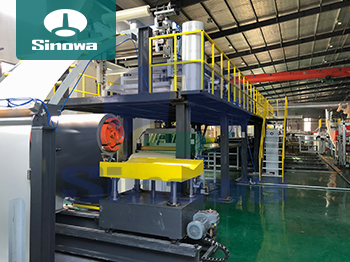


The pur sandwich panel line has high adaptability, which may produce various sandwich panel of the PU, PIR and rock wool systems. We may design various products according to the customer’s requirements, including various configurations, so as to meet their demands with flexible price system. Highly integrated and linked control system centralizes all control points at the main central center, achieving parameter linkage, fault self-diagnosis controlled by the whole line and shipping distance control. High-level automatic control system also saves the manpower and reduces the manpower loss for customers.


Concentrated system control is fully realized in the practice of concentrated process control so that the control system of all the movements of the parts in the pur sandwich panel line is integrated in one process control console with accessible remote communication to elevate the automation and reduce the allocated number of personnel for the assembly line. The main engine with modularized design achieves the precision operation of the pur sandwich panel line, stable and reliable quality, less part and maintenance loss. The whole pur sandwich panel line has over 40 innovative inventions, making our products have lots of unique features and the comprehensive performance of our pur sandwich panel line leading in the industry.


The precision servo hoisting mechanism employed by the main engine without hydraulic system makes the board thickness control flexible and the customer may conveniently change or adjust the board thickness. There will be not such troubles as hydraulic system adjustment, leakage, maintenance, etc. High-level energy saving and protection design makes the whole pur sandwich panel line possible to produce around the clock throughout the year and the customer will save huge budget. In addition, the isolated heat preservation room is constructed for warming the environment. The energy saving and protection design of our pur sandwich panel line may guarantee that the customer’s production line may be freely heated and produce in the main time to save more costs for customers.


The high-power low-consumption design quickens the reaction of the pur sandwich panel line while energy consumption is kept low. With the brand-new, fully sealed inner insulation design, the energy consumption is controlled at the minimum level to achieve the design objective of less than an hour for the insulation system to be activated from the room temperature above 5℃ to the production process temperature. The energy consumption is only 40% that of those similar products.
The PUR sandwich panel line represents a highly engineered, efficient manufacturing system dedicated to producing composite sandwich panels that have become indispensable across modern construction, logistics, agriculture, and transportation sectors, blending lightweight design, exceptional thermal efficiency, and reliable structural integrity into a single versatile building material. At its core, a PUR sandwich panel is defined by a three-layer composite structure, a design that eliminates the need for separate insulation, structural support, and exterior finishing layers, streamlining both production and on-site installation processes while delivering consistent, high-performance results. Unlike traditional building materials that require layered assembly on-site, these panels are fully fabricated in a controlled production line environment, where precision engineering ensures uniform material distribution, strong adhesive bonding between layers, and compliance with strict dimensional tolerances, making them a preferred choice for projects demanding speed, consistency, and long-term durability. The fundamental structure of every PUR sandwich panel consists of two outer facing layers and a rigid, closed-cell polyurethane (PUR) foam core, a configuration that leverages the unique strengths of each component to create a synergistic material that outperforms single-layer alternatives in nearly every functional category. The outer facings serve as the protective and load-bearing surface of the panel, shielding the soft foam core from physical damage, moisture intrusion, UV radiation, and environmental wear, while also contributing to the panel’s overall flexural and compressive strength; these facings can be manufactured from a range of materials, each selected to match specific application requirements, from metal alloys for heavy-duty industrial use to lightweight composite materials for specialized mobile structures. The middle PUR foam core is the heart of the panel’s performance, formed through a controlled chemical foaming process that creates a dense network of closed, air-filled cells, which are critical for its low thermal conductivity, high rigidity, and sound-absorbing properties. The production line itself is designed to integrate every stage of panel manufacturing seamlessly, from raw material preparation and foam mixing to facing feeding, adhesive application, continuous lamination, pressing, curing, cutting, and finishing, with automated systems ensuring that each panel meets consistent thickness, density, and bonding strength standards without manual variation. This continuous production model not only boosts output efficiency but also enhances the overall quality of the panels, as the curing process occurs under controlled temperature and pressure conditions, allowing the foam core to fully expand and bond with the facings without gaps, delamination, or weak spots that could compromise performance over time.
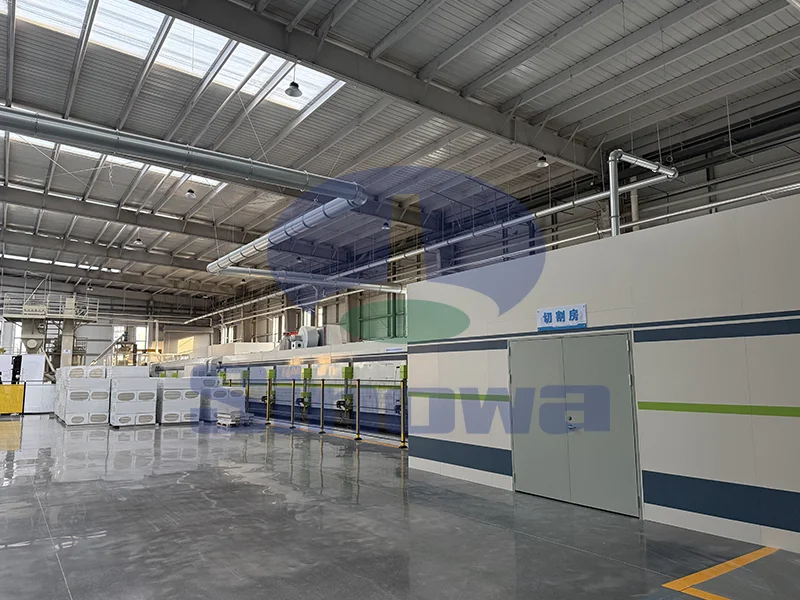
Performance is the defining advantage of PUR sandwich panels produced via a dedicated production line, with a unique combination of structural, thermal, acoustic, and durability properties that set them apart from other insulated building materials. Structurally, these panels offer an exceptional strength-to-weight ratio, meaning they can support significant vertical and horizontal loads while remaining far lighter than concrete, masonry, or solid metal panels; this lightweight nature reduces the overall dead load on building foundations and structural frames, enabling more flexible architectural designs, lower foundation costs, and easier handling and installation on job sites. The rigid foam core resists compression and deformation under heavy weight or external pressure, while the outer facings provide tensile strength to prevent bending or cracking, making the panels suitable for both wall and roof applications in low-rise and mid-rise structures, as well as for load-bearing partitions and cladding systems. Thermal performance is another standout feature, driven by the closed-cell structure of the PUR foam core, which traps stationary air within individual cells and drastically reduces heat transfer through conduction, convection, and radiation. This high thermal efficiency means panels can maintain stable internal temperatures with minimal energy loss, significantly reducing heating and cooling demands in enclosed spaces, making them ideal for climate-controlled environments where temperature consistency is critical. Beyond thermal insulation, PUR sandwich panels deliver strong acoustic performance, absorbing and dampening airborne and impact noise to create quieter indoor spaces; the foam core acts as a natural sound barrier, breaking up sound waves and preventing them from passing through the panel, while the solid outer facings add an extra layer of sound reduction, making the material suitable for commercial buildings, industrial facilities, and residential spaces where noise control is a priority. Durability is equally impressive, as the panels are resistant to moisture absorption, mold growth, and pest infestation, thanks to the closed-cell foam structure that prevents water penetration and the protective facings that shield against environmental damage; they also withstand temperature fluctuations, freeze-thaw cycles, and mild chemical exposure without warping, fading, or deteriorating, ensuring a long service life with minimal maintenance requirements. Unlike porous insulation materials that can lose effectiveness when exposed to moisture, PUR foam retains its thermal and structural properties even in humid or damp conditions, making it suitable for use in coastal regions, underground structures, and high-humidity industrial environments. Additionally, the panels have good dimensional stability, meaning they do not expand or contract significantly with temperature changes, preventing gaps, drafts, or structural stress at panel joints and maintaining a tight, secure seal throughout the building envelope.
PUR sandwich panels are available in a wide range of classifications, tailored to diverse application needs, with variations based on core properties, facing materials, panel design, thickness, and functional specialization, all produced efficiently on a flexible PUR sandwich panel line that can be adjusted to accommodate different specifications. The most primary classification relates to the foam core formulation, with standard PUR foam cores for general-purpose insulation and structural use, and modified PUR cores engineered for enhanced fire resistance, higher density, or improved compressive strength for heavy-load applications; modified cores maintain the core thermal efficiency of standard PUR while adding specialized performance traits to meet the demands of high-risk or high-stress environments. Facing materials are the next key differentiator, with metal facings being the most common choice for industrial and commercial construction, including coated steel and aluminum options. Coated steel facings offer exceptional durability, impact resistance, and weather protection, making them suitable for exterior walls, roofs, and industrial building envelopes, while aluminum facings are lighter, corrosion-resistant, and ideal for mobile structures, transportation applications, or interior finishes where weight reduction is critical. Non-metal facings, such as fiberglass-reinforced plastic (FRP) and other composite materials, are used for specialized applications requiring resistance to chemicals, corrosion, or electrical conductivity, such as agricultural facilities, food processing areas, and clean rooms. Panel design is another major classification, with flat panels for smooth wall and roof surfaces, corrugated panels for enhanced structural strength and water runoff on roofs, and profiled panels for decorative or functional cladding that adds architectural visual appeal while maintaining performance. Panels are also categorized by thickness, ranging from thin, lightweight options for interior partitions and small enclosures to thick, heavy-duty panels for high-performance thermal insulation in cold storage, refrigeration, and extreme climate environments; thicker panels naturally offer superior thermal resistance and structural strength, while thinner panels prioritize space efficiency and ease of installation for non-load-bearing applications. Edge profile design further divides the panels, with interlocking edge systems that create a tight, seamless fit between adjacent panels, eliminating thermal bridging and air leakage and enhancing the overall airtightness of the building envelope; these interlocking designs simplify on-site installation, reduce the need for additional sealing materials, and improve the structural stability of assembled wall and roof systems. Additionally, panels can be classified by functional specialization, including standard general-purpose panels, fire-retardant panels for areas with strict fire safety requirements, moisture-resistant panels for high-humidity environments, and food-grade panels for use in food processing, storage, and cold chain facilities where hygiene and cleanliness are non-negotiable. Each classification is produced on the same flexible production line with minor adjustments to material feeds, foam formulations, and finishing processes, ensuring that manufacturers can meet diverse market demands without sacrificing production efficiency or product quality.
The versatility of PUR sandwich panels, combined with their superior performance and efficient production, has led to their widespread adoption across countless industries and applications, replacing traditional building materials and revolutionizing construction and manufacturing processes globally. In the construction sector, they are a cornerstone of modern prefabricated and modular building systems, used for exterior wall cladding, roof panels, interior partitions, ceiling systems, and building envelopes for industrial warehouses, manufacturing facilities, commercial offices, retail spaces, and public buildings. Their lightweight design and quick installation significantly reduce construction timelines compared to traditional masonry or concrete construction, allowing projects to be completed in a fraction of the time with fewer labor resources; the prefabricated nature of the panels also minimizes on-site waste, making them a more sustainable building option. One of the most prominent applications is in cold chain and temperature-controlled storage, including cold storage warehouses, refrigerated rooms, frozen food storage facilities, and food processing plants, where the exceptional thermal insulation properties of PUR panels maintain consistent low temperatures, prevent frost buildup, and reduce energy consumption for refrigeration systems. The airtight, moisture-resistant design of the panels also prevents condensation and mold growth, preserving the quality and safety of perishable goods, food products, pharmaceuticals, and other temperature-sensitive items. In the transportation industry, PUR sandwich panels are widely used for the fabrication of refrigerated truck bodies, insulated trailer containers, van liners, and mobile cold storage units, where their lightweight nature reduces vehicle weight and improves fuel efficiency, while their thermal insulation capabilities keep cargo at stable temperatures during transit, protecting perishables, pharmaceuticals, and sensitive goods across long distances. The panels’ impact resistance and durability also ensure that transportation containers withstand the rigors of road travel, loading, and unloading without damage, extending the service life of the vehicle bodies.
Beyond construction and transportation, PUR sandwich panels play a vital role in agricultural and horticultural applications, particularly in the construction of insulated greenhouses, livestock barns, poultry houses, and agricultural storage facilities. In greenhouses, the panels maintain stable internal temperatures and protect plants from extreme outdoor weather conditions, extending growing seasons and improving crop yields, while in livestock facilities, they create comfortable, climate-controlled environments that promote animal health and productivity, reducing energy costs for heating and ventilation. The panels are also resistant to the corrosive effects of agricultural chemicals, manure, and moisture, making them a durable and low-maintenance option for farm structures. For specialized industrial and commercial use, they are used to build clean rooms, laboratory spaces, hospital isolation areas, and manufacturing clean zones, where their smooth, non-porous surfaces are easy to clean and sanitize, and their insulation properties maintain stable temperature and humidity levels required for sensitive research, production, and medical processes. In the residential sector, PUR sandwich panels are increasingly used for prefabricated homes, tiny houses, accessory dwelling units, and home extensions, offering homeowners energy-efficient, durable, and affordable housing solutions with quick installation times; they are also used for residential insulation, garage doors, and outdoor storage buildings, providing enhanced thermal efficiency and noise reduction for private living spaces. Additionally, the panels are used for temporary and portable structures, including site offices, emergency shelters, event booths, and construction site facilities, thanks to their easy transport, quick assembly, and reusability, making them a practical solution for short-term or mobile space needs.
The long-term value of PUR sandwich panels extends beyond their immediate performance and application versatility, encompassing sustainability, cost efficiency, and adaptability to evolving industry standards. From a sustainability perspective, the high thermal efficiency of the panels directly reduces energy consumption for heating and cooling in buildings and transportation units, lowering greenhouse gas emissions and supporting global energy conservation goals; the closed-cell foam core is also long-lasting and does not degrade over time, reducing the need for frequent replacements and minimizing material waste. The production process itself is designed to be efficient, with minimal raw material waste and automated systems that reduce energy use compared to traditional manufacturing methods for building materials. While the panels are durable and long-lasting, many components are recyclable at the end of their service life, further reducing their environmental impact and aligning with circular economy principles. Cost efficiency is another key benefit, as the initial investment in PUR sandwich panels is offset by long-term savings on energy bills, maintenance costs, and construction labor; the quick installation time reduces project downtime and labor expenses, while the low maintenance requirements eliminate the need for frequent repairs, repainting, or insulation replacements. Unlike traditional building materials that require regular upkeep to maintain performance, PUR panels retain their structural and thermal properties for decades with minimal care, making them a cost-effective choice for both large-scale commercial projects and small-scale residential applications. As building and energy standards continue to evolve globally, PUR sandwich panels remain adaptable, with ongoing advancements in foam formulations, facing materials, and production technology enhancing their performance, fire resistance, and sustainability without compromising their core advantages. The flexible nature of the PUR sandwich panel line allows for continuous innovation, with manufacturers able to integrate new materials and design improvements to meet changing market demands, ensuring that these panels will remain a leading choice for insulated, structural composite materials for years to come.
In summary, the PUR sandwich panel line is a critical manufacturing system that produces a highly versatile, high-performance composite material, defined by its innovative three-layer structure, exceptional thermal and structural performance, diverse classifications, and wide-ranging cross-industry applications. From large industrial warehouses and cold storage facilities to mobile transportation units, agricultural buildings, and residential homes, PUR sandwich panels deliver a unique combination of strength, efficiency, durability, and versatility that cannot be matched by traditional building materials. The controlled, continuous production process ensures consistent quality and performance across every panel, eliminating variability and ensuring reliable results for every project. Whether used for structural support, thermal insulation, noise reduction, or moisture protection, these panels provide a practical, cost-effective, and sustainable solution that addresses the key challenges of modern construction, logistics, and manufacturing. As the demand for energy-efficient, durable, and quick-to-install building materials continues to rise, PUR sandwich panels will remain an essential component of innovative, sustainable design, offering endless possibilities for architects, engineers, builders, and manufacturers across the globe, and solidifying their role as a foundational material in the future of construction and industrial design.
《PUR Sandwich Panel Line》Update Date: 2026/3/19
URL: https://www.sinowamachine.cn/en/tag/pur-sandwich-panel-line.html
- PU Sandwich Panel Making Machine
- Rockwool Sandwich Panel Production Line
- PU Sandwich Panel Machine
- PU Sandwich Panel Production Line
- Mineral Wool Sandwich Panel Machine
- PUF Panel Machine
- Rock Wool Sandwich Panel Line
- Sandwich Panel Machines
- Sandwich Panel Lines
- Rockwool Sandwich Panel Machine
- Rockwool Sandwich Panel Line
- PU Sandwich Panel Line
- PU Panel Machine
- Foam Forming Machine
- Continuous Sandwich Panel Line
- Continuous PU Sandwich Panel Line
- PIR Sandwich Panel Line
- Polyurethane Sandwich Panel Line
- Automatic PU Sandwich Panel Production Line
- PU Foam Sandwich Panel Production Line