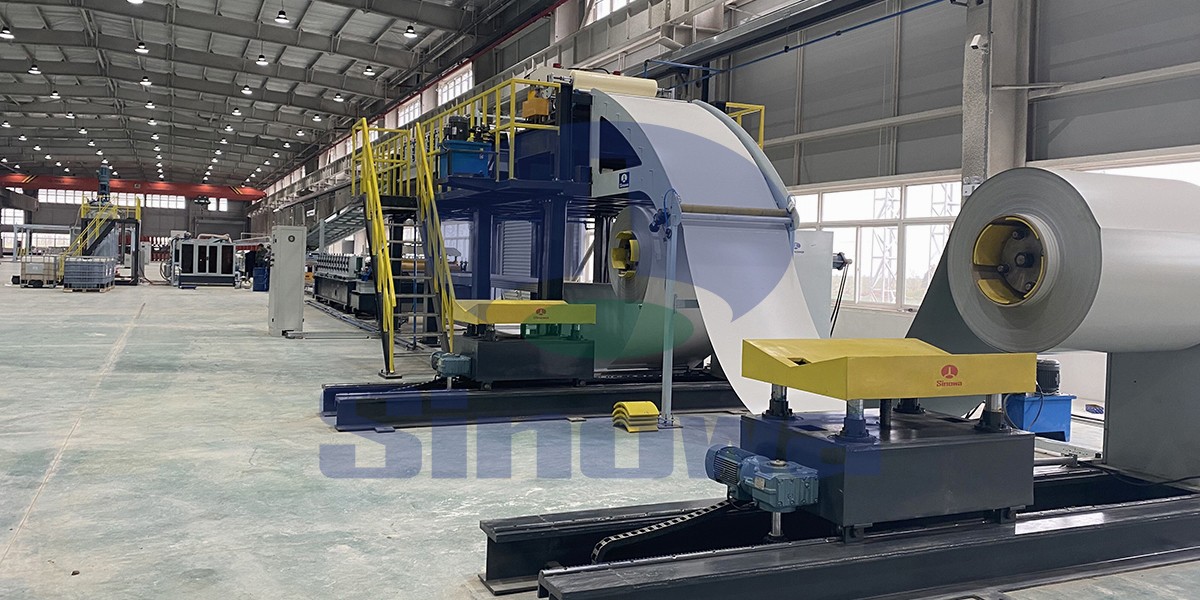
PUF Panel Manufacturing Machine
Sinowa is puf panel manufacturing machine manufacturer from china, dedicated to the research and development of high-end and high-efficiency, Sinowa is comprehensively taking the leading position in terms of efficiency, automation control level, HMI, environment protection and energy consumption, with subversive designs made in some critical technological fields to procure exceptional cost performance and customer-friendly experience for the entire puf panel manufacturing machine. The adoption of system integration technology and bus control technology accomplishes the full automatization of integrated and coordinated control of the entire puf panel manufacturing machine with accessible remote interactive communication. Ranking the first-class level in the world, it is currently the puf panel manufacturing machine in the market taking a comprehensive lead in high performance.
Based on the continuous technological pursuit, the puf panel manufacturing machine developed by Sinowa provides you with high-efficiency industrial value. Based on China's cost advantage and our hard-working technology concept, our puf panel manufacturing machine has a world-leading price-performance advantage. puf panel manufacturing machine can meet a variety of production needs of customers.The whole puf panel manufacturing machine design concept of modularization enables all our components to be integrated and combined at will. Our puf panel manufacturing machine can easily automate the production of roof sandwich panel, wall sandwich panel, cold storage sandwich panel and other products by different combination and configuration selection and siple switching. The inner core layer can be polyrethane or rock wool, glass wool, an so on.
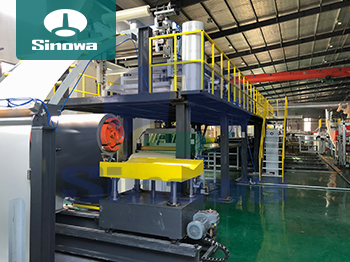


The puf panel manufacturing machine has high adaptability, which may produce various sandwich panel of the PU, PIR and rock wool systems. We may design various products according to the customer’s requirements, including various configurations, so as to meet their demands with flexible price system. Highly integrated and linked control system centralizes all control points at the main central center, achieving parameter linkage, fault self-diagnosis controlled by the whole line and shipping distance control. High-level automatic control system also saves the manpower and reduces the manpower loss for customers.


Concentrated system control is fully realized in the practice of concentrated process control so that the control system of all the movements of the parts in the puf panel manufacturing machine is integrated in one process control console with accessible remote communication to elevate the automation and reduce the allocated number of personnel for the assembly line. The main engine with modularized design achieves the precision operation of the puf panel manufacturing machine, stable and reliable quality, less part and maintenance loss. The whole puf panel manufacturing machine has over 40 innovative inventions, making our products have lots of unique features and the comprehensive performance of our puf panel manufacturing machine leading in the industry.


The precision servo hoisting mechanism employed by the main engine without hydraulic system makes the board thickness control flexible and the customer may conveniently change or adjust the board thickness. There will be not such troubles as hydraulic system adjustment, leakage, maintenance, etc. High-level energy saving and protection design makes the whole puf panel manufacturing machine possible to produce around the clock throughout the year and the customer will save huge budget. In addition, the isolated heat preservation room is constructed for warming the environment. The energy saving and protection design of our puf panel manufacturing machine may guarantee that the customer’s production line may be freely heated and produce in the main time to save more costs for customers.


The high-power low-consumption design quickens the reaction of the puf panel manufacturing machine while energy consumption is kept low. With the brand-new, fully sealed inner insulation design, the energy consumption is controlled at the minimum level to achieve the design objective of less than an hour for the insulation system to be activated from the room temperature above 5℃ to the production process temperature. The energy consumption is only 40% that of those similar products.
In the contemporary construction and industrial sectors, the demand for efficient, durable, and thermally insulated building materials has driven significant advancements in manufacturing equipment. Among these, the PUF panel manufacturing machine stands out as a critical asset, enabling the mass production of polyurethane foam (PUF) sandwich panels—composite structures consisting of a lightweight yet high-insulation PUF core bonded between two outer facer sheets, typically made of metal such as galvanized steel or aluminum. These panels have become indispensable in applications ranging from cold storage facilities and industrial warehouses to modular housing and clean rooms, thanks to their superior thermal performance, structural integrity, and quick installation capabilities. The manufacturing machine behind these panels is a sophisticated integration of mechanical, chemical, electrical, and thermal control technologies, designed to ensure consistency, efficiency, and flexibility in production. As industries continue to prioritize energy efficiency and sustainability, the evolution of PUF panel manufacturing machines has kept pace, incorporating advanced automation, precision control, and eco-friendly processes to meet evolving market needs.
At the core of the PUF panel manufacturing machine is a set of interrelated systems working in harmony to transform raw materials into finished panels. The fundamental working principle revolves around a continuous production process that eliminates the need for individual molds, thereby enhancing production speed and uniformity. The process begins with the preparation and feeding of the outer facer materials, which are typically supplied in coil form. This initial stage is handled by a de-coiling system equipped with guiding mechanisms and tension control devices to ensure the smooth, straight unwinding of the metal coils. The de-coiling unit is designed to prevent skewing or wrinkling of the facer sheets, as any irregularities at this stage would compromise the final product’s quality and structural integrity. Once uncoiled, the metal sheets pass through a pre-heating zone, where they are gently heated to a specific temperature. This pre-heating step is crucial as it optimizes the bonding between the metal sheets and the PUF core, ensuring a strong adhesive bond that withstands environmental stressors such as temperature fluctuations and moisture.

Following pre-heating, the metal sheets are shaped into the desired profile through a roll forming process. The roll forming section of the machine consists of a series of sequentially arranged rolling stands, each equipped with precision-engineered rollers that gradually bend the flat metal sheets into the required cross-sectional shape. This progressive forming method ensures that the sheets maintain their structural rigidity and dimensional accuracy, with the ability to produce a variety of profiles to suit different applications—from corrugated roof panels to flat wall panels. The flexibility of the roll forming system allows manufacturers to adjust the profile design by changing the roller sets, enabling the production of panels with varying widths, thicknesses, and configurations without major modifications to the entire production line.
Parallel to the processing of the outer facers, the machine’s foaming system prepares the polyurethane core material. Polyurethane foam is formed by the chemical reaction between two main components: polyol and isocyanate, often combined with additives such as foaming agents, catalysts, and flame retardants to enhance specific properties. The foaming system of a modern PUF panel manufacturing machine is equipped with high-pressure metering pumps and precision mixing heads, which are critical for ensuring the correct ratio of components and thorough blending. Digital flow meters and computerized control systems monitor the flow rate of each component in real time, making instantaneous adjustments to maintain the optimal mixing ratio. This precision is essential because even minor deviations in the ratio can lead to inconsistencies in foam density, cell structure, and thermal performance, resulting in substandard panels or material waste. The mixing head, which is often equipped with a mechanical agitator or static mixing elements, ensures that the components react uniformly to form a homogeneous foam mixture. Some advanced systems also incorporate heated lines to maintain the components at an optimal temperature, further enhancing the consistency of the chemical reaction.
Once the foam mixture is prepared, it is injected between the two pre-formed outer facer sheets as they move through the production line. This injection process is carefully timed and positioned to ensure uniform distribution of the foam across the entire width and length of the panels. Immediately after injection, the combined structure enters a curing oven or a double-belt pressing system. The curing oven uses hot air circulation to maintain a controlled temperature environment, which accelerates the foam expansion and curing process. The double-belt system, consisting of two parallel conveyor belts, applies uniform pressure to the panel assembly while it cures, ensuring that the foam core bonds firmly with the outer facers and that the finished panel has a flat, consistent surface. The pressure and temperature parameters in the curing zone are precisely controlled to achieve the desired foam density and structural strength—higher temperatures can speed up curing but must be balanced to avoid foam degradation, while optimal pressure ensures minimal voids in the core.
After the foam has fully cured and the panel structure has stabilized, the continuous panel is fed into a cutting system. This system uses high-precision saws or blades to trim the panel to the required length, with computerized controls ensuring accurate cutting without damaging the panel edges or compromising the core structure. Some advanced cutting systems are equipped with automatic length measurement and adjustment features, allowing for quick changes between different panel lengths as required by production orders. Following cutting, the finished panels are conveyed to a stacking system, where they are neatly arranged for storage or further processing, such as surface treatment or packaging. Throughout the entire production process, the machine is monitored and controlled by a central control system, typically based on programmable logic controllers (PLCs) with a user-friendly human-machine interface (HMI). This control system integrates all the machine’s subsystems, allowing operators to set and adjust production parameters such as line speed, foam injection rate, curing temperature, and cutting length. It also includes fault detection and alarm functions, which alert operators to issues such as material shortages, temperature deviations, or mechanical malfunctions, minimizing downtime and ensuring continuous production.
The performance and efficiency of a PUF panel manufacturing machine are determined by several key features, many of which have been enhanced through technological innovations in recent years. One of the most important features is production capacity, which is critical for meeting the high-volume demands of the construction industry. Modern machines are designed to operate continuously at high line speeds, producing significant quantities of panels in a short period. This high production capacity is complemented by energy efficiency, a feature that has become increasingly important as industries seek to reduce their environmental footprint and operational costs. Advanced machines incorporate energy-saving technologies such as variable frequency drives for motors, efficient heat recovery systems in the curing oven, and low-energy consumption control systems. Additionally, the use of environmentally friendly foaming agents, such as pentane, instead of ozone-depleting substances has made the production process more sustainable, aligning with global environmental regulations and sustainability goals.
Versatility is another key attribute of modern PUF panel manufacturing machines. The ability to produce panels of varying dimensions, profiles, and core densities allows manufacturers to cater to a wide range of applications. For example, cold storage facilities require panels with a high-density PUF core for enhanced thermal insulation, while modular housing may use lighter panels with specific aesthetic profiles. To achieve this versatility, machines are equipped with modular components that can be easily adjusted or replaced. For instance, the roll forming section can be reconfigured with different roller sets to produce different facer profiles, and the foaming system can be adjusted to change the foam density by modifying the mixing ratio of components. Some advanced machines can even switch between producing PUF panels and other types of insulated panels, such as rock wool or glass wool sandwich panels, by integrating additional material feeding systems.
Reliability and durability are also essential considerations for PUF panel manufacturing machines, as they are often operated continuously for extended periods in industrial environments. The machines are constructed using high-quality materials such as heavy-duty steel for the frame and components, ensuring they can withstand the rigors of continuous operation. Critical components such as the metering pumps, mixing heads, and roll forming rollers are designed for long service life, with minimal maintenance requirements. Regular maintenance is facilitated by easy access to key components, reducing downtime and ensuring consistent production output. The control system’s fault diagnosis capabilities also play a role in maintaining reliability, as they allow operators to quickly identify and address potential issues before they escalate into major malfunctions.
The performance of PUF panel manufacturing machines directly impacts the quality of the finished panels. Consistent foam density and thickness, achieved through precise metering and mixing, ensure that the panels have uniform thermal insulation properties. A well-bonded core and facer sheets prevent delamination, a common issue in poorly manufactured panels that can compromise structural integrity and insulation performance. The flatness and dimensional accuracy of the panels, ensured by the roll forming and double-belt pressing systems, facilitate quick and easy installation, reducing labor costs for construction projects. Additionally, the ability to control the foam’s cell structure through the machine’s process parameters enhances the panels’ resistance to moisture, fire, and pest infestation, extending their service life and reducing maintenance requirements for end-users.
The development of PUF panel manufacturing machines has been closely driven by the evolving needs of the applications they serve. Cold storage, for example, is a major application area where PUF panels are essential due to their ability to maintain stable temperatures and reduce energy consumption. The machines used to produce cold storage panels are designed to create high-density foam cores with minimal thermal conductivity, ensuring that the panels can effectively prevent heat transfer. In response to the growing demand for cold storage facilities in the food and pharmaceutical industries, manufacturers have developed machines that can produce panels with enhanced fire retardant properties, as fire safety is a critical concern in these sectors. The foaming systems in these machines are optimized to incorporate flame retardant additives uniformly, ensuring that the panels meet strict fire safety standards without compromising insulation performance.
Another key application area is pre-engineered buildings, which require lightweight yet durable panels that can be quickly assembled. PUF panel manufacturing machines have adapted to this need by producing panels with lightweight cores and strong metal facers, which reduce the overall weight of the building while maintaining structural stability. The high production speed of these machines allows manufacturers to meet the tight deadlines often associated with pre-engineered building projects, where quick delivery of materials is essential. Additionally, the versatility of the machines enables the production of panels for both roofing and wall applications, with custom profiles that enhance the aesthetic appeal of the building.
The clean room and pharmaceutical industries also rely on PUF panels for their ability to maintain sterile environments, as the panels’ smooth surfaces are easy to clean and resistant to moisture and contamination. Manufacturing machines for these applications are designed to produce panels with precise dimensional accuracy and minimal surface defects, ensuring that the panels can be installed with tight joints to prevent air leakage. The foaming process is carefully controlled to avoid the release of harmful emissions, and the machines are equipped with dust collection systems to maintain a clean production environment.
Looking to the future, the evolution of PUF panel manufacturing machines is likely to be shaped by several key trends, including increased automation, digitalization, and a stronger focus on sustainability. Automation will continue to advance, with the integration of robotics and artificial intelligence (AI) into production processes. Robotic systems can be used for tasks such as coil handling, panel stacking, and packaging, reducing the need for manual intervention and minimizing human error. AI-powered control systems will enable predictive maintenance, where the machine can monitor its own components’ performance and alert operators to potential failures before they occur, further reducing downtime. Digitalization will also play a key role, with the adoption of industrial internet of things (IIoT) technologies to connect machines to a central data platform. This connectivity will allow manufacturers to monitor production processes in real time, collect data on performance metrics such as output rate, material usage, and energy consumption, and make data-driven decisions to optimize efficiency.
Sustainability will remain a driving force for innovation, with further advancements in eco-friendly processes and materials. Manufacturers are likely to develop machines that use renewable or bio-based polyol components in the foam mixture, reducing the reliance on fossil fuels. Additionally, energy recovery systems will become more efficient, capturing waste heat from the curing process and reusing it to pre-heat raw materials or power other parts of the machine. The development of machines that produce panels with higher recycled content is also on the horizon, as the construction industry moves towards circular economy principles.
Another trend is the integration of more advanced quality control systems, such as machine vision technology. Cameras and sensors will be used to inspect the panels in real time during production, detecting surface defects, dimensional inaccuracies, or bonding issues that may be missed by human operators. This real-time inspection will allow for immediate adjustments to the production process, reducing waste and ensuring that only high-quality panels reach the market. Additionally, 3D scanning technology may be incorporated to create digital models of the panels, enabling precise quality control and facilitating the integration of the panels into building information modeling (BIM) systems for construction projects.
The globalization of the construction industry is also likely to impact the development of PUF panel manufacturing machines, with manufacturers focusing on creating machines that are easy to transport, install, and operate in different regions. Modular machine designs will become more common, allowing for easy assembly and disassembly, which reduces shipping costs and makes the machines accessible to smaller manufacturers in emerging markets. Additionally, user-friendly control systems with multi-language interfaces will facilitate operation by operators with varying levels of expertise, expanding the adoption of these machines worldwide.
In conclusion, the PUF panel manufacturing machine is a sophisticated and evolving piece of equipment that plays a critical role in meeting the demand for high-quality, efficient insulation materials in the construction and industrial sectors. Its integration of mechanical, chemical, and electrical technologies enables the continuous production of panels with consistent performance, durability, and versatility. From the de-coiling of raw materials to the final stacking of finished panels, every stage of the production process is carefully controlled to ensure quality and efficiency. Driven by the needs of key applications such as cold storage, pre-engineered buildings, and clean rooms, the machines have adapted to produce panels with specialized properties, including enhanced fire retardancy, thermal insulation, and sterility. As we look to the future, advancements in automation, digitalization, and sustainability will continue to transform these machines, making them more efficient, reliable, and environmentally friendly. The ongoing evolution of PUF panel manufacturing machines will not only benefit manufacturers by reducing costs and improving productivity but also contribute to the development of more energy-efficient and sustainable buildings, supporting global efforts to combat climate change and promote green construction practices.
《PUF Panel Manufacturing Machine》Update Date: 2026/1/19
URL: https://www.sinowamachine.cn/en/tag/puf-panel-manufacturing-machine.html
- PU Sandwich Panel Making Machine
- Rockwool Sandwich Panel Production Line
- PU Sandwich Panel Machine
- PU Sandwich Panel Production Line
- Mineral Wool Sandwich Panel Machine
- PUF Panel Machine
- Rock Wool Sandwich Panel Line
- Sandwich Panel Machines
- Sandwich Panel Lines
- Rockwool Sandwich Panel Machine
- Rockwool Sandwich Panel Line
- PU Sandwich Panel Line
- PU Panel Machine
- Foam Forming Machine
- Continuous Sandwich Panel Line
- Continuous PU Sandwich Panel Line
- PIR Sandwich Panel Line
- Polyurethane Sandwich Panel Line
- Automatic PU Sandwich Panel Production Line
- PU Foam Sandwich Panel Production Line