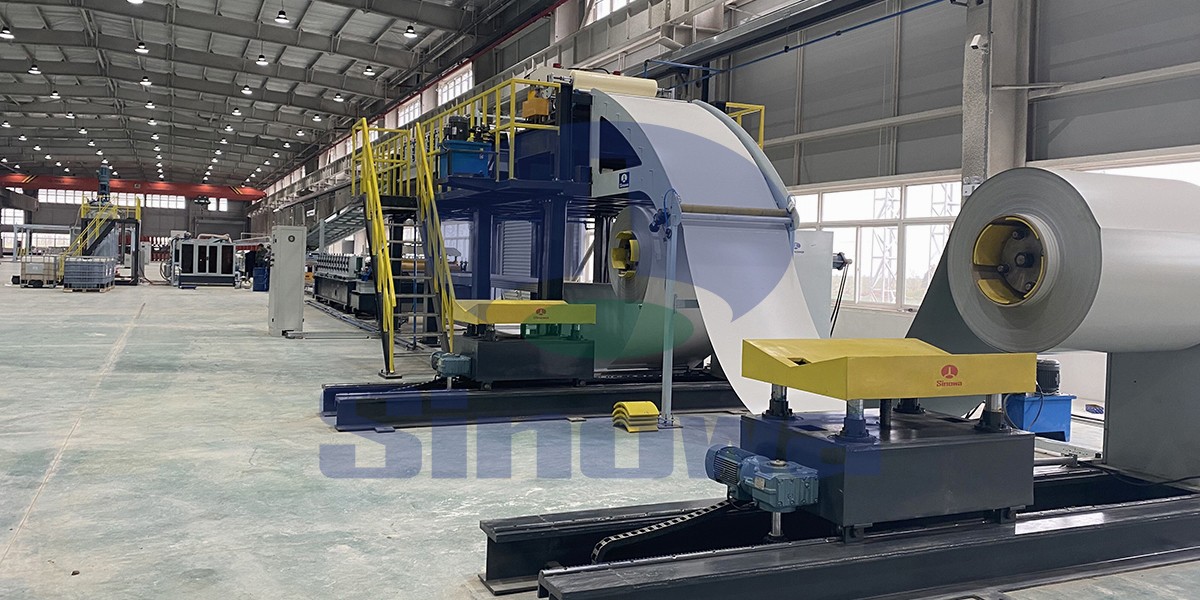
PU Board Production Line
Sinowa is pu board production line manufacturer from china, dedicated to the research and development of high-end and high-efficiency, Sinowa is comprehensively taking the leading position in terms of efficiency, automation control level, HMI, environment protection and energy consumption, with subversive designs made in some critical technological fields to procure exceptional cost performance and customer-friendly experience for the entire pu board production line. The adoption of system integration technology and bus control technology accomplishes the full automatization of integrated and coordinated control of the entire pu board production line with accessible remote interactive communication. Ranking the first-class level in the world, it is currently the pu board production line in the market taking a comprehensive lead in high performance.
Based on the continuous technological pursuit, the pu board production line developed by Sinowa provides you with high-efficiency industrial value. Based on China's cost advantage and our hard-working technology concept, our pu board production line has a world-leading price-performance advantage. pu board production line can meet a variety of production needs of customers.The whole pu board production line design concept of modularization enables all our components to be integrated and combined at will. Our pu board production line can easily automate the production of roof sandwich panel, wall sandwich panel, cold storage sandwich panel and other products by different combination and configuration selection and siple switching. The inner core layer can be polyrethane or rock wool, glass wool, an so on.
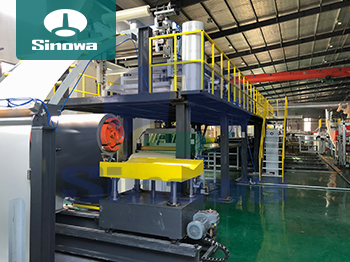


The pu board production line has high adaptability, which may produce various sandwich panel of the PU, PIR and rock wool systems. We may design various products according to the customer’s requirements, including various configurations, so as to meet their demands with flexible price system. Highly integrated and linked control system centralizes all control points at the main central center, achieving parameter linkage, fault self-diagnosis controlled by the whole line and shipping distance control. High-level automatic control system also saves the manpower and reduces the manpower loss for customers.


Concentrated system control is fully realized in the practice of concentrated process control so that the control system of all the movements of the parts in the pu board production line is integrated in one process control console with accessible remote communication to elevate the automation and reduce the allocated number of personnel for the assembly line. The main engine with modularized design achieves the precision operation of the pu board production line, stable and reliable quality, less part and maintenance loss. The whole pu board production line has over 40 innovative inventions, making our products have lots of unique features and the comprehensive performance of our pu board production line leading in the industry.


The precision servo hoisting mechanism employed by the main engine without hydraulic system makes the board thickness control flexible and the customer may conveniently change or adjust the board thickness. There will be not such troubles as hydraulic system adjustment, leakage, maintenance, etc. High-level energy saving and protection design makes the whole pu board production line possible to produce around the clock throughout the year and the customer will save huge budget. In addition, the isolated heat preservation room is constructed for warming the environment. The energy saving and protection design of our pu board production line may guarantee that the customer’s production line may be freely heated and produce in the main time to save more costs for customers.


The high-power low-consumption design quickens the reaction of the pu board production line while energy consumption is kept low. With the brand-new, fully sealed inner insulation design, the energy consumption is controlled at the minimum level to achieve the design objective of less than an hour for the insulation system to be activated from the room temperature above 5℃ to the production process temperature. The energy consumption is only 40% that of those similar products.
Polyurethane (PU) board production lines represent a sophisticated integration of mechanical engineering, material science, and automated manufacturing, designed to transform raw polyurethane components into high-performance rigid, semi-rigid, and flexible boards that serve critical roles across countless industrial and commercial sectors. These production systems are engineered to streamline the entire manufacturing workflow, from raw material preparation and precise mixing to foaming, forming, curing, cutting, and finishing, with each stage calibrated to maintain consistent product quality, dimensional accuracy, and operational efficiency. Unlike fragmented manual production setups, modern PU board production lines operate as unified, continuous or semi-continuous systems that minimize human intervention, reduce material waste, and ensure uniform physical and mechanical properties across every finished board, making them indispensable for large-scale and high-standard PU board manufacturing worldwide. The core value of these production lines lies not only in their ability to mass-produce PU boards but also in their adaptive structural design, which allows manufacturers to customize board specifications, density, hardness, and functional features to meet diverse market demands, from basic insulation panels to high-strength structural boards and specialized composite products.
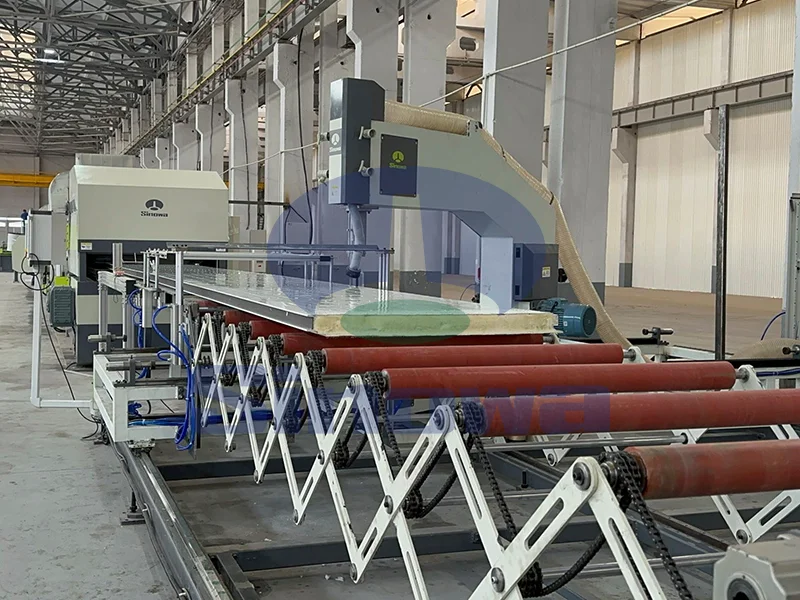
At the heart of every PU board production line is a meticulously engineered structural framework that supports the entire manufacturing process, with each modular component working in seamless coordination to deliver reliable and repeatable results. The typical complete production line is divided into several interconnected functional modules, each serving a distinct purpose in transforming liquid polyurethane raw materials into solid, finished boards. The first critical module is the raw material handling and metering system, which stores and precisely dispenses the two primary polyurethane components—polyol and isocyanate—along with auxiliary additives such as blowing agents, catalysts, flame retardants, and colorants. This system is equipped with high-precision metering pumps and temperature control units to maintain consistent raw material viscosity and mixing ratios, as even minor deviations in component proportions can drastically alter the final board’s performance characteristics. Unlike basic metering setups, advanced systems feature closed-loop feedback mechanisms that adjust flow rates in real time, ensuring perfect homogeneity of the polyurethane mixture before it enters the foaming stage, eliminating inconsistencies that could lead to weak spots, uneven density, or poor insulation in the finished boards.
Following the metering system is the high-pressure mixing and foaming unit, the core processing component of the entire production line that triggers the chemical reaction responsible for forming the PU foam structure. This unit uses high-pressure impingement mixing to blend the polyol and isocyanate streams at extreme speeds, creating a uniform reactive mixture that begins to foam and expand almost instantly upon discharge. The mixing chamber is designed to prevent material buildup and ensure complete chemical reaction, with temperature and pressure controls that regulate the foaming rate and cell structure of the polyurethane foam—key factors that define the board’s strength, insulation, and weight. Directly adjacent to the mixing unit is the forming and curing section, which consists of a double-belt conveyor system, heating zones, and pressure control mechanisms that shape the expanding foam into flat, uniform boards of specified thickness. The double-belt conveyor, constructed from high-strength, heat-resistant materials, maintains consistent pressure and flatness as the foam cures, preventing warping, bubbling, or thickness variations; upper and lower belts are adjustable to accommodate different board thicknesses, from thin insulation sheets to thick structural panels. The curing zone uses controlled, uniform heating (typically via hot air circulation or radiant heat) to accelerate the cross-linking process of the polyurethane molecules, ensuring the foam solidifies completely and develops its full mechanical strength without residual moisture or unreacted chemicals. This section is insulated to retain heat efficiently, reducing energy consumption while maintaining a stable curing environment that supports continuous production.
The final structural modules of the PU board production line include the cooling, cutting, and finishing systems, which prepare the cured boards for storage, transportation, and end use. The cooling section uses ambient air or controlled low-temperature airflow to bring freshly cured boards down to room temperature gradually, preventing thermal shock that could cause cracking or dimensional instability. Once cooled, the boards move to the precision cutting unit, which uses high-speed circular saws, band saws, or CNC cutting systems to trim the boards to exact length, width, and custom shapes as required. This cutting equipment is programmed to minimize material waste, with automated feeding and positioning that ensures clean, burr-free edges and strict adherence to dimensional tolerances. Some advanced production lines also include optional finishing modules, such as surface lamination units, sanding mechanisms, or coating stations, which add protective layers, decorative finishes, or functional coatings to the board surfaces, enhancing durability, moisture resistance, or aesthetic appeal without compromising the core PU foam properties. The entire production line is controlled by a centralized automated control system, which integrates mechanical, electrical, and hydraulic functions, allowing operators to set and adjust parameters such as mixing ratio, foaming temperature, curing time, belt speed, and cutting dimensions via a user-friendly interface. This centralized control reduces human error, enables quick reconfiguration for different board types, and provides real-time monitoring of production status, ensuring smooth operation and consistent output around the clock.
The performance of a PU board production line is defined by a set of core operational and output-related characteristics that directly impact the quality, efficiency, and versatility of the boards it produces, with structural design directly driving these performance metrics. One of the most prominent performance traits is production efficiency, with continuous production lines capable of operating non-stop for extended periods, delivering high output volumes with minimal downtime for maintenance or reconfiguration. Semi-continuous lines, while designed for smaller batch production, still offer superior efficiency compared to manual or semi-manual methods, with quick setup times that make them ideal for custom or small-batch orders. Another key performance factor is dimensional accuracy, as the precision of the metering, forming, and cutting systems ensures that every board meets strict size specifications, with minimal deviation in thickness, length, and width—critical for applications where tight fitting and seamless installation are required, such as construction insulation and cold storage paneling. Uniformity is equally vital: the consistent mixing, foaming, and curing processes eliminate variations in foam density, cell structure, and mechanical properties across the entire board surface and between different production batches, ensuring reliable performance in every unit produced.
Energy efficiency is a standout performance feature of modern PU board production lines, with optimized heating systems, insulated curing zones, and high-efficiency motors that reduce power and fuel consumption compared to older, conventional manufacturing setups. These lines are also designed with environmental performance in mind, using eco-friendly blowing agents that replace harmful ozone-depleting substances, and closed-loop material handling systems that capture and recycle excess raw materials or trim waste, minimizing environmental impact and reducing overall material costs for manufacturers. Durability and operational stability are additional core performance aspects, as the production line’s structural components—from the conveyor belts and mixing chambers to the cutting blades and control systems—are built to withstand continuous heavy use, resist wear and tear, and maintain consistent performance even under high-load production conditions. Low maintenance requirements are engineered into the design, with modular components that are easy to access, clean, and replace, reducing long-term operational disruptions and maintenance costs. Finally, adaptability is a key performance strength: most PU board production lines are designed to handle a wide range of raw material formulations and production parameters, allowing manufacturers to switch between different board types, densities, and specifications without extensive retooling, making the lines highly versatile for evolving market needs.
PU boards produced by these advanced production lines are categorized into distinct types based on their structural composition, foam cell structure, density, hardness, and functional properties, with each type tailored to specific performance requirements and application scenarios. The most fundamental classification is based on foam cell structure: closed-cell PU boards and open-cell PU boards. Closed-cell PU boards feature a dense, tightly packed cell structure where each cell is fully enclosed, with no interconnected pores; this structure delivers exceptional thermal insulation, low water absorption, high compressive strength, and rigidity, making them suitable for heavy-duty and moisture-prone applications. Open-cell PU boards, by contrast, have a porous, interconnected cell structure that offers superior sound absorption, lighter weight, and greater flexibility, with lower thermal insulation than closed-cell variants but excellent acoustic damping properties. These two core cell structures form the basis for all specialized PU board types, with additional modifications to density, hardness, and surface layers creating a diverse product portfolio.
Density is another primary classification criterion, with PU boards ranging from low-density (lightweight, flexible, and highly insulating) to medium-density (balanced strength and insulation) and high-density (rigid, load-bearing, and highly durable). Low-density PU boards are lightweight and easy to handle, with excellent thermal and acoustic insulation, making them ideal for non-load-bearing applications where weight reduction is a priority. Medium-density PU boards strike a balance between flexibility and rigidity, offering good insulation, moderate strength, and resistance to impact, suitable for general-purpose use across multiple industries. High-density PU boards are extremely rigid and durable, with high compressive and flexural strength, resistance to abrasion and deformation, and low water absorption, designed for structural applications that require load-bearing capacity and long-term durability. Beyond cell structure and density, PU boards are also classified by their composite structure, with single-layer solid PU boards and multi-layer sandwich PU boards being the two main categories. Single-layer boards are solid PU foam throughout, offering consistent properties across their thickness and suitable for basic insulation, cushioning, or lightweight structural use. Sandwich PU boards consist of a rigid PU foam core bonded to one or two outer facing layers, which can be made from various materials such as metal sheets, fiber-reinforced composites, kraft paper, non-woven fabrics, or cementitious boards; the outer layers enhance the board’s structural strength, surface durability, and weather resistance, creating a composite product that combines the insulation benefits of PU foam with the rigidity of the facing materials.
Additional specialized PU board types include flame-retardant PU boards, modified to have enhanced fire resistance and low smoke emission; moisture-resistant PU boards, treated to repel water and prevent mold or mildew growth in humid environments; and food-safe PU boards, formulated with non-toxic materials suitable for applications involving food contact or cleanroom environments. Each of these specialized types is produced by adjusting the raw material additives and production parameters on the same versatile production line, highlighting the system’s ability to cater to niche market demands without significant operational changes. The diversity of PU board types means that manufacturers can serve a wide range of industries with a single production line, maximizing operational flexibility and market reach.
The combination of superior performance characteristics and diverse types makes PU boards produced by these specialized production lines indispensable across a vast array of industries, with applications spanning construction, cold chain logistics, automotive manufacturing, marine engineering, packaging, interior design, industrial tooling, and more. In the construction industry, PU boards are one of the most widely used insulation materials, applied to residential and commercial building walls, roofs, floors, and facades to improve energy efficiency by reducing heat transfer, lowering heating and cooling costs, and maintaining stable indoor temperatures. Closed-cell high-density PU boards are particularly popular for exterior building insulation, as they resist moisture penetration, wind damage, and temperature fluctuations, while also providing sound insulation to reduce external noise pollution. Sandwich PU boards with metal facings are used for prefabricated building walls, partition panels, and ceiling systems, offering quick installation, structural stability, and both thermal and acoustic insulation, making them ideal for industrial warehouses, workshops, office buildings, and residential prefabricated homes.
The cold chain and refrigeration industry relies heavily on PU boards for their exceptional low-temperature insulation properties, which are critical for maintaining consistent cold temperatures and reducing energy consumption in cold storage warehouses, refrigerated trucks, shipping containers, walk-in freezers, and refrigerated display cases. PU boards used in these applications can withstand extreme low temperatures without becoming brittle or losing insulation efficiency, ensuring the integrity of perishable goods such as food, pharmaceuticals, and biological samples during storage and transportation. Their lightweight nature also reduces the overall weight of refrigerated vehicles and containers, improving fuel efficiency and load capacity. In the automotive and transportation sectors, PU boards are used for interior components, noise insulation panels, trunk liners, seat backings, and structural reinforcements, thanks to their lightweight properties that help reduce vehicle weight and improve fuel efficiency, combined with excellent shock absorption and sound dampening. Lightweight, low-density PU boards are preferred for automotive applications to minimize overall vehicle weight without compromising safety or comfort.
Marine and shipbuilding industries use high-density, moisture-resistant PU boards for cabin partitions, deck insulation, wall panels, and flotation components, as these boards resist saltwater corrosion, mold growth, and moisture absorption, making them durable in harsh marine environments. Their buoyancy properties also make them suitable for small watercraft flotation systems and marine structural components. In packaging, PU boards serve as protective cushioning materials for fragile, high-value, or heavy items such as electronics, glassware, furniture, and industrial equipment, absorbing shock and vibration during shipping and handling to prevent damage. Custom-cut PU packaging inserts can be tailored to fit specific product shapes, providing superior protection compared to traditional packaging materials. For interior design and furniture manufacturing, medium-density PU boards are used for cabinetry, wall panels, decorative moldings, and furniture cores, offering a smooth, stable surface that can be painted, laminated, or veneered, with good durability and resistance to warping.
Industrial and manufacturing applications include high-density PU tooling boards used for creating molds, prototypes, jigs, and fixtures in metal casting, plastic forming, and composite manufacturing; these boards are easy to machine, stable at varying temperatures, and durable for repeated use, making them a cost-effective alternative to metal tooling for low-volume production and prototyping. PU boards are also used in pipeline insulation for oil, gas, and water distribution systems, preventing heat loss or gain and protecting pipelines from temperature extremes and corrosion. In cleanroom and healthcare settings, non-toxic, easy-to-clean PU boards are used for wall and ceiling panels, as they resist dust accumulation, bacterial growth, and chemical damage, maintaining a sterile environment critical for healthcare, pharmaceutical manufacturing, and electronics production.
The widespread use of PU boards across these diverse sectors is directly attributed to the advanced design and performance of PU board production lines, which enable the consistent, efficient manufacturing of high-quality boards that meet the unique demands of each application. As industries continue to prioritize energy efficiency, sustainability, lightweight materials, and long-term durability, the demand for PU boards and the production lines that manufacture them is expected to grow steadily. Ongoing advancements in production line technology—including enhanced automation, smarter control systems, improved energy efficiency, and compatibility with more eco-friendly raw materials—will further expand the capabilities of these systems, allowing manufacturers to produce PU boards with even better performance, lower environmental impact, and greater versatility. Unlike many other manufacturing systems, PU board production lines are designed to evolve with changing industry standards and material innovations, ensuring they remain a cornerstone of modern composite board manufacturing for years to come. The seamless integration of structural robustness, operational efficiency, and adaptive performance in these production lines not only elevates the quality of PU boards but also drives innovation across the countless industries that rely on these versatile, high-performance materials to meet their most critical functional and operational needs.
《PU Board Production Line》Update Date: 2026/3/19
URL: https://www.sinowamachine.cn/en/tag/pu-board-production-line.html
- PU Sandwich Panel Making Machine
- Rockwool Sandwich Panel Production Line
- PU Sandwich Panel Machine
- PU Sandwich Panel Production Line
- Mineral Wool Sandwich Panel Machine
- PUF Panel Machine
- Rock Wool Sandwich Panel Line
- Sandwich Panel Machines
- Sandwich Panel Lines
- Rockwool Sandwich Panel Machine
- Rockwool Sandwich Panel Line
- PU Sandwich Panel Line
- PU Panel Machine
- Foam Forming Machine
- Continuous Sandwich Panel Line
- Continuous PU Sandwich Panel Line
- PIR Sandwich Panel Line
- Polyurethane Sandwich Panel Line
- Automatic PU Sandwich Panel Production Line
- PU Foam Sandwich Panel Production Line