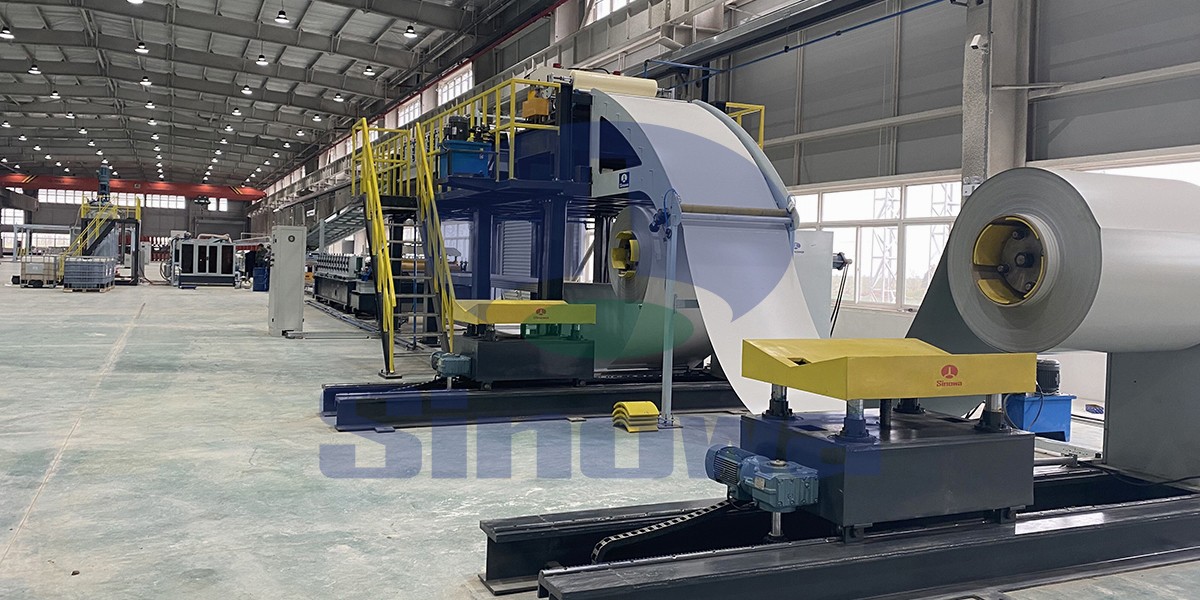
Continuous Sandwich Panel Production Line
Sinowa is continuous sandwich panel production line manufacturer from china, dedicated to the research and development of high-end and high-efficiency, Sinowa is comprehensively taking the leading position in terms of efficiency, automation control level, HMI, environment protection and energy consumption, with subversive designs made in some critical technological fields to procure exceptional cost performance and customer-friendly experience for the entire continuous sandwich panel production line. The adoption of system integration technology and bus control technology accomplishes the full automatization of integrated and coordinated control of the entire continuous sandwich panel production line with accessible remote interactive communication. Ranking the first-class level in the world, it is currently the continuous sandwich panel production line in the market taking a comprehensive lead in high performance.
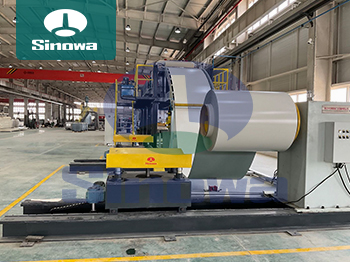
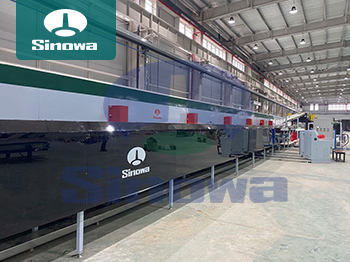
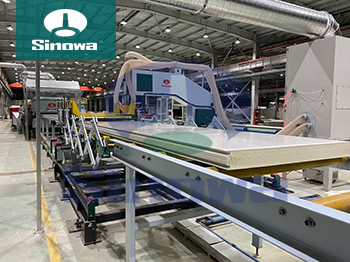
Based on the continuous technological pursuit, the continuous sandwich panel production line developed by Sinowa provides you with high-efficiency industrial value. Based on China's cost advantage and our hard-working technology concept, our continuous sandwich panel production line has a world-leading price-performance advantage. continuous sandwich panel production line can meet a variety of production needs of customers.The whole continuous sandwich panel production line design concept of modularization enables all our components to be integrated and combined at will. Our continuous sandwich panel production line can easily automate the production of roof sandwich panel, wall sandwich panel, cold storage sandwich panel and other products by different combination and configuration selection and siple switching. The inner core layer can be polyrethane or rock wool, glass wool, an so on.
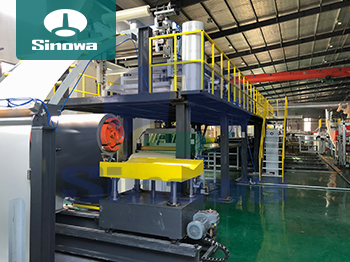


The continuous sandwich panel production line has high adaptability, which may produce various sandwich panel of the PU, PIR and rock wool systems. We may design various products according to the customer’s requirements, including various configurations, so as to meet their demands with flexible price system. Highly integrated and linked control system centralizes all control points at the main central center, achieving parameter linkage, fault self-diagnosis controlled by the whole line and shipping distance control. High-level automatic control system also saves the manpower and reduces the manpower loss for customers.


Concentrated system control is fully realized in the practice of concentrated process control so that the control system of all the movements of the parts in the continuous sandwich panel production line is integrated in one process control console with accessible remote communication to elevate the automation and reduce the allocated number of personnel for the assembly line. The main engine with modularized design achieves the precision operation of the continuous sandwich panel production line, stable and reliable quality, less part and maintenance loss. The whole continuous sandwich panel production line has over 40 innovative inventions, making our products have lots of unique features and the comprehensive performance of our continuous sandwich panel production line leading in the industry.


The precision servo hoisting mechanism employed by the main engine without hydraulic system makes the board thickness control flexible and the customer may conveniently change or adjust the board thickness. There will be not such troubles as hydraulic system adjustment, leakage, maintenance, etc. High-level energy saving and protection design makes the whole continuous sandwich panel production line possible to produce around the clock throughout the year and the customer will save huge budget. In addition, the isolated heat preservation room is constructed for warming the environment. The energy saving and protection design of our continuous sandwich panel production line may guarantee that the customer’s production line may be freely heated and produce in the main time to save more costs for customers.


The high-power low-consumption design quickens the reaction of the continuous sandwich panel production line while energy consumption is kept low. With the brand-new, fully sealed inner insulation design, the energy consumption is controlled at the minimum level to achieve the design objective of less than an hour for the insulation system to be activated from the room temperature above 5℃ to the production process temperature. The energy consumption is only 40% that of those similar products.
The continuous sandwich panel production line stands as a cornerstone of modern manufacturing, embodying the seamless integration of efficiency, precision, and versatility in creating one of the most widely used composite materials in contemporary construction and industrial applications. Unlike traditional discontinuous production methods that rely on batch processing and manual intervention at multiple stages, the continuous production line operates as a unified, automated system, transforming raw materials into finished sandwich panels in a non-interrupted flow. This innovative approach not only revolutionizes the production capacity but also ensures consistent quality, uniform performance, and enhanced sustainability, making it an indispensable asset in meeting the growing global demand for lightweight, durable, and energy-efficient building solutions.
At the heart of the continuous sandwich panel production line lies a sophisticated sequence of interconnected processes, each meticulously designed to work in harmony to achieve optimal results. The journey begins with the handling and preparation of facing materials, which are typically coiled metals such as steel or aluminum, chosen for their high strength-to-weight ratio, corrosion resistance, and adaptability to various profiling requirements. The coiled materials are first loaded onto unwinding units, which feed the flat sheets into the production line at a steady, controlled speed. This initial stage is critical for maintaining the overall rhythm of the continuous process, as any inconsistency in the feeding rate can disrupt subsequent operations. Before entering the profiling section, the facing materials undergo trimming to ensure precise width dimensions, and in some cases, joining mechanisms are employed to connect the end of one coil to the start of another, eliminating production downtime caused by coil changes.
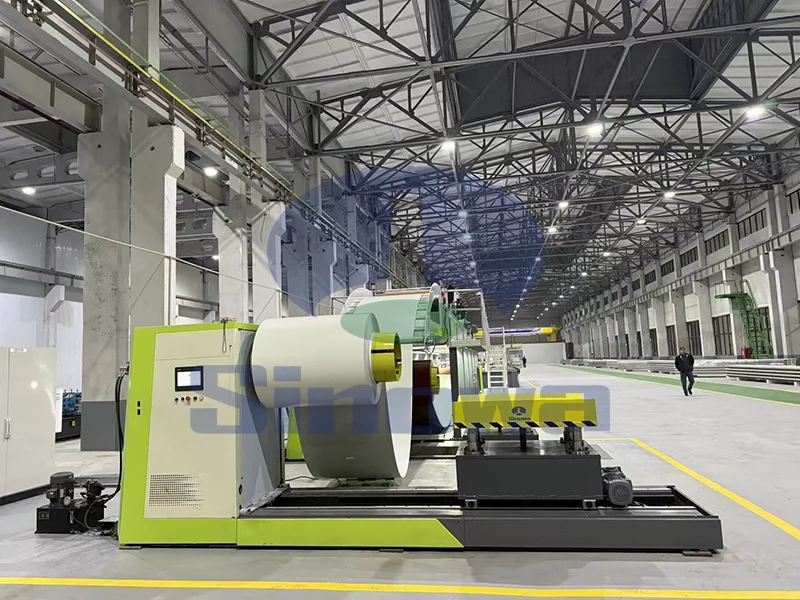
The profiling section represents a key phase in shaping the structural and aesthetic characteristics of the sandwich panel facings. Here, the flat metal sheets pass through a series of roller stations that gradually form them into specific profiles—such as corrugated, ribbed, or trapezoidal designs—depending on the intended application of the final panel. These profiles not only enhance the mechanical strength of the facings, enabling them to withstand bending, compression, and external loads more effectively but also contribute to the panel's ability to shed water when used in roofing applications or improve thermal insulation when used in wall cladding. The profiling process in a continuous line is highly automated, with computerized controls adjusting the roller positions and pressure to ensure uniform profile dimensions across the entire length of the panel. This level of precision is difficult to achieve with batch production methods, where manual adjustments between batches can lead to variations in product quality.
Following the profiling of the lower facing material, the production line moves into the core formation and lamination stage, which is often regarded as the most technically complex part of the continuous process. The core material, which is responsible for the sandwich panel's thermal insulation, soundproofing, and lightweight properties, is applied between the lower and upper facings in a continuous stream. Common core materials include polyurethane (PU) foam, mineral wool, expanded polystyrene (EPS), and polyisocyanurate (PIR) foam, each offering distinct performance characteristics tailored to specific application needs. For foam-based cores, the production line utilizes high-pressure mixing units that combine isocyanate and polyol components, which react chemically to form foam. This foam is dispensed onto the moving lower facing in a precise, uniform layer, ensuring consistent core thickness throughout the panel. For mineral wool cores, a separate feeding system delivers the fibrous material onto the lower facing, where it is compacted to the desired density before the upper facing is applied.
The lamination process occurs immediately after core application, as the upper profiled facing is brought into contact with the core material. The combined assembly then passes through a set of compression rollers and enters a curing zone, which is essential for the core material to achieve its full structural and thermal properties. The curing zone typically uses controlled heating—through methods such as hot air circulation, infrared radiation, or heated belts—to accelerate the chemical reaction of foam cores, ensuring complete hardening within the short time frame dictated by the continuous production speed. For mineral wool cores, the curing process focuses on stabilizing the fibrous structure and enhancing the bond between the core and the facings. Throughout this stage, the assembly is kept under constant pressure to prevent the formation of gaps or voids, ensuring a tight, uniform bond between the facings and the core.
Once the core material is fully cured, the continuous panel assembly moves to the cutting and finishing section. Here, the long, continuous panel is cut into individual panels of predetermined lengths using high-precision cutting tools, such as circular saws or band saws, which are synchronized with the production line speed to ensure clean, accurate cuts without damaging the panel structure. Advanced continuous lines often feature automatic tracking systems that adjust the cutting position in real time, compensating for any minor deviations in the panel's movement. After cutting, the individual panels may undergo additional finishing processes, such as edge trimming to remove any irregularities, surface cleaning to remove dust or debris, or the application of protective films to prevent scratches during transportation and installation. Some production lines also include automated stacking units that neatly arrange the finished panels onto pallets, ready for shipment, further reducing the need for manual labor and improving overall efficiency.
The advantages of the continuous sandwich panel production line over traditional batch methods are multifaceted and far-reaching. One of the most significant benefits is its exceptional production efficiency. By eliminating the downtime associated with batch processing—such as loading and unloading between batches, adjusting equipment settings, and waiting for individual batches to cure—continuous lines can achieve much higher output rates. Modern continuous production lines can produce up to 2,000,000 square meters of sandwich panels per year, making them ideal for large-scale construction projects that require a steady supply of materials. This high productivity not only reduces the per-unit production cost but also enables manufacturers to meet tight project deadlines more effectively.
Consistency and quality control are another major strength of continuous production lines. The automated, integrated nature of the process minimizes human error, ensuring that every panel produced adheres to the same exact specifications. Computerized control systems monitor every stage of the production process—from the thickness of the core material to the temperature of the curing zone—making real-time adjustments to maintain optimal conditions. This level of control ensures uniform core density, consistent facing thickness, and a strong, reliable bond between the facings and the core, resulting in panels with predictable mechanical and thermal performance. For applications such as cold storage facilities, where thermal insulation is critical, the consistent quality of panels produced by continuous lines is essential to maintaining the required temperature levels and reducing energy consumption.
Sustainability is also a key advantage of continuous sandwich panel production lines. The efficient use of raw materials is a hallmark of these systems, as precise metering and control systems minimize waste. For example, the high-pressure mixing units used for foam cores ensure that only the exact amount of material needed is dispensed, reducing material waste significantly. Additionally, the continuous curing process is designed to be energy-efficient, with advanced heating systems that minimize energy consumption while maximizing curing efficiency. Many modern continuous lines also support the use of eco-friendly core materials, such as low-VOC (volatile organic compound) foams or recycled mineral wool, further enhancing their environmental performance. The lightweight nature of the resulting sandwich panels also contributes to sustainability in the construction phase, as they require less energy to transport and can be installed with lighter equipment, reducing the carbon footprint of the building project.
The versatility of continuous sandwich panel production lines is another factor that makes them highly valuable in the manufacturing industry. These lines can be easily adapted to produce a wide range of sandwich panel types, simply by adjusting equipment settings, changing the facing material, or switching the core material. For example, a single continuous line can produce panels with steel or aluminum facings, and with PU, mineral wool, or EPS cores, allowing manufacturers to meet the diverse needs of different customers and applications. This versatility is particularly beneficial in responding to changing market demands, as manufacturers can quickly switch production from one panel type to another without significant downtime or equipment modifications. Whether producing panels for industrial warehouses, commercial shopping malls, residential buildings, or cold storage facilities, continuous production lines can be tailored to meet the specific performance requirements of each application.
In the context of modern construction trends, the continuous sandwich panel production line plays a crucial role in supporting the shift toward energy-efficient and sustainable building practices. As governments and organizations around the world implement stricter energy efficiency standards for buildings, the demand for high-performance insulation materials has grown significantly. Sandwich panels produced by continuous lines offer excellent thermal insulation properties, helping to reduce the energy consumption of buildings by minimizing heat transfer through walls and roofs. This not only lowers the operational costs of buildings but also reduces their carbon emissions, contributing to global efforts to combat climate change. Additionally, the lightweight nature of sandwich panels reduces the structural load on buildings, allowing for the use of lighter and more sustainable structural materials, further enhancing the overall sustainability of the construction project.
The application of continuous sandwich panel production lines extends beyond traditional construction, finding use in a variety of other industries. For example, in the transportation sector, sandwich panels are used in the construction of train carriages, ship interiors, and refrigerated trucks, where their lightweight and insulation properties are highly valued. In the renewable energy sector, sandwich panels are used in the construction of wind turbine nacelles and solar panel support structures, where their strength and durability are essential. The ability of continuous production lines to produce large volumes of consistent, high-quality panels makes them well-suited to meet the demands of these diverse industries, expanding the market for sandwich panels and driving further innovation in production technology.
Looking to the future, the continuous sandwich panel production line is poised to undergo further advancements, driven by the need for greater efficiency, sustainability, and performance. One area of innovation is the integration of smart manufacturing technologies, such as the Internet of Things (IoT) and artificial intelligence (AI), into production processes. IoT sensors can monitor every aspect of the production line in real time, collecting data on material usage, energy consumption, and product quality. This data can be analyzed using AI algorithms to identify inefficiencies, predict equipment failures, and optimize production parameters, further improving productivity and reducing waste. Additionally, advancements in material science are likely to lead to the development of new core and facing materials with enhanced properties, such as improved thermal insulation, higher strength, and greater recyclability, which will be integrated into continuous production lines to meet evolving market demands.
Another area of future development is the miniaturization and modularization of continuous production lines, making them more accessible to smaller manufacturers and enabling local production of sandwich panels. Modular production lines can be easily assembled and disassembled, allowing manufacturers to adapt to changing production needs and reduce capital investment. Additionally, advancements in energy-efficient curing technologies, such as the use of microwave or induction heating, may further reduce the energy consumption of continuous production lines, enhancing their sustainability.
In conclusion, the continuous sandwich panel production line represents a significant advancement in manufacturing technology, offering unparalleled efficiency, consistency, and versatility in the production of sandwich panels. Its integrated, automated processes ensure high-quality products that meet the diverse needs of the construction and industrial sectors, while its sustainability features align with global efforts to reduce carbon emissions and promote energy-efficient building practices. As technology continues to evolve, the continuous sandwich panel production line will undoubtedly play an even more important role in shaping the future of manufacturing, driving innovation, and supporting the development of sustainable, energy-efficient buildings and products around the world. The ongoing refinement of this technology will not only benefit manufacturers by reducing costs and improving productivity but also benefit society as a whole by providing access to high-performance, sustainable building materials that contribute to a more sustainable future.
《Continuous Sandwich Panel Production Line》Update Date: 2026/1/19
URL: https://www.sinowamachine.cn/en/tag/continuous-sandwich-panel-production-line.html
- PU Sandwich Panel Making Machine
- Rockwool Sandwich Panel Production Line
- PU Sandwich Panel Machine
- PU Sandwich Panel Production Line
- Mineral Wool Sandwich Panel Machine
- PUF Panel Machine
- Rock Wool Sandwich Panel Line
- Sandwich Panel Machines
- Sandwich Panel Lines
- Rockwool Sandwich Panel Machine
- Rockwool Sandwich Panel Line
- PU Sandwich Panel Line
- PU Panel Machine
- Foam Forming Machine
- Continuous Sandwich Panel Line
- Continuous PU Sandwich Panel Line
- PIR Sandwich Panel Line
- Polyurethane Sandwich Panel Line
- Automatic PU Sandwich Panel Production Line
- PU Foam Sandwich Panel Production Line