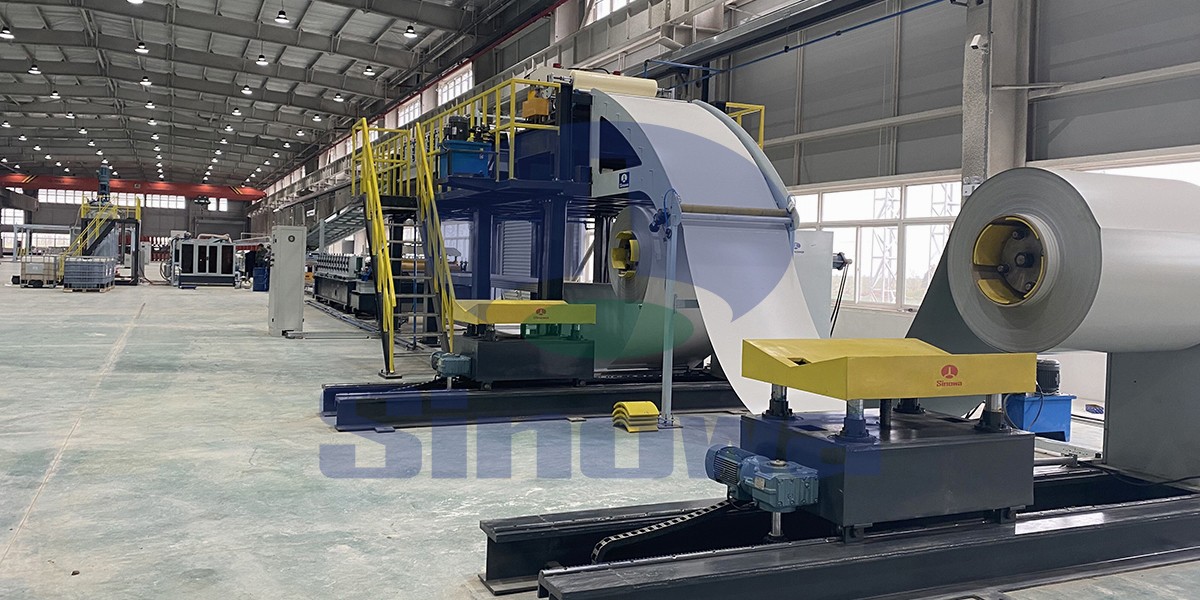
Sinowa is continuous pu sandwich panel production line manufacturer from china, dedicated to the research and development of high-end and high-efficiency, Sinowa is comprehensively taking the leading position in terms of efficiency, automation control level, HMI, environment protection and energy consumption, with subversive designs made in some critical technological fields to procure exceptional cost performance and customer-friendly experience for the entire continuous pu sandwich panel production line. The adoption of system integration technology and bus control technology accomplishes the full automatization of integrated and coordinated control of the entire continuous pu sandwich panel production line with accessible remote interactive communication. Ranking the first-class level in the world, it is currently the continuous pu sandwich panel production line in the market taking a comprehensive lead in high performance.
Based on the continuous technological pursuit, the continuous pu sandwich panel production line developed by Sinowa provides you with high-efficiency industrial value. Based on China's cost advantage and our hard-working technology concept, our continuous pu sandwich panel production line has a world-leading price-performance advantage. continuous pu sandwich panel production line can meet a variety of production needs of customers.The whole continuous pu sandwich panel production line design concept of modularization enables all our components to be integrated and combined at will. Our continuous pu sandwich panel production line can easily automate the production of roof sandwich panel, wall sandwich panel, cold storage sandwich panel and other products by different combination and configuration selection and siple switching. The inner core layer can be polyrethane or rock wool, glass wool, an so on.
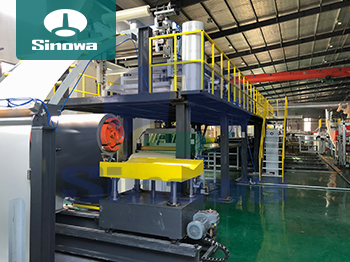
The continuous pu sandwich panel production line has high adaptability, which may produce various sandwich panel of the PU, PIR and rock wool systems. We may design various products according to the customer’s requirements, including various configurations, so as to meet their demands with flexible price system. Highly integrated and linked control system centralizes all control points at the main central center, achieving parameter linkage, fault self-diagnosis controlled by the whole line and shipping distance control. High-level automatic control system also saves the manpower and reduces the manpower loss for customers.
Concentrated system control is fully realized in the practice of concentrated process control so that the control system of all the movements of the parts in the continuous pu sandwich panel production line is integrated in one process control console with accessible remote communication to elevate the automation and reduce the allocated number of personnel for the assembly line. The main engine with modularized design achieves the precision operation of the continuous pu sandwich panel production line, stable and reliable quality, less part and maintenance loss. The whole continuous pu sandwich panel production line has over 40 innovative inventions, making our products have lots of unique features and the comprehensive performance of our continuous pu sandwich panel production line leading in the industry.
The precision servo hoisting mechanism employed by the main engine without hydraulic system makes the board thickness control flexible and the customer may conveniently change or adjust the board thickness. There will be not such troubles as hydraulic system adjustment, leakage, maintenance, etc. High-level energy saving and protection design makes the whole continuous pu sandwich panel production line possible to produce around the clock throughout the year and the customer will save huge budget. In addition, the isolated heat preservation room is constructed for warming the environment. The energy saving and protection design of our continuous pu sandwich panel production line may guarantee that the customer’s production line may be freely heated and produce in the main time to save more costs for customers.
The high-power low-consumption design quickens the reaction of the continuous pu sandwich panel production line while energy consumption is kept low. With the brand-new, fully sealed inner insulation design, the energy consumption is controlled at the minimum level to achieve the design objective of less than an hour for the insulation system to be activated from the room temperature above 5℃ to the production process temperature. The energy consumption is only 40% that of those similar products.
The continuous PU sandwich panel production line stands as a highly integrated, automated manufacturing system designed for the mass and consistent production of polyurethane core sandwich panels, a versatile building and industrial material that combines structural strength, thermal insulation, and weather resistance in a single composite unit. Unlike discontinuous production methods that rely on batch processing and manual handling for key steps, this continuous line operates as a seamless, end-to-end workflow, where raw materials enter one end of the system and finished, cut-to-size sandwich panels exit the other, with minimal manual intervention required throughout the entire production cycle. This design not only elevates production efficiency and panel uniformity but also expands the range of panel specifications and applications that can be achieved, making it a cornerstone of modern composite building material manufacturing across global construction, cold chain, industrial, and residential sectors. To fully understand the value and functionality of this production line, it is essential to explore its integrated structural composition, inherent operational and product performance attributes, the diverse types of panels it can manufacture, and the wide-ranging practical applications that rely on its high-quality output.

At its core, the continuous PU sandwich panel production line is a modularly structured system composed of several interconnected, functionally distinct units that operate in precise synchronization to maintain a steady production rhythm, with each module designed to execute a specific stage of the panel manufacturing process without disrupting the continuous flow. The initial stage of the line features the uncoiling and pre-treatment units, which handle the outer facing materials that form the structural skin of the sandwich panels. These units are engineered to accommodate various coil-fed facing materials, typically metal sheets such as steel or aluminum, which are the most common choices due to their durability and formability, though non-metal facing materials can also be processed with minor configuration adjustments. The uncoiler mechanisms securely hold and feed the raw material coils, while the pre-treatment section includes cleaning, surface activation, and pre-heating components; pre-heating is critical here, as it ensures the facing materials reach an optimal temperature to promote strong adhesion with the PU foam core and prevent warping or delamination during the foaming and bonding process. Following uncoiling and pre-treatment, the roll forming unit takes shape, precisely bending and profiling the flat facing materials into the desired panel profiles, whether flat, corrugated, ribbed, or custom-contoured for specific installation needs. This unit uses precision tooling and adjustable rollers to create consistent edge profiles and interlocking designs, which are vital for tight, secure panel-to-panel connections during on-site installation and enhance the overall structural integrity of finished wall or roof systems.
Moving deeper into the production line, the central and most technically complex section is the PU foaming, mixing, and laminating unit, which is responsible for creating the rigid polyurethane foam core that defines the panel’s insulation and lightweight properties. This unit consists of a high-precision chemical mixing system, a controlled pouring or injection mechanism, and a double-belt laminating press that maintains uniform pressure and temperature across the entire panel width and length. The chemical mixing system blends polyol and isocyanate raw materials, along with specialized additives for foam density, curing speed, and performance tuning, in exact ratios to ensure consistent foam structure and properties; the mixing process is carried out in a closed, pressurized environment to avoid air bubbles and ensure uniform cell formation in the foam, which directly impacts insulation efficiency and mechanical strength. The mixed PU compound is then evenly distributed between the two pre-formed outer facings, either through a moving pouring head that follows the line speed or a static injection system for wide-format panels, before entering the double-belt press. This press features two parallel, heated conveyor belts that apply consistent, adjustable pressure to sandwich the foam mixture between the facings, guiding the material through a controlled curing zone where temperature and speed are precisely regulated to allow the PU foam to expand fully, cure uniformly, and bond permanently to both facings. The length and temperature settings of the curing zone are calibrated based on foam thickness, panel width, and ambient conditions, ensuring full curing without overheating or under-curing, which could compromise panel performance.
The final segments of the continuous production line include the post-curing, cooling, cutting, and stacking units, which complete the panel manufacturing process and prepare products for storage and shipment. After exiting the double-belt press, the fully bonded continuous panel strip passes through a cooling zone, where ambient air or controlled airflow systems lower the panel temperature to stabilize the foam structure and prevent dimensional shrinkage once the panel is cut. The precision cutting unit follows, equipped with high-speed, computer-controlled cutting blades that can be adjusted to cut the continuous panel strip into fixed lengths, custom sizes, or even angled cuts for specialized building requirements; this cutting process is synchronized with the line speed to ensure accurate dimensions and clean, burr-free edges, eliminating the need for secondary on-site trimming. Finally, the stacking and handling unit automatically collects the finished panels, arranges them in neat stacks, and prepares them for protective packaging, with optional conveying systems to transfer panels directly to storage areas or loading bays. The entire line is overseen by a centralized control system that monitors and adjusts all operational parameters, including line speed, temperature, pressure, mixing ratios, and cutting dimensions, in real time. This integrated control system ensures that every unit operates in perfect harmony, minimizing downtime, reducing material waste, and maintaining consistent product quality across every panel produced, regardless of production volume or run duration.
In terms of performance, the continuous PU sandwich panel production line delivers exceptional operational and product-related performance that sets it apart from traditional manufacturing methods, with performance attributes split into two core categories: the line’s own operational efficiency and reliability, and the performance characteristics of the finished PU sandwich panels it produces. On the operational side, the continuous workflow design enables high-volume, continuous production with significantly higher output rates compared to batch-based discontinuous lines, as there are no gaps between production cycles for loading, unloading, or manual reconfiguration. The modular, automated structure reduces labor requirements and human error, as most process adjustments and quality checks are managed through the centralized control system, and the line is built for long-duration, stable operation with minimal maintenance needs, thanks to durable components and wear-resistant tooling that can withstand continuous use. The line also offers high flexibility in terms of production parameters, allowing operators to quickly adjust panel thickness, width, length, facing material type, and foam density without extensive retooling, making it suitable for both large-scale standard production runs and smaller custom orders. Additionally, the closed mixing and foaming system minimizes material waste and reduces environmental impact by containing chemical fumes and optimizing raw material usage, with precise dosing systems ensuring that only the required amount of PU compound is used for each panel, cutting down on excess material and scrap.
Equally important is the performance of the finished PU sandwich panels, which is directly shaped by the precision and consistency of the continuous production line. The uniform pressure and temperature control during the laminating and curing process result in a PU foam core with a dense, uniform cell structure, which delivers outstanding thermal insulation performance; this low thermal conductivity makes the panels highly effective at reducing heat transfer, making them ideal for energy-efficient building envelopes and temperature-controlled environments. The permanent bond between the foam core and outer facings, achieved through controlled pre-heating and adhesive activation, creates a composite panel with excellent mechanical strength, including high load-bearing capacity for roof applications, resistance to bending and impact, and structural stability even under extreme weather conditions such as wind, snow, and temperature fluctuations. The panels also exhibit low water absorption and good moisture resistance, preventing mold growth, material degradation, and loss of insulation efficiency over time, while the rigid foam core adds sound insulation properties, reducing noise transmission between interior and exterior spaces or between different rooms in a building. Furthermore, the consistent profiling and edge finishing from the roll forming unit ensure that panels have precise dimensional tolerances, allowing for quick, straightforward on-site installation with tight joints, which enhances the overall airtightness and weather resistance of the completed structure and reduces installation time and labor costs compared to traditional building materials.
The continuous PU sandwich panel production line is capable of manufacturing a wide range of panel types, categorized by core material variations, facing material types, panel function, and intended application, each tailored to meet specific performance and usage requirements. The most common classification is based on the core material, with standard rigid PU foam cores being the primary product, designed for general-purpose insulation and structural use; these panels balance insulation efficiency, lightweight properties, and cost-effectiveness for widespread applications. There are also modified PU foam cores, including PIR (polyisocyanurate) foam cores, which offer enhanced fire resistance and thermal stability compared to standard PU, making them suitable for applications with stricter safety and temperature tolerance demands. Some lines can also produce composite core panels, combining PU foam with other insulating materials such as mineral wool or glass wool in specific sections, to boost fire resistance or sound insulation for specialized industrial or commercial uses. When classified by outer facing material, the line produces metal-faced panels, including galvanized steel, color-coated steel, and aluminum-faced options, which are the most popular for exterior wall, roof, and industrial applications due to their durability, weather resistance, and low maintenance; non-metal faced panels, such as those with paper, fiberglass, or decorative composite facings, are also produced for interior partition, decorative, or light-duty applications where aesthetic appeal or non-corrosive properties are prioritized.
Panels are also categorized by their functional purpose and structural design, with wall panels, roof panels, cold storage panels, and partition panels being the four main functional types. Wall panels are designed with smooth or lightly profiled surfaces and precise interlocking edges for vertical installation, focusing on structural stability, weather resistance, and thermal insulation for building envelopes; they are available in various thicknesses to match different climate conditions and insulation requirements. Roof panels feature reinforced profiling and higher load-bearing capacity to withstand snow, wind, and environmental exposure, with a slightly sloped profile option to promote water runoff and prevent water accumulation. Cold storage panels are a specialized type with enhanced insulation properties, thicker foam cores, and airtight, watertight edge seals to maintain consistent low temperatures, minimizing energy loss for refrigerated spaces. Partition panels are lighter in weight and thinner in profile, designed for interior space division in commercial, residential, and industrial buildings, prioritizing sound insulation, quick installation, and aesthetic flexibility rather than heavy structural load-bearing. Additionally, the line can produce custom-sized panels for modular and prefabricated building applications, with pre-cut openings for doors, windows, or utility lines, further expanding the range of panel types and adapting to diverse design and construction needs.
The versatility and high performance of panels produced by continuous PU sandwich panel production lines have led to their extensive use across a vast array of industries and application scenarios, with the construction sector being the largest and most prominent user. In commercial and industrial construction, these panels are widely used for exterior walls and roofs of factories, warehouses, logistics centers, workshops, and commercial complexes, offering a fast, efficient building solution that combines structural support, insulation, and exterior finishing in one material. The quick installation process significantly shortens construction timelines, allowing commercial and industrial facilities to be put into operation faster than with traditional brick-and-mortar or concrete construction methods. In the cold chain and refrigeration industry, specialized cold storage panels are essential for constructing cold warehouses, refrigerated transport facilities, food processing plants, pharmaceutical storage facilities, and agricultural produce preservation centers, where precise temperature control is critical; the superior thermal insulation of PU sandwich panels drastically reduces energy consumption for refrigeration systems, lowering long-term operational costs and ensuring the quality and safety of temperature-sensitive goods such as food, pharmaceuticals, and biological products.
In residential and prefabricated construction, PU sandwich panels are increasingly used for modular homes, prefabricated houses, tiny homes, and temporary residential structures, thanks to their lightweight nature, ease of transportation, and fast assembly. These panels provide excellent thermal comfort for residential spaces, reducing heating and cooling costs year-round, while the durable metal facings offer long-term weather resistance and low maintenance. For interior applications, the panels are used as partition walls, ceiling panels, and acoustic insulation panels in offices, shopping malls, hotels, and public buildings, creating flexible, customizable interior spaces with effective sound insulation and a clean, modern aesthetic. Beyond the construction industry, these panels find use in specialized applications such as agricultural buildings, including livestock barns, greenhouse structures, and agricultural storage facilities, where they maintain stable internal temperatures and protect crops and livestock from extreme weather; they are also used for insulating industrial tanks, pipelines, and ventilation ducts, providing thermal insulation and corrosion protection for industrial infrastructure. Additionally, the panels are employed in temporary construction sites, emergency shelters, and event facilities, where quick deployment and structural reliability are essential, as they can be assembled and disassembled efficiently without compromising performance.
As demand for energy-efficient, sustainable, and fast-constructed building materials continues to grow globally, the continuous PU sandwich panel production line remains a vital piece of manufacturing equipment, evolving alongside advancements in material science and automation technology to enhance performance, flexibility, and environmental compatibility. The seamless integration of structural design, precise process control, and versatile production capabilities allows this line to meet the diverse needs of various industries, delivering consistent, high-quality sandwich panels that offer a unique combination of strength, insulation, durability, and cost-effectiveness. Unlike traditional building materials that require multiple layers and separate installation steps for structure, insulation, and finishing, PU sandwich panels streamline the building process, reduce material waste, and improve long-term energy efficiency, aligning with global trends toward green building and sustainable construction practices. The ongoing refinement of the production line’s automation systems, foaming technology, and modular design further expands its potential applications, ensuring that it will continue to be a key player in the composite building material industry, supporting the development of efficient, resilient, and sustainable infrastructure across residential, commercial, industrial, and specialized sectors worldwide.
《Continuous PU Sandwich Panel Production Line》Update Date: 2026/3/19
URL: https://www.sinowamachine.cn/en/tag/continuous-pu-sandwich-panel-production-line.html


