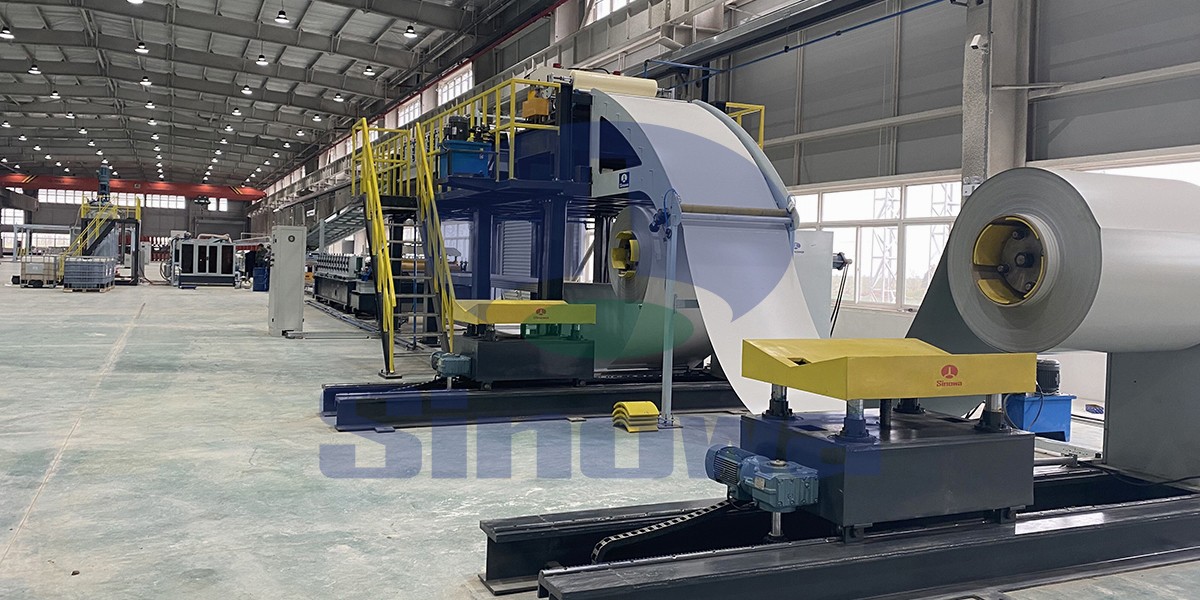
Composite Sandwich Panel Automatic Production Line
Sinowa is composite sandwich panel automatic production line manufacturer from china, dedicated to the research and development of high-end and high-efficiency, Sinowa is comprehensively taking the leading position in terms of efficiency, automation control level, HMI, environment protection and energy consumption, with subversive designs made in some critical technological fields to procure exceptional cost performance and customer-friendly experience for the entire composite sandwich panel automatic production line. The adoption of system integration technology and bus control technology accomplishes the full automatization of integrated and coordinated control of the entire composite sandwich panel automatic production line with accessible remote interactive communication. Ranking the first-class level in the world, it is currently the composite sandwich panel automatic production line in the market taking a comprehensive lead in high performance.
Based on the continuous technological pursuit, the composite sandwich panel automatic production line developed by Sinowa provides you with high-efficiency industrial value. Based on China's cost advantage and our hard-working technology concept, our composite sandwich panel automatic production line has a world-leading price-performance advantage. composite sandwich panel automatic production line can meet a variety of production needs of customers.The whole composite sandwich panel automatic production line design concept of modularization enables all our components to be integrated and combined at will. Our composite sandwich panel automatic production line can easily automate the production of roof sandwich panel, wall sandwich panel, cold storage sandwich panel and other products by different combination and configuration selection and siple switching. The inner core layer can be polyrethane or rock wool, glass wool, an so on.
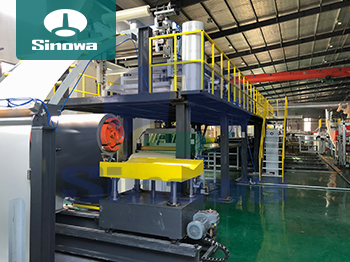


The composite sandwich panel automatic production line has high adaptability, which may produce various sandwich panel of the PU, PIR and rock wool systems. We may design various products according to the customer’s requirements, including various configurations, so as to meet their demands with flexible price system. Highly integrated and linked control system centralizes all control points at the main central center, achieving parameter linkage, fault self-diagnosis controlled by the whole line and shipping distance control. High-level automatic control system also saves the manpower and reduces the manpower loss for customers.


Concentrated system control is fully realized in the practice of concentrated process control so that the control system of all the movements of the parts in the composite sandwich panel automatic production line is integrated in one process control console with accessible remote communication to elevate the automation and reduce the allocated number of personnel for the assembly line. The main engine with modularized design achieves the precision operation of the composite sandwich panel automatic production line, stable and reliable quality, less part and maintenance loss. The whole composite sandwich panel automatic production line has over 40 innovative inventions, making our products have lots of unique features and the comprehensive performance of our composite sandwich panel automatic production line leading in the industry.


The precision servo hoisting mechanism employed by the main engine without hydraulic system makes the board thickness control flexible and the customer may conveniently change or adjust the board thickness. There will be not such troubles as hydraulic system adjustment, leakage, maintenance, etc. High-level energy saving and protection design makes the whole composite sandwich panel automatic production line possible to produce around the clock throughout the year and the customer will save huge budget. In addition, the isolated heat preservation room is constructed for warming the environment. The energy saving and protection design of our composite sandwich panel automatic production line may guarantee that the customer’s production line may be freely heated and produce in the main time to save more costs for customers.


The high-power low-consumption design quickens the reaction of the composite sandwich panel automatic production line while energy consumption is kept low. With the brand-new, fully sealed inner insulation design, the energy consumption is controlled at the minimum level to achieve the design objective of less than an hour for the insulation system to be activated from the room temperature above 5℃ to the production process temperature. The energy consumption is only 40% that of those similar products.
Composite sandwich panels have emerged as a cornerstone material in modern industrial and construction sectors, renowned for their exceptional combination of lightweight properties, structural rigidity, thermal insulation, and durability. These panels, composed of two outer skin layers bonded to a low-density core, have revolutionized applications ranging from aerospace components to commercial building envelopes. Behind the widespread adoption of these high-performance materials lies a critical enabler: the composite sandwich panel automatic production line. This advanced manufacturing system has transformed the production paradigm, shifting from labor-intensive, batch-wise processes to streamlined, continuous operations that ensure consistency, efficiency, and scalability. As global demand for energy-efficient and sustainable building materials surges—driven by rapid urbanization, infrastructure development, and stringent environmental regulations—the automatic production line has become an indispensable asset in meeting market needs while pushing the boundaries of manufacturing innovation.
To appreciate the significance of automatic production lines, it is essential to first understand the fundamental composition and performance characteristics of composite sandwich panels. A typical composite sandwich panel consists of three key components: two thin, high-strength skin layers and a lightweight core material. The skin layers, often made of aluminum, steel, fiberglass, or carbon fiber-reinforced polymers, provide structural strength and protect the core from external damage. The core, which forms the middle layer, is selected based on specific application requirements and can include foam materials (polyurethane, polystyrene, or polyisocyanurate), honeycomb structures (aluminum or nomex), or natural materials like balsa wood. This tri-layer structure leverages the complementary strengths of each component: the skins resist bending and tensile forces, while the core absorbs compression and provides thermal insulation, resulting in a material that outperforms traditional monolithic materials in strength-to-weight ratio and energy efficiency.
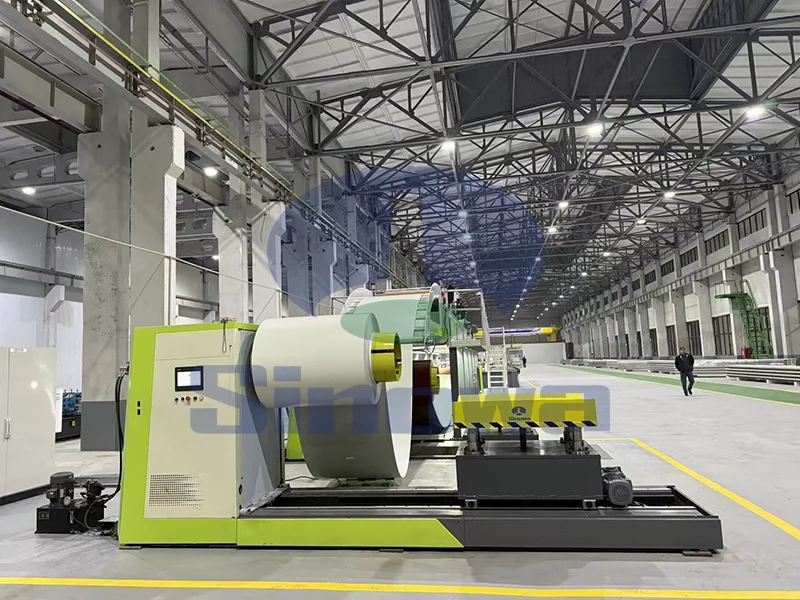
Historically, the production of composite sandwich panels relied on discontinuous, manual or semi-automated processes. These batch-wise systems involved loading raw materials into molds, injecting adhesive or foam core materials, allowing for curing, and then demolding each panel individually. While this approach offered some flexibility for custom sizes or low-volume production, it was plagued by inherent limitations: slow production speeds, high labor requirements, inconsistent quality due to human intervention, and prolonged curing times. As demand grew for large-scale infrastructure projects—such as warehouses, cold storage facilities, and industrial sheds—the need for a more efficient and reliable production method became apparent. The transition to automatic production lines addressed these gaps, introducing a continuous, integrated workflow that minimized manual intervention and maximized output quality.
The core architecture of a composite sandwich panel automatic production line is designed for seamless integration of multiple processes, from raw material handling to final product inspection. While specific configurations may vary based on the type of core and skin materials used, most modern lines consist of several key modules: raw material uncoiling and feeding, skin forming, core preparation and injection, lamination and bonding, curing, precision cutting, and quality control. Each module operates under the coordination of a central control system, which uses advanced software and sensors to monitor and adjust parameters in real time, ensuring uniformity across the entire production process.
The raw material handling module is the starting point of the production workflow, responsible for feeding skin materials—typically in coil form—into the line. Automatic uncoilers gently unwind the coils, while straightening devices ensure the skin material is flat and free of defects before proceeding to the forming stage. For metal skins, this module may also include cleaning stations to remove oil, dust, or debris, which could compromise the bonding strength between the skin and core. The use of automated handling equipment eliminates the risk of surface damage caused by manual lifting and ensures a consistent feed rate, which is critical for maintaining process synchronization.
Following raw material handling, the skin forming module shapes the outer layers into the desired profile. This is often achieved through roll forming, a process where the flat skin material passes through a series of tandem rolling stands. Each stand applies incremental pressure to bend the material into the specified shape—such as corrugated or ribbed profiles—without compromising its structural integrity. Roll forming is ideal for automatic production lines due to its high speed and ability to produce consistent profiles with tight tolerances. For non-metallic skins, such as fiberglass-reinforced polymers, the forming process may involve continuous lamination or extrusion, which is also integrated into the automatic workflow.
The core preparation and injection module is perhaps the most critical component of the production line, as it directly impacts the thermal and structural properties of the final panel. For foam core panels, this module mixes liquid chemicals (such as isocyanate and polyol for polyurethane foam) in precise proportions, ensuring the correct foam density and curing characteristics. The mixed chemicals are then continuously injected between the two formed skin layers through a precision nozzle system. For honeycomb or balsa wood cores, the module involves automated cutting and positioning of the core material, followed by the application of adhesive to bond it to the skins. Advanced automatic lines feature adaptive injection systems that adjust the flow rate and distribution based on the panel thickness and width, ensuring uniform core density and complete coverage.
Once the core material is in place, the lamination and bonding module ensures a strong, durable bond between the skins and core. This is typically achieved through a combination of pressure and temperature control. In continuous production lines, the panel assembly passes through a series of pressure rollers or a multi-layer press, which applies uniform pressure to eliminate air gaps and ensure intimate contact between the layers. For foam cores, the bonding process is enhanced by the exothermic reaction of the foam, which cures and adheres to the skins as it expands. The automatic control system monitors the pressure and temperature throughout this stage, adjusting parameters to accommodate different material combinations and panel specifications.
Curing is the next stage, where the adhesive or foam core is fully hardened to achieve the panel’s final structural properties. In continuous production lines, curing is often accomplished through a tunnel oven or a controlled cooling zone, depending on the core material. For polyurethane foam cores, the curing process is rapid, allowing the panel to move continuously through the line without the need for batch-wise curing. The automatic system maintains precise temperature and humidity levels in the curing zone, ensuring consistent curing times and preventing defects such as delamination or bulging. This continuous curing process is a key advantage over discontinuous systems, as it significantly reduces production time and increases throughput.
After curing, the precision cutting module trims the continuous panel into the desired lengths. Automatic cutting machines—equipped with high-speed blades or saws—make clean, accurate cuts without damaging the panel edges. The cutting parameters are controlled by the central system, which can be programmed to produce panels of varying lengths based on customer requirements. Some advanced lines also include punching or embossing capabilities, which are integrated into the cutting module to add features such as mounting holes or decorative patterns. The use of automatic cutting eliminates the dimensional variations associated with manual cutting, ensuring that each panel meets exact specifications.
The final stage of the production line is quality control, an automated process that ensures the finished panels meet performance and safety standards. Sensors and cameras are strategically placed throughout the line to monitor key parameters such as panel thickness, core density, bonding strength, and surface defects. For example, ultrasonic sensors detect delamination between the skins and core, while vision systems identify surface imperfections such as scratches or dents. Panels that fail to meet the specified criteria are automatically diverted from the production line for rework or disposal. Additionally, sample panels are periodically subjected to rigorous testing—including pressure resistance, peeling strength, and thermal insulation tests—to validate the overall quality of the production run. This comprehensive quality control system ensures that only high-quality panels reach the market, enhancing the reliability of composite sandwich panels in critical applications.
The adoption of composite sandwich panel automatic production lines offers a multitude of benefits that have driven their widespread acceptance across industries. One of the most significant advantages is increased production efficiency. Continuous automatic lines can produce thousands of square meters of panels per shift, a dramatic improvement over the low output of discontinuous systems. This high throughput enables manufacturers to meet large-scale project requirements and shorten lead times, which is particularly important in the construction and infrastructure sectors where project timelines are often tight.
Consistency and quality assurance are another key benefit of automatic production. The use of computer-controlled systems and minimal manual intervention ensures that each panel is produced to the same high standard, with uniform thickness, core density, and bonding strength. This consistency is critical for structural applications, where variations in panel properties could compromise the safety and integrity of the final structure. Additionally, the automated quality control system detects defects early in the production process, reducing material waste and rework costs.
Cost-effectiveness is also a major advantage of automatic production lines. While the initial investment in automatic equipment is higher than that of discontinuous systems, the long-term operational costs are significantly lower. The reduction in labor requirements—due to automated material handling, forming, and cutting—lowers labor costs, while the high throughput and reduced waste minimize material costs. Over time, these savings translate into a lower cost per panel, making composite sandwich panels a more affordable option for a wider range of applications.
Environmental sustainability is another important benefit of automatic production lines. The precise control of material usage reduces waste, while the efficient use of energy in the curing and forming processes lowers the carbon footprint of production. Additionally, many automatic lines are designed to accommodate eco-friendly materials, such as bio-based foam cores and recyclable skin materials, aligning with global efforts to promote sustainable manufacturing practices. The lightweight nature of composite sandwich panels also contributes to environmental sustainability by reducing transportation and installation energy requirements, further lowering the overall carbon footprint of construction projects.
The versatility of automatic production lines is another factor driving their adoption. Modern lines can be easily adjusted to produce panels of varying sizes, thicknesses, and material combinations, allowing manufacturers to meet the specific requirements of different applications. For example, a single line can produce panels with polyurethane foam cores for cold storage facilities, mineral wool cores for fire-resistant building envelopes, and aluminum honeycomb cores for aerospace components. This flexibility enables manufacturers to adapt to changing market demands and expand their product offerings without significant retooling costs.
The applications of composite sandwich panels produced by automatic lines are diverse and continue to expand across industries. In the building and construction sector, these panels are widely used for roofing, wall cladding, partitions, and cold storage facilities. Their thermal insulation properties help reduce energy consumption in buildings, making them a popular choice for sustainable construction projects. In the transportation sector, composite sandwich panels are used in the manufacturing of buses, trucks, rail vehicles, and marine vessels, where their lightweight properties help improve fuel efficiency and reduce emissions. The aerospace industry also relies on composite sandwich panels for aircraft components, such as rotor blades and interior panels, due to their high strength-to-weight ratio.
Other emerging applications include wind energy, where composite sandwich panels are used in wind turbine blades to enhance structural integrity and efficiency, and the sports and leisure industry, where they are used in the production of equipment such as surfboards and ski poles. The ability of automatic production lines to produce high-quality panels in large volumes has been instrumental in the expansion of these applications, making composite sandwich panels a viable alternative to traditional materials in a wide range of sectors.
Looking to the future, the composite sandwich panel automatic production line is poised for further innovation and advancement. One key trend is the integration of smart manufacturing technologies, such as the Internet of Things (IoT), artificial intelligence (AI), and big data analytics. IoT sensors placed throughout the production line will enable real-time monitoring of equipment performance and process parameters, allowing for predictive maintenance and minimizing downtime. AI algorithms will analyze production data to optimize process parameters, further improving efficiency and quality. Big data analytics will also enable manufacturers to gain insights into market trends and customer preferences, facilitating more informed production planning.
Another trend is the development of more sustainable production processes. Manufacturers are increasingly focusing on reducing energy consumption, minimizing waste, and using eco-friendly materials. This includes the adoption of renewable energy sources to power production lines, the development of recyclable composite materials, and the implementation of closed-loop production systems that reuse waste materials. Additionally, advancements in bio-based core materials, such as soy-based polyurethane foam, are expected to further enhance the environmental sustainability of composite sandwich panels.
Advancements in material science will also drive innovation in automatic production lines. The development of high-performance materials, such as carbon fiber-reinforced skins and advanced honeycomb cores, will require production lines that can handle these materials with greater precision and control. Additionally, the integration of 3D printing technology into automatic lines may enable the production of complex panel designs that are not possible with traditional manufacturing methods, opening up new applications in sectors such as aerospace and architecture.
The global market for composite sandwich panels is expected to grow at a significant rate in the coming years, driven by increasing demand from the construction, transportation, and aerospace sectors. This growth will fuel further investment in automatic production technology, leading to more efficient, flexible, and sustainable production lines. As manufacturers continue to innovate and adapt to changing market needs, the composite sandwich panel automatic production line will remain a critical enabler of the widespread adoption of composite materials, contributing to the development of more energy-efficient, durable, and sustainable structures and products.
In conclusion, the composite sandwich panel automatic production line represents a significant advancement in manufacturing technology, transforming the way composite sandwich panels are produced and enabling their widespread adoption across industries. By combining high efficiency, consistent quality, cost-effectiveness, and versatility, these production lines have become an indispensable asset for manufacturers seeking to meet the growing demand for sustainable and high-performance materials. As smart manufacturing technologies, sustainable practices, and material science continue to evolve, the automatic production line will continue to push the boundaries of innovation, ensuring that composite sandwich panels remain at the forefront of modern material technology. The future of composite sandwich panel production is bright, with automatic lines playing a central role in shaping a more sustainable and efficient manufacturing landscape.
《Composite Sandwich Panel Automatic Production Line》Update Date: 2026/1/8
URL: https://www.sinowamachine.cn/en/tag/composite-sandwich-panel-automatic-production-line.html
- PU Sandwich Panel Making Machine
- Rockwool Sandwich Panel Production Line
- PU Sandwich Panel Machine
- PU Sandwich Panel Production Line
- Mineral Wool Sandwich Panel Machine
- PUF Panel Machine
- Rock Wool Sandwich Panel Line
- Sandwich Panel Machines
- Sandwich Panel Lines
- Rockwool Sandwich Panel Machine
- Rockwool Sandwich Panel Line
- PU Sandwich Panel Line
- PU Panel Machine
- Foam Forming Machine
- Continuous Sandwich Panel Line
- Continuous PU Sandwich Panel Line
- PIR Sandwich Panel Line
- Polyurethane Sandwich Panel Line
- Automatic PU Sandwich Panel Production Line
- PU Foam Sandwich Panel Production Line