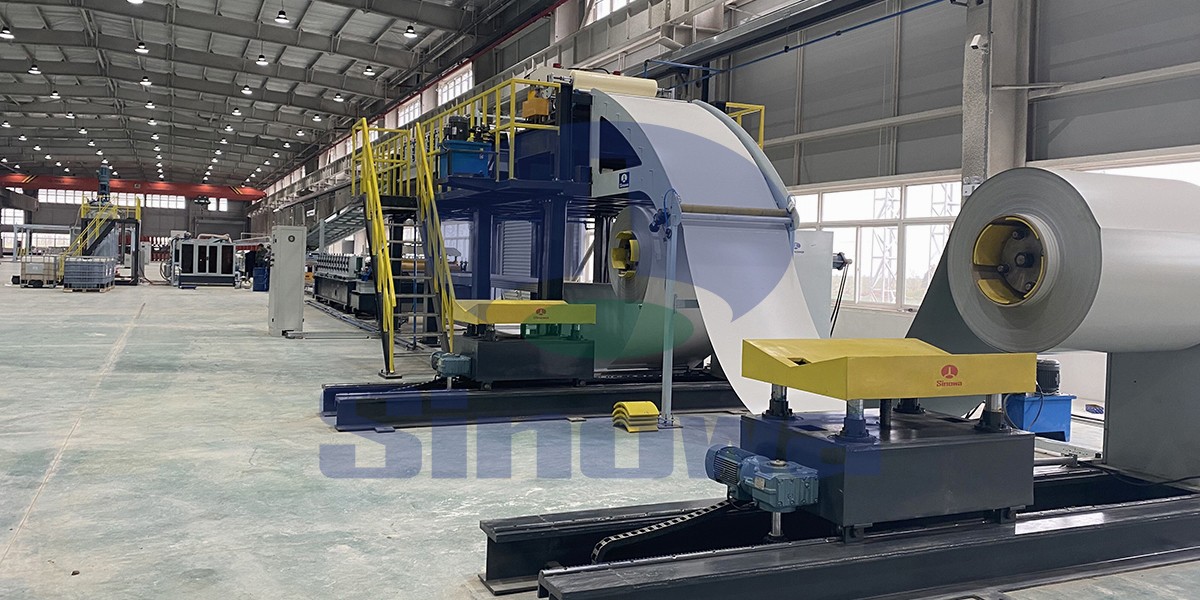
Automatic Sandwich Panel Production Line
Sinowa is automatic sandwich panel production line manufacturer from china, dedicated to the research and development of high-end and high-efficiency, Sinowa is comprehensively taking the leading position in terms of efficiency, automation control level, HMI, environment protection and energy consumption, with subversive designs made in some critical technological fields to procure exceptional cost performance and customer-friendly experience for the entire automatic sandwich panel production line. The adoption of system integration technology and bus control technology accomplishes the full automatization of integrated and coordinated control of the entire automatic sandwich panel production line with accessible remote interactive communication. Ranking the first-class level in the world, it is currently the automatic sandwich panel production line in the market taking a comprehensive lead in high performance.
Based on the continuous technological pursuit, the automatic sandwich panel production line developed by Sinowa provides you with high-efficiency industrial value. Based on China's cost advantage and our hard-working technology concept, our automatic sandwich panel production line has a world-leading price-performance advantage. automatic sandwich panel production line can meet a variety of production needs of customers.The whole automatic sandwich panel production line design concept of modularization enables all our components to be integrated and combined at will. Our automatic sandwich panel production line can easily automate the production of roof sandwich panel, wall sandwich panel, cold storage sandwich panel and other products by different combination and configuration selection and siple switching. The inner core layer can be polyrethane or rock wool, glass wool, an so on.
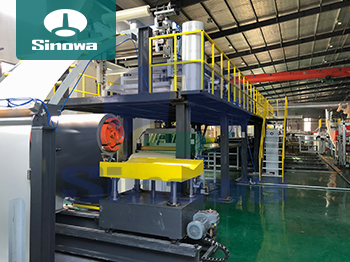


The automatic sandwich panel production line has high adaptability, which may produce various sandwich panel of the PU, PIR and rock wool systems. We may design various products according to the customer’s requirements, including various configurations, so as to meet their demands with flexible price system. Highly integrated and linked control system centralizes all control points at the main central center, achieving parameter linkage, fault self-diagnosis controlled by the whole line and shipping distance control. High-level automatic control system also saves the manpower and reduces the manpower loss for customers.


Concentrated system control is fully realized in the practice of concentrated process control so that the control system of all the movements of the parts in the automatic sandwich panel production line is integrated in one process control console with accessible remote communication to elevate the automation and reduce the allocated number of personnel for the assembly line. The main engine with modularized design achieves the precision operation of the automatic sandwich panel production line, stable and reliable quality, less part and maintenance loss. The whole automatic sandwich panel production line has over 40 innovative inventions, making our products have lots of unique features and the comprehensive performance of our automatic sandwich panel production line leading in the industry.


The precision servo hoisting mechanism employed by the main engine without hydraulic system makes the board thickness control flexible and the customer may conveniently change or adjust the board thickness. There will be not such troubles as hydraulic system adjustment, leakage, maintenance, etc. High-level energy saving and protection design makes the whole automatic sandwich panel production line possible to produce around the clock throughout the year and the customer will save huge budget. In addition, the isolated heat preservation room is constructed for warming the environment. The energy saving and protection design of our automatic sandwich panel production line may guarantee that the customer’s production line may be freely heated and produce in the main time to save more costs for customers.


The high-power low-consumption design quickens the reaction of the automatic sandwich panel production line while energy consumption is kept low. With the brand-new, fully sealed inner insulation design, the energy consumption is controlled at the minimum level to achieve the design objective of less than an hour for the insulation system to be activated from the room temperature above 5℃ to the production process temperature. The energy consumption is only 40% that of those similar products.
In the realm of modern manufacturing and construction, sandwich panels have emerged as a pivotal material, celebrated for their exceptional combination of lightweight properties, structural rigidity, thermal insulation, and acoustic performance. These panels, composed of two outer facings and a low-density core, find applications spanning from industrial warehouses and cold storage facilities to aerospace components and modular buildings. The widespread adoption of sandwich panels has been significantly fueled by the development of automatic production lines, which have revolutionized the manufacturing process by enhancing efficiency, ensuring consistency, and reducing operational costs.
Sandwich panels have a long history of evolution, with early manual production methods characterized by low efficiency, high labor intensity, and inconsistent product quality. The limitations of manual manufacturing became increasingly prominent as market demand grew, particularly in the construction sector where standardized, high-quality panels are essential for ensuring building safety and energy efficiency. The transition from manual to semi-automatic and eventually fully automatic production lines represents a paradigm shift in the industry, driven by the need to meet escalating demand while improving product performance and reducing environmental impact. Today’s automatic sandwich panel production lines integrate advanced technologies such as precision mechanical engineering, programmable logic control (PLC), and intelligent material handling, enabling end-to-end automation from raw material feeding to finished product stacking.
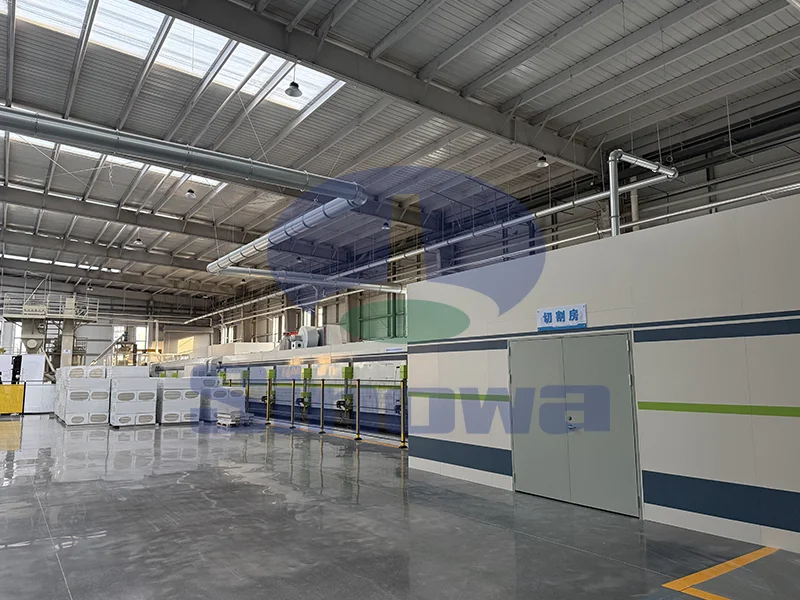
Core Components of Automatic Sandwich Panel Production Lines
A fully automatic sandwich panel production line is a complex integrated system comprising multiple interconnected modules, each designed to perform specific functions in the manufacturing process. While the exact configuration may vary depending on the type of sandwich panel being produced (e.g., EPS, PU, rock wool, or aluminum honeycomb), the core components typically include feeding systems, forming systems, core material processing systems, bonding and curing systems, cutting systems, and stacking systems. These components work in seamless coordination under the control of a central PLC system, ensuring precise operation and consistent product quality.
The feeding system is the starting point of the production process, responsible for supplying raw materials to the line in a controlled and consistent manner. For metal-faced sandwich panels, the feeding system usually consists of decoilers, levelers, and feed rollers. Decoilers unwind large coils of metal sheets (such as steel or aluminum) and feed them into the levelers, which remove any wrinkles or distortions to ensure flatness. Precision feed rollers then transport the metal sheets to the forming system at a uniform speed, ensuring synchronization with other process stages. For core materials such as EPS beads or rock wool battens, dedicated feeding systems with dosing devices are used to ensure accurate material supply, minimizing waste and ensuring consistent core density.
The forming system is critical for shaping the outer facings of the sandwich panel into the desired profile. This system typically comprises a series of tandem rolling stands, each equipped with precision rollers that gradually bend the metal sheets into the required shape. The rolling process is highly controlled, with each stand adjusting the sheet’s curvature incrementally to avoid material damage and ensure dimensional accuracy. Advanced forming systems can be adjusted to produce different panel profiles, enabling manufacturers to cater to diverse application requirements without extensive reconfiguration. Some high-end production lines also integrate punching or embossing modules into the forming system, allowing for the creation of custom patterns or mounting holes directly during the forming process.
The core material processing system varies significantly depending on the type of core used. For foam cores such as PU (polyurethane) or EPS (expanded polystyrene), the system includes mixing and foaming units. In PU panel production lines, liquid PU components are mixed at high pressure in a mixing head and then uniformly dispensed between the two metal facings. For EPS panels, pre-expanded and matured EPS beads are fed into a mold cavity, where they are expanded and bonded using steam heating. For rock wool or mineral wool cores, the processing system includes longitudinal shearing devices that cut the rock wool battens to the required width, as well as dust collection systems to ensure a clean working environment. The integration of 3D printing technology into core material processing is an emerging trend, enabling the production of complex core structures with enhanced mechanical properties and insulation performance.
Bonding and curing systems are responsible for ensuring strong adhesion between the core material and the outer facings. The bonding process may involve the application of adhesives, thermal bonding, or chemical bonding (in the case of foam cores). Curing systems are designed to facilitate the bonding process by controlling temperature and pressure. For example, in PU panel production lines, a double track laminating conveyor is used to apply uniform pressure to the panel while maintaining a controlled temperature environment, allowing the PU foam to expand and cure properly. Cooling systems are often integrated into the curing process to accelerate solidification and ensure dimensional stability. These systems may use air cooling or water cooling, depending on the material requirements and production speed.
The cutting system is responsible for trimming the continuous sandwich panel into finished products of the required length. Automatic cutting systems use high-precision saws or blades, controlled by the PLC system to ensure accurate cutting. The cutting process is synchronized with the production speed, minimizing material waste and ensuring clean, straight cuts. Some advanced cutting systems also include edge trimming functions to remove any irregularities and ensure uniform panel dimensions. Finally, the stacking system automates the process of collecting and stacking finished panels, reducing the need for manual labor and minimizing the risk of product damage. Stacking systems may use robotic arms or conveyor belts equipped with lifting devices, and can be programmed to stack panels in specific configurations for easy storage and transportation.
Working Principles of Automatic Production Lines
The working principle of an automatic sandwich panel production line revolves around the seamless integration of multiple processes, all controlled by a central PLC system to ensure synchronization and precision. While the exact sequence may vary based on the panel type, the general workflow follows a consistent pattern: raw material feeding → facing forming → core material preparation and placement → bonding and curing → cutting → stacking and packaging.
For PU sandwich panels, the production process begins with the unwinding and leveling of metal coils. The metal sheets are then fed into the forming system, where they are shaped into the desired profile. Simultaneously, the PU foam components are mixed in the high-pressure mixing head. The formed metal sheets are fed into the double track laminating conveyor, and the mixed PU foam is uniformly dispensed between the two sheets. As the panels move through the laminating conveyor, the PU foam expands under controlled temperature and pressure, bonding firmly to the inner surfaces of the metal facings. The panels then pass through the cooling system to accelerate the curing process, ensuring the foam solidifies completely. Once cured, the continuous panel is cut to the required length by the automatic cutting system, and the finished panels are stacked by the stacking system.
In the case of EPS sandwich panels, the process differs slightly in the core material preparation stage. Pre-expanded EPS beads are fed into a silo and then transported to the forming machine via a conveyor belt. The forming machine uses a hydraulic system to fill the mold cavity with the EPS beads, which are then expanded and bonded using steam heating. The residual foaming agent in the beads softens and expands due to the heat, filling the entire mold cavity and forming a solid core. After cooling and curing, the mold opens automatically, and the EPS core is ejected. The core is then placed between two pre-formed metal facings, which are bonded together using adhesives or thermal bonding. The assembled panel is then cut to length and stacked.
The central PLC system plays a crucial role in controlling the entire production process. It monitors and adjusts parameters such as feeding speed, forming pressure, temperature, and cutting length in real time, ensuring consistent product quality. The PLC system also integrates human-machine interface (HMI) devices, allowing operators to monitor production status, adjust parameters, and troubleshoot issues easily. Some advanced production lines also incorporate IoT (Internet of Things) technology, enabling remote monitoring and predictive maintenance, further enhancing operational efficiency and reducing downtime.
Key Advantages of Automatic Production Lines
The adoption of automatic sandwich panel production lines offers numerous advantages over traditional manual or semi-automatic methods, making them an indispensable investment for modern manufacturers. These advantages include enhanced production efficiency, improved product quality, reduced labor costs, minimized material waste, and improved workplace safety.
One of the most significant advantages of automatic production lines is their high production efficiency. Continuous automatic lines can produce up to 1,500 meters of panel per hour, significantly outperforming manual methods. The elimination of manual intervention at each stage of the process ensures a smooth and uninterrupted workflow, maximizing production time and output. This high efficiency is particularly beneficial for large-scale manufacturers and those catering to high-demand markets, enabling them to meet customer requirements quickly and gain a competitive edge.
Automatic production lines also ensure superior product quality and consistency. Manual production is prone to human error, leading to variations in panel thickness, density, and bonding strength. In contrast, automatic systems use precision components and real-time process control to ensure uniform application of materials, consistent pressure, and accurate cutting. This results in panels with stable mechanical properties, precise dimensions, and reliable performance. The enhanced consistency reduces the risk of defects and rework, improving customer satisfaction and reducing overall production costs.
Reduced labor costs are another key benefit of automation. Automatic production lines minimize the need for a large workforce, as most tasks (including feeding, forming, bonding, cutting, and stacking) are performed by machines. This allows manufacturers to optimize their labor resources, reducing labor expenses and improving operational efficiency. Additionally, the reduction in manual labor reduces the risk of human error, further enhancing productivity and product quality.
Automatic production lines also contribute to minimizing material waste. Precision dosing and feeding systems ensure that raw materials are used efficiently, reducing excess material usage. The accurate cutting systems also minimize waste by ensuring that panels are cut to the exact required length. This not only reduces material costs but also has environmental benefits, as less waste is generated and disposed of. Some advanced production lines also use eco-friendly materials and processes, such as using pentane as a foaming agent instead of chloroform carbon, further reducing their environmental impact.
Improved workplace safety is another important advantage of automatic production lines. Manual production involves workers operating heavy machinery, handling hot materials, and working in potentially hazardous environments. Automation removes workers from these high-risk situations, reducing the risk of accidents and injuries. For example, automatic material handling systems eliminate the need for workers to lift heavy metal coils or finished panels, reducing the risk of musculoskeletal injuries. Additionally, dust collection systems and enclosed processing modules improve air quality, protecting workers’ health.
Diverse Applications of Sandwich Panels and Production Line Adaptability
Sandwich panels produced by automatic lines are highly versatile, finding applications in a wide range of industries. The adaptability of automatic production lines to produce different types of sandwich panels (with varying core materials, facing materials, and profiles) makes them suitable for catering to the diverse needs of these industries.
The construction industry is the largest consumer of sandwich panels. In this sector, sandwich panels are used for exterior walls, roofs, interior partitions, cold storage facilities, and modular buildings. Exterior wall panels benefit from the thermal insulation and weather resistance of sandwich panels, reducing energy consumption for heating and cooling. Roof panels are designed to withstand harsh weather conditions such as heavy snow and rain, with secure fastening systems to prevent leaks. Cold storage facilities require panels with excellent thermal insulation properties to maintain sub-zero temperatures, making PU and EPS sandwich panels ideal for this application. Modular construction, which is gaining popularity due to its speed and efficiency, relies heavily on sandwich panels produced by automatic lines, as they can be manufactured to precise specifications and installed quickly.
The transportation industry also uses a significant amount of sandwich panels. In automotive and railway applications, lightweight sandwich panels (such as aluminum honeycomb or FRP sandwich panels) are used for vehicle interiors, exteriors, and flooring, reducing vehicle weight and improving fuel efficiency. Marine applications use corrosion-resistant sandwich panels for ship interiors and exteriors, as they can withstand the harsh marine environment. The aerospace industry uses high-performance sandwich panels with advanced core materials (such as Nomex® or carbon fiber-reinforced polymers) for aircraft components, benefiting from their high strength-to-weight ratio and excellent thermal insulation properties.
Industrial applications include warehouses, factories, and clean rooms. Warehouses and factories use sandwich panels for walls and roofs, as they are easy to install and provide good thermal and acoustic insulation. Clean rooms, such as those in the pharmaceutical and electronics industries, require panels with smooth surfaces and high airtightness, which can be produced with precision by automatic lines. Other industrial applications include machine coverings, container construction, and sound barriers.
The adaptability of automatic production lines is key to meeting the diverse needs of these applications. Modular designs allow manufacturers to reconfigure the production line to produce different types of panels, changing core materials, facing materials, or panel dimensions as required. For example, a single production line can be adjusted to produce PU sandwich panels for cold storage and rock wool sandwich panels for fire-resistant walls. This versatility reduces the need for multiple dedicated production lines, lowering capital investment and improving operational flexibility.
Future Trends in Automatic Sandwich Panel Production Lines
The automatic sandwich panel production line industry is poised for significant growth and innovation, driven by evolving market demands, technological advancements, and increasing focus on sustainability. Several key trends are shaping the future of these production lines, including the integration of smart technologies, the development of eco-friendly processes, the advancement of 3D printing for core materials, and the adoption of digital twin technology.
The integration of smart technologies such as IoT, AI (artificial intelligence), and big data analytics is transforming automatic production lines into intelligent systems. IoT sensors installed throughout the production line collect real-time data on process parameters, equipment performance, and product quality. This data is analyzed using AI algorithms to identify patterns, predict potential equipment failures, and optimize process parameters. Predictive maintenance allows manufacturers to address equipment issues before they lead to downtime, improving operational efficiency. AI-powered quality control systems can detect defects in real time, ensuring that only high-quality products reach the market.
Sustainability is a major driver of innovation in the industry, with manufacturers focusing on developing eco-friendly production processes and materials. This includes the use of recycled materials for facing sheets and core materials, the adoption of low-VOC (volatile organic compound) adhesives, and the use of renewable energy sources to power production lines. Additionally, the development of biodegradable core materials such as PLA (polylactic acid) is gaining traction, reducing the environmental impact of sandwich panels at the end of their lifecycle. Some production lines are also designed to minimize energy consumption, using energy-efficient motors and heat recovery systems.
The advancement of 3D printing technology is opening up new possibilities for core material design and production. 3D printing allows for the creation of complex core structures with optimized mechanical properties, such as arch-corrugated cores that enhance flexural strength and insulation performance. Modular 3D-printed cores that are assembleable and disassembleable offer additional versatility, allowing for reuse and customization across diverse applications. Research has shown that 3D-printed cores can achieve significantly higher load capacity and flexural modulus compared to traditional core designs, making them suitable for high-performance applications in aerospace and transportation.
The adoption of digital twin technology is another emerging trend. A digital twin is a virtual replica of the production line, which mirrors the physical line in real time. This technology allows manufacturers to simulate production processes, test new configurations, and optimize operations without disrupting actual production. Digital twins can also be used for training purposes, allowing operators to learn how to operate the line in a safe virtual environment. The integration of digital twin technology with IoT and AI enables predictive optimization, further enhancing production efficiency and product quality.
Conclusion
Automatic sandwich panel production lines have transformed the manufacturing of sandwich panels, enabling high-efficiency, high-quality production that meets the diverse needs of modern industries. The core components of these lines work in seamless coordination, controlled by advanced PLC systems to ensure precision and consistency. The key advantages of automatic production lines, including enhanced efficiency, improved quality, reduced labor costs, minimized waste, and improved safety, make them an indispensable tool for manufacturers. The versatility of these lines allows for the production of sandwich panels for a wide range of applications, from construction and transportation to aerospace and industrial uses.
Looking to the future, the integration of smart technologies, the focus on sustainability, the advancement of 3D printing, and the adoption of digital twin technology will continue to drive innovation in the industry. These developments will further enhance the performance and efficiency of automatic sandwich panel production lines, enabling manufacturers to meet evolving market demands while reducing their environmental impact. As the demand for lightweight, energy-efficient, and sustainable materials continues to grow, automatic sandwich panel production lines will play an increasingly important role in shaping the future of manufacturing and construction.
《Automatic Sandwich Panel Production Line》Update Date: 2026/1/8
URL: https://www.sinowamachine.cn/en/tag/automatic-sandwich-panel-production-line.html
- PU Sandwich Panel Making Machine
- Rockwool Sandwich Panel Production Line
- PU Sandwich Panel Machine
- PU Sandwich Panel Production Line
- Mineral Wool Sandwich Panel Machine
- PUF Panel Machine
- Rock Wool Sandwich Panel Line
- Sandwich Panel Machines
- Sandwich Panel Lines
- Rockwool Sandwich Panel Machine
- Rockwool Sandwich Panel Line
- PU Sandwich Panel Line
- PU Panel Machine
- Foam Forming Machine
- Continuous Sandwich Panel Line
- Continuous PU Sandwich Panel Line
- PIR Sandwich Panel Line
- Polyurethane Sandwich Panel Line
- Automatic PU Sandwich Panel Production Line
- PU Foam Sandwich Panel Production Line