Phenolic Insulation Panel Production Line Manufacturer
Phenolic Insulation Panel Production Line Manufacturer in China. Fully automatic continuous phenolic foam panel line, turnkey solution, fireproof insulation board machine, custom sizes.
Overview of Phenolic Insulation Panel Production Line
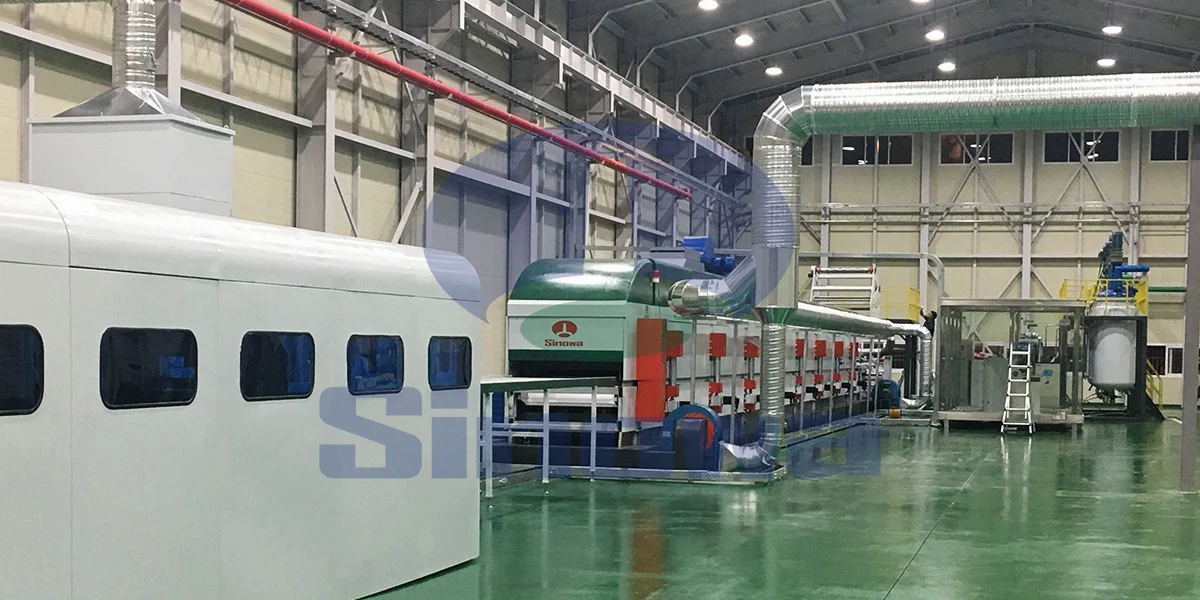
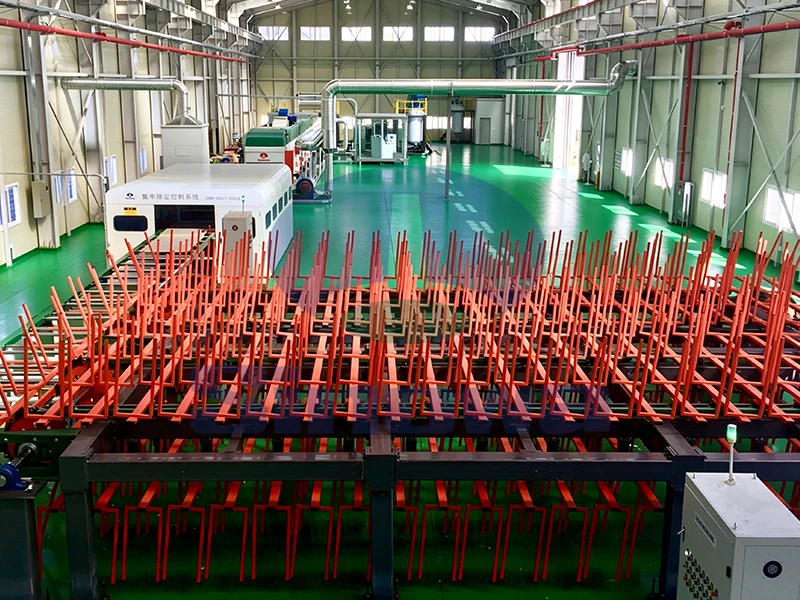
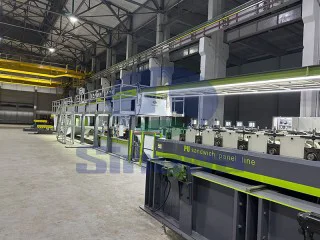
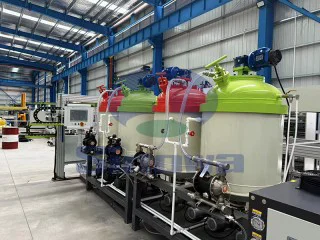
This phenolic insulation panel production line manufacturer develops integrated equipment systems covering feeding, mixing, foaming, forming, curing, trimming and cutting for streamlined panel fabrication. Featuring adjustable temperature, speed and dimension settings, the line ensures uniform board structure and low defect rates. With user-friendly controls and accessible maintenance points, it supports smooth commissioning and stable long-term operation. Flexible layout options suit varied workshop spaces. Refined foaming and forming technologies enable consistent, low-waste production of quality phenolic insulation panels for thermal insulation applications.
Sinowa phenolic insulation panel production line reaches world-class standards in equipment efficiency, automatic control, HMI, environmental protection and energy-saving performance. It adopts disruptive key technologies and delivers excellent cost-performance, supporting remote interactive communication.
-
![Phenolic Insulation Panel Production Line Manufacturer]() Modular Design: The phenolic insulation panel production line features modular design with freely combinable and interchangeable components. Core parts are machined by machining centers to minimize human-factor interference. It achieves high production efficiency and fast delivery with low maintenance loss. The sandwich panel equipment owns more than 40 innovative patented technologies.
-
![Phenolic Insulation Panel Production Line Manufacturer]() Multi-product Manufacturing Capacity: Phenolic Insulation Panel Production Line can automatically produce roof, wall and cold-storage sandwich panels via configuration switching. It supports sandwich panels with core materials including PU, PIR, rock wool and glass wool. Custom configurations and flexible pricing packages are available upon customer requirements.
-
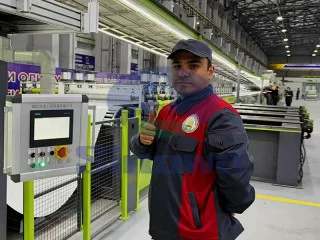
![Phenolic Insulation Panel Production Line Manufacturer]() Control System Advantages: Highly integrated and linked control system centralizes all control points on the main console. Functions including parameter linkage, full-line fault self-diagnosis, conveying distance control and remote communication are available to greatly cut manpower input.
-
![Phenolic Insulation Panel Production Line Manufacturer]() Main Machine Features: The main engine adopts a precision servo hoisting mechanism without hydraulic system. Board thickness can be adjusted flexibly and conveniently, avoiding common troubles of hydraulic systems such as leakage, commissioning and maintenance, ensuring precise operation and stable product quality.
-
![Phenolic Insulation Panel Production Line Manufacturer]() Energy-saving & Environmental-friendly Performance: Equipped with an independent heating-insulation room and brand-new fully-sealed inner insulation structure. Phenolic Insulation Panel Production Line supports round-the-clock production all year round. The insulation system can heat up from ambient temperature above 5℃ to process temperature within less than one hour. Its energy consumption is only 40% of similar products, which greatly reduces production costs.

Main Technical Parameters of Phenolic Insulation Panel Production Line
- Production types: PU, PIR, phenolic, rockwool panels
- Production usage: insulation panels, decorative panels
- Sheet surface options: aluminum foil, non-woven fabric, paper, naked surface
- Product thickness: 10m -200 mm
- Production speed: 3.0m - 25m
- Foaming method: two or multi-component foaming
- Foaming agent: pentane or 141B
- Line length: 45m -100m, Customer Optional
Delivering Customised Production Solutions for Insulation Panel Fabrication
A reliable phenolic insulation panel production line manufacturer focuses on designing and building integrated equipment systems that turn raw phenolic resin materials into finished insulation panels with stable performance. Every production line is engineered to accommodate different production capacities, layout requirements and product specifications, matching the practical needs of panel fabricators of varying scales. The whole system connects material feeding, mixing, continuous foaming, forming, curing, trimming and cutting into one streamlined workflow, reducing manual intervention and keeping the production process consistent.
Optimised Equipment Structure for Stable Continuous Operation
The core of the production system lies in precisely controlled material proportioning and mixing units. These components ensure resin and auxiliary ingredients blend evenly before foaming, which lays a foundation for uniform internal structure of the final phenolic boards. The forming and curing section adopts a continuous conveying structure with adjustable temperature and speed parameters. Operators can tweak settings flexibly to adapt to changes in raw material batches and target panel thickness. Supporting units such as edge trimming devices and automatic cutting modules help obtain neat panel edges and accurate dimensions, lowering the rate of off-spec products.
Focus on Operational Usability and Long-Term Serviceability
Good equipment design balances output efficiency with daily maintenance convenience. The phenolic panel production line is arranged with easy access points for routine inspection, component replacement and cleaning work. Control interfaces are simplified for on-site operators, with clear parameter display and real-time running status feedback. The manufacturer also provides technical guidance for installation, commissioning and staff training after equipment delivery, helping customers get the whole line into normal operation smoothly. Reasonable structural selection slows down wear of key moving parts and extends the stable service cycle of the entire production system.
Adaptable Layout to Fit Different Factory Spaces
Since production workshops differ greatly in floor area, ceiling height and logistics routes, the manufacturer avoids one-size-fits-all line designs. Engineers adjust the arrangement of each functional section, and offer linear or segmented layout schemes according to a client’s workshop conditions. Auxiliary conveying and stacking accessories can be added optionally to connect the finished panel area, which further improves the internal logistics flow inside the factory. Such flexible layout planning helps customers make full use of existing plant space without unnecessary reconstruction work.
Supporting Sustainable Production of High-Performance Insulation Materials
Phenolic insulation panels are widely applied in thermal insulation and fire-safe enclosure scenarios, and the quality of production equipment directly determines the core properties of finished boards. A professional manufacturer keeps refining the foaming control and forming technology of the line, to help end producers obtain panels with stable thermal insulation performance and good structural integrity. By supporting steady, low-waste continuous manufacturing, the production system helps insulation panel producers maintain stable product quality while improving overall production efficiency in the long run.
- Continuous PU Sandwich Panel Line
- Glass Wool Sandwich Panel Production Line
- Insulation Board Production Line
- Mineral Wool Sandwich Panel Production Line
- PIR Sandwich Panel Production Line
- Polyurethane Sandwich Panel Line
- Polyurethane Sandwich Panel Machine
- Polyurethane Sandwich Panel Manufacturing Line
- Polyurethane Sandwich Panel Production Line
- PU Sandwich Panel Line
- PU Sandwich Panel Machine
- PU Sandwich Panel Production Line
- PUR Sandwich Panel Production Line
- Rock Wool Sandwich Panel Production Line
- Sandwich Panel Lines
- Sandwich Panel Machines
- Sandwich Panel Manufacturing Line
- Sandwich Panel Production Line
- Sandwich Panel Production Machinery
- Sandwich Panel Production Machines